
For side sleepers, finding a comfortable sleep eye mask isn’t just about blocking light—it’s about avoiding pressure points, preventing slippage, and ensuring uninterrupted rest. Traditional flat masks often dig into the cheek or shift during the night when one side of the face presses against the pillow. The right mask should contour to your face without creating discomfort, stay in place through movement, and complement your natural sleeping posture. Understanding the unique needs of side sleepers is key to selecting a mask that enhances, rather than hinders, sleep quality.
Why Standard Eye Masks Fail Side Sleepers
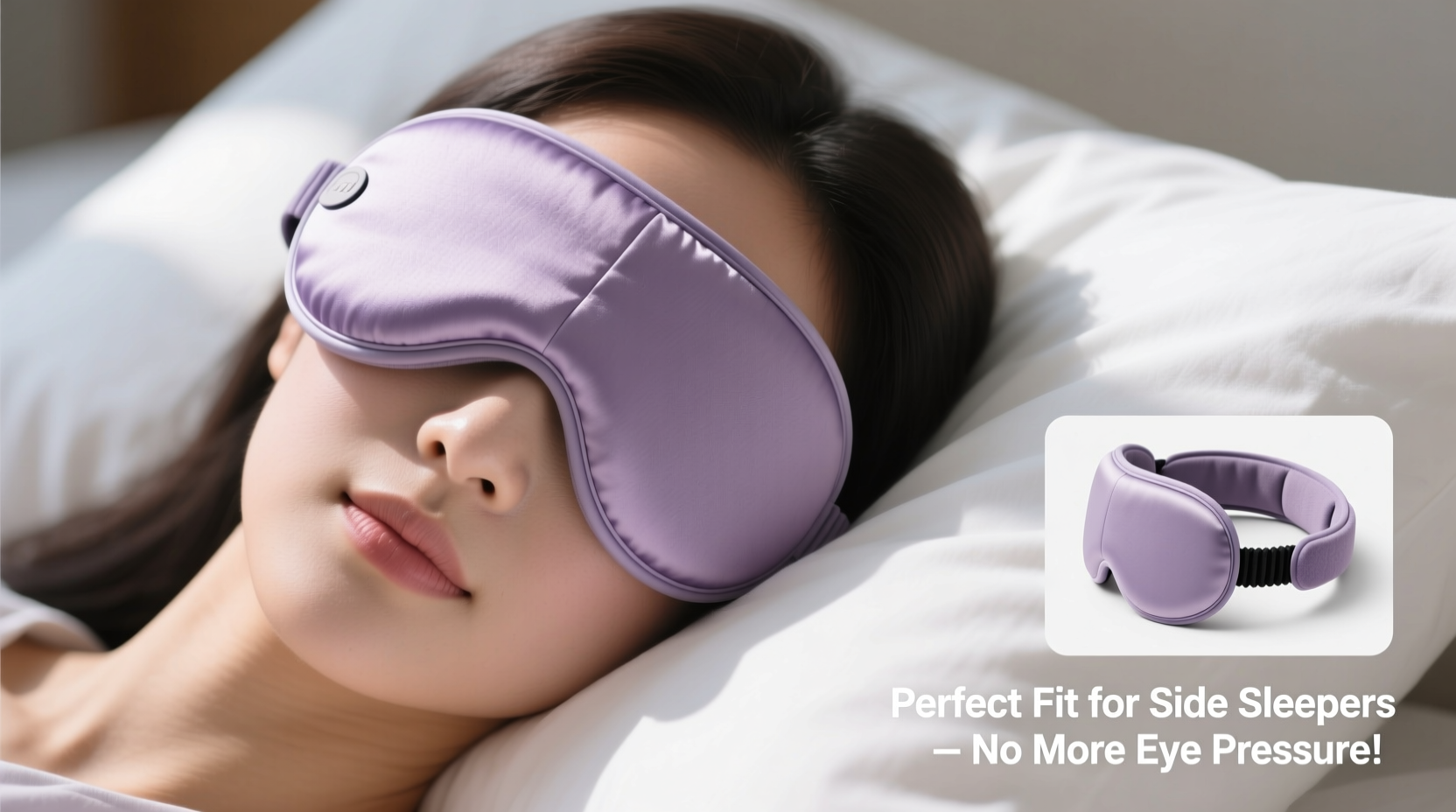
Most off-the-shelf sleep masks are designed with back or stomach sleepers in mind. These typically feature rigid padding or a uniform shape that doesn’t accommodate the angle at which a side sleeper’s face meets the pillow. When lying on your side, the cheekbone and ear area bear direct pressure, and any protrusion from the mask can cause:
- Pain or numbness along the cheek or temple
- Ear discomfort due to compressed foam
- Mask displacement leading to light leakage
- Increased tossing and turning
A study published in the *Journal of Clinical Sleep Medicine* found that physical discomfort from sleep accessories was among the top reasons users abandoned them within the first two weeks. For side sleepers, this issue is amplified by poor design choices that ignore anatomical realities.
“Side sleepers need adaptive support, not just coverage. The mask must follow the curve of the face without pushing into sensitive areas.” — Dr. Lena Patel, Sleep Posture Specialist
Key Features of an Ideal Eye Mask for Side Sleepers
To avoid discomfort and maximize effectiveness, look for these essential characteristics:
Contoured or 3D Design
A contoured mask has sculpted eye cups that create space over the eyes, reducing contact with eyelashes and minimizing pressure. This design allows the mask to sit flush against the face while accommodating facial curves—especially important when one side is pressed into a pillow.
Low-Profile Padding
Thick, bulky foam may block more light but increases pressure on the cheek. Instead, opt for minimal yet effective cushioning made from memory foam or soft gel that compresses gently without rebounding aggressively.
Adjustable Strap with Soft Edges
The strap should be wide enough to distribute tension evenly across the head, preventing tight bands behind the ears. Look for models with silicone-grip inner lining or stretchable fabric that holds securely without needing excessive tightening.
Non-Compression Materials
Materials like microfiber, bamboo-derived fabric, or breathable knits reduce heat buildup and resist deformation under pressure. Avoid vinyl or stiff synthetics that trap moisture and lose shape quickly.
Material Comparison: What Works Best for Side Sleepers
| Material | Pros | Cons | Best For |
|---|---|---|---|
| Bamboo Fabric | Breathable, hypoallergenic, moisture-wicking | May require hand washing | Sensitive skin, hot sleepers |
| Memory Foam | Contours well, blocks light effectively | Can retain heat, harder to clean | Deep sleepers needing full blackout |
| Minky/Cotton Blend | Soft texture, machine washable | Less durable over time | Daily use, moderate side pressure |
| Gel-Infused Foam | Cooling effect, conforms precisely | Heavier, may shift slightly | Menopausal women, overheaters |
Step-by-Step Guide to Choosing Your Ideal Mask
- Assess your sleeping position consistency: Do you stay on one side all night, or switch between sides? If you move frequently, prioritize flexibility and secure straps.
- Measure your head circumference: Use a soft tape measure around the widest part of your head (just above ears). Compare this to product specs to ensure proper fit.
- Evaluate bridge width: A narrow nose bridge prevents light leaks and reduces pressure on the nasal bones. Adjustable bridges offer customization.
- Check internal depth: There should be at least 0.5 inches of clearance between your eyelashes and the inner dome to prevent irritation.
- Test for ear clearance: Some masks extend too far back and press against the outer ear. Try positioning the mask while wearing glasses or headphones to simulate real-world conditions.
- Washability: Choose removable covers or fully machine-washable options to maintain hygiene without degrading structure.
Real-World Example: Sarah’s Journey to Better Sleep
Sarah, a 38-year-old nurse working night shifts, struggled with daytime insomnia. She tried multiple eye masks but found them painful after just 20 minutes of lying on her left side. “It felt like someone was poking my cheekbone,” she said. After switching to a contoured bamboo mask with a split strap design—one that wraps below the ears instead of over them—she reported immediate improvement. “The difference was night and day. No more waking up with red marks or soreness.” Her new mask maintained darkness throughout her eight-hour sleep cycle, even as she shifted positions three or four times.
Checklist: Before You Buy a Sleep Mask as a Side Sleeper
- ✅ Has a 3D or contoured shape to avoid cheek pressure
- ✅ Uses breathable, soft fabric (e.g., bamboo, cotton blend)
- ✅ Features an adjustable, non-slip strap with wide band
- ✅ Allows space for eyelashes (no rubbing)
- ✅ Doesn’t press on the ears or distort hearing
- ✅ Blocks light completely when tested in daylight
- ✅ Is easy to clean and maintain long-term
- ✅ Comes with a trial period or return policy
Frequently Asked Questions
Can I use an eye mask if I wear prescription glasses?
Yes, but choose a mask with a flexible nose bridge and sufficient internal volume. Some users prefer to remove glasses before bed and use a mask afterward. Alternatively, consider a low-profile design that won’t pinch frames against the face.
How do I stop my mask from slipping off at night?
Slippage often results from improper strap tension or slick fabrics. Opt for masks with silicone grip strips inside the headband or dual-layer straps. Washing the strap occasionally also restores friction lost to oils and sweat.
Are weighted eye masks safe for side sleepers?
Generally not recommended. Weighted masks apply downward pressure that can increase discomfort when combined with pillow resistance. Stick to lightweight, ergonomically shaped models instead.
Final Tips for Long-Term Comfort
Even the best mask will degrade over time. Replace yours every 6–12 months depending on usage and care. Rotate between two masks if possible to extend lifespan and allow thorough drying between uses. Store in a cool, dry place away from direct sunlight to preserve elasticity and color.
Take Action Tonight
Your sleep environment should work with your body, not against it. As a side sleeper, you deserve a sleep mask that respects your posture, protects your rest, and disappears into the background of your nightly routine. Don’t settle for discomfort masked as convenience. Use the guidelines above to test, compare, and finally find the perfect fit. Once you experience truly pressure-free darkness, you’ll wonder why you waited so long.




 浙公网安备
33010002000092号
浙公网安备
33010002000092号 浙B2-20120091-4
Comments
No comments yet. Why don't you start the discussion?