
Nighttime movement through urban streets, bike lanes, or rural trails demands more than just determination—it requires visibility. For commuters on foot or by bike and runners logging evening miles, being seen is as critical as the journey itself. Backpack lighting isn’t just an accessory; it’s a fundamental layer of personal safety. Yet with countless options flooding the market—from built-in LED strips to clip-on blinkers—choosing the right system can feel overwhelming. The best backpack lighting balances brightness, durability, ease of use, and compliance with local safety standards. This guide cuts through the noise, offering practical advice grounded in real-world conditions, expert insights, and user-tested performance.
Why Visibility Matters After Dark
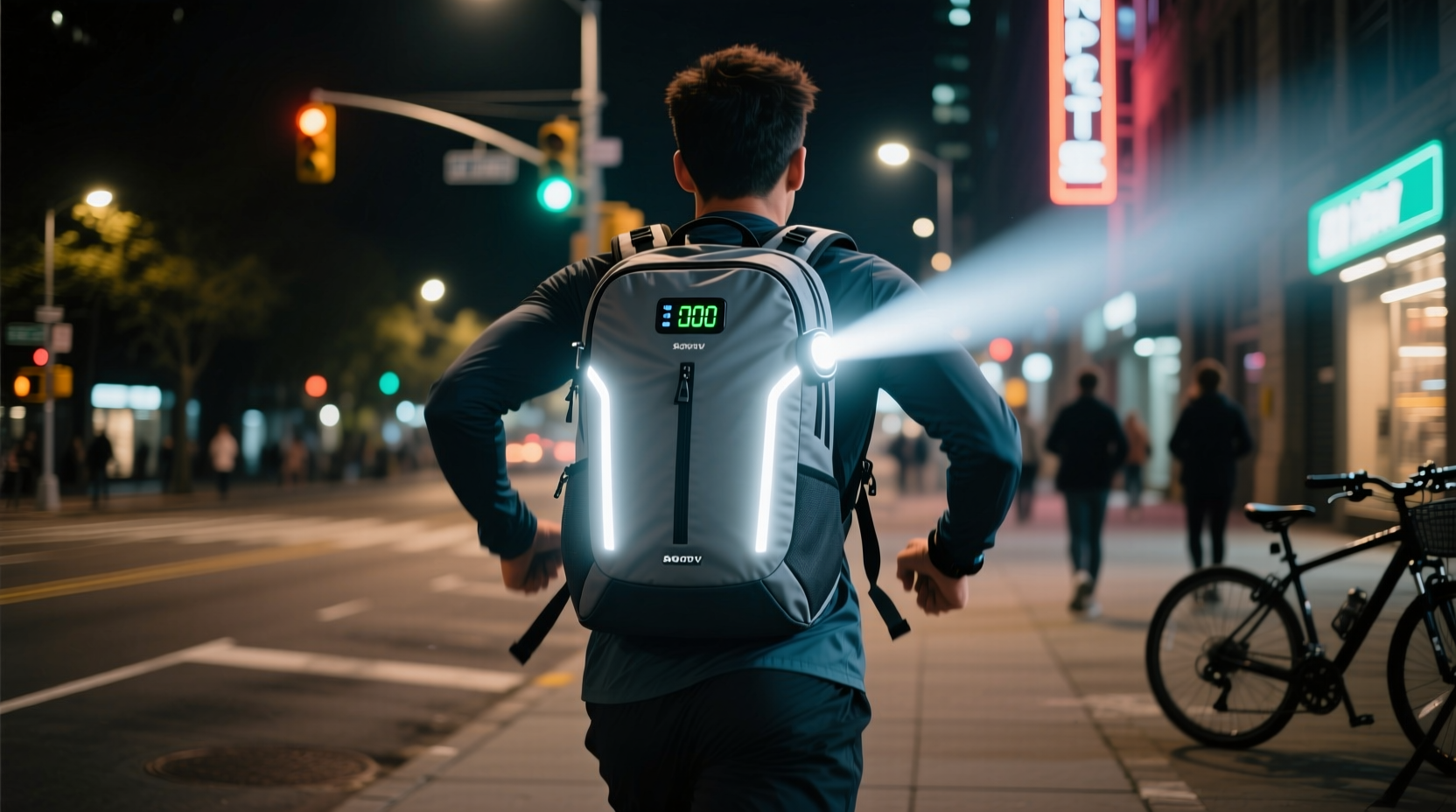
According to the National Highway Traffic Safety Administration (NHTSA), pedestrian fatalities are disproportionately high during nighttime hours, with nearly 75% occurring in low-light conditions. Runners and cyclists face similar risks when sharing roads with vehicles that may not detect them in time. Traditional reflective strips help, but they only reflect light—they don’t emit it. Active lighting, especially on a moving backpack, increases conspicuity from multiple angles, giving drivers crucial extra seconds to react.
A well-lit backpack enhances vertical visibility. Since most vehicle headlights are aimed forward and slightly downward, lights placed at torso height stand out more than ankle-level reflectors. Moreover, motion patterns created by a bouncing or swaying illuminated pack help drivers distinguish humans from static objects like signs or guardrails.
“Active lighting on upper-body gear significantly improves detection distance—by up to 400% in some studies.” — Dr. Lena Peterson, Human Factors Researcher at the Transportation Safety Institute
Key Features to Evaluate in Backpack Lighting
Not all lights serve the same purpose. A runner needs different performance characteristics than a commuter carrying a laptop. Below are the core technical and functional elements to assess before purchasing.
Brightness and Beam Patterns
Measured in lumens, brightness determines how far and wide your light projects. However, higher isn’t always better. For backpack use, 50 to 200 lumens is typically sufficient—enough to be seen without blinding others. More important than raw output is beam pattern:
- Strobe mode: Highly effective for attracting attention; ideal for high-traffic zones.
- Solid beam: Best for consistent visibility on unlit paths.
- Pulsing or fading: Mimics natural motion, improving depth perception for drivers.
Battery Life and Rechargeability
A light that dies halfway through your commute defeats its purpose. Look for models offering at least 6–10 hours on steady mode and 15+ on eco-blink settings. USB-rechargeable units eliminate the need for disposable batteries, reducing long-term cost and environmental impact. Some premium backpacks integrate solar charging, though these are still niche and weather-dependent.
Weather Resistance
Rain, fog, and road spray are inevitable. Ensure any lighting system has an IPX4 rating or higher (resistant to splashing water). Fully sealed housings prevent corrosion and short circuits over time.
Mounting Flexibility and Stability
The light must stay securely attached, even during vigorous movement. Options include:
- Integrated panels sewn into the backpack fabric
- Magnetic or snap-on modules
- Adjustable straps or bungee cords for universal fit
Integrated systems look cleaner but limit upgrade paths. Modular setups offer adaptability across multiple bags.
Choosing Based on Activity Type
Your primary use case should dictate your selection criteria. What works for a daily train rider may fall short for trail runners.
Urban Commuters (Walkers & Cyclists)
Commuters often move through mixed traffic and crosswalks where sudden attention is key. Prioritize lights with multiple modes—especially daytime-visible strobes—and wide-angle dispersion. A red taillight-style setup is standard, but adding side-facing LEDs improves intersection safety. Consider backpacks with smart sensors that activate lights automatically at dusk.
Runners (Road & Trail)
Runners benefit from dynamic lighting that emphasizes motion. Synchronized blink patterns or color-shifting LEDs can make you more recognizable as a human form. Lightweight, low-profile designs prevent bounce and chafing. Battery weight distribution matters too—a top-mounted heavy light can throw off balance over long distances.
Long-Distance Cyclists
For those covering miles after sunset, endurance is paramount. Pair your backpack light with front and rear bike lights for layered visibility. Choose a model with programmable modes so you can switch between high-visibility city settings and low-glare rural ones. Some riders prefer diffused panels over focused beams to avoid creating “hotspots” that distract nearby traffic.
Comparison Table: Lighting Types by Use Case
| Light Type | Best For | Pros | Cons |
|---|---|---|---|
| Built-in LED Panel | Daily commuters | Sleek design, reliable connection | Hard to replace if damaged |
| Clip-On Flashlight | Budget users, occasional use | Affordable, portable | Easily lost, limited angles |
| Magnetic Detachable Module | Multi-use travelers | Transferable between packs | Can detach under strong vibration |
| Reflective + Active Hybrid | All-weather runners | Passive and active safety combined | Higher initial cost |
Step-by-Step Guide to Selecting Your Ideal Setup
Follow this sequence to ensure no detail is overlooked when choosing your backpack lighting:
- Assess your typical route. Is it well-lit or dark? Are there intersections, roundabouts, or blind curves?
- Determine usage frequency. Daily use warrants investment in durable, rechargeable systems.
- Check your backpack compatibility. Does it have attachment points, loops, or integrated wiring?
- Select light type based on activity. Refer to the comparison table above.
- Test visibility range. Ask a friend to view your light from 50–100 meters away at night.
- Verify battery logistics. Can you charge it at work or home? How often will you forget?
- Install and adjust placement. Aim for center-back, above waist level, with clear line-of-sight to traffic.
Real-World Example: Sarah’s Safer Evening Runs
Sarah, a 32-year-old software developer in Portland, began running after work to manage stress. Her neighborhood had dim streetlights and frequent delivery trucks turning onto residential streets. Initially, she relied on reflective stripes on her shoes and vest. One October evening, a driver turning left failed to yield, narrowly missing her. A bystander later told her, “I saw you, but I don’t think he did.”
She upgraded to a backpack with a vertical LED strip featuring alternating pulse patterns. Within days, fellow runners and drivers alike gave her wider berth. She also noticed increased eye contact from motorists at crossings. Over six months, she logged over 200 miles without another close call. “It’s not just about being seen,” she said. “It’s about feeling confident that I *will* be seen.”
Common Mistakes to Avoid
- Using white lights facing backward. White is reserved for headlights. Rear-facing lights should be red to avoid confusing oncoming traffic.
- Overloading with too many blink patterns. Excessive flashing can appear erratic or emergency-related, causing confusion.
- Ignoring mounting stability. A dangling light reduces effectiveness and may snag on doors or branches.
- Forgetting maintenance. Dust, moisture, and loose contacts degrade performance over time. Clean contacts monthly.
- Assuming one size fits all. A light perfect for cycling may be too bright or bulky for walking.
Frequently Asked Questions
Can I use my phone flashlight as backup lighting?
In emergencies, yes—but it’s suboptimal. Phone flashlights are rarely visible beyond 30 feet, drain battery quickly, and aren’t positioned at optimal height. They should supplement, not replace, dedicated lighting.
Are there legal requirements for backpack lights?
While few jurisdictions mandate backpack-specific lights, many require pedestrians and cyclists to be visible at night. In cities like New York and Chicago, runners must wear reflective material or active lights between sunset and sunrise. Check local ordinances, especially if using trails shared with bikes.
How do I clean and maintain my backpack lighting system?
Wipe down the housing with a damp cloth monthly. For removable units, disconnect and inspect terminals for corrosion. Never submerge non-IP67-rated units. Store in a dry place when not in use for extended periods.
Expert Checklist: Final Pre-Deployment Review
Before relying on your lighting in real conditions, run through this verification list:
- ✅ Light produces a clear, consistent beam (no flickering)
- ✅ Mounted securely and aligned rearward
- ✅ Red in color for back-facing orientation
- ✅ Fully charged and tested in darkness
- ✅ Weather-resistant seals intact
- ✅ Does not interfere with backpack zippers or shoulder straps
- ✅ Complies with local visibility regulations
Conclusion: Make Safety a Habit, Not a Reaction
Choosing the right backpack lighting isn’t about chasing the brightest or flashiest option—it’s about making intentional, informed decisions that align with your routine and environment. Whether you're dashing to catch a train or pushing pace on a midnight run, visibility is non-negotiable. The right setup blends seamlessly into your gear while dramatically reducing risk. Start by auditing your current habits, then invest in a system that meets both performance and practicality standards. Safety doesn’t have to be loud or cumbersome. Sometimes, it’s just a steady glow in the dark, signaling: *I’m here. I’m moving. See me.*




 浙公网安备
33010002000092号
浙公网安备
33010002000092号 浙B2-20120091-4
Comments
No comments yet. Why don't you start the discussion?