
Choosing the right backpack for a weekend trip isn’t just about style or brand preference—it’s about comfort, functionality, and ensuring your gear fits without strain. Too small, and you’ll be forced to overpack or leave essentials behind. Too large, and the excess bulk can throw off your balance, lead to poor posture, and make movement cumbersome. The ideal backpack strikes a balance between capacity, weight distribution, and personal fit. This guide walks you through the key considerations—from volume and torso length to load management—so you can travel light, stay comfortable, and focus on the journey.
Understand Backpack Volume: What Size Do You Really Need?
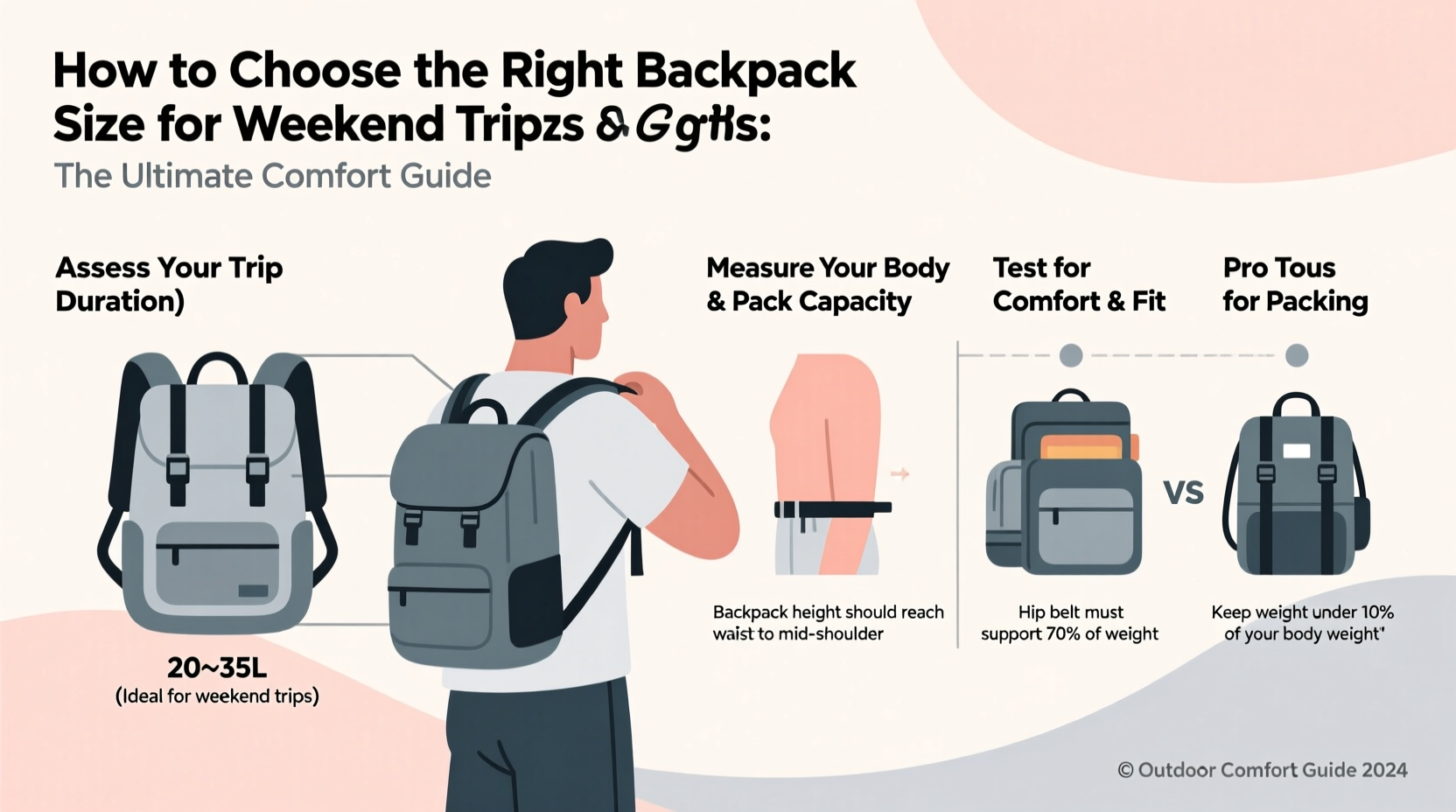
Backpacks are typically measured in liters, indicating their total carrying capacity. For weekend trips lasting 48 to 72 hours, most travelers find that 30 to 50 liters is sufficient. However, the exact size depends on several factors: season, destination, clothing needs, and whether you're hiking or staying in accommodations with laundry access.
A minimalist urban traveler might thrive with a 30–35L pack, while someone heading into cooler climates or planning outdoor activities may need closer to 45–50L to accommodate layers, rain gear, and equipment.
| Trip Type | Recommended Capacity | What It Holds |
|---|---|---|
| City break (2 nights) | 30–35L | Clothes for 2 days, toiletries, tech, jacket |
| Hiking/camping weekend | 40–50L | Sleeping bag, tent, extra layers, food, water |
| Shoulder-season trek | 45L | Insulated clothing, cooking gear, hydration system |
| Minimalist carry-on only | 30–35L | Packing cubes, rollable clothes, essentials |
The key is not to default to larger sizes “just in case.” Excess space encourages overpacking, which increases weight and reduces stability. A well-packed 35L bag often serves better than an overstuffed 60L model.
Match the Backpack to Your Torso Length
One of the most overlooked aspects of backpack selection is torso fit. A backpack designed for a 16-inch torso will sit awkwardly on someone with a 20-inch frame, leading to shoulder strain, hip belt misalignment, and inefficient weight transfer.
To measure your torso length, stand straight and tilt your head forward slightly. Locate the C7 vertebra—the prominent bump at the base of your neck. From there, run a flexible tape measure down your spine to the top of your hip bones (iliac crest). Most adult torsos range from 15 to 20 inches.
Once measured, consult manufacturer sizing charts. Many premium brands offer small, medium, and large backpanel options. Some even provide adjustable suspension systems that let you fine-tune the harness on the fly.
“Proper torso fit ensures the hip belt carries 80% of the load, not your shoulders. That’s the difference between arriving energized or exhausted.” — Daniel Ruiz, Outdoor Gear Specialist, REI Co-op
Signs of Poor Torso Fit
- The hip belt sits above the hips or digs into the stomach
- Shoulder straps pull forward or gap at the chest
- Top of the pack extends above your headline, obstructing vision
- You feel pressure concentrated on the shoulders rather than hips
If you're between sizes, opt for the smaller backpanel if you have shorter legs or a compact build. Taller individuals with longer torsos should prioritize extended harness systems.
Load Distribution and Frame Type Matter
Backpacks come in three primary structural types: internal frame, external frame, and frameless. Each affects how weight is carried and impacts comfort during movement.
Internal Frame Packs
Most common for weekend travelers, internal frame packs feature a rigid structure sewn inside the fabric. They hug the back closely, offering excellent weight transfer to the hips and better balance on uneven terrain. Ideal for hikers and mixed-use travelers who value agility.
External Frame Packs
Rare today but still used in heavy-load scenarios, these elevate the pack away from the back, improving ventilation. However, they’re less stable and harder to maneuver in tight spaces like trains or city streets.
Frameless Packs
Lightweight and simple, often used for ultralight trips under 35L. They rely on packed items for structure and work best when loads are under 15 pounds. Not recommended for those with back sensitivity or long-distance walking.
Regardless of type, ensure the backpack has a load-lifter strap—small webbing straps connecting the top of the shoulder harness to the pack body. These help pull the top inward, stabilizing the center of gravity and reducing shoulder fatigue.
Step-by-Step: How to Test a Backpack Before Buying
Selecting a backpack online is convenient, but nothing replaces a physical trial. Follow this step-by-step process to evaluate fit and function before committing.
- Gather a test load: Pack ~10–15 lbs (4.5–7 kg) of books or weights to simulate a real weekend kit.
- Wear the backpack: Put it on and fasten both the hip belt and sternum strap.
- Adjust the shoulder straps: Tighten until snug but not constricting. The weight should settle into your hips, not hang from your shoulders.
- Check hip belt position: The center should rest squarely on your iliac crest, not on your stomach or lower back.
- Move around: Walk, bend, twist, and climb stairs. Listen to your body—any pinching, rubbing, or shifting indicates poor ergonomics.
- Evaluate access points: Can you reach your water bottle? Is the main compartment easy to open while wearing it?
- Assess ventilation: After five minutes of movement, check for sweat buildup along the back panel.
If buying online, research return policies and favor brands that offer free exchanges. Many outdoor retailers now include video fitting guides and virtual chat support to help match you with the right model.
Real-World Example: Choosing Between Two Popular Models
Sophia planned a two-night hiking trip through the Cascade foothills in early autumn. She narrowed her choice to two well-reviewed packs: the Osprey Talon 33 (33L) and Deuter Speed Lite 40 (40L).
At first glance, the Deuter seemed more spacious. But Sophia measured her torso (17.5 inches) and found the Talon’s adjustable AirSpeed suspension matched perfectly. The Deuter, though larger, had a fixed backpanel better suited for taller frames.
She also considered her packing list: quick-dry clothes, a lightweight sleeping bag, rain jacket, snacks, and a hydration bladder. Total estimated weight: 12 lbs. The Talon’s 33L capacity was ample, and its mesh-covered frame provided superior airflow during uphill climbs.
In the end, she chose the smaller, better-fitting pack—and completed her hike without discomfort. “I thought more space meant more convenience,” she said later. “But I realized that proper fit made all the difference. I barely noticed the pack after the first mile.”
Essential Packing Tips for Maximum Comfort
Even the best-fitting backpack becomes uncomfortable if poorly packed. How you distribute weight inside the bag directly affects balance and strain.
Follow the Golden Rule of Load Layering:
- Bottom: Soft, rarely accessed items (sleeping bag, spare clothes)
- Middle: Heaviest gear close to your back (food, stove, water reservoir)
- Top: Frequently used items (jacket, snacks, first aid)
- Outside: Quick-access gear (rain cover, water bottles, tripod)
Keeping dense items near your spine maintains a low center of gravity and prevents the pack from pulling backward. Avoid placing heavy objects at the top or bottom extremes.
Use compression sacks or packing cubes to eliminate air pockets and keep contents organized. A tightly packed bag moves as one unit with your body, reducing bounce and friction.
“Weight placement is as important as pack size. A 35L pack with smart loading feels lighter than a disorganized 30L.” — Lena Torres, Ultralight Backpacking Instructor
Weekend Trip Backpack Checklist
Before finalizing your purchase, verify that the backpack supports your intended use. Use this checklist to assess suitability:
- ✅ Fits your torso length (measured accurately)
- ✅ Hip belt adjusts securely and transfers weight properly
- ✅ Volume matches trip duration and climate needs (30–50L)
- ✅ Has dedicated compartments for laptop, water bladder, or dirty shoes
- ✅ Features multiple access points (top, front, side zippers)
- ✅ Includes attachment points for trekking poles, ice axe, or helmet
- ✅ Made from durable, weather-resistant material (e.g., 400D nylon or recycled ripstop)
- ✅ Weighs under 3.5 lbs (1.6 kg) empty for optimal efficiency
- ✅ Offers adequate ventilation (mesh back panel or suspended design)
- ✅ Compatible with airline carry-on size restrictions (if flying)
Frequently Asked Questions
Can I use a 20L backpack for a weekend trip?
Only if you're an extreme minimalist traveling in warm weather with access to laundry. Most people need at least 30L to comfortably carry clothes, toiletries, and essentials for two nights. A 20L pack works for day trips or overnight urban stays with minimal gear.
Is a 50L backpack too big for a weekend?
It can be—if you’re not careful. A 50L pack is ideal for camping weekends, cold-weather trips, or destinations where resupply isn’t possible. But if used for simple city breaks, it encourages overpacking. Consider compressing the top or using internal dividers to reduce usable volume.
How do I know if my backpack is too heavy?
As a general rule, your loaded backpack should not exceed 20% of your body weight. For a 150 lb (68 kg) person, that’s 30 lbs (13.6 kg). Signs of excess weight include shoulder grooves, lower back pain, difficulty balancing, or needing frequent rest stops. Repack with lighter alternatives when possible.
Final Thoughts: Prioritize Fit Over Features
Selecting the right backpack size for weekend trips goes beyond numbers on a label. It’s about how the pack integrates with your body, supports your itinerary, and enhances—not hinders—your experience. While features like hydration sleeves and USB ports are nice, they mean little if the hip belt rides up or the shoulder straps dig into your collarbone.
Invest time in measuring your torso, testing load distribution, and simulating real-world conditions. Choose a pack that balances capacity with comfort, and remember: the best backpack is the one you forget you're wearing.




 浙公网安备
33010002000092号
浙公网安备
33010002000092号 浙B2-20120091-4
Comments
No comments yet. Why don't you start the discussion?