
Selecting a foundation that blends seamlessly into your skin isn’t just about matching surface color—it’s about understanding what lies beneath. Undertone is the invisible base of your complexion, and when it’s warm, choosing the wrong foundation can leave you looking sallow, orange, or ashy no matter how close the shade appears in the bottle. Too many people rely on guesswork, swatching on their hands, or trusting artificial store lighting, only to end up with mismatched results by midday. The truth is, identifying and matching warm undertones doesn’t have to be confusing. With the right approach, tools, and awareness, you can find a foundation that looks like skin, not paint.
Understanding Warm Undertones: The Foundation of Your Match
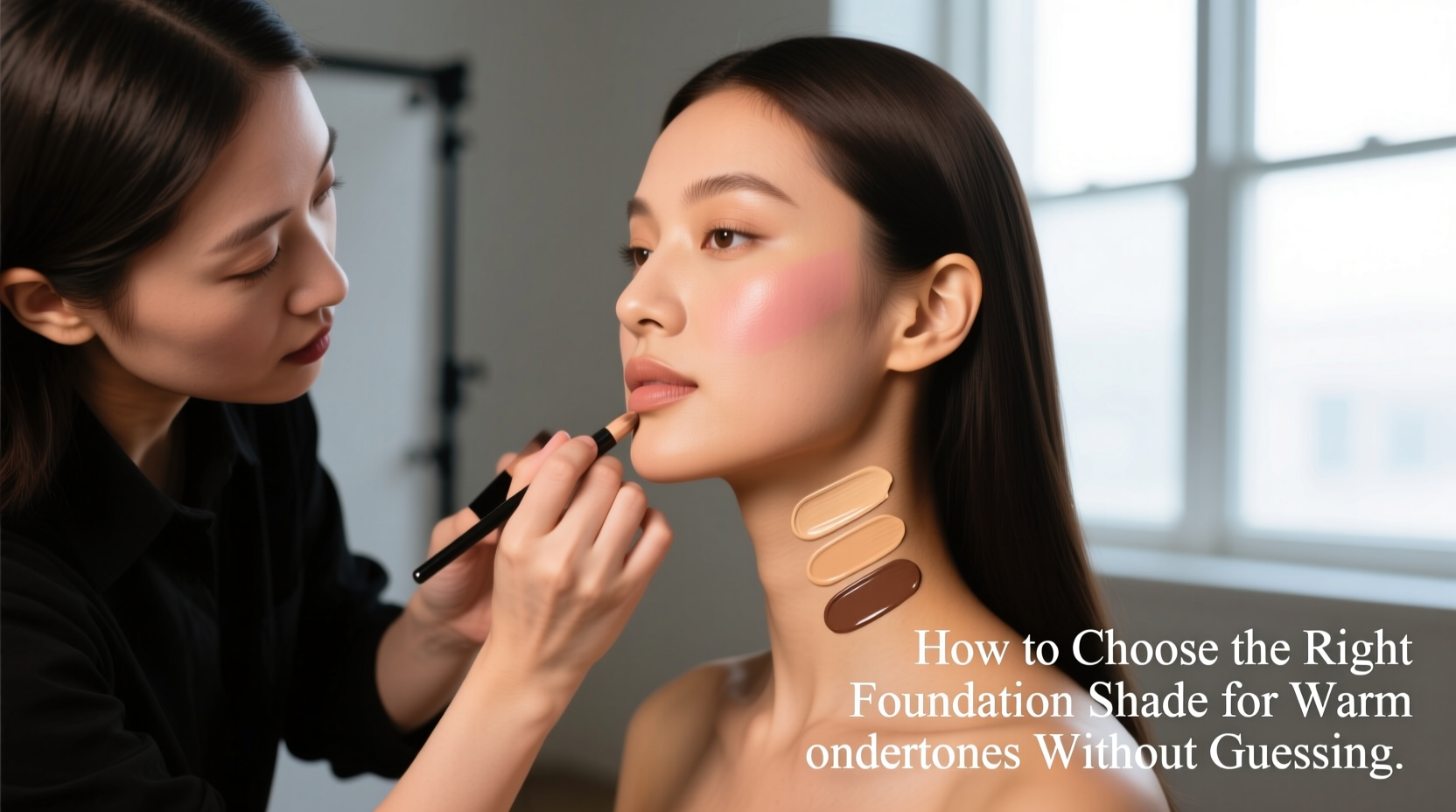
Your skin’s undertone is the subtle hue beneath the surface—distinct from your visible skin tone, which can change due to sun exposure, acne, or makeup. There are three primary undertones: warm, cool, and neutral. Warm undertones lean toward yellow, golden, peachy, or olive hues. If your veins appear greenish rather than blue, gold jewelry enhances your glow, and you tan easily instead of burning, you likely have warm undertones.
Warm undertones are often misunderstood because they don’t always align with skin depth. A person with very fair skin can still have warm undertones (like ivory with a yellow base), just as someone with deep skin may have rich golden or red-gold undertones. This is why “light,” “medium,” or “deep” labels alone aren't enough—they describe depth, not tone.
“Foundation matching isn’t about finding the closest color—it’s about syncing with the chemistry of your skin. Warm undertones need warmth in the formula, not just a number on a scale.” — Lila Monroe, Celebrity Makeup Artist & Color Consultant
The Science Behind Skin and Shade Matching
Skin reflects light differently based on melanin concentration and underlying pigments. Warm undertones contain more pheomelanin (a reddish-yellow pigment), which interacts uniquely with foundation formulas. When a foundation lacks this warmth, it disrupts the natural harmony, creating a grayish or washed-out effect—even if the shade seems correct at first glance.
Lighting plays a crucial role. Most retail environments use fluorescent or overly yellow bulbs that distort color perception. A shade that looks perfect under bright white lights might look completely different in natural daylight. This is why dermatologists and makeup artists emphasize testing foundation in multiple lighting conditions.
Additionally, oxidation—a chemical reaction between your skin’s pH and the foundation—can cause some formulas to darken or shift within minutes of application. Foundations with warm bases tend to oxidize less dramatically on warm-toned skin, making them more stable throughout the day.
A Step-by-Step Guide to Finding Your Perfect Warm-Toned Foundation
Choosing the right foundation without guessing requires a methodical process. Follow these steps to eliminate uncertainty and build confidence in your match.
- Determine your undertone definitively. Use the vein test (green = warm), jewelry test (gold flatters = warm), or white vs. cream fabric test (cream looks better = warm). For accuracy, do all three.
- Identify your depth level. Compare your clean, moisturized face in natural light to a shade chart. Is your skin fair, light-medium, medium, tan, deep, or rich? Be honest—sun tans fade, but your baseline doesn’t.
- Narrow to warm-based lines. Look for foundations labeled “warm,” “golden,” “yellow,” “peach,” or “olive.” Avoid terms like “cool,” “pink,” “rose,” or “beige” unless specified as neutral-warm.
- Swatch 2–3 candidate shades. Apply thin strips along your jawline in natural daylight. Wait five minutes for oxidation. The correct shade will disappear into your skin.
- Check indoor and outdoor lighting. Move near a window, then step outside. A true match remains consistent across environments.
- Observe after one hour. Some foundations shift due to sebum, sweat, or oxidation. Reassess later to ensure longevity of the match.
Real Example: Maria’s Foundation Breakthrough
Maria, a 34-year-old with light-medium skin and persistent dullness, had been using a “natural beige” foundation for years. It looked okay in the store but made her look tired by noon. She assumed she needed a lighter shade. After learning about undertones, she tested a warm golden alternative—one she initially thought was too yellow. In daylight, it blended invisibly. Her skin looked radiant, even, and alive. The difference wasn’t depth—it was warmth. By switching to a warm-based formula, she finally achieved a second-skin finish.
Do’s and Don’ts When Matching Warm Undertones
| Do’s | Don’ts |
|---|---|
| Test foundation on your jawline in natural light | Swatch on your hand or forearm |
| Look for keywords like “golden,” “yellow,” or “warm” in the name | Assume “natural” or “nude” means it’s right for you |
| Use daylight-balanced lighting at home for testing | Rely solely on smartphone flash or bathroom lighting |
| Layer with your regular moisturizer before swatching | Test on dry or exfoliated skin that doesn’t reflect your daily routine |
| Ask for samples before committing to a full bottle | Buy online without trying first, especially from brands with narrow shade ranges |
Top Foundation Features for Warm Undertones
Not all foundations are created equal when it comes to accommodating warm undertones. Here’s what to look for in a formula designed to enhance—not mask—your natural warmth.
- Yellow or golden pigment base: Ensures harmony with your skin’s underlying tone.
- Buildable coverage: Allows you to customize opacity while maintaining a natural finish.
- Oxidation resistance: Prevents dramatic darkening after application.
- Hydration balance: Dry skin magnifies undertone mismatches; oily skin can break down pigment unevenly.
- Inclusive shade ranges: Brands like Fenty Beauty, IT Cosmetics, and NARS offer extensive warm and deep-warm options.
Finding Warm Shades Online: A Strategic Approach
With so many shopping online, guessing becomes inevitable—unless you apply strategy. Start by identifying one physical store where you can test two or three potential matches. Once confirmed, note the exact shade names and numbers. Then, purchase refills online with confidence.
Watch video reviews from influencers with similar skin tones. Pay attention to how the foundation behaves in motion and changing light—not just in studio shots. Search hashtags like #warmundertone or #goldenfoundation on Instagram or TikTok to see real-world applications.
Some brands now offer virtual try-on tools using augmented reality. While not perfect, they can help narrow choices when combined with other research. Always cross-reference digital tools with real-user feedback.
Common Mistakes That Lead to Mismatched Warm Foundations
Even informed buyers make errors. These pitfalls are especially common among those with warm undertones:
- Trusting the bottle label over real-life results: A shade named “Caramel” might still have cool undertones depending on the brand.
- Ignoring seasonal changes: Skin tone shifts slightly with sun exposure. You may need two foundation shades—one for winter, one for summer—both warm-based but different in depth.
- Over-relying on primer or setting powder: These products can alter foundation appearance. Test your full routine together.
- Using outdated samples: Foundations expire. Old samples may have oxidized or separated, giving false readings.
“I’ve seen clients spend hundreds on high-end foundations that clash because they skipped the lighting test. Five minutes in daylight saves hours of regret.” — Jamal Reyes, Master Makeup Technician, NYC Institute of Aesthetic Arts
Foundation Matching Checklist for Warm Undertones
Use this checklist every time you evaluate a new foundation:
- ✅ I’ve confirmed my undertone using at least two tests (veins, jewelry, or fabric).
- ✅ I’m testing on my jawline, not my hand.
- ✅ I’m using natural daylight or a daylight-balanced lamp.
- ✅ I’ve applied my usual moisturizer before swatching.
- ✅ I’ve waited 5–10 minutes to check for oxidation.
- ✅ The foundation disappears into my skin without a visible line.
- ✅ I’ve checked the shade indoors and outdoors.
- ✅ I’ve observed how it looks after one hour of wear.
- ✅ The formula suits my skin type (oily, dry, combination).
- ✅ I’ve verified the shade name includes warm indicators (e.g., W, G, GOLD, WARM).
Frequently Asked Questions
Can I have warm undertones and still look good in pink-based makeup?
Generally, no. While blushes and lipsticks can introduce contrast, your base should harmonize with your undertone. Pink-based foundations on warm skin create a dissonance that reads as “off” or fatigued. Warm-toned individuals usually thrive in peach, coral, honey, or golden hues in both foundation and color cosmetics.
I tan easily—does that mean my undertone is warm?
Tanning ability is a strong indicator, but not definitive alone. People with warm undertones typically tan rather than burn, but some neutral-cool types can also develop a tan over time. Combine this clue with others—like how gold vs. silver jewelry looks on you—for a clearer picture.
What if a brand doesn’t label undertones in their shades?
Study the naming convention. For example, “Almond 3W” likely means “warm,” while “Honey 2N” suggests neutral. Look for user reviews mentioning undertones. If in doubt, contact customer service—many brands now provide detailed undertone maps upon request.
Final Thoughts: Confidence Starts with a True Match
Choosing the right foundation for warm undertones isn’t about luck or intuition—it’s about precision, observation, and consistency. When your foundation aligns with your skin’s natural chemistry, you don’t just look better; you feel more like yourself. No more adjusting selfies to hide ashy patches or reapplying concealer to fix discoloration. A perfect match lets your features shine without interference.
The process takes effort, but it pays off every single day. Once you’ve locked in your ideal warm-toned shade, you’ll wonder how you ever settled for less. Stop guessing. Start matching with purpose.




 浙公网安备
33010002000092号
浙公网安备
33010002000092号 浙B2-20120091-4
Comments
No comments yet. Why don't you start the discussion?