
Selecting the right lunch box is more than a matter of convenience—it affects food safety, freshness, portability, and long-term value. With so many designs on the market, the choice often comes down to two main categories: soft-sided and hard-sided containers. Each has distinct advantages depending on lifestyle, diet, and environment. Understanding the differences helps ensure your meals stay safe, organized, and enjoyable from kitchen to desk or school.
Understanding Soft-Sided Lunch Boxes
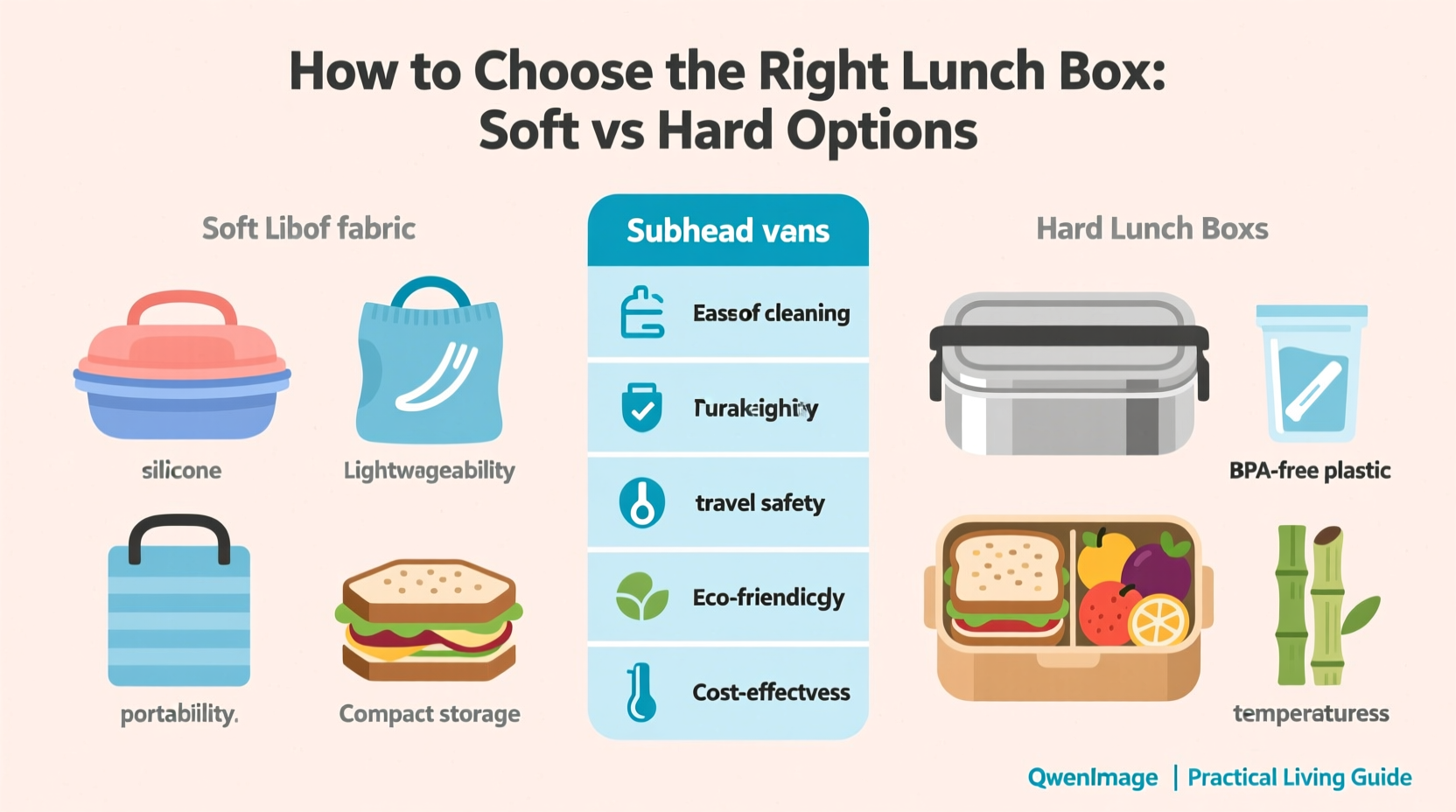
Soft lunch boxes are typically made from insulated fabric with a zippered closure and often include an interior lining that’s easy to wipe clean. These are lightweight and flexible, making them ideal for people who prioritize portability and compact storage when not in use.
Most soft models feature thermal insulation designed to keep food at safe temperatures for several hours. Many come with removable ice packs or have pockets to insert your own. Their pliable structure allows them to fit into crowded backpacks or under airplane seats without adding bulk.
However, soft lunch boxes lack rigidity, which means they offer little protection against crushing. If packed in a heavy bag or dropped, contents may be damaged—especially glass containers or delicate foods like salads.
Exploring Hard-Sided Lunch Containers
Hard lunch boxes are constructed from rigid materials such as plastic, stainless steel, or aluminum. They maintain their shape regardless of external pressure and often feature multiple compartments to separate food items. This structural integrity makes them excellent for protecting fragile contents and preventing leaks.
Many hard models integrate built-in cooling systems or are compatible with reusable gel packs. Some advanced versions even include vacuum sealing or phase-change materials for extended temperature retention. Their durability also makes them suitable for outdoor activities, travel, or industrial work environments.
On the downside, hard containers are heavier and less space-efficient when stored empty. They may not fit easily into small bags and can be noisy if metal components clang together.
“Thermal performance isn’t just about insulation—it’s about material density and air-tight seals. Hard containers generally outperform soft ones in both heat retention and impact resistance.” — Dr. Lena Patel, Food Safety Researcher at EcoTherm Labs
Key Factors When Choosing Between Soft and Hard Options
The best lunch box depends on individual needs. Consider these critical factors before purchasing:
- Insulation Performance: How long must food remain hot or cold? Soft boxes typically hold temperatures for 3–4 hours; high-end hard models can exceed 8 hours.
- Durability: Will it be carried in a gym bag, tossed in a trunk, or used by a child? Hard cases resist damage better.
- Weight and Portability: Commuters and students benefit from lighter soft models.
- Cleaning Ease: Fabric interiors can absorb spills; hard plastic or stainless steel wipes clean effortlessly.
- Aesthetics and Customization: Soft boxes come in more colors and patterns; hard models tend toward minimalist designs.
Comparison Table: Soft vs Hard Lunch Boxes
| Feature | Soft-Sided | Hard-Sided |
|---|---|---|
| Weight | Light (8–16 oz) | Moderate to Heavy (1–3 lbs) |
| Temperature Retention | 3–5 hours | 6–10+ hours |
| Durability | Low to Medium (prone to punctures) | High (impact-resistant) |
| Storage Efficiency | Folds flat or rolls up | Fixed shape, takes consistent space |
| Leak Protection | Depends on inner container | Often includes sealed compartments |
Real-World Example: A Teacher’s Daily Routine
Sophie, a middle school teacher in Portland, used a soft lunch bag for years because it fit easily into her tote alongside lesson plans and student papers. But during winter field trips, she noticed her soup cooled within two hours, and once, a dropped bag crushed her yogurt container. She switched to a compact hard-sided model with a removable divider and integrated cooling tray. Though slightly heavier, it keeps meals warm until lunchtime and survives rough handling in her car and classroom closet. For her, the trade-off in weight was worth the gain in reliability.
Step-by-Step Guide to Choosing Your Ideal Lunch Box
- Evaluate your daily routine: Do you walk to work, bike, or drive? How much space do you have?
- Assess your meal types: Are you packing soups, salads, or leftovers requiring strict temperature control?
- Determine cleaning preferences: Do you prefer hand-washing fabric or quickly rinsing rigid trays?
- Test compatibility: Ensure the lunch box fits with your existing containers (glass, bento, etc.).
- Check sustainability features: Look for BPA-free materials, recyclable components, and brands with take-back programs.
- Read verified reviews: Focus on feedback related to insulation longevity and zipper durability.
Lunch Box Selection Checklist
- ✅ Matches my daily commute and storage constraints
- ✅ Maintains safe food temperatures for at least 4 hours
- ✅ Easy to clean and resistant to stains/odors
- ✅ Compatible with my preferred food containers
- ✅ Durable enough for regular use and occasional drops
- ✅ Includes secure closure (zipper, latch, or snap)
- ✅ Made from non-toxic, eco-conscious materials
Frequently Asked Questions
Can I put a soft lunch box in the washing machine?
Only if the manufacturer specifies machine-washable materials. Most experts recommend spot-cleaning with a damp cloth and mild detergent to preserve insulation and stitching integrity. Never submerge the entire unit unless explicitly approved.
Are hard lunch boxes microwave-safe?
No—most hard lunch boxes are not designed for microwaving. The outer shell may contain metal components or adhesives that can melt or spark. Always transfer food to a microwave-safe dish before heating.
Which type is better for kids?
For younger children, hard-sided boxes with simple latches and colorful compartments encourage organization and reduce spills. Older kids who carry backpacks may prefer soft models for their lightness and flexibility. Supervise initial use to ensure proper sealing and hygiene.
Final Thoughts and Next Steps
The decision between soft and hard lunch boxes ultimately reflects personal priorities: mobility versus protection, ease of storage versus thermal consistency. There’s no universal “best” option—only what works best for your lifestyle, diet, and environment.
Whether you're fueling a busy school day, navigating a demanding job site, or preparing meals for someone else, investing time in selecting the right container pays off in food quality, safety, and daily convenience. Don’t settle for a lunch box that merely holds food—choose one that preserves it, protects it, and fits seamlessly into your routine.




 浙公网安备
33010002000092号
浙公网安备
33010002000092号 浙B2-20120091-4
Comments
No comments yet. Why don't you start the discussion?