
Red lipstick is timeless—a symbol of confidence, elegance, and boldness. Yet, finding the perfect red can feel like searching for a needle in a haystack. Too blue? It makes you look pale. Too orange? It clashes with your undertone. The truth is, not every red flatters every complexion. But it doesn’t have to be a game of chance.
With the right understanding of skin undertones, lighting, and pigment chemistry, you can pinpoint your ideal red lipstick on the first try. No more swatching dozens of shades or returning unused products. This guide breaks down the science and style behind choosing a red that enhances your natural coloring—efficiently and confidently.
Understand Your Skin’s Undertone
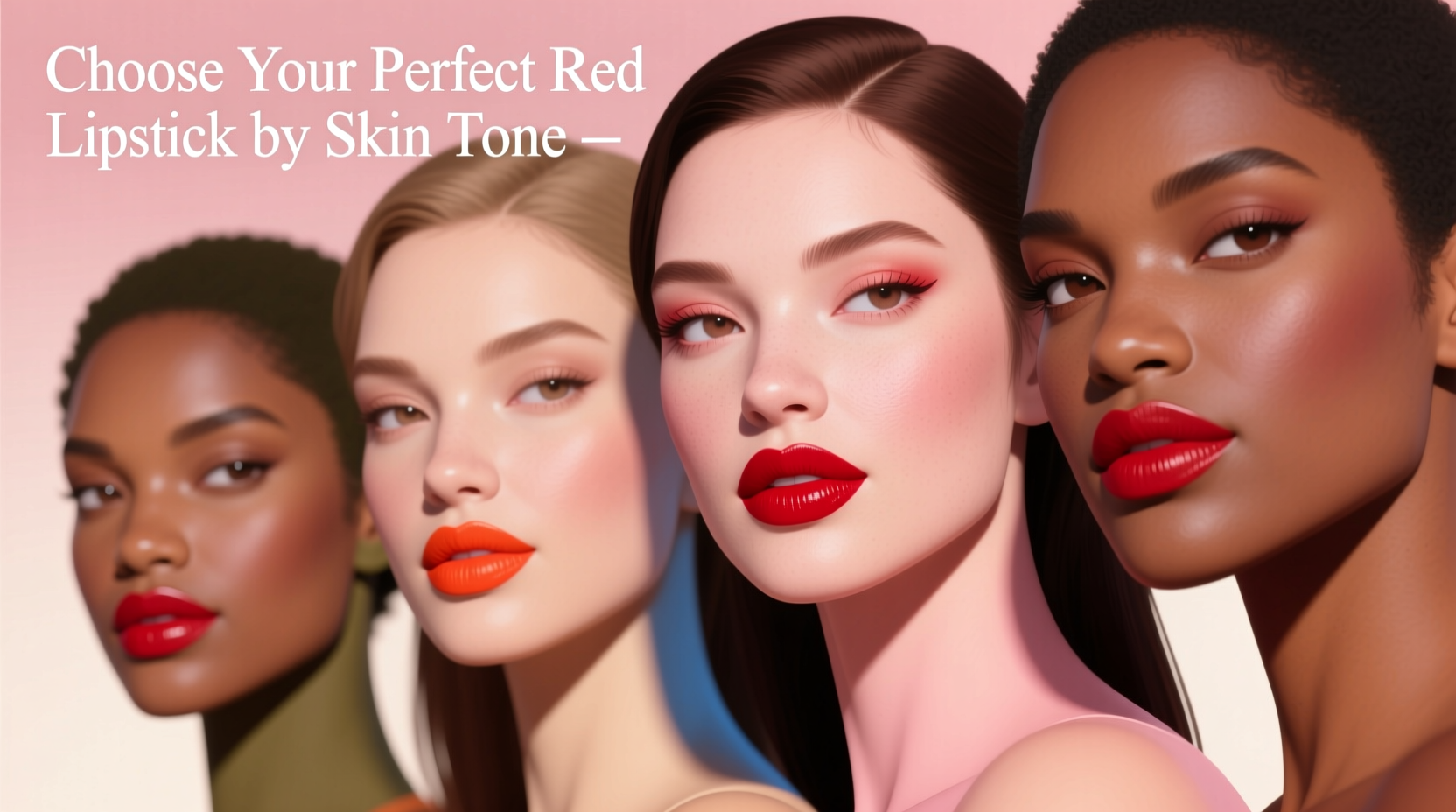
The foundation of selecting the right red lipstick lies in identifying your skin’s undertone—not its surface color, but the subtle hue beneath. There are three primary undertones: cool, warm, and neutral. These determine how colors interact with your complexion.
Cool undertones often have hints of pink, red, or blue in the skin. Warm undertones lean toward yellow, golden, or olive. Neutral undertones are a balanced mix of both. Misjudging this can lead to a red lipstick that drains your face or creates an ashy effect.
To identify your undertone, consider these simple tests:
- Vein Test: Look at the veins on your wrist under natural light. If they appear bluish or purple, you likely have cool undertones. Greenish veins suggest warmth. If it's hard to tell, you may be neutral.
- Jewelry Test: Do silver or gold accessories complement your skin better? Cool undertones usually harmonize with silver; warm ones glow with gold.
- Sun Reaction: If you burn easily and rarely tan, you’re likely cool-toned. If you tan easily and rarely burn, you’re probably warm-toned.
Match Red Lipstick Shades to Your Undertone
Once you’ve identified your undertone, the next step is aligning it with the correct pigment family in red lipstick. Reds are not monolithic—they vary widely in base pigments, which dramatically affect how they appear on different skin tones.
| Undertone | Best Red Lipstick Types | Shade Examples | Avoid |
|---|---|---|---|
| Cool (Pink, Blue) | Blue-based reds, berry-reds, burgundy | Ruby Woo (MAC), Cherry On Top (Fenty) | Orange-reds, coral-reds |
| Warm (Yellow, Golden) | Orange-based reds, tomato reds, brick reds | Lady Danger (NARS), Firecracker (Maybelline) | Blue-toned or fuchsia-leaning reds |
| Neutral | True reds, cherry reds, universal reds | Fire & Ice (Revlon), Heroine (YSL) | Extremely cool or warm extremes |
Cool undertones benefit from blue-based reds because they create harmony rather than contrast. A classic blue-red like MAC’s Ruby Woo enhances fairness and adds vibrancy without washing out porcelain or medium complexions.
Warm undertones thrive with orange-infused reds. These shades echo the golden qualities in the skin, creating a sun-kissed, radiant effect. A tomato red like NARS Lady Danger lifts deeper golden or olive complexions beautifully.
Neutral undertones have the most flexibility. True reds—those balanced between blue and orange—are ideal. They don’t skew too cold or too warm, making them universally flattering. Brands often label these as “classic” or “universal” reds.
“Choosing lipstick isn’t just about preference—it’s chromatic alignment. When pigment complements undertone, the result isn’t just color; it’s radiance.” — Dr. Lila Chen, Cosmetic Color Scientist
Consider Your Complexion Depth
Beyond undertone, the depth—or level—of your skin tone also influences your best red. Fair, medium, tan, and deep skin each interact differently with pigment intensity and saturation.
Fair skin often looks best with bright, high-contrast reds. Deep, vampy reds can overwhelm lighter complexions unless balanced with strong eye makeup. A cherry red or blue-toned pop works well without dominating the face.
Medium skin tones handle a broader range. Classic true reds and slightly deeper berries shine here. Avoid shades that are too muted, as they can dull the complexion.
Tan and deep skin tones can carry richer, bolder reds with ease. Brick reds, oxbloods, and wine-toned reds add drama and sophistication. Very light or pastel reds may appear washed out, so opt for saturated formulas.
Step-by-Step Guide: Find Your Perfect Red in 5 Minutes
You don’t need a makeup artist to find your ideal red. Follow this quick, reliable process to narrow down your options efficiently.
- Assess Your Undertone: Use the vein or jewelry test in daylight. Determine if you’re cool, warm, or neutral.
- Identify Your Skin Depth: Categorize your skin as fair, medium, tan, or deep. Be honest—this helps filter intensity levels.
- Narrow by Pigment Type: Based on your undertone, select either blue-based, orange-based, or true reds.
- Check Finish Preferences: Decide if you prefer matte, satin, gloss, or cream. Matte gives drama; gloss adds youthfulness.
- Test Virtually or on Jawline: Use AR try-on tools (like Sephora Virtual Artist) or apply a small line along your jaw. Does it blend seamlessly or create a stark line?
This method eliminates guesswork. For example, if you’re fair with cool undertones, focus on bright blue-reds in satin or semi-matte finishes. If you’re deep-skinned with warm undertones, explore rich brick or terracotta reds with creamy opacity.
Real Example: Choosing Red for Olive Skin
Maria, a 34-year-old with olive-toned skin (warm-neutral undertone), had always avoided red lipstick, thinking it made her look sallow. She tried several popular “classic” reds, but they leaned too blue and created a grayish cast around her mouth.
After learning about undertones, she realized her skin had warm golden undertones masked by surface neutrality. She switched to orange-based reds like Maybelline’s Firecracker and Fenty’s Uncensored. Instantly, her lips looked vibrant, and her complexion appeared more even and luminous. No more ashy corners—just bold, confident color.
Her mistake wasn’t the shade itself, but mismatched pigment. Once aligned, red became her signature look.
Don’t Overlook Lighting and Formula
Even the most carefully chosen shade can fall flat under poor lighting or with the wrong formula. Fluorescent lights emphasize blue tones, while warm indoor lighting enhances orange hues. Always evaluate a lipstick in multiple environments—natural daylight, office lighting, and evening ambiance.
Formula matters just as much as color. A sheer red may not deliver enough pigment for deeper skin tones, while an ultra-matte version can accentuate dryness on mature lips. Consider your lip texture and lifestyle:
- Dry lips? Opt for hydrating or satin finishes.
- Oily skin? Matte formulas resist transfer and last longer.
- Want longevity? Look for transfer-proof or liquid lipsticks with red pigments that don’t feather.
Also, keep in mind that some reds contain shimmer or pearl finishes. While glamorous, these can highlight fine lines or uneven texture. For a clean, polished look, stick to cream or matte finishes unless you’re aiming for a special occasion sparkle.
Checklist: How to Buy Red Lipstick with Confidence
Before purchasing any red lipstick, run through this checklist:
- ✅ Identified my skin’s undertone (cool, warm, neutral)
- ✅ Matched undertone to correct red family (blue-based, orange-based, true red)
- ✅ Considered my skin depth and chosen appropriate saturation
- ✅ Selected a finish that suits my lip texture and needs (matte, satin, gloss)
- ✅ Tested the shade in natural light or via virtual try-on
- ✅ Checked return policy in case of mismatch
This simple routine turns impulsive buying into strategic selection.
FAQ: Common Questions About Red Lipstick and Skin Tone
Can I wear red lipstick if I have very fair skin?
Absolutely. Fair skin pairs beautifully with blue-based reds like cherry or raspberry. Avoid overly dark or brownish reds, which can look harsh. Stick to bright, crisp tones for balance.
What if I’m neutral but can’t decide between cool and warm?
Start with a true red—the middle ground. Brands like Revlon, YSL, and Charlotte Tilbury offer excellent “universal reds” designed for neutral undertones. Test two shades—one slightly cool, one slightly warm—and see which blends more naturally with your skin.
Do red lipsticks age you?
Not if chosen wisely. Overly dark or matte reds without proper prep can emphasize lip lines. To keep a youthful appearance, exfoliate lips regularly, use a matching liner, and opt for satin or creamy finishes that reflect light softly.
Final Thoughts: Make Red Work for You
Choosing the right red lipstick shouldn’t be a gamble. With a clear understanding of your undertone, skin depth, and the pigment spectrum of red, you can make informed decisions that enhance your natural beauty. The perfect red isn’t just about fashion—it’s about harmony. It should make your eyes brighter, your skin clearer, and your presence more commanding.
No more wasting money on shades that sit unused. No more hesitation before a big event. Armed with this knowledge, you can walk into any store or browse online with confidence, knowing exactly which red will work for you—before you even swatch it.




 浙公网安备
33010002000092号
浙公网安备
33010002000092号 浙B2-20120091-4
Comments
No comments yet. Why don't you start the discussion?