
Selecting a tote bag that fits seamlessly into your daily routine is more nuanced than simply picking one that looks good. The right size can make the difference between feeling organized and prepared versus weighed down and overwhelmed. Whether you're commuting to the office, running errands across town, or transitioning from desk to dinner, your tote should support your lifestyle—not hinder it. With so many sizes, materials, and designs available, knowing what to prioritize helps you avoid buyer’s remorse and ensures long-term satisfaction.
A well-chosen tote balances practicality with personal style. It carries your essentials without straining your shoulder, fits under desks or in subway racks, and complements your wardrobe. But before diving into aesthetics, start with purpose. Your daily responsibilities, carried items, and movement patterns determine the ideal dimensions. This guide breaks down the key factors in selecting the perfect tote size for both professional and everyday use, offering actionable advice grounded in real-world experience.
Assess Your Daily Essentials
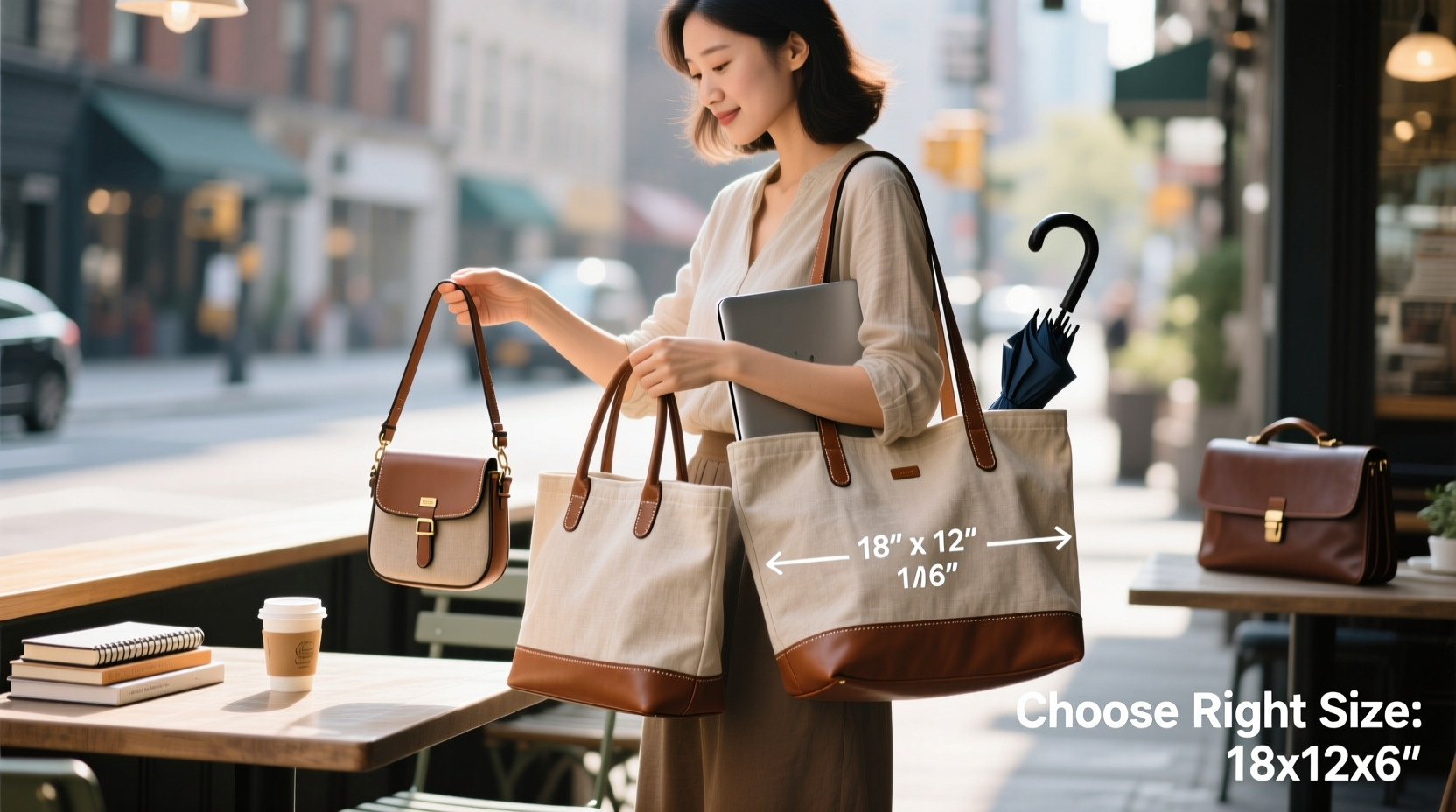
The foundation of choosing the right tote begins with an honest inventory of what you carry every day. A common mistake is selecting a bag based on appearance alone, only to discover later that it doesn’t accommodate a laptop, water bottle, or umbrella. Start by laying out everything you typically bring with you—from work documents and tech devices to personal items like hand cream, snacks, or a change of shoes.
Categorize these items by frequency: daily must-haves, occasional additions, and seasonal needs. For example, someone working in a corporate office may need space for a 13-inch laptop, notebook, wallet, phone, keys, and lunch container. Meanwhile, a freelance designer might also carry sketchbooks, styluses, and extra charging cables. Errand runners could include reusable shopping bags, produce, or pet supplies.
Once you’ve compiled your list, measure the largest item—usually a laptop or tablet—as this will dictate minimum interior dimensions. Most standard laptops fit comfortably in totes starting at 15 inches wide and 12 inches tall. Smaller devices allow for more compact options, but always leave room for padding or a sleeve to prevent damage.
Understand Tote Size Categories
Totes are generally grouped into three size categories: small (mini), medium, and large. Each serves distinct purposes, and understanding their typical measurements and capacities helps narrow your choices.
| Size Category | Typical Dimensions (inches) | Best For | Limits |
|---|---|---|---|
| Small / Mini | 10–12\" W × 8–10\" H × 3–4\" D | Evening outings, light errands, minimalist commuters | Fits phone, wallet, keys, lipstick—no laptop |
| Medium | 13–16\" W × 10–12\" H × 4–5\" D | Daily work commute, hybrid roles, moderate errands | Holds 13\" laptop, notebook, small water bottle |
| Large | 17–20+\" W × 12–14\" H × 5–6\" D | Full workloads, frequent travelers, heavy errand days | Bulky; may exceed airline personal item limits |
While dimensions vary slightly between brands, this framework provides a reliable baseline. Medium totes strike the best balance for most urban professionals and active individuals. They offer enough structure to protect electronics while remaining manageable in crowded spaces. Large totes excel when you’re transporting files, gym clothes, or groceries, but they can become unwieldy if consistently underfilled—empty space leads to disorganization and shifting contents.
“Functionality starts with proportion. A tote should be full enough to justify its size but not overstuffed to the point of distortion.” — Lena Torres, Product Designer at Urban Carry Co.
Consider Ergonomics and Comfort
No matter how stylish or spacious a tote is, discomfort will discourage regular use. Shoulder strain, back pain, and uneven weight distribution are common complaints among tote users—especially those carrying heavy loads over extended periods. The size of the bag directly impacts ergonomics, so consider handle length, weight, and balance.
Longer handles allow for shoulder carry, which distributes weight more evenly than hand-carrying. However, excessively long straps can cause the bag to swing or slip off, particularly with wider totes. Ideally, handles should rest comfortably between 9 and 11 inches from the top edge of the bag, allowing for easy over-the-shoulder wear without dragging.
Weight matters too. A large canvas tote may seem lightweight when empty, but once filled with books, a laptop, and a water bottle, it can easily exceed 8–10 pounds. Over time, this places stress on the dominant shoulder. Look for structured totes with padded linings or reinforced bases that maintain shape and reduce sagging. Some modern designs incorporate removable shoulder pads or crossbody strap attachments for added support.
Additionally, think about how you move through your day. Do you take public transit, bike, or walk several blocks? A bulky tote may be impractical during rush hour or on escalators. If mobility is a priority, opt for a medium-sized tote with clean lines and minimal exterior pockets that won’t snag.
Match Bag Size to Lifestyle Scenarios
Your ideal tote depends heavily on your daily rhythm. Two people with different routines may require vastly different sizes—even if they work in the same industry. Consider these realistic scenarios:
Case Study: Sarah, Marketing Manager in Midtown
Sarah commutes via subway, works in a shared office space, and often meets clients off-site. Her essentials include a 13-inch MacBook, planner, tablet, reusable coffee cup, umbrella, and makeup pouch. She previously used a large tote but found it difficult to stow under meeting tables and prone to tipping over due to uneven weight.
After switching to a medium structured tote (15\" × 11\" × 5\") with a padded laptop sleeve and front zip compartment, she gained better organization and improved portability. The smaller footprint made it easier to navigate crowded trains, and the balanced design reduced shoulder fatigue. By aligning size with her actual usage—not aspirational capacity—she increased both efficiency and comfort.
Case Study: Jamal, Freelance Photographer
Jamal travels between photo shoots, edits at cafés, and runs weekend errands. His needs fluctuate: some days he carries only his camera and phone; others, he brings lenses, a tripod, laptop, and client proofs. He initially chose a large tote for versatility but realized it was too big on lighter days, making it feel empty and disorganized.
His solution? Dual-bag strategy. He keeps a compact camera insert in a medium tote for mobile editing days and uses a dedicated camera backpack for gear-heavy outings. This approach allowed him to maintain professionalism without physical strain.
These examples illustrate that one-size-fits-all rarely works. Instead, evaluate your weekly schedule and identify peak load days versus average ones. If your heaviest day occurs only once a week, it may not justify a permanently oversized bag.
Step-by-Step Guide to Choosing Your Ideal Tote
Follow this practical sequence to confidently select the right tote size:
- Inventory your essentials: List all items you carry daily, including tech, documents, personal care products, and accessories.
- Measure your largest item: Especially your laptop or tablet. Add 1–2 inches to each dimension for clearance.
- Determine your primary use case: Is it mainly for work, errands, or mixed activities? Prioritize accordingly.
- Evaluate carrying habits: Do you prefer shoulder carry, hand carry, or occasional crossbody use? Choose handle style and length accordingly.
- Test proportions in person: Visit a store if possible. Place your items inside potential totes and walk around briefly.
- Check fit in transportation: Ensure the tote fits under a café table, beside your seat on transit, or in your car’s passenger footwell.
- Assess long-term durability: Larger bags demand stronger materials. Canvas, waxed cotton, or vegan leather hold up better under daily stress than flimsy fabrics.
Common Mistakes to Avoid
- Choosing based on trends alone: Oversized slouchy totes may look chic but collapse under weight and lack organization.
- Ignoring closure types: Open-top totes offer easy access but expose contents. Zippered or magnetic-flap closures add security, especially in crowds.
- Overlooking interior layout: Even a perfectly sized tote fails without compartments for quick-access items like phones or transit cards.
- Forgetting about weather: Lightweight cotton absorbs moisture. If you live in a rainy climate, opt for water-resistant finishes or pack a liner.
FAQ
Can a tote be too big for work?
Yes. An oversized tote can be impractical in confined office spaces, difficult to store under desks, and unbalanced when partially filled. It may also appear disorganized or unprofessional if contents are visible and jumbled.
What size tote fits under most airplane seats?
Most airlines allow personal items up to 18\" × 14\" × 8\". A medium tote (15\"–16\" wide) typically fits under the seat in front of you, provided it’s not overpacked. Always check your carrier’s specific guidelines before travel.
Is a medium tote suitable for both work and errands?
In most cases, yes. A well-designed medium tote accommodates a laptop, lunch, and a few grocery items. If you frequently buy bulk goods or carry gym gear, consider pairing it with a foldable secondary bag.
Final Checklist Before Buying
- ✅ Laptop fits with room to spare?
- Ensure there’s padding or a dedicated sleeve.
- ✅ Handles are comfortable over the shoulder?
- Test weight distribution with loaded items.
- ✅ Has at least one secure interior pocket?
- Vital for keys, cards, or phone.
- ✅ Fits under a standard desk or café table?
- Height and depth matter as much as width.
- ✅ Material is durable and appropriate for your climate?
- Waxed canvas or treated nylon resists wear and weather.
Conclusion
Choosing the right size tote isn’t about following fashion trends—it’s about aligning form with function. The ideal bag supports your daily flow, protects your belongings, and feels effortless to carry. By evaluating your true needs, testing proportions, and prioritizing comfort, you can find a tote that enhances productivity and confidence. Don’t settle for a bag that compromises your posture or forces you to leave essentials behind. Take the time to assess, try, and refine your choice. When your tote fits your life perfectly, it becomes less of an accessory and more of an extension of your routine.




 浙公网安备
33010002000092号
浙公网安备
33010002000092号 浙B2-20120091-4
Comments
No comments yet. Why don't you start the discussion?