
Aromatherapy has become a cornerstone of modern wellness routines, offering benefits ranging from stress reduction to improved sleep and enhanced focus. At the heart of this practice lies the essential oil diffuser—a device that disperses aromatic molecules into the air. But not all diffusers are created equal. Choosing the wrong one can lead to underwhelming results, uneven scent distribution, or even safety concerns. The key is matching the diffuser type to your room size, lifestyle, and intended use. With so many options on the market—ultrasonic, nebulizing, heat, and evaporative—it’s easy to feel overwhelmed. This guide breaks down each type, explains how room dimensions affect performance, and provides actionable advice to help you make an informed decision.
Understanding Diffuser Types and How They Work
Different diffusers operate using distinct mechanisms, which influence their efficiency, noise level, maintenance needs, and impact on essential oils. Understanding these differences is the first step toward making a smart purchase.
- Ultrasonic Diffusers: These use electronic frequencies to vibrate water and essential oils into a fine mist. They double as humidifiers, making them ideal for dry climates. Quiet and energy-efficient, they’re popular in bedrooms and offices. However, diluting oils in water may slightly alter their therapeutic properties.
- Nebulizing Diffusers: These work by forcing air through a glass chamber to break oils into micro-particles without water or heat. They preserve the full potency of essential oils and deliver strong aromas quickly. Best suited for therapeutic use, but tend to consume oils faster and are typically louder and more expensive.
- Heat Diffusers: These use warmth—either from a candle or electric element—to evaporate essential oils. While simple and inexpensive, heat can degrade certain compounds in oils, reducing their therapeutic value. Not recommended for medical or mood-based applications.
- Evaporative Diffusers: Often fan-driven, these blow air across an absorbent surface (like a pad or reed) infused with oils. They offer controlled, consistent diffusion but produce lighter scents. Commonly used in commercial spaces due to their low maintenance.
Matching Diffuser Power to Room Size
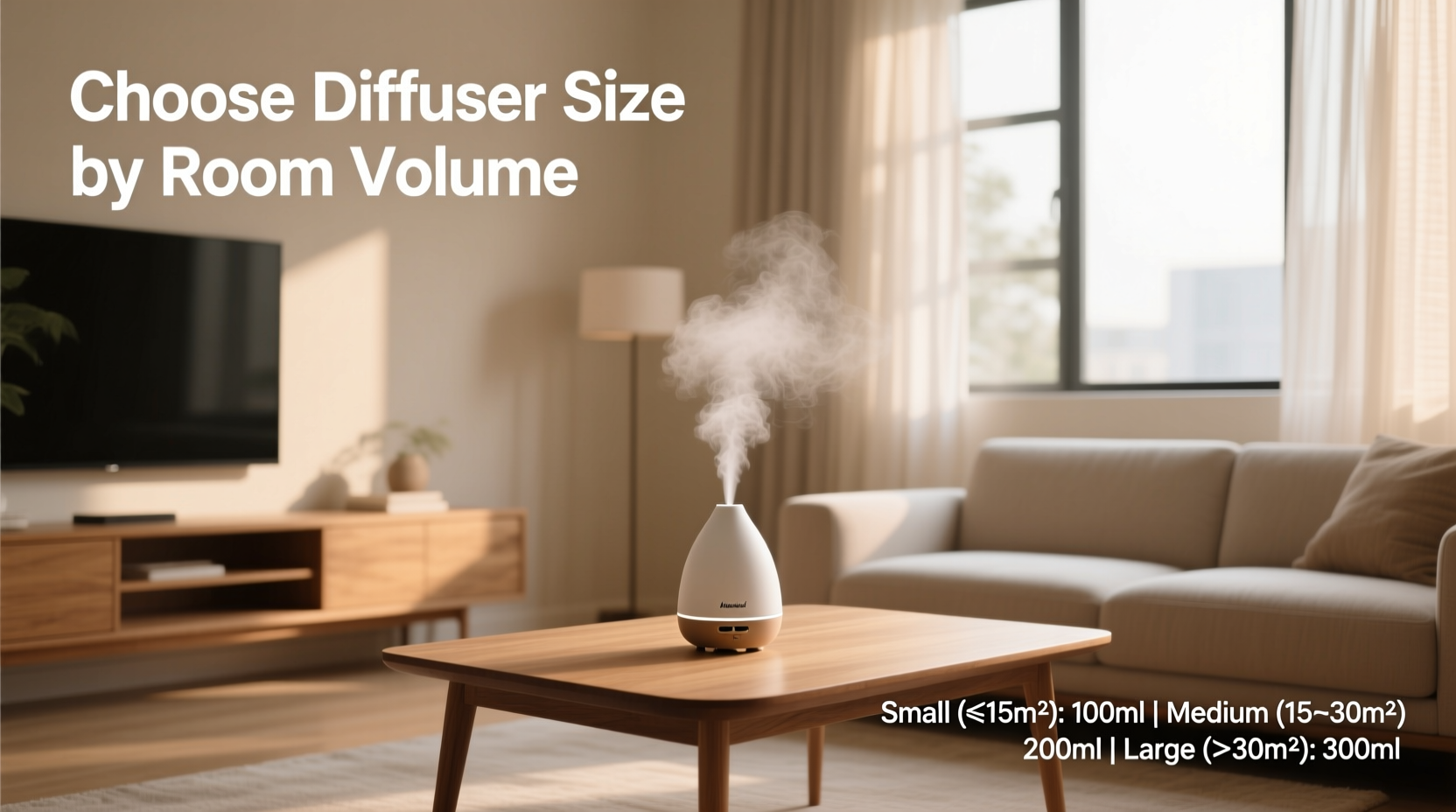
One of the most overlooked factors when selecting a diffuser is room size. A unit designed for a 150-square-foot bedroom will struggle in a 500-square-foot living area, resulting in weak fragrance dispersion and wasted oil. Conversely, an oversized diffuser in a small space can create an overpowering aroma, leading to headaches or irritation.
Manufacturers often list coverage area on product packaging, but these claims can be exaggerated. Real-world performance depends on ceiling height, airflow, and room layout. As a rule of thumb:
| Room Size (sq ft) | Recommended Diffuser Type | Run Time & Output Level |
|---|---|---|
| Up to 150 | Ultrasonic or small nebulizer | 3–5 hours intermittent; medium output |
| 150–300 | Mid-range ultrasonic or standard nebulizer | 5–7 hours; high output or continuous mode |
| 300–500 | Large-capacity ultrasonic or commercial nebulizer | 8+ hours; adjustable intensity |
| 500+ | Multiples units or industrial evaporative systems | Zoned diffusion; timer-controlled |
For open-concept homes or lofts, consider using multiple smaller diffusers strategically placed rather than relying on a single powerful unit. This ensures even coverage and allows customization per zone—lavender in the sleeping area, citrus in the workspace.
“Diffusion isn’t just about scent strength—it’s about particle distribution. In larger rooms, inadequate dispersion means you’re not getting consistent therapeutic exposure.” — Dr. Lena Patel, Integrative Aromatherapist
Assessing Your Needs: Purpose, Preferences, and Practicality
Beyond size, your personal goals should shape your choice. Are you diffusing for relaxation, respiratory support, mood enhancement, or ambient fragrance? Each objective aligns better with certain technologies.
Wellness-Focused Use
If you're using essential oils for health reasons—such as easing anxiety, supporting immunity, or aiding sleep—nebulizing diffusers are superior. Their cold-air process preserves volatile compounds like linalool (in lavender) and limonene (in citrus), maximizing bioavailability. Ultrasonic models are a close second, especially if humidity is also desired.
Everyday Ambiance
For general home fragrance, ultrasonic diffusers strike the best balance between cost, ease of use, and aesthetic appeal. Many come with LED lighting options and auto-shutoff features, making them safe and convenient for daily operation.
Allergy and Asthma Considerations
While diffusers can improve indoor air quality, improper use may trigger sensitivities. Heat and evaporative models generally produce fewer airborne particles, making them less likely to irritate lungs. However, those with asthma should avoid nebulizers unless advised by a healthcare provider, as they release concentrated oil aerosols.
Lifestyle Factors
Consider how much time you can dedicate to maintenance. Nebulizers require regular cleaning to prevent clogs. Ultrasonic units need demineralized water in hard-water areas to avoid white dust. Evaporative types are lowest maintenance but offer less scent control.
Step-by-Step Guide to Selecting Your Ideal Diffuser
Follow this logical sequence to ensure you choose a diffuser that fits both your space and intentions.
- Measure your primary room. Calculate square footage (length × width). Note ceiling height—rooms over 9 feet may need stronger output.
- Define your purpose. Is it for sleep, focus, air purification, or decoration? Write down your top three goals.
- Evaluate noise tolerance. Bedrooms demand quiet operation—ultrasonic and evaporative models are near-silent. Nebulizers often have a noticeable hum.
- Check safety features. Look for automatic shut-off when water runs low, BPA-free materials, and tip-resistant design—especially important around children or pets.
- Review maintenance requirements. Can you commit to weekly disassembly and cleaning? If not, prioritize simpler designs with fewer crevices. <6> Compare run times and tank capacity. Larger tanks (300ml+) allow longer diffusion without refills. Adjustable timers (1, 3, or 6-hour cycles) add flexibility.
- Read verified user reviews. Focus on feedback about durability, scent throw, and long-term reliability—not just initial impressions.
Real-World Example: Choosing for a Home Office
Sarah, a freelance graphic designer, works from a 200-square-foot converted sunroom. She wanted something to help her stay alert during morning sessions and calm in the evenings. After researching, she ruled out heat diffusers due to inconsistent output and potential oil degradation. She considered a nebulizer but found it too loud for video calls. Instead, she chose a mid-sized ultrasonic diffuser with a 250ml tank, variable mist settings, and a soft blue nightlight. By using peppermint in the morning and a cedar-lavender blend at night, she achieved her dual goals without disturbing her workflow. The unit automatically shuts off after four hours, fitting perfectly into her schedule.
This case illustrates how balancing technical specs with real-life usage leads to better satisfaction than simply buying the most powerful or cheapest option.
Diffuser Selection Checklist
Before purchasing, go through this checklist to avoid common pitfalls:
- ✅ Measured room size and confirmed diffuser coverage matches
- ✅ Chose diffuser type based on purpose (therapy, ambiance, humidity)
- ✅ Verified noise level is appropriate for the environment
- ✅ Checked for essential safety features (auto shut-off, stable base)
- ✅ Assessed ease of cleaning and long-term upkeep
- ✅ Ensured compatibility with preferred essential oils (some plastics degrade with citrus oils)
- ✅ Read independent reviews focusing on durability and performance
Frequently Asked Questions
Can I use any essential oil in all diffuser types?
Most high-quality essential oils work in ultrasonic and nebulizing diffusers. However, thick oils like vetiver or patchouli may clog nebulizers without proper dilution. Avoid using carrier oils (like jojoba) in ultrasonic models—they don’t mix with water and can leave residue. Always check manufacturer guidelines.
How often should I clean my diffuser?
Clean after every 3–4 uses or at least once a week. Residual oils can build up, impair function, and harbor bacteria. For ultrasonic models, use a mix of white vinegar and water; for nebulizers, rinse the glass chamber with isopropyl alcohol. Let all parts dry completely before reuse.
Is it safe to run a diffuser all day?
Continuous diffusion is not recommended. Experts suggest 30–60 minutes on, followed by a break, to prevent olfactory fatigue and overexposure. Prolonged use may cause headaches or respiratory irritation in sensitive individuals. Use intermittent modes or timers to maintain healthy cycles.
Final Thoughts and Next Steps
Selecting the right diffuser isn’t about finding the most advanced model—it’s about alignment. The perfect diffuser complements your room dimensions, supports your wellness goals, and integrates seamlessly into your daily life. Whether you’re creating a serene bedroom sanctuary or boosting focus in a home office, the right device enhances both atmosphere and well-being. Take the time to assess your space, define your needs, and choose a model that delivers consistent, safe, and effective diffusion.




 浙公网安备
33010002000092号
浙公网安备
33010002000092号 浙B2-20120091-4
Comments
No comments yet. Why don't you start the discussion?