
In a world where time is precious and wardrobes are limited, versatility is no longer a luxury—it’s a necessity. Nowhere is this more evident than in footwear. A well-chosen pair of boots can transition from a boardroom meeting to a casual dinner, from city sidewalks to weekend hikes, without missing a beat. But not all boots are created equal. The key lies in selecting a style that balances aesthetics, comfort, durability, and adaptability. With the right approach, you can invest in one or two pairs that serve as the foundation of your seasonal wardrobe.
Understand Your Lifestyle Needs
Before evaluating materials or heel heights, start by assessing how you actually live. Are you commuting daily in an urban environment? Do you spend weekends outdoors? Is your workplace formal or business-casual? These factors determine which boot styles will be most useful.
A professional in a corporate office might prioritize sleek ankle boots with a modest heel and leather uppers. In contrast, someone with an active lifestyle may benefit from rugged chukka boots with waterproofing and cushioned soles. The goal isn’t to find a single “perfect” boot for every situation, but rather a few high-performing options that cover 80% of your weekly activities.
Key Features of a Truly Versatile Boot
Versatility doesn’t just come from color or cut; it’s rooted in design fundamentals. Boots that perform across contexts share several core characteristics:
- Neutral Color Palette: Shades like black, dark brown, taupe, or charcoal blend effortlessly with both formal and casual attire.
- Moderate Heel Height: A heel between 0.5” and 1.5” offers support without sacrificing comfort or formality.
- Minimalist Design: Avoid excessive stitching, logos, or hardware. Clean lines ensure broader outfit compatibility.
- Durable Yet Lightweight Materials: Full-grain leather or suede resists wear while aging gracefully. Modern synthetics can also offer breathability and water resistance.
- All-Weather Readiness: Look for rubber outsoles with tread patterns suitable for wet pavement or light trails.
“Versatility starts with intention. Choose boots not for how they look in isolation, but how they interact with what you already wear.” — Marcus Reed, Footwear Stylist & Consultant
Top 5 Boot Styles That Work Everywhere
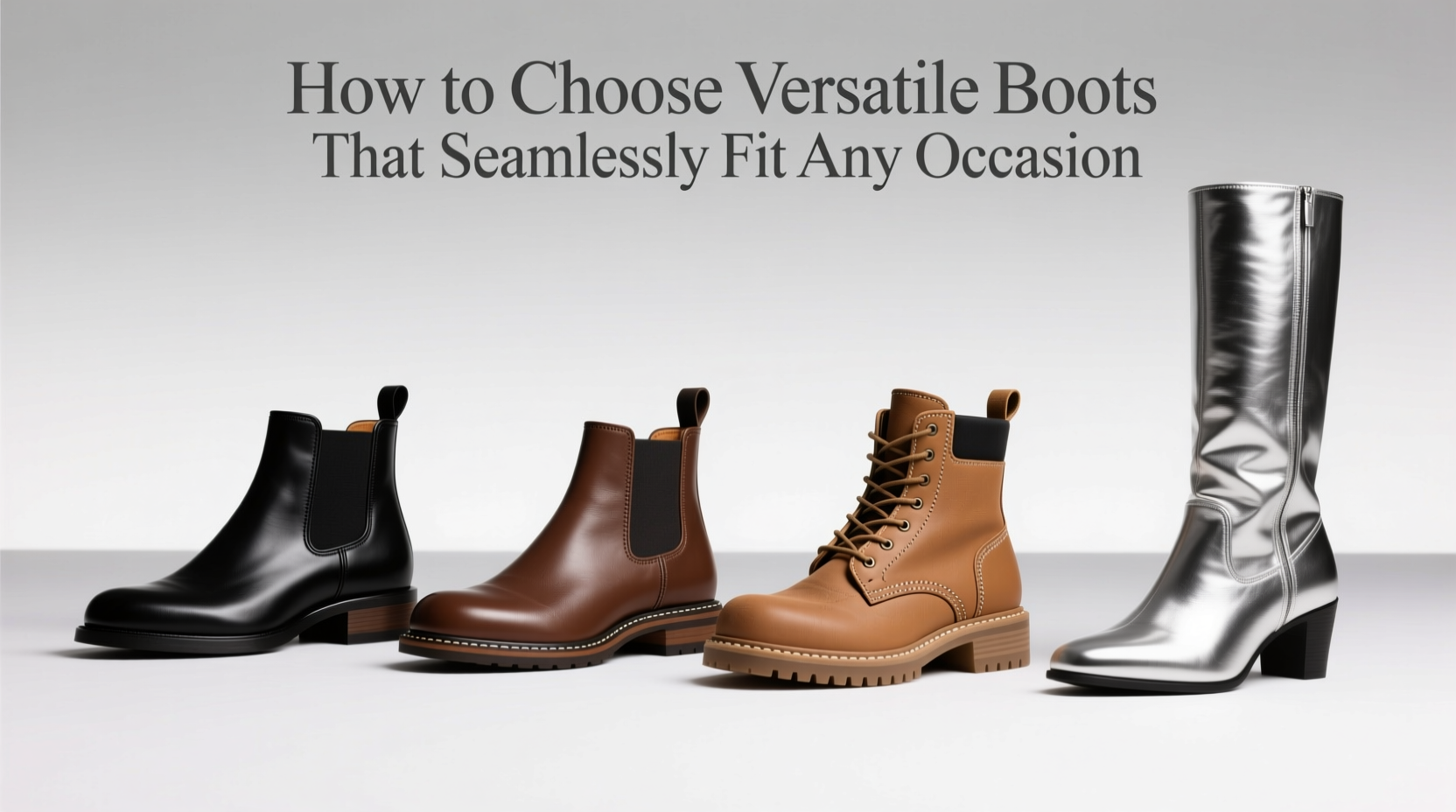
Certain silhouettes have proven their cross-functional value over decades. Here’s a breakdown of the most adaptable types:
| Boot Style | Best For | Pairing Suggestions | Lifespan (with care) |
|---|---|---|---|
| Chelsea Boots | City commuting, business-casual settings | Slim trousers, jeans, midi skirts | 3–5 years |
| Chukka Boots | Weekend outings, smart-casual events | Chinos, rolled jeans, unstructured blazers | 4–6 years |
| Combat/Work Boots | Rainy days, travel, outdoor activities | Joggers, denim, layered outfits | 5+ years |
| Western-Inspired Ankle Boots | Casual Fridays, dinners, creative workplaces | Dark wash jeans, corduroys, dresses | 3–4 years |
| Field Boots (e.g., Timberland-style) | All-season use, hiking, errands | Denim, cargo pants, knitwear | 5+ years |
Among these, Chelsea and chukka boots stand out for their unmatched adaptability. Their streamlined profiles allow them to elevate jeans just enough for dinner, yet remain understated enough for office environments when paired with tailored pants.
Step-by-Step Guide to Choosing Your Ideal Pair
Selecting versatile boots isn’t about impulse or trends—it’s a deliberate process. Follow this sequence to make a confident decision:
- Assess Your Climate: If you face rain or snow, prioritize waterproof treatments or rubber soles. In dry regions, breathable leathers suffice.
- Determine Primary Use: List your top three weekly activities (e.g., office, gym commute, grocery runs).
- Narrow Down Silhouettes: Based on use, pick 1–2 styles from the table above.
- Try Before You Buy: Visit a store if possible. Walk on different surfaces, test toe box width, and check heel slip.
- Evaluate Long-Term Value: Ask: Will I wear this at least twice a week during its season? Does it complement at least four existing items?
- Invest in Care Supplies: Purchase a conditioner, protector spray, and shoe trees to extend lifespan.
Mini Case Study: From Office to Evening Outings
Consider Sarah, a marketing manager in Chicago. Her week includes client meetings, subway commutes, and Friday night dinners. She previously owned separate shoes for each scenario—pumps for work, sneakers for transit, and heeled boots for evenings. After consolidating her footwear, she invested in a pair of dark brown chukka boots made from oiled leather.
The result? She now wears them Monday through Friday. With gray wool trousers and a blazer, they project professionalism. On Fridays, she swaps in slim black jeans and a leather jacket for a night out. During winter, they handle slush thanks to a silicone-based waterproof spray. Over 18 months, she estimates saving over 7 hours per week in outfit decisions and reduced shoe rotation.
Common Pitfalls to Avoid
Even with good intentions, many people undermine boot versatility through common mistakes:
- Overprioritizing Fashion Trends: Platform combat boots or brightly colored finishes limit pairing options.
- Ignoring Fit for Style: A narrow toe box may look sharp but causes discomfort after two hours of walking.
- Skipping Weather Protection: Suede boots ruined by one rainy day aren’t truly versatile.
- Budgeting Only for Price, Not Cost Per Wear: A $120 boot worn five times costs more per use than a $250 pair worn 50 times.
“Durability and flexibility are the twin pillars of functional fashion. If a boot can’t survive a surprise downpour or a long day on your feet, it doesn’t matter how stylish it is.” — Lena Torres, Sustainable Footwear Advocate
Checklist: How to Test Boot Versatility Before Buying
- ☐ Try them with jeans, dress pants, and shorts (if applicable)
- ☐ Walk on hard flooring and carpet to assess comfort
- ☐ Check sole noise level—quiet soles are better for offices
- ☐ Spray test: Dab water on leather to see bead-up response
- ☐ Evaluate ease of cleaning—stitched seams trap dirt
- ☐ Confirm return policy in case integration fails
Frequently Asked Questions
Can I wear the same boots year-round?
Yes, but material matters. Oiled leather or waxed suede handles moisture well for fall/winter. Lighter-weight chukkas or perforated designs work in spring. True all-year boots are rare, but rotating two complementary pairs extends wear across seasons.
Are vegan leather boots durable enough for daily use?
Some modern plant-based or PU-leather boots perform well, especially with reinforced soles and proper care. However, they typically last 1–2 years under heavy use compared to 3–5 for quality animal leather. Look for brands offering warranties as a sign of confidence.
How do I maintain boots to keep them looking fresh everywhere?
Wipe off dirt after each use. Condition leather every 4–6 weeks. Use cedar shoe trees to retain shape. Rotate pairs to prevent fatigue in materials. Reapply waterproofing every few months in wet climates.
Final Thoughts: Build a Foundation, Not a Collection
Choosing versatile boots isn’t about chasing perfection—it’s about strategic simplification. When you select footwear designed to move fluidly through your life, you reduce clutter, save money, and gain confidence in your appearance. The most powerful wardrobe choices are often the quietest: a well-made boot in a timeless shade that asks for no attention but receives plenty.




 浙公网安备
33010002000092号
浙公网安备
33010002000092号 浙B2-20120091-4
Comments
No comments yet. Why don't you start the discussion?