
The Alcantara fabric used on Microsoft Surface devices—such as the Surface Pro, Surface Laptop, and Surface Earbuds—offers a premium tactile experience, combining softness with durability. However, this microfiber suede-like material is prone to absorbing oils, dirt, and stains from daily use. Over time, improper cleaning can lead to pilling, texture degradation, or discoloration. Cleaning it correctly isn’t just about aesthetics; it’s about preserving both function and longevity. Unlike standard fabrics or leather, Alcantara demands a delicate approach that balances effective cleaning with material preservation.
This guide provides a comprehensive, step-by-step method for safely cleaning Alcantara surfaces on your Microsoft device. You’ll learn what tools to use, which to avoid, and how to prevent the most common mistake: pilling caused by aggressive wiping or unsuitable materials. Whether you're dealing with light smudges or deeper soiling, these techniques are field-tested and aligned with manufacturer recommendations and textile care expertise.
Understanding Alcantara Fabric and Why It’s Sensitive
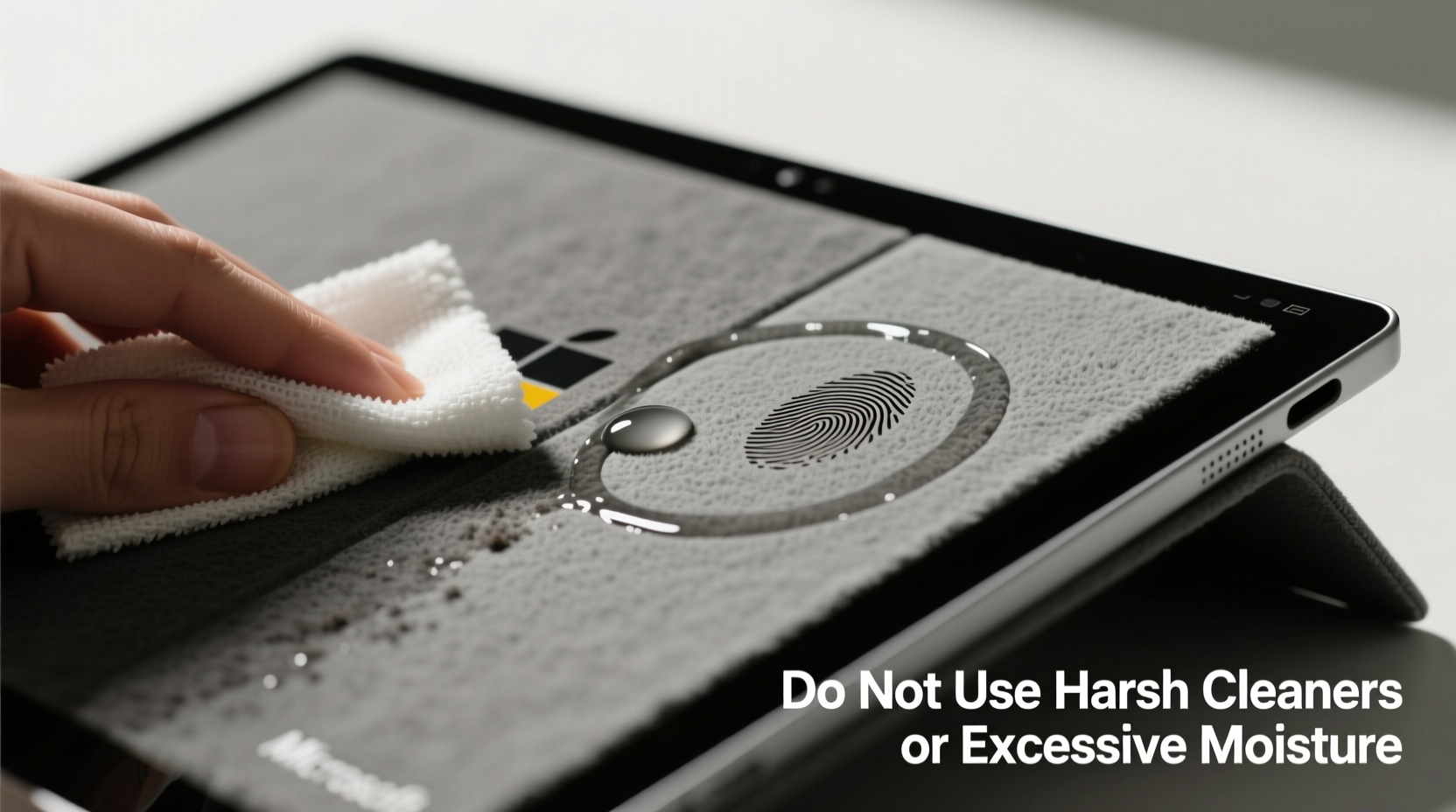
Alcantara is a proprietary Italian-made material composed of 70% polyester and 30% polyurethane. It mimics the look and feel of suede but offers better resistance to wear, UV light, and staining—when properly maintained. Despite its resilience, Alcantara has a fine nap (the direction of the fibers), which makes it vulnerable to abrasion and friction. On Microsoft Surface devices, it's used primarily on keyboard decks and palm rests, areas constantly exposed to skin oils, sweat, and environmental dust.
Pilling occurs when short fibers break and tangle into small balls due to mechanical stress—like rubbing with a coarse cloth or using excessive pressure. Once pilling starts, it’s irreversible and degrades the fabric’s appearance and comfort. This sensitivity means traditional cleaning methods—such as using paper towels, alcohol wipes, or household cleaners—are not only ineffective but damaging.
“Alcantara requires specialized care similar to high-end automotive interiors. Aggressive cleaning destroys the fiber matrix, leading to permanent texture changes.” — Dr. Lena Moretti, Textile Preservation Specialist, Milan Institute of Materials Science
Essential Tools and Supplies for Safe Cleaning
Cleaning Alcantara effectively begins with selecting the right tools. Using inappropriate materials is the leading cause of pilling and fiber damage. Below is a list of recommended supplies backed by both Microsoft’s support documentation and professional textile care standards.
| Item | Recommended Use | Why It Matters |
|---|---|---|
| Microfiber Cloth (Lint-Free, Ultra-Soft) | Dry wiping and damp application | Minimizes friction; won’t scratch or pull fibers |
| Distilled Water | Mild dampening | Prevents mineral deposits from tap water |
| Isopropyl Alcohol (70%, Optional & Diluted) | Spot treatment for stubborn stains | Must be diluted and used sparingly to avoid drying |
| Soft-Bristled Brush (Nylon or Natural Bristle) | Loosening embedded debris | Gently lifts dirt without snagging fibers |
| Alcantara-Specific Cleaner (e.g., Alcantara® Care Kit) | Deep cleaning | pH-balanced and tested for fiber integrity |
Step-by-Step Guide to Cleaning Alcantara Without Pilling
Cleaning your Surface’s Alcantara surface should be approached in stages: dry removal, gentle damp cleaning, spot treatment (if needed), and conditioning. Follow this timeline for optimal results.
- Power Down and Disconnect: Turn off your Surface device and disconnect any peripherals. If cleaning a laptop, close the lid gently and place it on a flat, stable surface.
- Dry Dusting with Microfiber Cloth: Use a dry, ultra-soft microfiber cloth to gently wipe the Alcantara surface in one direction—following the nap of the fabric. Avoid circular motions or back-and-forth scrubbing, which increase friction and risk pilling.
- Use a Soft Brush for Debris: For crumbs, lint, or particles trapped between keys or along seams, use a clean, soft-bristled brush (like a makeup or camera lens brush). Gently flick debris outward rather than pressing down.
- Prepare Damp Cleaning Solution: Lightly dampen a corner of the microfiber cloth with distilled water. Wring it thoroughly until it’s barely moist—never wet. Excess moisture can seep into seams and damage internal components or cause mold under the fabric layer.
- Wipe Gently in One Direction: Starting at one edge, wipe the dampened cloth across the Alcantara in straight, smooth strokes following the fiber grain. Re-fold the cloth frequently to use a clean section. Do not saturate or rub vigorously.
- Treat Stains Sparingly: For oily or sticky spots, apply one or two drops of Alcantara-specific cleaner or a 1:4 mixture of distilled water and 70% isopropyl alcohol to the cloth—not directly on the fabric. Blot the area lightly; never scrub. Allow to air-dry completely before use.
- Air-Dry Thoroughly: Let the cleaned area dry for at least 30 minutes in a well-ventilated room. Avoid direct sunlight or heat sources like hairdryers, which can warp adhesive layers beneath the fabric.
- Restore Nap (Optional): After drying, lightly brush the fabric with the soft-bristled brush in one direction to lift and realign the fibers, restoring the original texture.
“Even a few drops too much water can compromise the bond between Alcantara and the substrate. Always err on the side of dryness.” — Microsoft Hardware Support Guidelines, v4.1
Common Mistakes That Cause Pilling and How to Avoid Them
Many users unintentionally damage their Alcantara surfaces by applying cleaning habits meant for glass, metal, or plastic. The following table outlines frequent errors and safer alternatives.
| Don’t Do This | Why It’s Harmful | Do This Instead |
|---|---|---|
| Using alcohol wipes or disinfectant sprays | Dries out polyurethane fibers, causes brittleness and flaking | Use distilled water or Alcantara-specific solutions only |
| Scrubbing in circular motions | Creates friction that pulls and knots fibers into pills | Wipe in straight lines, following the fabric grain |
| Applying liquid directly to the surface | Leads to pooling, seepage, and potential hardware damage | Apply cleanser to cloth first, then to fabric |
| Using paper towels or tissues | Coarse texture abrades surface; leaves lint behind | Stick to high-quality microfiber cloths |
| Cleaning too frequently with liquids | Accelerates fiber fatigue and breakdown over time | Limit damp cleaning to once every 4–6 weeks unless heavily soiled |
Real-World Example: A Remote Worker’s Routine
Sophie, a freelance graphic designer in Vancouver, uses her Surface Laptop daily for 8–10 hours. After six months, she noticed darkening around the spacebar and a slightly rough texture forming near the trackpad. She initially tried cleaning it with a baby wipe, which left a sticky residue and worsened the pilling.
After consulting Microsoft’s care guide and switching to a proper routine—using a microfiber cloth with a drop of distilled water weekly and a soft brush monthly—she restored much of the fabric’s original softness. By avoiding alcohol-based products and minimizing moisture, she halted further degradation. Now, her Surface looks nearly new after 14 months of heavy use.
Her key insight: “Consistency matters more than intensity. Five minutes a week beats one aggressive cleaning session.”
Checklist: Monthly Alcantara Maintenance Routine
- ✅ Power down device and remove accessories
- ✅ Dry wipe entire Alcantara surface with microfiber cloth
- ✅ Brush between keys and seams with soft-bristled tool
- ✅ Lightly dampen microfiber cloth with distilled water
- ✅ Wipe in straight, unidirectional strokes—no scrubbing
- ✅ Treat stains with minimal cleaner applied via cloth
- ✅ Air-dry for at least 30 minutes before use
- ✅ Store device in a clean, dry environment away from humidity
Frequently Asked Questions
Can I use hand sanitizer to clean Alcantara?
No. Hand sanitizers contain high concentrations of alcohol and gelling agents that dry out the fabric and leave residues. They may also discolor the material over time. Stick to water-based or specialty Alcantara cleaners.
How often should I clean my Surface’s Alcantara surface?
For regular use, dry wiping should be done weekly. Damp cleaning is recommended every 4–6 weeks unless visible soiling occurs. Over-cleaning increases wear, so limit liquid exposure to only when necessary.
Is it possible to reverse pilling once it starts?
Unfortunately, no. Pilling is a physical breakdown of the fiber structure and cannot be repaired. The best approach is prevention through proper cleaning techniques. In severe cases, Microsoft offers paid Alcantara replacement services for laptops and keyboards.
Final Thoughts: Preserve Performance and Comfort Through Smart Care
The Alcantara fabric on your Microsoft Surface is designed to enhance both comfort and aesthetics. But like any premium material, it requires thoughtful maintenance. The goal isn’t just cleanliness—it’s long-term preservation. By understanding the fabric’s composition, respecting its limits, and using the right tools and techniques, you can keep your device looking and feeling pristine for years.
Every swipe of a paper towel or splash of cleaner might seem harmless in the moment, but cumulative misuse leads to irreversible damage. Make gentle, informed care part of your digital hygiene routine. Your fingers—and your device—will thank you.




 浙公网安备
33010002000092号
浙公网安备
33010002000092号 浙B2-20120091-4
Comments
No comments yet. Why don't you start the discussion?