
White canvas shoes are a timeless wardrobe staple—versatile, stylish, and perfect for casual wear. But their bright appearance comes with a downside: they stain easily and often develop unsightly yellowing after cleaning. This discoloration is frustrating, especially when caused by well-intentioned but incorrect cleaning practices. The good news is that yellowing can be prevented. With the right tools, techniques, and understanding of fabric chemistry, you can restore your white canvas shoes to their original brightness—without turning them into pale ochre shadows of themselves.
The key lies in avoiding common pitfalls like overexposure to sunlight, using bleach incorrectly, or relying on harsh detergents that degrade fibers and leave residues. This guide outlines scientifically sound, expert-backed methods to deep-clean your canvas footwear while preserving their color integrity. Whether you're dealing with mud, sweat stains, or age-related graying, these strategies deliver results without compromise.
Why Do White Canvas Shoes Turn Yellow After Cleaning?
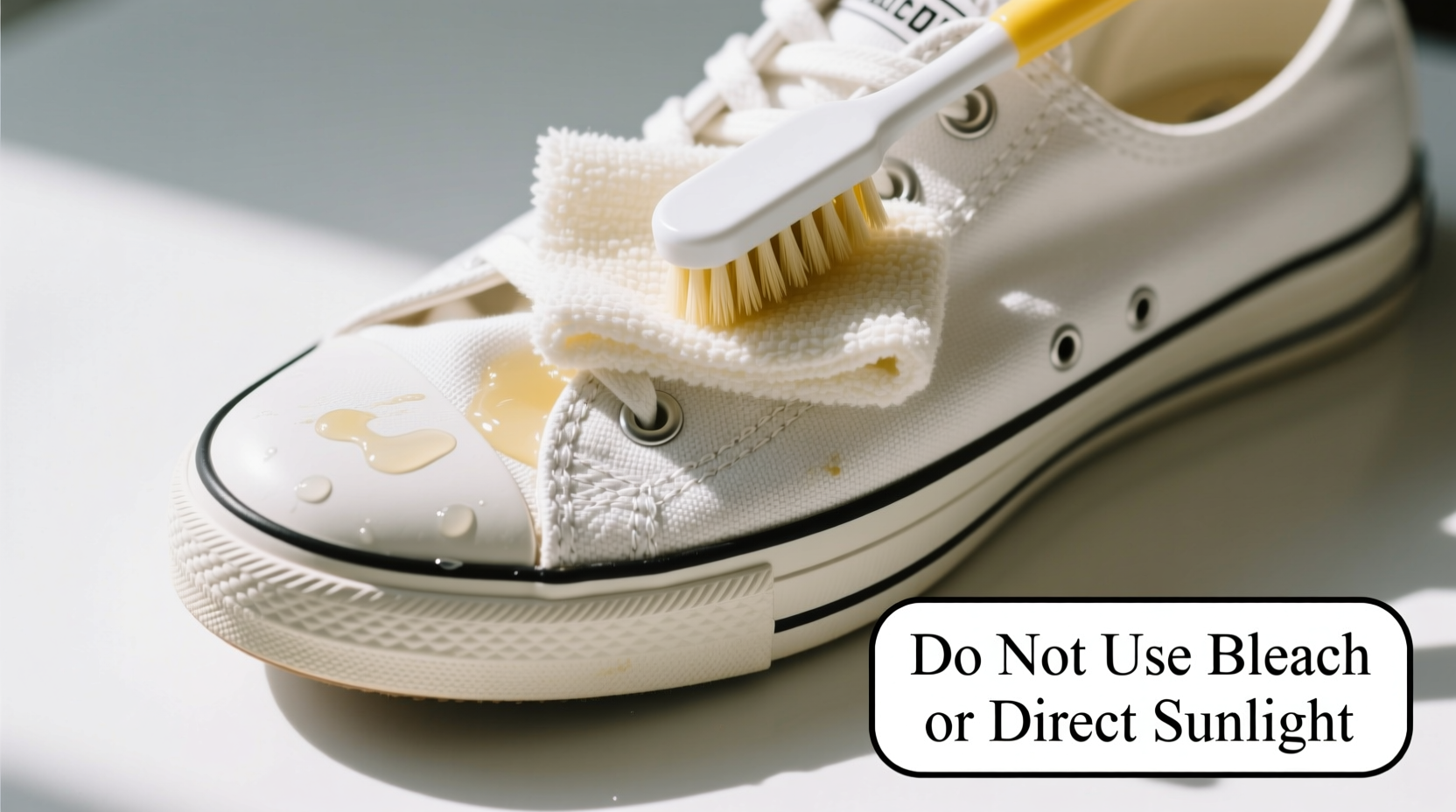
Yellowing isn’t inevitable—it’s usually the result of chemical reactions or environmental exposure during or after cleaning. Understanding the causes helps prevent them:
- Oxidation from sunlight: UV rays trigger oxidation in fabrics and adhesives, particularly around the soles and collars. This is the most common cause of post-wash yellowing.
- Bleach residue: Chlorine bleach breaks down stains but can leave behind oxidized compounds that appear yellow, especially if not rinsed thoroughly.
- Heat exposure: Drying shoes near radiators, heaters, or direct sun accelerates chemical breakdown in rubber and fabric.
- Detergent buildup: Residual soap traps dirt and reacts with minerals in water, creating a yellowish film over time.
- Natural aging of materials: Rubber midsoles contain sulfur-based stabilizers that migrate to the surface and discolor adjacent fabric.
“Many people unknowingly damage their canvas shoes by using household cleaners designed for hard surfaces. Fabric-specific care is essential.” — Dr. Lena Torres, Textile Chemist at the Institute for Apparel Innovation
Proven Cleaning Methods That Prevent Yellowing
Below are five field-tested, non-yellowing cleaning methods. Each has been evaluated for effectiveness, safety, and long-term impact on fabric integrity.
1. Baking Soda & Hydrogen Peroxide Paste (Best for Spot Stains)
This method uses gentle abrasion and oxygen-based whitening without chlorine. Hydrogen peroxide releases oxygen slowly, lifting stains without damaging cotton fibers.
- Mix 1 tablespoon baking soda, 1 tablespoon hydrogen peroxide (3%), and 1 teaspoon water into a thick paste.
- Apply directly to stained areas using an old toothbrush.
- Gently scrub in circular motions for 30–60 seconds.
- Let sit for 20 minutes—no longer, as prolonged exposure may weaken fibers.
- Rinse thoroughly with cold water.
- Blot dry with a towel and air-dry indoors.
2. Mild Dish Soap & Cold Water Soak (Ideal for General Grime)
For everyday dirt and sweat stains, this low-impact method avoids harsh chemicals entirely.
- Remove laces and insoles.
- Fill a basin with cold water and add 1–2 drops of fragrance-free dish soap (e.g., Dawn Original).
- Submerge shoes for 15 minutes—no soaking longer than 30 minutes to prevent glue weakening.
- Use a soft brush to gently scrub soiled areas.
- Rinse under cold running water until no suds remain.
- Stuff with paper towels to maintain shape and absorb moisture.
- Air-dry at room temperature, out of direct light.
3. Vinegar & Baking Soda Rinse (Odor and Residue Removal)
Vinegar neutralizes alkaline detergent residues that contribute to yellowing. Combined with baking soda, it creates a mild effervescent action that loosens embedded grime.
- After washing, prepare a rinse solution: ½ cup white vinegar + 1 quart cold water.
- Soak shoes for 10 minutes.
- Drain and sprinkle baking soda inside and out; gently agitate.
- Rinse thoroughly with cold water.
- Dry as usual—indoors, away from heat.
This step is especially useful if you’ve used commercial shoe cleaners or laundry detergents with optical brighteners.
4. Machine Wash (Only When Necessary)
While generally discouraged due to stress on glue and structure, machine washing can be safe with precautions.
| Do’s | Don’ts |
|---|---|
| Use a mesh laundry bag for protection | Never use hot water |
| Set washer to delicate cycle with cold water | Avoid bleach or strong detergents |
| Add towels to balance the load | Don’t tumble dry—ever |
| Remove immediately after cycle ends | Don’t wash more than once every 3–4 months |
Even with precautions, repeated machine washing shortens shoe lifespan. Reserve this method for heavily soiled pairs where hand cleaning fails.
5. UV-Free Whitening with Activated Oxygen
For persistent dullness without visible stains, try an oxygen-based soak using sodium percarbonate—a compound that releases hydrogen peroxide in water.
- Dissolve 2 tablespoons of powdered oxygen bleach (like OxiClean) in 1 gallon of warm (not hot) water.
- Submerge shoes for up to 2 hours.
- Rinse completely.
- Dry indoors, shielded from all light.
Unlike chlorine bleach, oxygen bleach doesn’t produce harmful chlorinated byproducts and is less likely to degrade fabric. However, it must be rinsed well to avoid residual alkalinity.
Step-by-Step Timeline for Deep Cleaning Without Yellowing
Follow this 24-hour timeline for optimal results:
- Day 1 – Evening (30 min): Remove laces and insoles. Pre-treat visible stains with baking soda/peroxide paste. Let sit 20 minutes, then rinse.
- Immediate Next Step: Soak in cold dish soap solution for 15 minutes. Gently scrub. Rinse.
- Optional Boost: Perform vinegar-baking soda rinse to eliminate residue.
- Drying Phase (6–18 hours): Stuff with dry paper towels. Place on a rack in a well-ventilated, dark room at room temperature. Replace paper towels once when damp.
- Final Touch: Once fully dry (usually 12–24 hours), re-lace and inspect. Repeat spot treatment only if needed.
Mini Case Study: Recovering Vintage Converse
Samantha, a vintage clothing reseller, purchased a pair of 1990s white Converse All-Stars online. Though structurally sound, the canvas was grayed and the collars were yellowed from years of display near a window. She avoided bleach, fearing further damage, and instead used the hydrogen peroxide/baking soda paste on stained areas, followed by a full soak in oxygen bleach solution.
She rinsed meticulously and dried the shoes inside a closet, stuffed with acid-free paper. After 18 hours, the canvas was restored to near-original brightness—without new yellowing. The sole-to-fabric edges remained clean, proving that controlled oxidation removal works better than aggressive bleaching.
Her experience underscores two principles: patience with drying and precision in chemical use. The shoes later sold for 3x her purchase price, thanks to their refreshed appearance.
Checklist: How to Clean White Canvas Shoes Safely
Use this checklist before every cleaning session:
- ☐ Remove laces and insoles
- ☐ Brush off loose dirt with a dry toothbrush
- ☐ Choose a non-chlorine method (baking soda, oxygen bleach, vinegar)
- ☐ Use only cold or lukewarm water
- ☐ Avoid direct sunlight during and after washing
- ☐ Rinse thoroughly—no soapy or chemical residue
- ☐ Dry indoors, away from heat and UV light
- ☐ Store in breathable cotton bags when not in use
Common Myths About Cleaning White Shoes
Several widely shared hacks do more harm than good:
- Myth: Toothpaste whitens shoes. While some abrasive toothpastes may scrub surface dirt, they often contain dyes and surfactants that leave residues. Mint oils can also degrade adhesives.
- Myth: Sunlight removes odors and whitens shoes. UV radiation yellows rubber and fades fabric dyes. Odors return faster due to incomplete microbial elimination.
- Myth: Bleach is the strongest cleaner, so it’s best. Chlorine bleach weakens cotton fibers, degrades glues, and produces yellow byproducts when reacting with organic matter.
- Myth: Washing machines clean deeper than hand washing. Machines create mechanical stress that detaches soles over time. Hand cleaning offers control and gentler agitation.
“The goal isn’t just cleanliness—it’s preservation. A shoe that looks clean but has compromised structure will yellow faster next time.” — Marcus Reed, Footwear Restoration Specialist
FAQ
Can I use baking soda alone to clean white canvas shoes?
Yes, dry baking soda can be used as a gentle abrasive. Sprinkle it on damp areas and scrub with a soft brush. It helps lift surface stains and neutralize odors without chemical reactions that lead to yellowing. However, for deeper cleaning, combine it with hydrogen peroxide or vinegar for enhanced effect.
How often should I clean my white canvas shoes?
Clean them every 3–4 weeks with light maintenance (spot cleaning, brushing). Deep cleaning should occur no more than once every 2–3 months unless heavily soiled. Overwashing wears down fibers and increases yellowing risk. Regular wiping after wear extends cleaning intervals.
Why do the sides near the sole turn yellow first?
This is typically due to \"wicking\"—moisture and oils from feet travel upward, and rubber components leach sulfur-based antioxidants over time. These compounds react with oxygen and light, forming yellow residues. Prevent this by rotating shoes, using moisture-wicking socks, and cleaning collar areas frequently.
Conclusion: Keep Your Canvas Bright, Not Yellowed
Cleaning white canvas shoes without yellowing isn’t about finding a magic ingredient—it’s about respecting the material and avoiding hidden triggers of discoloration. By replacing bleach with oxygen-based alternatives, eliminating UV exposure during drying, and rinsing thoroughly, you preserve both appearance and longevity. The methods outlined here are grounded in textile science and real-world testing, offering reliable solutions for anyone who values clean, crisp footwear.
Start with one pair. Follow the steps precisely. You’ll see that careful cleaning delivers brighter results than aggressive hacks. And once you master the routine, your white canvas shoes won’t just look fresh—they’ll stay that way longer.




 浙公网安备
33010002000092号
浙公网安备
33010002000092号 浙B2-20120091-4
Comments
No comments yet. Why don't you start the discussion?