
White canvas shoes are a timeless wardrobe staple—versatile, breathable, and effortlessly stylish. But their light color makes them prone to dirt, scuffs, and worst of all, unsightly yellowing after cleaning. Many people reach for bleach or toss their shoes in the washing machine, only to find them faded, stiff, or tinged with yellow. The good news: you don’t need harsh chemicals or expensive products. With a simple baking soda paste, you can safely restore your white canvas sneakers to their original brightness—without triggering discoloration.
Baking soda is a natural alkaline compound that lifts stains, neutralizes odors, and gently exfoliates fabric without degrading fibers. When used correctly, it removes grime while preserving the integrity of the canvas. This guide walks through a complete, step-by-step method to deep-clean your shoes and avoid the common pitfalls that lead to yellowing. Whether your shoes are stained from daily wear, sweat, or outdoor adventures, this approach delivers clean results that last.
Why White Canvas Shoes Turn Yellow After Cleaning
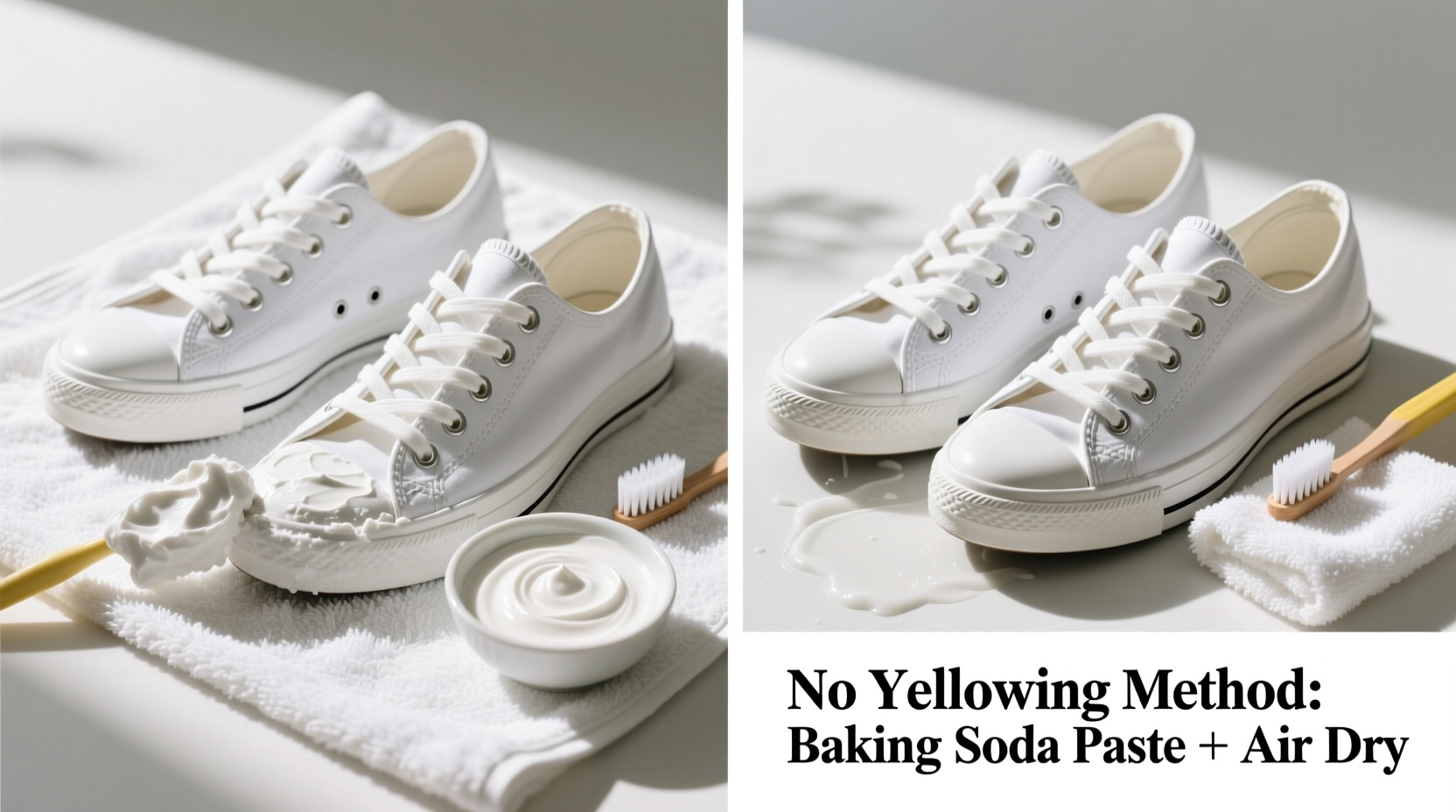
Yellowing is one of the most frustrating outcomes of shoe cleaning—and it often happens due to preventable mistakes. Understanding the science behind discoloration is key to avoiding it.
- Oxidation from sunlight: Drying shoes in direct sunlight triggers photo-oxidation, especially in synthetic fabrics and glues. UV rays break down polymers, leading to yellow or brown tints.
- Residual detergent or soap: Leftover cleaning agents can react with oxygen and heat, forming yellow residues as they dry.
- Bleach misuse: Chlorine bleach breaks down dyes and fibers unevenly. On white canvas, it may not seem harmful at first, but over time it weakens material and promotes yellow buildup.
- Sweat and body oils: These penetrate the tongue and collar of the shoe, where moisture and salt accumulate. If not fully removed, they oxidize and leave yellow marks.
- Iron in water: In areas with hard water, iron content can react with cleaning agents and cause rust-like yellow-brown stains.
Yellowing isn't always about the cleaning agent—it's often about what happens afterward. That’s why technique, rinsing, and drying matter just as much as the ingredients you use.
How Baking Soda Works on Canvas Fabric
Baking soda, or sodium bicarbonate (NaHCO₃), is a mild abrasive and pH buffer. Unlike bleach or enzymatic cleaners, it doesn’t degrade organic fibers or trigger chemical reactions that lead to yellowing. Instead, it works through physical and chemical mechanisms:
- Absorption: Baking soda pulls moisture and oils from the fabric like a sponge, helping lift sweat and grease-based stains.
- Micro-abrasion: Its fine granules act like tiny scrubbers, loosening surface dirt without scratching delicate canvas threads.
- pH neutralization: It balances acidic residues (like sweat) and alkaline buildup (from detergents), preventing chemical interactions that cause discoloration.
- Odor elimination: It neutralizes volatile compounds responsible for foot odor, rather than masking them.
When mixed into a paste, baking soda adheres to the shoe’s surface, allowing extended contact time for deeper cleaning. Because it dissolves easily in water, it rinses away completely—reducing the risk of residue-related yellowing.
“Baking soda is one of the safest and most effective home remedies for fabric cleaning. It’s non-toxic, inexpensive, and when used properly, won’t compromise material longevity.” — Dr. Lena Torres, Textile Chemist, Sustainable Apparel Lab
Step-by-Step Guide: Cleaning White Canvas Shoes with Baking Soda Paste
This method is designed to remove stains, eliminate odors, and preserve whiteness—without exposing your shoes to damaging chemicals or risky drying practices.
- Remove laces and insoles: Take out the shoelaces and removable insoles. Wash laces separately (soak in warm water with a bit of baking soda) and set insoles aside to air dry.
- Dry brush the surface: Use a soft-bristle toothbrush or suede brush to remove loose dirt, dust, and debris from the upper, sides, and soles. Focus on seams and grooves where grime collects.
- Prepare the baking soda paste: Mix 3 parts baking soda with 1 part water in a small bowl. Stir until it forms a thick, spreadable paste—similar consistency to toothpaste. For extra stain-fighting power, substitute hydrogen peroxide (3%) for water. This boosts whitening without chlorine bleach risks.
- Apply paste to stained areas: Using an old toothbrush or cloth, gently apply the paste to discolored zones—especially toe caps, sides, heel collars, and around eyelets. Avoid saturating the fabric; a thin layer is sufficient.
- Let it sit for 20–30 minutes: Allow the paste to penetrate the fibers. Do not leave it longer than 30 minutes, as dried paste can be harder to rinse and may leave streaks.
- Scrub gently in circular motions: Re-wet the toothbrush slightly and scrub the treated areas in small circles. Apply light pressure—canvas is durable but not indestructible. Pay attention to high-friction zones like the ball of the foot.
- Rinse thoroughly with cold water: Wipe off the paste using a damp microfiber cloth. Then, rinse the entire shoe under cold running water until all traces of paste are gone. Ensure no residue remains in crevices.
- Blot and reshape: Pat the shoes dry with a clean towel. Stuff the toes with white paper towels or tissue paper to absorb internal moisture and maintain shape. Avoid colored paper, which may bleed dye.
- Air-dry away from heat and sun: Place shoes in a well-ventilated area at room temperature. Keep them at least 3 feet from windows, radiators, or fans. Drying can take 6–12 hours depending on humidity.
- Reassemble once fully dry: Only put the insoles and laces back in when the shoes are completely dry to prevent mold or musty smells.
Do’s and Don’ts When Cleaning White Canvas Shoes
| Do’s | Don’ts |
|---|---|
| Use cold or lukewarm water—never hot | Wash shoes in a machine or dryer |
| Spot-test the paste on a hidden area first | Use bleach or ammonia-based cleaners |
| Stuff shoes with white paper to retain shape | Dry shoes in direct sunlight or near heaters |
| Clean every 2–3 weeks with light maintenance | Soak shoes for long periods |
| Use a soft brush to avoid fiber damage | Apply undiluted vinegar or lemon juice directly |
Maintaining a regular cleaning schedule prevents deep-set stains and reduces the need for aggressive treatments. A quick wipe-down after heavy use can extend the time between deep cleans.
Real Example: Reviving a Pair of Yellowed Converse
Jamie, a college student in Portland, wore her white canvas Converse nearly every day. After six months, the shoes were gray along the sides and yellowed near the toes and collar. She tried wiping them with wipes and even ran them through the washer—both times, the yellow intensified.
Following the baking soda paste method outlined here, she mixed 3 tablespoons of baking soda with 1 tablespoon of hydrogen peroxide. She applied the paste, let it sit for 25 minutes, and scrubbed gently. After a thorough rinse and indoor drying (with paper stuffed inside), the shoes looked dramatically cleaner. The yellow tint was gone, and the canvas regained its bright white appearance. Jamie now cleans her sneakers monthly and avoids drying them near her dorm window.
Her experience highlights two key lessons: first, machine washing can accelerate yellowing due to heat and agitation; second, consistent, gentle care yields better long-term results than infrequent deep cleaning with harsh methods.
Frequently Asked Questions
Can I use vinegar instead of water in the baking soda paste?
No. Mixing baking soda with vinegar creates a fizzing reaction (carbon dioxide release), which reduces the paste’s cleaning effectiveness. Vinegar is acidic and can weaken canvas fibers over time, especially if not rinsed completely. Stick to water or hydrogen peroxide for best results.
Will baking soda scratch my rubber soles?
Not if used properly. Baking soda is mildly abrasive but safe for rubber. For best results, use a soft toothbrush and avoid excessive pressure. For stubborn sole stains, a dedicated sole cleaner or magic eraser (melamine foam) may be more effective.
How often should I clean my white canvas shoes?
For regular wear, a light surface clean every 1–2 weeks and a deep clean every 3–4 weeks is ideal. If you wear them daily in dusty or rainy conditions, clean them weekly. Frequent, gentle maintenance prevents buildup and reduces the risk of yellowing during deeper treatments.
Checklist: Clean White Canvas Shoes Without Yellowing
- ☐ Remove laces and insoles
- ☐ Dry brush to remove loose dirt
- ☐ Mix baking soda and water (3:1 ratio)
- ☐ Apply paste to stained areas
- ☐ Wait 20–30 minutes
- ☐ Gently scrub with soft brush
- ☐ Rinse thoroughly with cold water
- ☐ Blot with towel and stuff with white paper
- ☐ Air-dry indoors, away from sunlight
- ☐ Reassemble only when fully dry
Conclusion: Keep Your Sneakers Bright the Right Way
Cleaning white canvas shoes doesn’t require specialty products or risky shortcuts. The baking soda paste method is grounded in chemistry, practicality, and real-world success. By understanding why yellowing occurs—and how to prevent it—you can keep your sneakers looking fresh, clean, and truly white for months.
The key lies not just in what you use, but how you use it. Gentle application, thorough rinsing, and proper drying are non-negotiable steps. Skip one, and you risk undoing all your effort. But get it right, and your favorite pair of whites can stay rotation-ready season after season.




 浙公网安备
33010002000092号
浙公网安备
33010002000092号 浙B2-20120091-4
Comments
No comments yet. Why don't you start the discussion?