
White canvas shoes are a timeless staple—versatile, breathable, and effortlessly stylish. But their bright appearance is also their Achilles’ heel: dirt, sweat, and improper cleaning can quickly lead to stubborn stains and an unsightly yellow tint. Many people reach for bleach or commercial cleaners, not realizing these often accelerate yellowing due to chemical reactions with fabric or UV exposure.
The good news? You don’t need specialty products. Your kitchen already holds everything required to safely restore your white canvas shoes to their original brilliance. Using common household items like baking soda, white vinegar, and dish soap, you can deep-clean your footwear while preventing the discoloration that ruins so many attempts at revival.
This guide walks through science-backed techniques, real-world tested steps, and crucial precautions—all using ingredients you likely have on hand. Whether your shoes are stained from daily wear, sun exposure, or old storage, this method preserves whiteness without damage.
Why White Canvas Shoes Turn Yellow
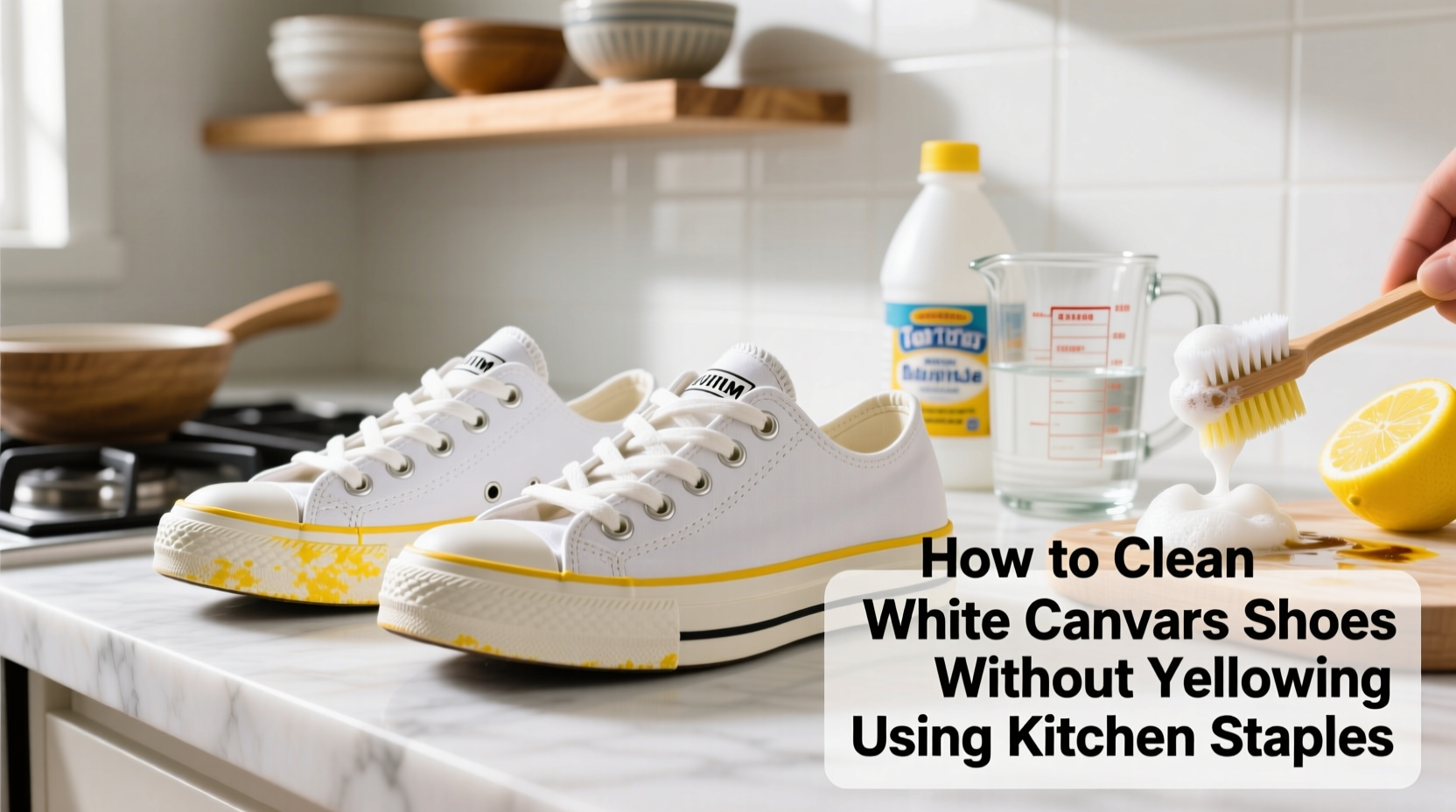
Understanding what causes yellowing is key to avoiding it. Contrary to popular belief, yellow stains aren't always just dirt buildup. Several factors contribute:
- Oxidation from sunlight: Prolonged exposure to UV rays breaks down fibers and bleaches dyes unevenly, causing a yellow cast.
- Residue from detergents or cleaning agents: Leftover soap or alkaline substances (like baking soda if not rinsed well) react with air and light, leading to discoloration.
- Sweat and body oils: Natural acids and salts transfer from feet to insoles and sides, embedding into fabric over time.
- Chlorine or bleach use: Even diluted bleach weakens cotton fibers and accelerates yellowing rather than whitening long-term.
- Poor drying practices: Air-drying in direct sunlight may seem efficient but significantly increases yellowing risk.
“Yellowing in canvas isn’t always about dirt—it’s often a chemical reaction between cleaning residue and UV exposure.” — Dr. Lena Torres, Textile Chemist, University of Massachusetts
Cleaning effectively means removing grime without introducing compounds that degrade the fabric or leave behind film. That’s where kitchen-based solutions shine—they’re mild, biodegradable, and less likely to cause adverse reactions when used correctly.
Essential Kitchen Staples for Safe Cleaning
The following ingredients are non-toxic, inexpensive, and proven effective for delicate fabrics like canvas. Each plays a specific role in lifting stains, deodorizing, and preserving fiber integrity.
| Ingredient | Cleaning Role | Why It Works |
|---|---|---|
| Baking Soda (Sodium Bicarbonate) | Mild abrasive & odor neutralizer | Gently scrubs surface stains without scratching; balances pH to prevent residue buildup |
| White Vinegar (5% Acetic Acid) | Stain dissolver & disinfectant | Breaks down organic matter (sweat, grass); removes mineral deposits from hard water |
| Liquid Dish Soap (Phosphate-free) | Grease and oil emulsifier | Lifts body oils and environmental grime; safe for cotton fibers |
| Hydrogen Peroxide (3%) | Oxygen-based brightener | Whitens gently without chlorine; breaks down into water and oxygen |
| Cold Water | Solvent base | Prevents shrinking and setting protein-based stains (like sweat) |
Step-by-Step: How to Clean White Canvas Shoes Without Yellowing
This six-step process ensures thorough cleaning while minimizing risks of discoloration. Total time: approximately 45 minutes active work, plus 12–24 hours drying.
- Remove laces and insoles
Take out shoelaces and removable insoles. Wash laces separately by soaking in warm soapy water. Insoles should be hand-cleaned gently with a cloth dampened in vinegar-water solution (1:1 ratio), then air-dried away from sunlight. - Dry brush loose debris
Use a soft-bristled toothbrush or shoe brush to remove dried mud, dust, or lint from the surface. Focus on seams and tread areas where dirt accumulates. - Prepare the cleaning paste
Mix 2 tablespoons baking soda, 1 tablespoon liquid dish soap (clear, fragrance-free preferred), and 1 tablespoon hydrogen peroxide into a smooth paste. This combination lifts stains, deodorizes, and brightens without abrasion. - Apply and scrub gently
Dip a clean toothbrush into the paste and work it into the canvas in small circular motions. Pay extra attention to discolored zones—especially toe box and sides near the sole. Do not soak the shoes; apply only enough paste to cover stained areas. - Rinse thoroughly with cold water
Dampen a microfiber cloth with cold water and wipe off all paste residue. Rinse repeatedly until no suds remain. Residual cleaning agents are a primary cause of post-wash yellowing, so this step is critical. - Vinegar final rinse (optional but recommended)
Fill a basin with 2 cups cold water and ½ cup white vinegar. Wipe the entire exterior of the shoe with this solution using a clean cloth. This neutralizes any remaining alkalinity from baking soda and eliminates lingering odors.
Drying: The Most Important Step to Prevent Yellowing
Improper drying undoes even the best cleaning efforts. Never place canvas shoes in direct sunlight or near heat sources like radiators or dryers. Heat triggers oxidation and sets residual moisture into a yellow film.
Instead:
- Stuff shoes loosely with white paper towels or clean, undyed cotton rags to absorb moisture and maintain shape.
- Place in a well-ventilated room, ideally near a fan or open window (but not in direct airflow).
- Avoid colored paper or newspaper—ink can transfer onto wet fabric.
- Allow 12–24 hours for complete drying depending on humidity.
Real Example: Reviving a Pair of Yellowed Sneakers
Sophie, a college student in Portland, wore her white canvas sneakers nearly every day for three months. After frequent walks in drizzle and gym use, the shoes were grimy, smelly, and noticeably yellow around the toes and midsole. She’d tried wiping them with baby wipes and once left them in the sun to dry—mistakes that worsened the color.
Following the kitchen-staples method above, she mixed the baking soda paste, scrubbed gently, and rinsed thoroughly. She skipped the sun-drying temptation and instead stuffed them with paper towels and placed them near a bedroom fan overnight. By morning, the shoes looked dramatically cleaner—no streaks, no new yellow patches. After two rounds (one week apart), they regained 90% of their original brightness without damage to stitching or rubber trim.
“I was shocked something so simple worked better than store-bought sprays,” Sophie said. “Now I clean them monthly before stains set in.”
Do’s and Don’ts: What to Avoid When Cleaning Canvas
To protect your shoes and avoid yellowing, follow this essential checklist:
| Do’s | Don’ts |
|---|---|
| Use cold water for mixing and rinsing | Use hot water—it sets stains and weakens glue |
| Scrub with soft-bristled brushes | Use stiff wire brushes or steel wool |
| Rinse until water runs clear | Leave cleaning residue on fabric |
| Dry indoors, away from sunlight | Put shoes in direct sun or near heaters |
| Repeat treatment weekly if needed | Use bleach, ammonia, or abrasive powders |
Frequently Asked Questions
Can I wash white canvas shoes in the washing machine?
No, machine washing is strongly discouraged. Agitation can break down adhesives holding the sole to the upper, and high spin cycles create creases that trap moisture. Additionally, detergent residue often remains in fibers, leading to yellowing when exposed to air and light.
How often should I clean my white canvas shoes?
For regular wear, a light wipe-down every 1–2 weeks and a full cleaning every 4–6 weeks maintains appearance and prevents deep staining. If worn in wet or muddy conditions, clean immediately after use.
Will baking soda alone clean my shoes?
Baking soda has mild abrasive and deodorizing properties, but used alone it lacks the ability to emulsify oils or disinfect. For full cleaning, combine it with dish soap and hydrogen peroxide for optimal results.
Preventive Care Tips for Long-Term Whiteness
Maintaining white canvas shoes is easier than restoring them. Incorporate these habits to reduce cleaning frequency and extend lifespan:
- Rotate your footwear: Avoid wearing the same pair two days in a row. This allows time for moisture to evaporate fully, reducing odor and mildew risk.
- Apply a fabric protector spray: While not a kitchen staple, a silicone-free fabric guard adds a water-repellent layer. Reapply monthly if worn frequently outdoors.
- Spot clean immediately: At the first sign of dirt or scuff, dab with a cloth dampened in vinegar-water (1:3 ratio). Quick action prevents stains from bonding to fibers.
- Store properly: Keep shoes in a cool, dry closet. Avoid plastic bins—canvas needs airflow to prevent mustiness. Use breathable cotton shoe bags if storing long-term.
Conclusion: Keep Your Kicks Fresh the Natural Way
Cleaning white canvas shoes doesn’t require expensive kits or harsh chemicals. With everyday kitchen ingredients—baking soda, vinegar, dish soap, and hydrogen peroxide—you can achieve professional-level results while protecting fabric integrity and avoiding yellowing. The secret lies not just in what you use, but how you rinse and dry. Residue removal and shade-drying are the unsung heroes of lasting whiteness.
By understanding the causes of discoloration and adopting a gentle, consistent routine, your favorite sneakers can stay crisp and clean for seasons to come. No more tossing slightly yellowed shoes or settling for dull appearances. You have the tools, the knowledge, and the power to revive and preserve.




 浙公网安备
33010002000092号
浙公网安备
33010002000092号 浙B2-20120091-4
Comments
No comments yet. Why don't you start the discussion?