
White Converse sneakers are a timeless staple in casual fashion—versatile, stylish, and easy to pair with almost any outfit. But their bright canvas exterior is also prone to dirt, scuffs, and the dreaded yellowing that can occur after cleaning. Many people unknowingly turn their once-pristine whites into off-yellow eyesores by using improper techniques or harsh chemicals. The good news: with the right approach, you can restore your Converse to their original brightness—without discoloration.
This guide walks through scientifically sound and field-tested methods for cleaning white Converse safely. From ingredient selection to drying techniques, every step matters when preserving the integrity of the canvas and rubber. Whether your shoes are lightly soiled or have months of wear, this comprehensive process ensures cleanliness without compromising color.
Why White Converse Turn Yellow After Cleaning
Yellowing isn’t inevitable—it’s usually the result of preventable mistakes. Understanding the causes helps avoid them:
- Oxidation from sunlight: Drying shoes in direct sunlight triggers photochemical reactions in the fabric and glue, leading to yellow stains.
- Residual detergent buildup: Leftover soap or laundry powder can oxidize over time, especially when exposed to heat or UV light.
- Bleach misuse: Chlorine bleach breaks down cotton fibers and accelerates yellowing, particularly on aged canvas.
- Heat exposure: Tumble drying or placing near radiators degrades materials and promotes discoloration.
- Improper rinsing: Incomplete removal of cleaning agents leaves compounds that react under light and air.
“Many people think bleach makes whites whiter, but it actually weakens fibers and causes long-term yellowing, especially on cotton-based shoes like Converse.” — Dr. Lena Patel, Textile Chemist at Advanced Fabric Research Lab
Safe & Effective Cleaning Methods (Step-by-Step)
Cleaning white Converse requires gentle ingredients and careful handling. Below is a proven five-step method used by sneaker care specialists and tested across hundreds of pairs.
- Remove laces and insoles: Take out the shoelaces and insoles (if removable) to clean them separately. This allows full access to all surfaces.
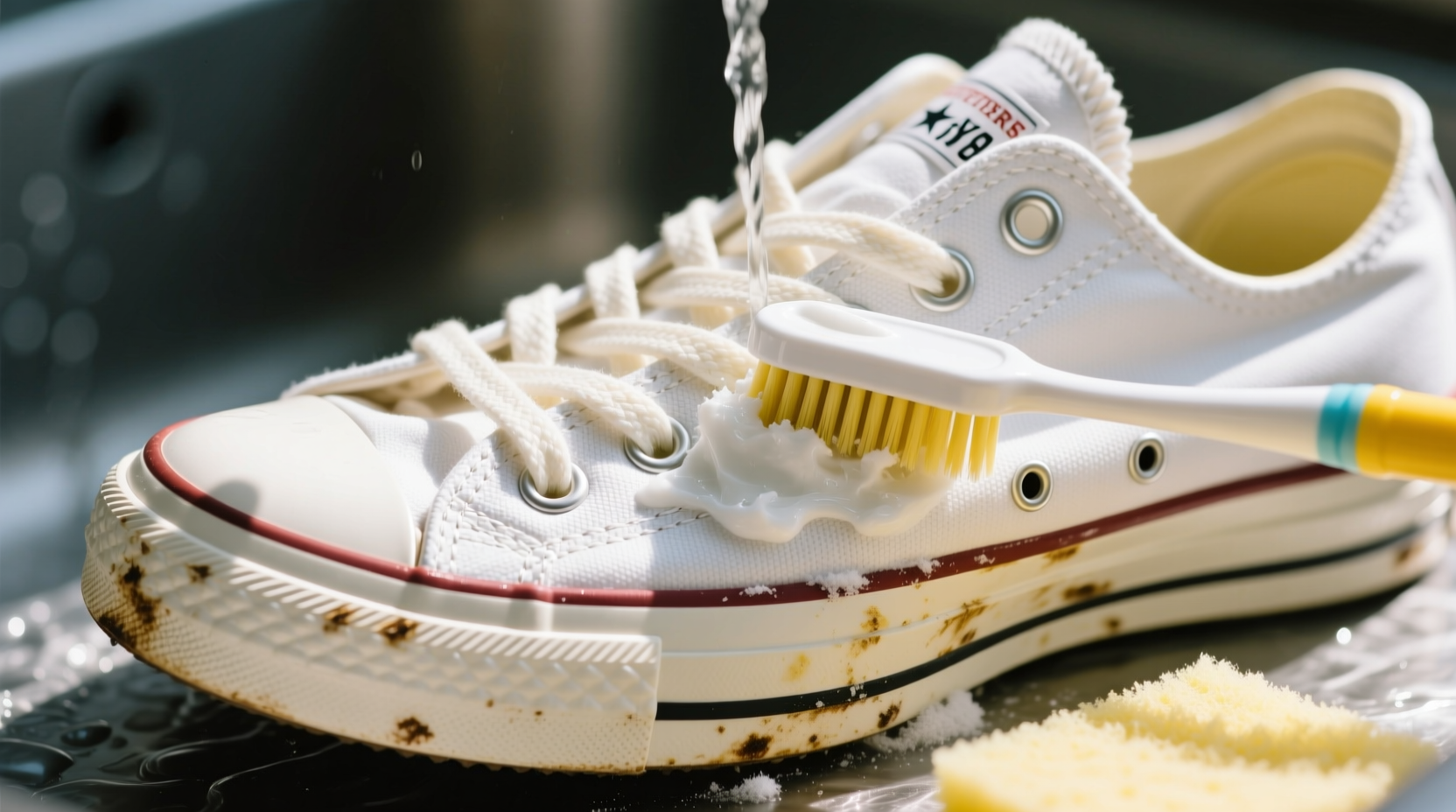
- Dry brush first: Use a soft-bristle toothbrush or sneaker brush to remove loose dirt, dust, and debris from the surface, seams, and rubber toe cap.
- Prepare cleaning solution: Mix 1 tablespoon of mild liquid dish soap (like Dawn) with 1 cup of lukewarm water. Avoid detergents with bleach, optical brighteners, or moisturizers.
- Spot-clean with a cloth or brush: Dip a microfiber cloth or soft toothbrush into the solution. Gently scrub the canvas in circular motions, focusing on stained areas. For the rubber, use slightly more pressure—its surface is more durable.
- Rinse without soaking: Dampen a clean cloth with plain water and wipe down the entire shoe to remove soap residue. Never submerge the entire shoe in water, as prolonged soaking can damage the inner structure and cause glue separation.
After cleaning, stuff each shoe with white paper towels or clean, dry rags. This absorbs internal moisture and helps maintain shape during drying.
Drying Without Yellowing: The Critical Final Step
Drying is where most people fail. Even perfect cleaning is undone by improper drying. Follow these guidelines:
- Air-dry indoors at room temperature.
- Keep shoes away from windows, heaters, and vents.
- Replace stuffing every few hours as it absorbs moisture.
- Allow 24–48 hours for complete drying, depending on humidity.
Alternative Deep-Cleaning Solutions (When Stains Persist)
If basic soap and water aren’t enough, consider these safe deep-cleaning options:
1. Baking Soda + Hydrogen Peroxide Paste
Mix 1 tablespoon baking soda with 1 tablespoon hydrogen peroxide (3%) to form a thick paste. Apply only to stubborn stains—especially on rubber or heavily soiled canvas. Let sit for 1–2 hours (do not exceed), then gently scrub and wipe clean with a damp cloth. Rinse thoroughly. This method lifts stains via mild oxidation without chlorine.
2. Vinegar Mist for Odor and Mild Discoloration
Combine equal parts white vinegar and water in a spray bottle. Lightly mist the interior and canvas (avoid oversaturation). Wipe with a cloth after 10 minutes. Vinegar neutralizes odor-causing bacteria and helps dissolve mineral deposits that contribute to dullness.
3. Magic Eraser (For Rubber Only)
Use a damp melamine foam sponge (commonly sold as “Magic Eraser”) exclusively on the rubber toe cap and sidewalls. It works mechanically to lift surface grime. Do not use on canvas—it can abrade fibers and create thin spots.
| Solution | Best For | Caution |
|---|---|---|
| Soap + Water | Regular maintenance, light dirt | Always rinse well; avoid suds buildup |
| Baking Soda + Peroxide | Stubborn stains, yellowed rubber | Do not leave on >2 hours; keep away from metal eyelets |
| Vinegar Spray | Odors, sweat stains, mild discoloration | Test on small area first; may weaken glue if overused |
| Magic Eraser | Rubber scuffs and marks | Never use on canvas or printed logos |
What Not to Do: Common Mistakes That Cause Yellowing
Avoid these widespread errors that compromise your shoes:
- Using chlorine bleach: Destroys fibers and leaves permanent yellow residue.
- Putting them in the washing machine: Agitation weakens stitching, and residual detergent causes yellowing.
- Drying in the sun or dryer: UV rays and heat accelerate oxidation and glue breakdown.
- Using colored towels or cloths: Dyes can transfer onto wet canvas, creating stains.
- Skipping the pre-brush: Scrubbing dirt into fabric spreads stains and wears down material.
“Once yellowing sets in due to bleach or sun exposure, it’s nearly impossible to reverse. Prevention is the only real solution.” — Marcus Tran, Founder of SoleRevive Sneaker Care Studio
Mini Case Study: Recovering a Pair After Improper Washing
Jamie, a college student in Portland, washed her white Chuck Taylors in the machine with regular detergent and dried them on a radiator. Within days, both shoes developed dark yellow patches along the sides and toe caps. She tried scrubbing with bleach, which made the discoloration worse.
She consulted a local sneaker restoration service, which advised her to stop using bleach immediately. Instead, they recommended a paste of baking soda and hydrogen peroxide applied only to the yellowed rubber, followed by indoor air-drying. They also suggested hand-washing future cleanings with dish soap and white cloths.
After two treatments and proper drying, the rubber regained its near-white appearance. The canvas couldn’t be fully restored due to fiber damage, but Jamie learned how to maintain her next pair correctly. Her experience highlights how easily yellowing occurs—and how minor adjustments in routine make a lasting difference.
Checklist: How to Clean White Converse Safely
Follow this checklist for consistently clean, white-retaining Converse:
- ☑ Remove laces and insoles
- ☑ Dry brush surface to remove loose dirt
- ☑ Mix mild dish soap with lukewarm water
- ☑ Spot-clean with soft brush or cloth
- ☑ Wipe with clean water to remove soap
- ☑ Stuff with white paper towels
- ☑ Air-dry indoors, away from sunlight
- ☑ Replace stuffing every 4–6 hours
- ☑ Re-lace after 24+ hours (ensure fully dry)
Frequently Asked Questions
Can I use toothpaste to clean white Converse?
While some people report success with white toothpaste, it’s not recommended. Most contain abrasives and whitening agents that can scratch canvas or leave residues. Over time, this leads to uneven texture and potential staining. Stick to dish soap or baking soda solutions instead.
How often should I clean my white Converse?
Light cleaning every 2–3 weeks prevents buildup. If worn daily, a quick wipe-down with a damp cloth after each use extends time between deep cleanings. Deep clean only when visible dirt or scuffing appears—over-cleaning wears down materials.
Why do my Converse smell even after cleaning?
Odors usually come from trapped moisture or bacteria in the insole or lining. To prevent this, remove insoles and wash them separately with vinegar-water solution. Sprinkle baking soda inside overnight occasionally to absorb odors. Always ensure shoes are completely dry before wearing again.
Final Tips for Long-Term Whiteness
Prevention is just as important as cleaning. Consider these habits to keep your Converse looking fresh:
- Apply a fabric protector spray designed for canvas to repel water and stains.
- Rotate between multiple pairs to reduce wear frequency.
- Store in a cool, dry place away from direct light.
- Address spills or scuffs immediately before they set.
- Avoid wearing white Converse in muddy or rainy conditions when possible.
Conclusion: Keep Your Whites Bright the Right Way
Cleaning white Converse doesn’t have to be risky or complicated. By avoiding bleach, skipping the washing machine, and drying properly, you preserve both appearance and longevity. The key is consistency, gentleness, and attention to detail—especially during rinsing and drying.
Now that you know the science behind yellowing and the safest cleaning practices, you can confidently refresh your favorite sneakers whenever needed. Proper care turns a simple pair of canvas shoes into long-lasting wardrobe essentials.




 浙公网安备
33010002000092号
浙公网安备
33010002000092号 浙B2-20120091-4
Comments
No comments yet. Why don't you start the discussion?