
White sneakers are a wardrobe staple—versatile, stylish, and perfect for nearly any outfit. But their bright color makes them prone to scuffs, yellowing, and stubborn stains. While commercial cleaners exist, many contain harsh chemicals that can degrade materials over time. A safer, more affordable alternative? Baking soda and vinegar. This dynamic duo is not only environmentally friendly but also highly effective at breaking down grime, lifting discoloration, and neutralizing odors. When used correctly, this natural cleaning method can restore your sneakers to near-new condition without damaging the fabric, rubber, or glue.
The science behind it is simple: baking soda (sodium bicarbonate) acts as a gentle abrasive and deodorizer, while vinegar (acetic acid) dissolves mineral deposits and organic residue. Together, they create a mild effervescent reaction that helps loosen embedded dirt. This article walks you through every step of the process, including preparation, application, drying, and long-term maintenance, so you can keep your sneakers looking crisp and clean season after season.
Why Baking Soda and Vinegar Work on Sneakers
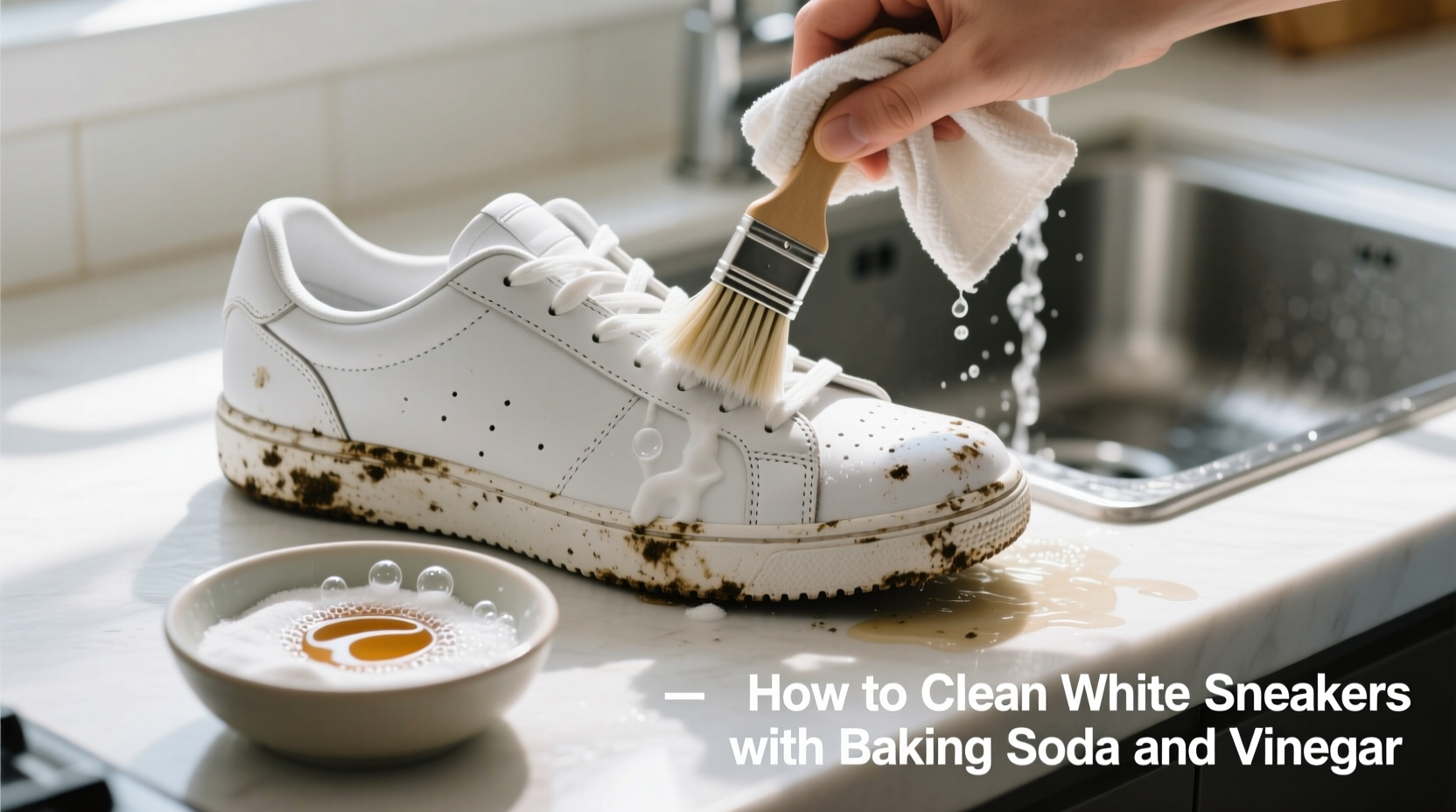
Most sneaker stains come from a mix of environmental exposure—dirt, sweat, oil, and UV light—all contributing to dullness and discoloration. Traditional cleaning products often rely on bleach or solvents that may compromise the integrity of mesh, synthetic leather, or adhesives. In contrast, baking soda and vinegar offer a non-toxic solution that’s both powerful and gentle.
Baking soda has a pH of around 9, making it mildly alkaline. It lifts acidic residues like sweat and grease while scrubbing away surface-level buildup without scratching delicate materials. Vinegar, with a pH of about 2.5, counters alkaline deposits such as soap scum or hard water marks. When combined, they react to form carbon dioxide bubbles, which help dislodge trapped particles in fabric fibers and crevices along the sole.
“Natural cleaning agents like baking soda and vinegar are excellent for routine sneaker care. They reduce chemical exposure and preserve material longevity better than many store-bought sprays.” — Dr. Lena Torres, Textile Chemist and Sustainable Apparel Researcher
This method works best on canvas, knit, synthetic uppers, and rubber soles—common components in popular white sneakers like Converse, Adidas Stan Smiths, Nike Air Force 1s, and New Balance models. However, caution is advised for leather or suede, which require specialized treatments to avoid water spotting or texture damage.
Step-by-Step Guide to Cleaning White Sneakers
Cleaning sneakers properly requires more than just mixing two household ingredients. The key lies in preparation, technique, and patience. Follow this detailed timeline to ensure optimal results without risking structural damage.
- Remove laces and insoles: Take out the shoelaces and pull out the inner soles if possible. Wash laces separately by soaking them in warm, soapy water or placing them in a mesh laundry bag for machine washing. Insoles should be hand-washed gently and air-dried completely before reinsertion.
- Dry brush first: Use a soft-bristle toothbrush or sneaker brush to remove loose dirt and debris from the surface, especially around seams and grooves in the midsole. This prevents mud from turning into paste during wet cleaning.
- Create the cleaning paste: Mix 1 tablespoon of baking soda with 1 teaspoon of water to form a thick paste. Separately, prepare a spray solution of equal parts white vinegar and water in a small spray bottle.
- Pre-treat stained areas: Apply the baking soda paste directly to high-traffic zones—tips, sides, heel counters, and yellowed midsoles. Avoid oversaturating; focus on problem spots.
- Spray with vinegar solution: Lightly mist the treated areas with the vinegar-water mix. You’ll notice slight fizzing—this indicates the chemical reaction is working to lift grime.
- Scrub gently: Using a clean toothbrush or soft cloth, work the mixture into the fabric with circular motions. Pay attention to textured surfaces where dirt hides. For rubber soles, use firmer pressure as needed.
- Wipe and repeat: After scrubbing, wipe off residue with a damp microfiber cloth. If stains persist, reapply the paste and allow it to sit for 10–15 minutes before scrubbing again.
- Rinse carefully: Dampen a fresh cloth with clean water and wipe down all cleaned areas to remove any leftover baking soda or vinegar. Do not submerge the shoes in water.
- Air dry properly: Stuff each shoe with crumpled paper towels or clean rags to maintain shape and absorb moisture. Place them in a well-ventilated area away from direct sunlight or heat sources, which can warp materials and cause yellowing.
Do’s and Don’ts When Using Baking Soda and Vinegar
To maximize effectiveness and prevent accidental damage, follow these guidelines based on material type and cleaning behavior.
| Do’s | Don’ts |
|---|---|
| Use distilled white vinegar (clear, no dyes) | Use apple cider vinegar—it may stain light fabrics |
| Test on a small, hidden area first | Apply full-strength vinegar directly to fabric |
| Let paste sit for 15 minutes on tough stains | Leave residue on for hours—can attract dust |
| Clean every 2–3 weeks for regular wear | Soak entire shoe in liquid mixture |
| Store shoes in breathable cotton bags | Keep them in plastic bins where moisture accumulates |
One common mistake is overusing baking soda. While it’s safe in moderation, excessive application can leave a powdery film that attracts more dirt. Similarly, undiluted vinegar may weaken certain synthetic fibers over time. Always dilute and rinse thoroughly.
Real Example: Reviving Year-Old Canvas Sneakers
Jamal, a college student in Portland, wore his white canvas sneakers daily for nearly a year—through campus walks, weekend hikes, and rainy commutes. By spring, the once-bright shoes were grayish, smelly, and streaked with mud lines. He tried wiping them with wipes and even dabbing with hydrogen peroxide, but nothing worked long-term.
After reading about natural cleaning methods, he decided to try the baking soda and vinegar approach. He removed the laces, brushed off dried dirt, then applied a paste of baking soda and water to the toe box and sides. After spraying with a 50/50 vinegar-water solution and scrubbing with an old toothbrush, he wiped the shoes clean and let them dry overnight stuffed with newspaper.
The next morning, the difference was striking. Surface stains had vanished, and the midsole looked noticeably whiter. More importantly, the musty odor was gone. “I couldn’t believe something from my kitchen could do what store products failed to,” Jamal said. “Now I clean them monthly to keep them fresh.”
Maintenance Checklist for Long-Term Whiteness
Cleaning is only half the battle. Preventive care ensures your sneakers stay cleaner longer. Use this checklist as part of your monthly routine:
- ☑ Remove dirt and dust weekly with a dry brush
- ☑ Rotate between multiple pairs to reduce wear
- ✓ Spot-clean spills or scuffs immediately
- ✓ Apply a fabric protector spray (water-based, non-yellowing)
- ✓ Store in a cool, dry place away from direct sun
- ✓ Re-treat with baking soda/vinegar every 3–4 uses in dirty conditions
- ✓ Replace insoles every 6 months for hygiene and comfort
Frequently Asked Questions
Can I use this method on leather white sneakers?
Proceed with caution. Full-grain or patent leather can tolerate diluted vinegar and minimal baking soda, but repeated use may dry out the material. Instead, use a leather-specific cleaner and conditioner. If attempting this method, test on a small area first and limit exposure time.
Will baking soda and vinegar make my shoes smell like vinegar?
No, the odor dissipates quickly as the vinegar evaporates. Baking soda actually neutralizes smells, so most users report a fresher scent post-cleaning. Ensure shoes are fully dry before wearing to eliminate any lingering traces.
How often can I clean my sneakers this way?
Every 2–3 weeks is ideal for regular wear. Over-cleaning can stress fabrics and adhesives. For light soiling, a quick wipe-down with a damp cloth and spot treatment is sufficient.
Final Thoughts: Simple Ingredients, Lasting Results
Keeping white sneakers clean doesn’t require expensive kits or industrial detergents. With just baking soda and vinegar—two pantry staples—you can achieve impressive results safely and sustainably. The process respects both your footwear and the environment, avoiding toxic runoff and plastic packaging.
More than just a cleaning hack, this method encourages mindful ownership. Regular maintenance extends the life of your sneakers, reduces waste, and saves money over time. Whether you're refreshing a beloved pair or prepping for a special occasion, taking 20 minutes to deep-clean with care makes a visible difference.




 浙公网安备
33010002000092号
浙公网安备
33010002000092号 浙B2-20120091-4
Comments
No comments yet. Why don't you start the discussion?