
Stringing Christmas lights is one of the most joyful parts of holiday decorating, but it can quickly turn stressful when circuits trip or outlets buzz ominously. One common mistake? Connecting too many light strands together without understanding electrical limits. While it might seem harmless to daisy-chain several sets end-to-end, doing so risks overloading circuits, damaging lights, or even creating a fire hazard. The good news: with a few smart strategies, you can safely connect two (or more) sets of Christmas lights while staying within safe electrical parameters.
The key lies in understanding basic electrical principles—particularly amperage, wattage, and outlet capacity—and applying them practically. This guide walks you through everything from reading manufacturer labels to organizing your setup for maximum safety and sparkle.
Understanding Circuit Load and Electrical Limits
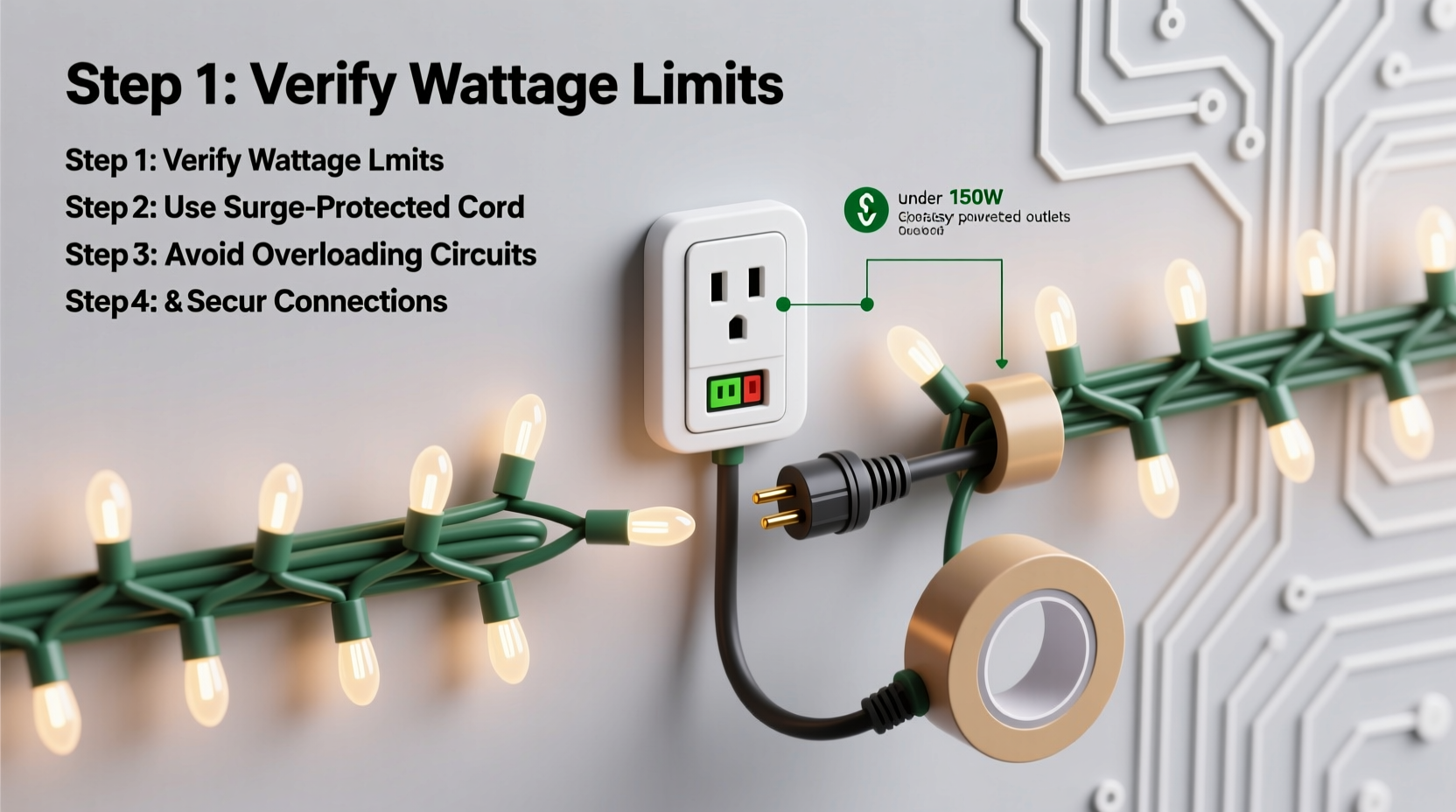
Every home circuit has a maximum load it can handle, typically measured in amps (amperes). Most standard household circuits in the U.S. are rated for 15 or 20 amps. To avoid tripping a breaker—or worse—you must ensure that the total power draw from all devices on the circuit stays below this limit.
Christmas lights consume electricity in watts. You can convert watts to amps using this formula:
Amps = Watts ÷ Volts
In North America, standard household voltage is 120 volts. So if a string of lights uses 48 watts:
48 ÷ 120 = 0.4 amps
That means each strand draws less than half an amp. But when multiple strands are connected, those numbers add up fast.
As a general rule, never exceed 80% of a circuit’s capacity for continuous loads (like holiday lights left on for hours). That means:
- For a 15-amp circuit: max 12 amps (1,440 watts)
- For a 20-amp circuit: max 16 amps (1,920 watts)
Always assume your circuit already powers other items—lamps, TVs, chargers—so reserve at least 3–5 amps for existing loads before adding lights.
“Overloading a circuit with decorative lighting is one of the most preventable causes of holiday electrical issues. Know your limits and plan accordingly.” — Carlos Mendez, Licensed Electrician & NFPA Safety Advisor
How to Safely Connect Two Sets of Lights: A Step-by-Step Guide
Connecting two sets of Christmas lights doesn’t have to be risky—if done correctly. Follow these steps to ensure a safe, bright display.
- Check the manufacturer’s label on each light set. Look for the “maximum connectable” number—often listed as “Connect Up To ___ Sets.” Exceeding this number voids safety certifications and increases fire risk.
- Determine the wattage per string. If not listed, use a wattage meter or calculate based on bulb count and type (e.g., LED vs. incandescent).
- Add the wattage of both sets. For example, two 48-watt LED strings = 96 watts total (0.8 amps).
- Verify the outlet’s available capacity. If the outlet is on a shared 15-amp circuit with other devices drawing 6 amps, you only have 6 amps left. Your two-light setup uses less than 1 amp, so it’s safe.
- Use a surge-protected power strip rated for outdoor or indoor use, depending on location. Avoid cheap extension cords or multi-plug adapters without overload protection.
- Plug each set into the power strip separately, rather than daisy-chaining beyond the manufacturer’s limit. This reduces strain on individual connectors.
- Test the setup by turning it on for 15–20 minutes. Check for warm plugs, flickering, or buzzing sounds—all signs of potential overload.
LED vs. Incandescent: Which Is Safer for Connecting Multiple Sets?
The type of bulb makes a dramatic difference in safety and efficiency. Here's how LED and incandescent lights compare when connecting multiple sets:
| Feature | LED Lights | Incandescent Lights |
|---|---|---|
| Wattage per 100-bulb string | 4–7 watts | 40–50 watts |
| Heat output | Low (safe to touch) | High (can burn skin or materials) |
| Max connectable strings (typical) | 40–50+ sets | 2–3 sets |
| Lifespan | 25,000–50,000 hours | 1,000–2,000 hours |
| Energy cost (seasonal avg.) | $1–$3 | $15–$30 |
LED lights are clearly the safer and more efficient choice for connecting multiple sets. Their low power draw allows you to link far more strings without approaching circuit limits. They also generate minimal heat, reducing fire risk—especially important when draping lights over trees, curtains, or flammable decorations.
If you’re still using older incandescent sets, consider upgrading to LED. Many modern LED strings are designed to mimic the warm glow of traditional bulbs while using a fraction of the energy.
Real Example: Sarah’s Front Porch Overload Incident
Sarah loves holiday decorating. Every year, she wraps her porch railing, eaves, and tree in lights. Last season, she decided to double her display by connecting four sets of incandescent mini-lights end-to-end. Each string was rated for 48 watts, but the label clearly stated “Maximum 3 sets connected.” She ignored it, thinking, “It’s just one extra.”
On the second night, the lights flickered, then went out. The circuit breaker in her basement had tripped. When she reset it, the same thing happened within minutes. Concerned, she called an electrician.
The technician explained that four 48-watt strings drew 192 watts (1.6 amps), which wasn’t excessive—but because they were daisy-chained beyond the manufacturer’s rating, the first connector overheated, creating resistance and tripping the thermal cutoff. Worse, the outlet showed scorch marks inside the wall plate, indicating a near-miss fire hazard.
Solution? The electrician advised switching to LED lights and using a power strip with built-in surge and overload protection. Sarah now runs six LED light sets safely on the same circuit—with no daisy-chaining—by plugging them individually into a single heavy-duty outlet strip.
Essential Checklist: Safe Multi-Light Connection Protocol
Before plugging in your holiday lights, run through this checklist to prevent overloads and hazards:
- ✅ Identify whether your lights are LED or incandescent
- ✅ Locate the wattage and “max connectable” number on each set
- ✅ Calculate total wattage and amp draw of all planned connections
- ✅ Confirm the circuit’s total capacity and current load
- ✅ Use a UL-listed power strip with overload protection
- ✅ Avoid daisy-chaining beyond the manufacturer’s limit
- ✅ Plug additional sets directly into the power strip instead
- ✅ Inspect cords for frays, cracks, or damaged plugs
- ✅ Test the setup for 15–20 minutes before leaving unattended
- ✅ Install a timer to automatically turn lights off after 8–10 hours
Frequently Asked Questions
Can I connect two different brands of Christmas lights together?
Yes, but only if both are rated for connection and you don’t exceed the lower brand’s “maximum connectable” limit. Mismatched voltages or incompatible connectors can cause failure or overheating. Always check labels and use caution.
Is it safe to plug multiple light strings into one outlet?
Yes, as long as the total load stays within the outlet’s circuit capacity and you use a surge-protected power strip. Avoid plugging high-draw appliances (like space heaters) into the same circuit while lights are on.
Why do my lights work for a few hours and then shut off?
This often indicates a built-in thermal fuse has tripped due to overheating—usually from daisy-chaining too many sets or poor ventilation around the plug. Let the lights cool, reduce the chain length, and plug into a better-ventilated area.
Pro Tips for Managing Larger Displays
If you're decorating a large tree, roofline, or yard, managing multiple light sets requires planning. Here are advanced strategies:
- Zone your display: Divide lights into zones powered by separate circuits. For example, use one circuit for the front yard, another for the living room tree.
- Use smart plugs: Control different sections remotely and schedule on/off times to reduce runtime and heat buildup.
- Label your cords: Use colored tags or tape to identify which string goes where, making troubleshooting easier.
- Invest in commercial-grade lights: For permanent or expansive displays, look for strings rated for higher connectability and durability.
- Run a dedicated circuit: If you decorate heavily every year, consider having an electrician install a dedicated 20-amp outdoor circuit for holiday use.
“The safest Christmas display isn’t the brightest—it’s the one that respects electrical limits and uses modern, efficient technology.” — National Fire Protection Association (NFPA) Holiday Safety Report, 2023
Final Thoughts: Shine Bright, Stay Safe
Connecting two sets of Christmas lights doesn’t have to be complicated or dangerous. By understanding wattage, respecting manufacturer limits, and using the right tools—like LED lights and surge-protected strips—you can create a festive display that’s both dazzling and safe.
Remember: the holidays are about joy, not emergency electricians. A few minutes spent calculating load and checking connections can prevent hours of frustration—or worse. Whether you’re lighting a small tree or wrapping an entire house, prioritize safety as much as sparkle.




 浙公网安备
33010002000092号
浙公网安备
33010002000092号 浙B2-20120091-4
Comments
No comments yet. Why don't you start the discussion?