
When a recipe calls for fresh basil but you only have dried—or vice versa—knowing the correct conversion ratio is essential to avoid under-seasoned or overpowering results. Many home cooks assume these forms of basil are interchangeable by volume alone, but that misconception can lead to imbalanced flavors. Dried and fresh basil differ significantly in concentration, moisture content, and aromatic intensity. Understanding how to convert between them ensures your dishes maintain the intended herbal brightness and depth. Whether you're preparing pesto, tomato sauce, or a Mediterranean stew, mastering this conversion elevates your cooking from guesswork to precision.
Definition & Overview
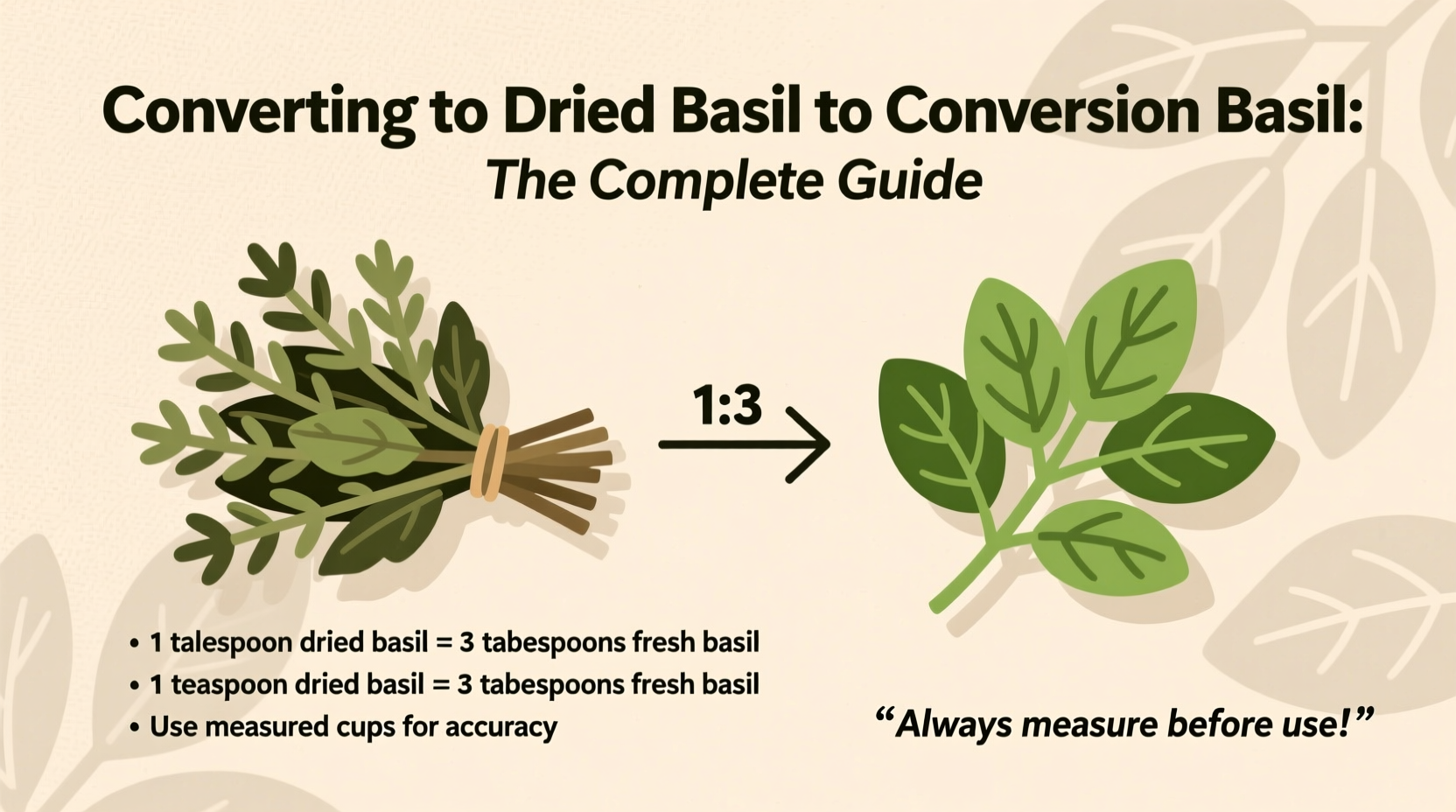
Basil (Ocimum basilicum) is a fragrant herb belonging to the mint family, Lamiaceae. Native to tropical regions of Asia and widely cultivated across the Mediterranean, it plays a central role in Italian, Thai, Vietnamese, and Indonesian cuisines. The most common variety used in Western cooking is sweet basil, known for its lush green leaves and sweet, slightly peppery aroma with hints of anise and clove.
In culinary applications, basil appears in two primary forms: fresh and dried. Fresh basil consists of whole or chopped leaves harvested at peak maturity, prized for their vibrant color and volatile essential oils. Dried basil is produced by dehydrating fresh leaves, which removes moisture and concentrates certain compounds while diminishing others. This transformation alters not just weight and volume, but also flavor profile and potency.
The key challenge arises when substituting one form for another. Because drying intensifies some aspects of taste while muting delicate top notes, direct 1:1 substitutions often fail. A proper understanding of measurement conversion requires acknowledging both physical changes during dehydration and sensory differences in application.
Key Characteristics
| Characteristic | Fresh Basil | Dried Basil |
|---|---|---|
| Flavor Profile | Bright, sweet, slightly peppery with anise-like undertones; highly aromatic | Muted sweetness, earthier, more concentrated; loses some floral notes |
| Aroma | Strongly fragrant; releases essential oils when bruised | Less volatile; scent diminishes over time |
| Color | Vibrant emerald green | Olive to dark green; fades with age |
| Texture / Form | Soft, tender leaves; used whole, torn, or chopped | Crisp, brittle leaves; typically crushed or ground |
| Moisture Content | High (approx. 90%) | Low (5–10%) |
| Shelf Life | 3–7 days refrigerated; best used immediately | 1–3 years if stored properly in airtight container |
| Culinary Function | Finishing herb; adds freshness and visual appeal | Infusion herb; used early in cooking to rehydrate and release flavor |
Practical Usage: How to Substitute Accurately
The standard rule for converting dried herbs to fresh—and vice versa—is based on concentration. Due to water loss during drying, dried herbs are more potent by weight. However, they lack the bright, volatile oils that define fresh basil’s character. Therefore, substitution isn’t purely about strength—it's about timing, method, and expected outcome.
The Standard Conversion Ratio
The universally accepted conversion is:
- 1 tablespoon fresh basil = 1 teaspoon dried basil
- 1 cup loosely packed fresh basil ≈ 3 tablespoons dried basil
- 3 parts fresh basil ≡ 1 part dried basil (by volume)
This 3:1 ratio reflects the general consensus among professional chefs and food scientists, accounting for typical moisture loss (approximately 70–80% reduction in volume after drying).
Step-by-Step Substitution Guide
- Identify the amount called for in the recipe. For example, “2 tablespoons chopped fresh basil.”
- Apply the 3:1 ratio. Divide the fresh amount by 3: 2 ÷ 3 ≈ 0.67 tablespoons → round to 2 teaspoons dried basil.
- Adjust based on dish type. In long-cooked sauces, dried basil benefits from early addition. In raw applications like salads or garnishes, consider supplementing with lemon zest or parsley to mimic freshness.
- Taste and refine. Always taste after incorporating dried basil, especially if the recipe wasn't designed for it. You may need a slight acid boost (lemon juice or vinegar) to balance the earthiness.
Pro Tip: When using dried basil in place of fresh in no-cook recipes (e.g., caprese salad), reconsider the substitution entirely. Dried basil won’t provide the same mouthfeel or burst of aroma. Instead, use frozen basil cubes (blanched and pureed with oil) as a closer alternative.
Real-World Application Examples
Example 1: Marinara Sauce
A traditional recipe calls for ¼ cup chopped fresh basil added at the end. To adapt using dried:
¼ cup = 4 tablespoons → divide by 3 → approximately 1¼ tablespoons dried basil.
Since marinara simmers for 30+ minutes, add the dried basil during the last 10 minutes to preserve flavor without bitterness.
Example 2: Pesto
Classic pesto relies on fresh basil’s juiciness and fragrance. Substituting dried basil directly will result in a dull, flat sauce. If fresh is unavailable, combine 2 tablespoons dried basil with 1 tablespoon lemon juice, ½ teaspoon sugar, and extra garlic to compensate for lost vibrancy. Even then, texture suffers—this version works better as a spread than a pasta sauce.
Example 3: Tomato-Basil Soup
Recipe uses ⅓ cup fresh basil stirred in before blending. Converting: ⅓ cup = ~5 tablespoons → divided by 3 → use 1¾ teaspoons dried basil. Add it at the start of sautéing onions to infuse the base, then finish with a splash of balsamic vinegar to restore brightness.
Variants & Types of Basil
Not all basil is created equal. While sweet basil dominates grocery stores, several varieties affect how conversions apply due to differing oil concentrations and leaf structures.
- Sweet Basil (Ocimum basilicum): Most common; standard reference for conversion ratios.
- Genovese Basil: A subtype of sweet basil with larger, more aromatic leaves; ideal for pesto. Slightly higher oil content means dried Genovese may be marginally stronger—reduce dried用量 by 10%.
- Thai Basil (Ocimum thyrsiflora): Licorice-forward flavor; holds up better when dried. Can substitute at near 2.5:1 ratio (fresh:dried) due to robustness.
- Lemon Basil: Citrusy notes fade significantly when dried; not recommended for drying unless used in teas or spice blends.
- Dwarf Greek Basil: Smaller leaves, more compact growth; often sold dried. Naturally more concentrated—use 3:1 ratio cautiously, starting with less.
Storage Insight: Store dried basil in an airtight glass jar away from heat and light. It retains optimal potency for 6–12 months. After one year, its flavor diminishes by up to 50%, meaning you may need to increase用量 slightly—but never double.
Comparison with Similar Ingredients
Basil is often confused with other herbs, particularly in dried form where visual distinctions blur. Misidentification leads to incorrect substitutions and flawed conversions.
| Herb | Similarities to Basil | Key Differences | Substitution Advice |
|---|---|---|---|
| Oregano | Same family; often paired in Italian dishes | More pungent, less sweet; dominant in pizza seasoning | Use half the amount if replacing basil; not interchangeable 1:1 |
| Marjoram | Delicate, sweet flavor; sometimes labeled \"sweet marjoram\" | Softer, woodsy tone; lacks anise notes | Better substitute for dried basil than oregano, but still distinct |
| Thyme | Common in dried herb blends (e.g., Herbes de Provence) | Earthy, camphorous; doesn’t mimic basil’s sweetness | Not a viable substitute; alters dish identity |
| Italian Seasoning | Often contains dried basil as a component | Blend of oregano, marjoram, rosemary, thyme, sage | If substituting for dried basil, use 1.5x the amount—but expect complexity, not purity |
Practical Tips & FAQs
Can I use dried basil instead of fresh in all recipes?
No. Dried basil performs poorly in raw applications such as salads, bruschetta, or garnishes. Its texture is gritty, and it lacks the aromatic lift of fresh leaves. Reserve dried basil for cooked dishes like soups, stews, braises, and slow-simmered sauces where hydration and prolonged heat allow flavor release.
Why does my dried basil taste bitter?
Bitterness occurs when dried basil is exposed to high heat for too long or used in excess. Unlike fresh basil, which mellows when cooked, dried basil can develop sharp, acrid notes. To prevent this, add dried basil midway through cooking—not at the very beginning—and never exceed recommended conversions without tasting first.
Is there a weight-based conversion for greater accuracy?
Yes. For precise baking or commercial formulations:
- 1 ounce (28g) fresh basil ≈ 7–8g dried basil
- 1 cup loosely packed fresh basil ≈ 15g
- 1 tablespoon dried basil ≈ 1.5g
Using a kitchen scale eliminates volume inconsistencies caused by packing density.
What are reliable substitutes if I have neither fresh nor dried basil?
While no herb perfectly replicates basil, acceptable alternatives include:
- Pesto paste (jarred or frozen): Closest match in flavor and function.
- Herbes de Provence: Contains basil-like elements; use sparingly.
- Spinach + parsley + pinch of tarragon: Mimics color and mild herbal tone in blended dishes.
- Arugula: Peppery bite contrasts sweetness but adds green freshness in salads.
Does freezing fresh basil count as “fresh” or “dried” for conversion purposes?
Technically, frozen basil retains its fresh status. Freezing ruptures cell walls, releasing more flavor upon thawing. Use a 1:1 swap for fresh in cooked dishes. However, texture becomes soft—so don’t use thawed frozen basil for garnish. Blanch leaves briefly before freezing to preserve color and inhibit enzymatic browning.
“Drying herbs is like compressing a symphony into a single note. You keep the essence, but lose the harmony. That’s why conversion isn’t arithmetic—it’s alchemy.” — Chef Elena Rossi, Culinary Institute of America
Summary & Key Takeaways
Converting between dried and fresh basil hinges on recognizing fundamental differences in moisture, concentration, and culinary behavior. The 3:1 volume ratio (fresh to dried) serves as a foundational guideline, but successful substitution depends on context: cooking method, dish type, and desired sensory outcome.
Key points to remember:
- Use 1 teaspoon dried basil for every 1 tablespoon fresh as a starting point.
- Dried basil excels in long-cooked dishes; avoid it in raw preparations.
- Fresh basil contributes aroma, color, and texture beyond mere flavor.
- Weight-based measurements offer superior accuracy, especially in professional settings.
- Store dried basil properly to maintain potency; replace after 12–18 months.
- Never treat dried herbs as direct equivalents—they are different ingredients serving similar roles.
Next time you reach for the spice rack, pause and convert with confidence. Your palate—and your recipes—will thank you.




 浙公网安备
33010002000092号
浙公网安备
33010002000092号 浙B2-20120091-4
Comments
No comments yet. Why don't you start the discussion?