
For many, the magic of the holiday season lies in the soft glow of Christmas lights. But while most traditional string lights offer only one brightness setting—full power—there’s growing demand for more control. Dimmable lights allow you to set the mood, reduce glare, and even save energy during late-night displays. The good news? You don’t need to replace your entire collection of standard incandescent or LED Christmas lights to achieve this. With affordable inline dimming controllers, you can upgrade existing strings to fully adjustable brightness in just a few steps.
This guide walks through everything you need to know about converting standard Christmas lights into dimmable ones—from selecting compatible components to installation, safety precautions, and real-world performance tips. Whether you’re decorating a porch, wrapping a tree, or illuminating a rooftop display, these modifications can transform your setup without breaking the bank.
Understanding Standard vs. Dimmable Christmas Lights
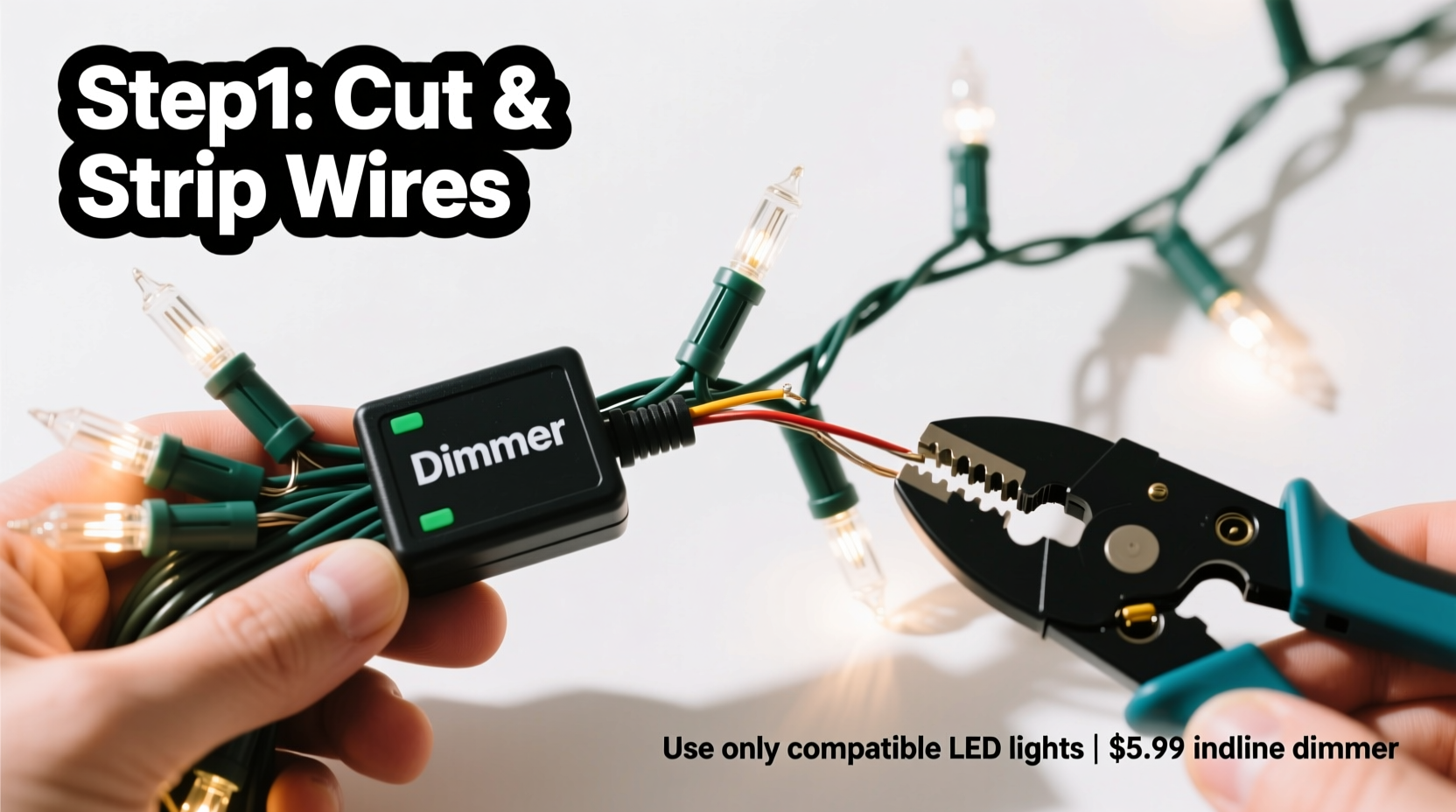
Most off-the-shelf Christmas light strings are designed to operate at full voltage with no built-in brightness control. These “standard” lights either stay on at 100% output or turn off completely. While reliable and inexpensive, they lack flexibility. In contrast, dimmable lights use pulse-width modulation (PWM) or phase-cut technology to vary brightness smoothly.
The key difference isn't always in the bulbs themselves—it's often in the power delivery system. Many modern LED Christmas lights are inherently dimmable if supplied with a compatible controller. Even some incandescent strings respond well to voltage reduction, though with less efficiency and color stability.
By introducing an external inline dimmer between the wall outlet and the light string, you gain precise control over brightness without modifying individual bulbs or sockets. This makes retrofitting simple, scalable, and reversible.
Choosing the Right Inline Dimmer Controller
Not all dimmers work with all types of Christmas lights. Selecting the correct inline controller is critical for performance and safety. Below are the most common types available in the $10–$30 range:
- PWM (Pulse Width Modulation) Controllers: Best for low-voltage DC LED strings, especially battery-powered or USB-operated sets. These modulate power rapidly to simulate dimming without flicker.
- TRIAC-Based AC Dimmers: Designed for household AC voltage (120V in North America). Suitable for plug-in incandescent and some AC-powered LED strings.
- Smart Plug Dimmers: Wi-Fi or Bluetooth-enabled devices that allow app or voice-controlled dimming. Limited in actual dimming range but convenient for scheduling.
- Rotary Dial Inline Dimmers: Physical knobs that adjust brightness manually. Often used for stage lighting but now adapted for decorative strings.
When shopping, pay close attention to specifications:
| Feature | Recommended | Avoid |
|---|---|---|
| Voltage Compatibility | Matches your lights (e.g., 120V AC or 12V DC) | Mismatched voltage (e.g., 12V dimmer on 120V line) |
| Wattage Rating | Higher than total string wattage | Lower-rated dimmers (fire risk) |
| Dimming Curve | Smooth fade from 10% to 100% | Only 50%–100% range or abrupt cutoff |
| Bulb Type Support | Explicitly lists LED or incandescent | “Universal” with no specifics |
“Many people assume their existing lights aren’t dimmable, but over 70% of modern LED mini-lights work perfectly with a properly matched TRIAC dimmer.” — Carlos Mendez, Lighting Systems Engineer, Holiday Illumination Labs
Step-by-Step Guide: Converting Your Lights to Dimmable
Follow this practical sequence to safely install an inline dimmer on your current Christmas light strings.
- Assess Your Light Strings
Check the label for voltage, wattage, and bulb type. Note how many strings you plan to connect. Total combined wattage must not exceed the dimmer’s maximum load rating. - Select the Appropriate Dimmer
For standard 120V plug-in LED or incandescent strings, choose a UL-listed AC rotary or slide dimmer rated for at least 20% above your total load. For example, if your setup draws 48 watts, pick a dimmer rated for 60 watts or more. - Test One String First
Plug a single string into the dimmer, then into the wall. Turn the knob slowly from low to high. Look for smooth dimming, absence of buzzing, and no flickering. If issues occur, unplug immediately and recheck compatibility. - Connect Multiple Strings (If Needed)
If daisy-chaining multiple strings, ensure the total load remains under the dimmer’s capacity. Never exceed manufacturer limits. Use heavy-duty extension cords if needed, but keep them away from moisture. - Install the Dimmer Permanently
Mount the dimmer in a dry, accessible location—indoors near an outlet or inside a weatherproof enclosure outdoors. Secure cords with clips to prevent tripping or strain. - Label and Organize
Mark the dimmer and associated lights clearly. Consider adding a small switch box so you can bypass the dimmer when full brightness is desired.
Real-World Example: A Homeowner’s Dimming Upgrade
Sarah Thompson, a homeowner in Portland, Oregon, had used the same set of 50-foot warm-white LED Christmas lights along her eaves for five years. While beautiful, the constant brightness overwhelmed neighbors during evening hours. She wanted softer illumination after 8 PM but didn’t want to invest in new smart lights costing over $100.
She purchased a $17 inline TRIAC dimmer rated for 100W, compatible with LED and incandescent loads. After confirming her string drew only 36W, she connected it directly between the outlet and the first light set. Testing revealed smooth dimming down to about 15%, with no audible hum or flicker. She mounted the dimmer inside a garage outlet box with a clear faceplate for easy access.
Now, she adjusts the brightness nightly—bright for parties, dim for quiet evenings. Her neighbors appreciated the reduced light pollution, and her electricity usage dropped slightly due to lower average output. Total project cost: under $20.
Common Pitfalls and How to Avoid Them
While the conversion process seems straightforward, several issues commonly arise:
- Flickering at Low Brightness: Caused by incompatible dimming technology. Try a different dimmer model or avoid running below 20% unless specified as low-end compatible.
- Overheating: Occurs when exceeding wattage limits. Always derate by 20%—if a dimmer says 100W, run only up to 80W continuous.
- No Dimming Effect: Some cheap LED strings have internal rectifiers that resist phase-cut dimming. Test before final installation.
- Humming or Buzzing: Usually from magnetic transformers or poor-quality drivers. Switch to a PWM-based dimmer for DC systems.
- Weather Damage: Outdoor dimmers must be housed in IP65-rated enclosures. Never expose electronics to rain or snow.
“The biggest mistake I see is assuming ‘all LEDs are dimmable.’ That’s like saying all cars take the same fuel. Technology matters.” — Lena Park, Electrical Safety Consultant, NFPA Contributor
Essential Checklist for a Successful Conversion
- ✓ Confirm voltage and wattage of all light strings
- ✓ Choose a dimmer rated for higher wattage than your total load
- ✓ Verify dimmer supports your bulb type (LED/incandescent)
- ✓ Test dimmer with one string before full deployment
- ✓ Install in a dry, ventilated location
- ✓ Label controls clearly for future reference
- ✓ Inspect cords and connections monthly during use
Frequently Asked Questions
Can I dim old incandescent Christmas lights?
Yes, most traditional incandescent mini-lights dim very well using standard TRIAC dimmers. They may shift slightly warmer in color as brightness decreases, which often enhances the cozy holiday feel. Just ensure the dimmer matches the higher wattage draw typical of incandescent sets.
Will using a dimmer save energy?
Yes, reducing brightness lowers power consumption proportionally. At 50% brightness, most dimmable LEDs use roughly 50% less energy. Incandescents also save power when dimmed, though less efficiently due to heat loss. Over a six-week season, this can translate into measurable savings—especially with large displays.
Are there wireless options for dimming standard lights?
Yes. Smart plug dimmers like Lutron Caseta or TP-Link Kasa offer remote control via smartphone or voice assistants. However, many smart plugs only support limited dimming ranges (e.g., 20%–100%) and may not work reliably with low-wattage LED strings. Always check compatibility lists before purchasing.
Final Thoughts: Transform Your Holiday Display with Simple Upgrades
Converting standard Christmas lights to dimmable doesn’t require rewiring, soldering, or replacing every string. With a modest investment in an inline controller, you unlock a new level of ambiance, efficiency, and control. Whether you're toning down the glow for a romantic winter evening or creating dynamic lighting scenes across seasons, dimming opens creative possibilities beyond the holidays.
The technology is accessible, safe when installed correctly, and increasingly affordable. As more consumers seek smarter, more sustainable ways to enjoy festive lighting, retrofitting existing setups with dimmers represents a practical step forward—one that honors both tradition and innovation.




 浙公网安备
33010002000092号
浙公网安备
33010002000092号 浙B2-20120091-4
Comments
No comments yet. Why don't you start the discussion?