
A bedroom should be more than just a place to sleep—it should be a sanctuary. Yet, many people assume that achieving a peaceful, spa-like atmosphere requires expensive renovations or designer furniture. The truth is, you don’t need a large budget to transform your bedroom into a calming retreat. With intentional lighting choices and strategic layout adjustments, you can significantly elevate the mood and functionality of your space. This guide breaks down practical, low-cost methods to cultivate tranquility in your bedroom through two powerful tools: lighting and spatial arrangement.
Why Atmosphere Matters in Your Bedroom
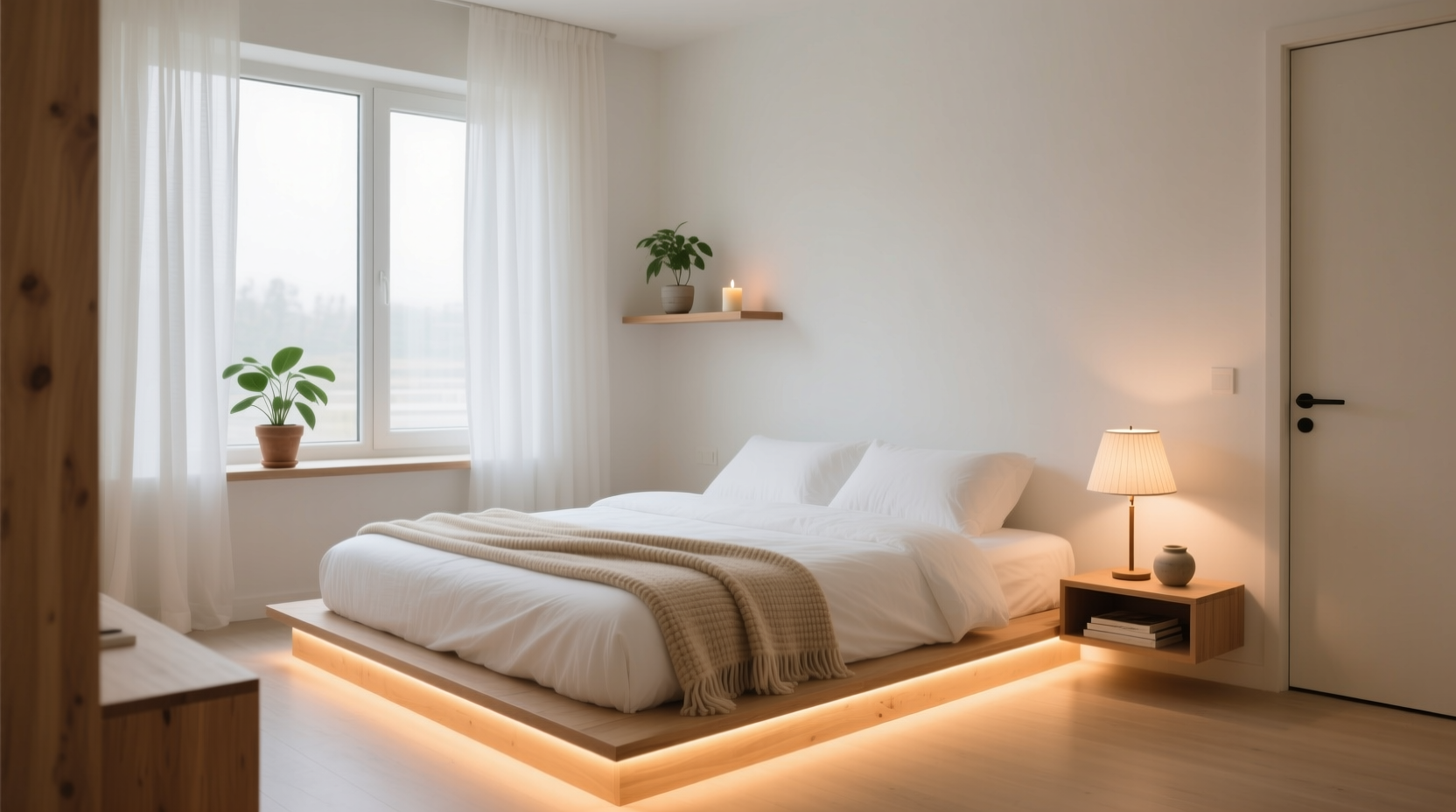
The environment of your bedroom directly influences your sleep quality, stress levels, and overall well-being. According to the American Psychological Association, environments perceived as chaotic or visually overwhelming can increase cortisol—the stress hormone—making it harder to unwind at night. Conversely, spaces that are organized, softly lit, and free of clutter promote relaxation and support deeper rest.
Creating a calming bedroom isn’t about buying the most expensive mattress or importing linens from abroad. It’s about designing a space that signals safety and serenity to your nervous system. Lighting and layout are two of the most impactful—and affordable—ways to achieve this. They shape how you experience the room before you even touch the sheets.
Mastering Budget-Friendly Lighting for Calm
Lighting is one of the most underestimated design elements. Harsh overhead lights can make even the coziest room feel sterile. On the other hand, layered, warm-toned lighting instantly softens a space and prepares the mind for rest.
Start by evaluating your current light sources. Most bedrooms come with a single ceiling fixture that emits bright, cool white light—ideal for an office, but not for winding down. Replace this bulb with a warmer one (2700K–3000K color temperature) to mimic candlelight or sunset glow. This small change costs less than $5 and makes a dramatic difference.
Next, layer your lighting. Relying on just one source flattens the space. Instead, combine three types:
- Ambient lighting: General illumination, like a ceiling fixture or wall sconces.
- Task lighting: Focused light for reading or preparing, such as bedside lamps.
- Accent lighting: Decorative touches like fairy lights or under-bed LEDs.
You don’t need to buy all new fixtures. Repurpose what you have. A simple desk lamp with a warm bulb works perfectly on a nightstand. Clip-on reading lights save floor space and cost under $15. For accent lighting, string fairy lights around a mirror or headboard—many options are battery-powered, eliminating the need for outlets nearby.
“Lighting sets the emotional tone of a room. Soft, warm layers signal safety and calm—just what your brain needs before sleep.” — Dr. Lena Tran, Environmental Psychologist
Optimizing Layout for Flow and Serenity
Your bedroom’s layout affects not just aesthetics, but also energy flow and subconscious comfort. Poor placement can make a room feel cramped or disjointed, even if it's spacious. The goal is to create balance, clear pathways, and a focal point that draws the eye gently—usually the bed.
Begin by measuring your room and sketching a rough floor plan. You don’t need fancy software; graph paper and a pencil work fine. Identify key obstacles: windows, doors, outlets, and radiators. Then, position the bed so it’s visible upon entry but not directly in line with the door—a principle rooted in Feng Shui known as the “command position.” This placement fosters a sense of control and security.
If your bed must face the door due to space constraints, soften the effect by placing a small screen, bench, or plant between the foot of the bed and the entrance. This creates visual buffer without blocking movement.
Minimize clutter by choosing multi-functional furniture. A storage ottoman at the end of the bed doubles as seating and a place to stash extra blankets. Floating shelves keep books and decor off the floor while maintaining openness. If you lack closet space, use woven baskets under the bed to store off-season clothes—out of sight, out of mind.
Arrange nightstands symmetrically if possible. Matching lamps or identical decor on both sides create visual harmony, which the brain interprets as order and peace. If symmetry isn’t feasible, focus on balance—similar heights, shapes, or colors on each side.
Step-by-Step: Transform Your Bedroom in One Weekend
You can implement these changes over a single weekend with minimal spending. Follow this timeline to avoid overwhelm and see measurable results.
- Day 1 Morning: Declutter & Assess
Remove unnecessary items—donate, recycle, or relocate. Empty drawers, clear surfaces, and vacuum thoroughly. Take stock of existing lighting and furniture. - Day 1 Afternoon: Plan Layout
Sketch your ideal setup. Decide where the bed, nightstands, and storage will go. Note outlet locations for lamps and electronics. - Day 1 Evening: Shop Smart
Purchase only what’s essential: warm bulbs, one or two new lamps, and maybe string lights. Check thrift stores, Facebook Marketplace, or discount retailers like IKEA or Target. - Day 2 Morning: Rearrange Furniture
Move pieces according to your plan. Test walking paths and access to windows or closets. Adjust until movement feels natural. - Day 2 Afternoon: Install Lighting
Set up ambient, task, and accent lights. Test dimmers and positioning. Sit on the bed and observe how light falls—adjust angles as needed. - Day 2 Evening: Final Touches
Add soft textiles: throw blanket, cushion, or rug. Place a plant or essential oil diffuser on a shelf. Turn off overhead lights and experience your new ambiance.
Budget Breakdown: What You’ll Spend
To prove this approach is accessible, here’s a realistic cost estimate for a full transformation:
| Item | Average Cost | Where to Find |
|---|---|---|
| Warm LED bulbs (2-pack) | $8 | Hardware store, Amazon |
| Clip-on reading lamps (pair) | $20 | Target, Walmart |
| Fairy lights (battery-operated) | $12 | Dollar Tree, HomeGoods |
| Storage baskets (set of 2) | $15 | Thrift store, IKEA |
| Floating shelf + brackets | $25 | Home Depot, Lowe’s |
| Small indoor plant | $10 | Garden center, Trader Joe’s |
| Total Estimated Cost | $90 |
This total is less than the price of a single luxury throw pillow—but delivers lasting impact across every square foot of your bedroom.
Mini Case Study: From Chaotic to Calm in 48 Hours
Sophie, a 32-year-old teacher in Portland, lived in a studio apartment where her bed dominated the room. Her only light source was a harsh ceiling fixture, and clothes spilled from a folding rack near the window. She felt anxious entering the space each evening.
Over a weekend, she followed the steps above. She replaced the bulb with a warm dimmable one, added a $15 clip lamp to her nightstand, and hung fairy lights along the headboard. She moved the clothing rack to a closet nook and placed a storage ottoman at the foot of the bed. Finally, she added a snake plant on a floating shelf.
“I didn’t spend much, but the change is incredible,” Sophie said. “Now when I turn on the lights at night, it feels like stepping into a retreat. I fall asleep faster and wake up less stressed.”
Checklist: Your Calming Bedroom Transformation
Use this checklist to ensure you’ve covered all bases:
- ✅ Removed clutter and deep-cleaned the space
- ✅ Measured room and sketched a new layout
- ✅ Positioned bed in command position (if possible)
- ✅ Replaced overhead bulb with warm, dimmable LED
- ✅ Added at least two additional light sources (e.g., lamps, string lights)
- ✅ Ensured clear walking paths (minimum 18 inches)
- ✅ Used storage solutions to hide mess (baskets, ottomans, shelves)
- ✅ Created visual balance with symmetrical or harmonious decor
- ✅ Added one natural element (plant, wood finish, cotton textile)
- ✅ Tested lighting at night to confirm calming effect
Common Mistakes to Avoid
Even with good intentions, small missteps can undermine your efforts. Watch out for these pitfalls:
- Using only overhead lighting: Creates a flat, institutional feel.
- Placing the bed too close to the wall: Can make the room feel smaller. Leave a small gap for air circulation and visual depth.
- Overloading nightstands: Too many items create visual noise. Keep only essentials: lamp, book, glass of water.
- Ignoring cord management: Tangled wires disrupt calm. Use twist ties or adhesive clips to bundle cords neatly.
- Choosing cool-white bulbs: Blue-toned light suppresses melatonin. Stick to warm tones (2700K–3000K).
FAQ
Can I create a calming bedroom without painting or renovating?
Absolutely. While paint can help, lighting and layout have a stronger immediate impact on mood. Focus on soft lighting, clean lines, and intentional placement. Textiles like rugs and curtains can add warmth without permanent changes.
What if I have limited outlets in my bedroom?
Use battery-powered lights (like fairy lights or LED strips) and plug multiple devices into a single power strip. Position your main lamp near the outlet and use extension cords discreetly along baseboards if needed. Cord covers can hide them safely.
Is Feng Shui necessary for a calming bedroom?
While not required, Feng Shui principles—like the command position and minimizing clutter—are backed by environmental psychology. They align with how humans naturally perceive safety and order. You don’t need to follow all rules, but incorporating key ideas can enhance tranquility.
Final Thoughts: Peace Is Within Reach
A calming bedroom doesn’t require wealth or construction permits. It begins with awareness—of how light affects your mood, how space influences your movement, and how simplicity supports stillness. By rethinking lighting layers and optimizing layout, you reclaim your bedroom as a true refuge.
The investment is minimal, but the return—better sleep, reduced anxiety, daily moments of peace—is immeasurable. You don’t need to wait for a new home or paycheck to start. Begin tonight: swap a bulb, move a lamp, clear a surface. Small actions build sanctuary.




 浙公网安备
33010002000092号
浙公网安备
33010002000092号 浙B2-20120091-4
Comments
No comments yet. Why don't you start the discussion?