
A bedroom should be more than just a place to sleep—it should be a sanctuary. In today’s fast-paced world, the need for restorative spaces has never been greater. While furniture, color schemes, and decor play their roles, two often-overlooked elements have an outsized impact on mood and well-being: lighting and scent. Together, they shape the sensory environment of your room in ways that are both subtle and profound. Unlike structural changes or expensive renovations, adjusting light and fragrance requires minimal investment but delivers maximum return in comfort and calm.
Light influences circadian rhythms, alertness, and emotional state. Scent, meanwhile, bypasses cognitive processing and speaks directly to the limbic system—the brain’s center for emotion and memory. When used intentionally, these two forces can transform even the most chaotic bedroom into a peaceful retreat. This guide explores how to harness them effectively, offering practical strategies, expert insights, and real-world applications to help you cultivate serenity through atmosphere alone.
The Science Behind Light and Mood
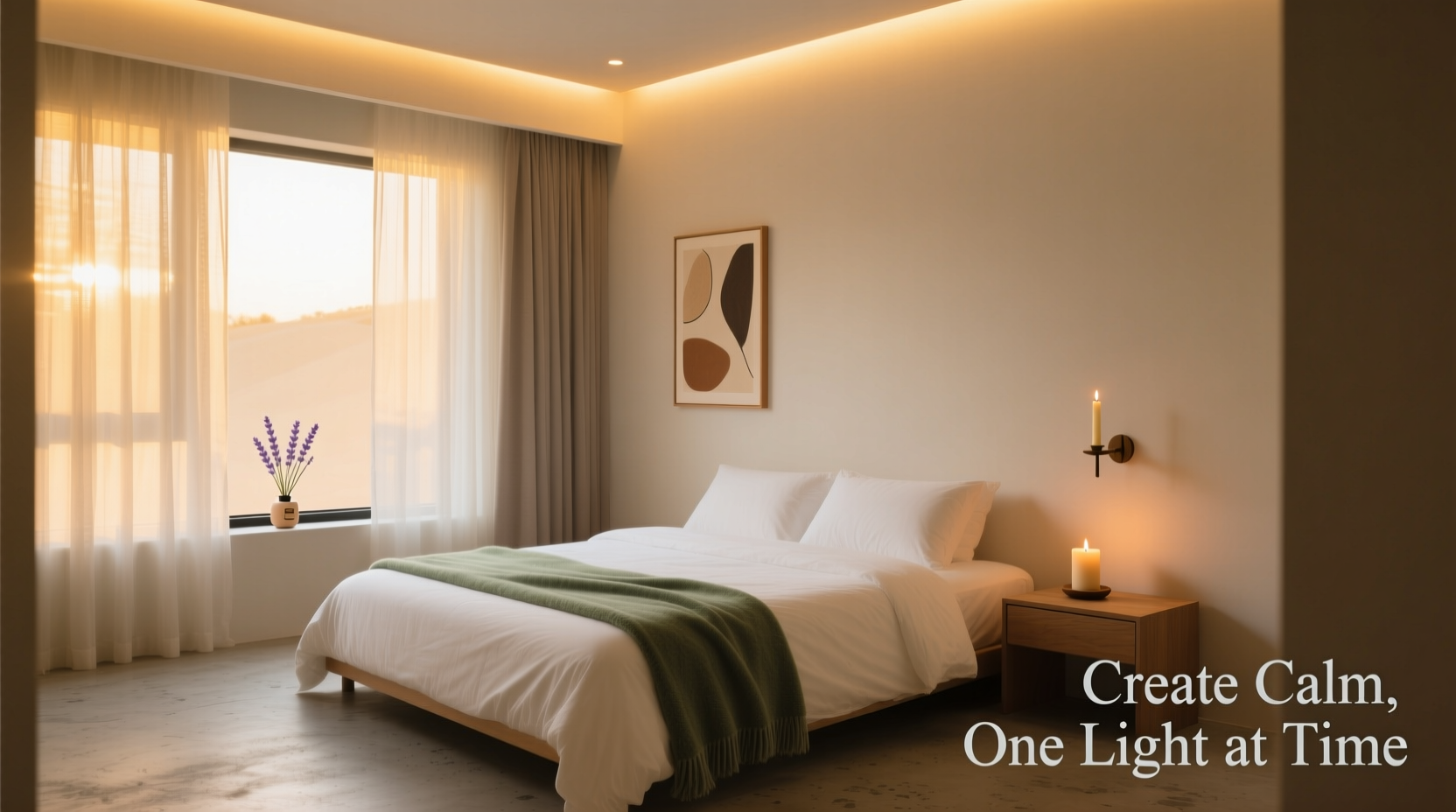
Light is not merely functional; it's physiological. The human body operates on a 24-hour internal clock regulated by exposure to light. Blue-rich daylight signals wakefulness, while warmer, dimmer tones signal the brain that it's time to wind down. Disrupting this cycle—by staring at bright screens or overhead lights late at night—can interfere with melatonin production, making it harder to fall asleep and reducing sleep quality.
For a calming bedroom, prioritize warm-toned lighting (between 2200K and 3000K on the Kelvin scale). These amber and soft white hues mimic candlelight or sunset, encouraging relaxation. Avoid cool white or daylight bulbs (above 4000K), which are energizing and better suited for kitchens or offices.
Layering light sources is key. Relying solely on a ceiling fixture creates harsh shadows and uniform illumination, which feels institutional rather than intimate. Instead, combine ambient, task, and accent lighting:
- Ambient: Low-wattage ceiling fixtures or recessed lighting set at 20–30% brightness.
- Task: Bedside lamps for reading, ideally with adjustable arms and warm bulbs.
- Accent: String lights, LED strips behind headboards, or floor lamps in corners to add depth and warmth.
Smart lighting systems allow automation. You can program lights to shift from bright white in early evening to deep amber one hour before bed. Some even sync with sunrise and sunset times, adapting seasonally without manual input.
Choosing Scents That Soothe the Mind
Fragrance is the most direct path to emotional regulation. Unlike sight or sound, smell travels straight to the amygdala and hippocampus—areas involved in emotion and memory. A single whiff of lavender can evoke childhood summers or trigger a sense of safety. This makes scent a powerful tool for shaping psychological space.
Not all fragrances promote calm. Citrus and peppermint, while invigorating, may be too stimulating for nighttime use. Instead, opt for essential oils known for their sedative and anxiolytic properties:
| Scent | Effect | Best Used |
|---|---|---|
| Lavender | Reduces anxiety, improves sleep quality | Nightly diffusion or linen spray |
| Chamomile | Calmative, mild sedative effect | In blends with lavender or sandalwood |
| Sandalwood | Grounding, promotes mental clarity | Incense or diffuser before bed |
| Bergamot | Elevates mood without overstimulation | After stressful days, diluted in carrier oil |
| Vanilla | Triggers feelings of comfort and nostalgia | Candles or room sprays |
Delivery method matters. Candles provide flickering light and warmth but require supervision. Reed diffusers offer consistent release without flame. Ultrasonic diffusers disperse fine mist along with aroma, adding humidity—ideal in dry climates. Spray mists applied to pillows or curtains deliver immediate but short-lived effects.
“Scent is the forgotten design element. It doesn’t just complement a space—it defines its emotional tone.” — Dr. Naomi Richards, Environmental Psychologist and Sensory Design Researcher
Step-by-Step Guide to Building Your Calming Atmosphere
Creating a tranquil bedroom isn't about buying every scented candle on the market. It’s about intentionality and routine. Follow this five-step process to build a personalized, soothing environment:
- Assess your current lighting. Turn off all lights and enter your bedroom at night. Note where shadows fall, where glare occurs, and whether any areas feel too bright or too dark. Identify zones needing softer illumination.
- Replace harsh bulbs. Swap out any daylight or cool-white bulbs for warm-dim LEDs. Test different wattages (e.g., 40W equivalent) to find the ideal glow.
- Add layered lighting. Introduce at least two additional light sources—such as bedside lamps or wall sconces. Position them below eye level to reduce visual strain.
- Select 1–2 base scents. Start simple. Choose one floral (like lavender) and one woody (like sandalwood) oil. Use them consistently for a week to gauge their effect on your mood and sleep.
- Create a nightly ritual. Ten minutes before bed, dim the lights to 30%, light a candle or turn on your diffuser, and take three slow breaths. This signals your nervous system that it’s time to transition into rest.
Consistency amplifies results. Just as brushing your teeth becomes automatic, so too can this sensory wind-down become a non-negotiable part of your evening. Over time, your brain will associate these cues with safety and stillness, making relaxation easier to access.
A Real-Life Transformation: From Chaotic to Calm
Sarah, a 34-year-old project manager in Chicago, struggled with insomnia and nighttime anxiety. Her bedroom had a bright overhead light, no secondary fixtures, and she often worked on her laptop in bed until midnight. She described the space as “functional but sterile.” After learning about sensory design, she decided to experiment with lighting and scent alone—without changing any furniture or paint.
She replaced her ceiling bulb with a dimmable warm LED, added a fabric-shaded table lamp on each nightstand, and installed a thin LED strip behind her headboard. For scent, she began diffusing a blend of lavender and cedarwood for 30 minutes before bed. Within four nights, she noticed she was falling asleep faster. By the second week, she no longer reached for her phone upon waking in the middle of the night. “It felt like my room finally ‘held’ me,” she said. “The light wasn’t attacking me, and the smell made me feel protected.”
Her experience underscores a crucial point: environmental psychology works. Small sensory shifts can yield significant emotional shifts, especially when applied consistently.
Common Mistakes and What to Avoid
Even well-intentioned efforts can backfire if misapplied. Here are frequent pitfalls and how to avoid them:
- Overpowering scents: Too much fragrance can cause headaches or nausea. Always start with fewer reeds or lower diffuser settings. If others in the household complain, dilute with unscented oil.
- Using blue or white nightlights: Even small amounts of cool light at night suppress melatonin. Replace with red or amber bulbs, which have the least impact on circadian rhythm.
- Mixing too many scents: Combining multiple strong fragrances creates olfactory confusion. Stick to one primary scent profile per session.
- Ignoring timing: Introducing calming stimuli too late—or too early—reduces effectiveness. Begin dimming lights and diffusing scents 60–90 minutes before target bedtime.
Also, consider individual sensitivities. Some people react negatively to synthetic fragrances found in commercial air fresheners. Whenever possible, use 100% pure essential oils or naturally derived soy or beeswax candles.
Your Calming Bedroom Checklist
Use this checklist to evaluate and upgrade your space:
- ☐ Replace all cool-white bulbs with warm-dim LEDs (2200K–3000K)
- ☐ Install at least two supplemental light sources (lamps, sconces, strips)
- ☐ Add a dimmer switch or smart bulb system
- ☐ Choose one calming essential oil (e.g., lavender, chamomile)
- ☐ Select a safe scent delivery method (diffuser, reed, or flameless candle)
- ☐ Establish a 30-minute pre-sleep ritual using low light and scent
- ☐ Remove electronic devices that emit blue light from bedside area
- ☐ Clean diffusers weekly to prevent mold and clogging
This list is designed to be actionable, not overwhelming. Tackle one item per week. Progress compounds: each change builds toward a more harmonious environment.
FAQ: Lighting, Scent, and Sleep
Can I use regular candles instead of diffusers?
Yes, but with caution. Beeswax or soy candles with cotton wicks are cleaner-burning and less likely to release toxins. Always extinguish before sleeping and keep away from flammable materials. Flameless LED candles with built-in scent capsules are a safer alternative.
What if I’m sensitive to smells?
Start with micro-doses. Try a single drop of essential oil on a tissue placed nearby—not directly in a diffuser. Or use unscented options like heated clay diffusers that gently release moisture without strong aroma. Fragrance sensitivity varies widely; listen to your body.
How long does it take to notice a difference?
Many people report improved relaxation within 3–5 nights. Sleep improvements may take 1–2 weeks of consistent practice. Like meditation or exercise, sensory conditioning works cumulatively.
Final Thoughts: Design Your Sanctuary
You don’t need a redesign or a renovation to make your bedroom a haven. Lighting and scent are accessible, affordable, and profoundly effective tools for shaping emotional experience. By understanding how warm light supports biological rest and how certain aromas quiet the mind, you gain agency over your inner state through your outer environment.
The goal isn’t perfection—it’s presence. A softly glowing lamp, the faint trace of lavender on your pillow, the absence of harsh glare: these small details accumulate into a feeling of safety, one that invites deeper breaths and quieter thoughts. In a world that rarely slows down, your bedroom can be the exception.




 浙公网安备
33010002000092号
浙公网安备
33010002000092号 浙B2-20120091-4
Comments
No comments yet. Why don't you start the discussion?