
The holiday season often brings sensory overload—bright lights, loud music, and constant activity. While tradition favors dazzling displays, many are now seeking a quieter, more mindful approach to Christmas decor. A calming lighting setup using dimmable smart bulbs offers the perfect balance: festive warmth without visual chaos. By leveraging modern technology, you can craft an ambiance that soothes rather than stimulates, turning your home into a serene winter sanctuary.
Smart lighting has evolved beyond convenience. Today’s dimmable LED bulbs allow precise control over brightness, color temperature, and scheduling—all from your phone or voice assistant. When applied thoughtfully, these tools help create spaces that support relaxation, reflection, and meaningful connection during the holidays.
Why Calm Lighting Matters During the Holidays
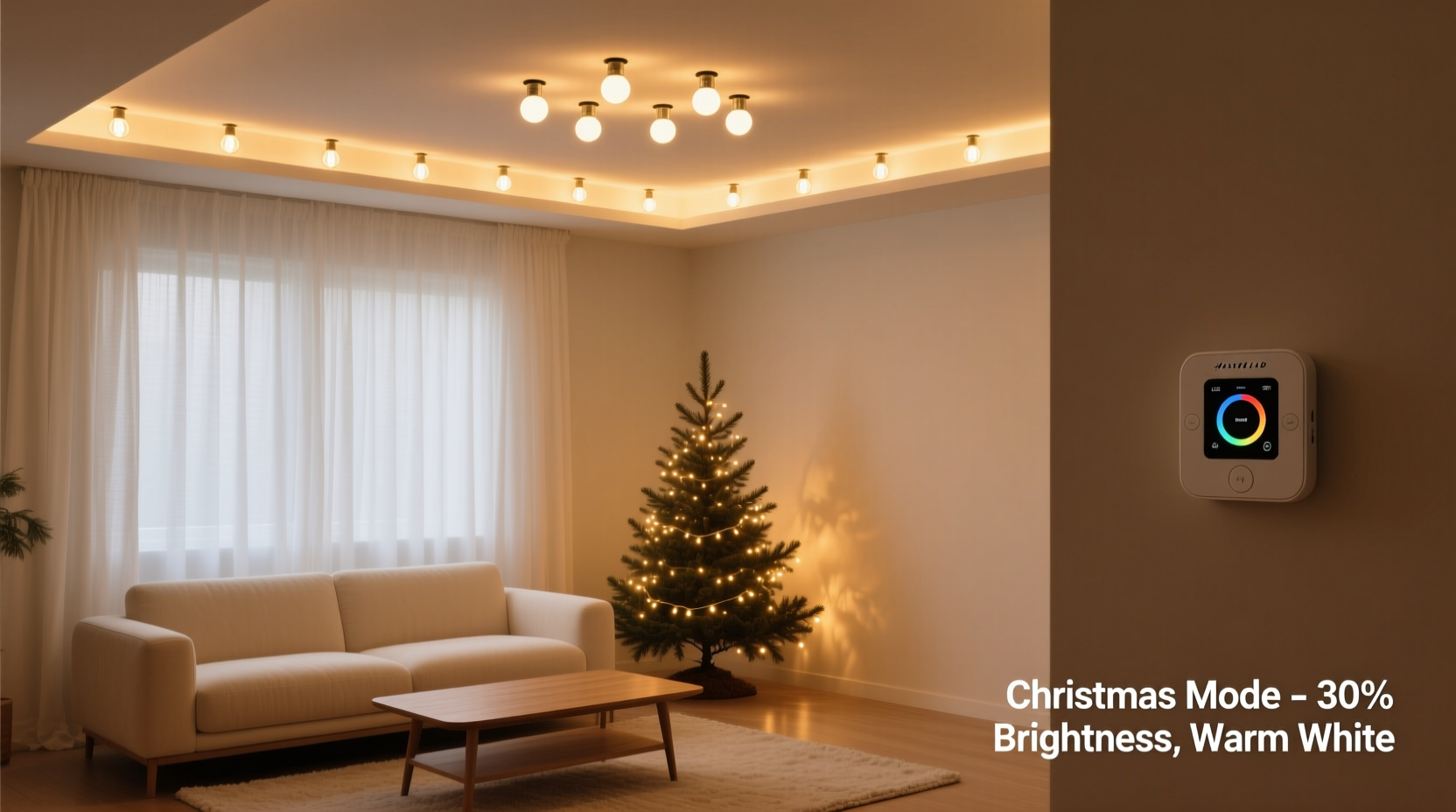
Lighting profoundly influences mood and behavior. Harsh, bright, or rapidly flashing lights can trigger stress responses, especially in individuals sensitive to sensory input. In contrast, soft, warm lighting supports melatonin production, encourages relaxation, and fosters emotional comfort—essential qualities during a season that can feel emotionally taxing.
A calming Christmas lighting scheme doesn’t mean sacrificing festivity. Instead, it redefines celebration through subtlety. Think of candlelit dinners, gentle glows from window sills, and warm accents along stair rails—not strobing icicle lights or blinding rooftop displays.
“Lighting is the most underused tool in emotional design. A well-lit space doesn’t just look better—it feels safer, more intimate, and more human.” — Dr. Lena Torres, Environmental Psychologist
Dimmable smart bulbs make this level of control accessible. With the ability to adjust brightness down to 1% and shift color temperatures from cool daylight to candlelight warmth, they offer unmatched flexibility for crafting restful environments.
Choosing the Right Smart Bulbs for a Peaceful Ambiance
Not all smart bulbs are created equal when it comes to creating calm. The key lies in selecting models with full dimming range, adjustable color temperature (measured in Kelvin), and reliable app integration.
| Feature | Recommended Spec | Why It Matters |
|---|---|---|
| Dimming Range | 1%–100% | True low-end dimming mimics candlelight; bulbs that only go to 10% still feel intrusive at night. |
| Color Temperature | 2200K–3000K (warm white) | Lower Kelvin values produce amber tones similar to firelight, promoting relaxation. |
| Compatibility | Works with Alexa, Google Home, Apple HomeKit | Ensures seamless voice or automation control without app dependency. |
| Flicker-Free Operation | Yes | Reduces eye strain and headaches caused by imperceptible flickering in cheaper LEDs. |
| App Reliability | Stable firmware, frequent updates | Prevents dropouts during scheduled scenes or routines. |
Top brands like Philips Hue, LIFX, and Nanoleaf consistently deliver high performance in these areas. For budget-conscious setups, consider TP-Link Kasa or Wyze bulbs—but verify flicker performance and dimming smoothness before large-scale deployment.
Step-by-Step Guide to Installing Your Calming Light Setup
Creating a tranquil lighting environment requires planning, placement, and programming. Follow this sequence to build a cohesive system that enhances peace throughout the holiday season.
- Assess Key Areas: Identify rooms where relaxation is prioritized—living room, bedroom, entryway, dining nook. Avoid over-lighting kitchens or utility spaces unless used for evening gatherings.
- Replace Existing Bulbs: Swap out standard or colored holiday bulbs with warm-dimmable smart LEDs. Focus on fixtures that remain on for extended periods (floor lamps, ceiling mounts, string light adapters).
- Install & Connect: Screw in each bulb and follow manufacturer instructions to pair with your chosen ecosystem (e.g., Hue Bridge, Wi-Fi network). Label bulbs by room during setup to avoid confusion later.
- Create Ambient Zones: Group lights by function—“Reading Corner,” “Dinner Table,” “Window Glow.” This allows independent control and prevents one setting from affecting the entire house.
- Set Default Scenes: Program a “Calm Evening” scene set to 2700K at 15% brightness across common areas. Use slightly brighter settings (30%) in zones used for meals or conversation.
- Add Scheduling: Use your app to automate transitions. For example:
- 6:00 PM – Lights rise gently to 20% (simulating sunset arrival)
- 8:30 PM – Shift to 10% for quiet time
- 10:30 PM – Fade to off or nightlight mode
- Test & Refine: Spend two evenings observing how the light feels. Adjust brightness down if it still feels too alerting. Consider adding sheer fabric diffusers to reduce glare from exposed bulbs.
Design Principles for a Soothing Visual Experience
Even the best technology fails without thoughtful design. A calming aesthetic relies on three core principles: diffusion, rhythm, and restraint.
Diffusion ensures light is soft and indirect. Bare bulbs—even dimmed ones—create harsh focal points. Place smart bulbs behind shades, inside frosted globes, or within woven lanterns. For string lights, drape them behind sheer curtains or inside glass vases filled with pine sprigs.
Rhythm refers to spacing and pattern. Cluster lights in small groupings rather than spreading them evenly. Clusters mimic natural firelight patterns and guide the eye gently through a space. For example, place three smart-lit candles on a mantle instead of lining ten along the edge.
Restraint means embracing minimalism. Limit illuminated surfaces to 30–40% of any room. Let shadows exist—they enhance depth and tranquility. Avoid synchronized blinking or rainbow cycles; these disrupt calm. If using motion triggers, limit them to essential pathways (hallways, bathrooms) and disable sound-reactive modes.
Real Example: A Cozy Urban Apartment Transformation
Sophie, a graphic designer in Portland, used to dread the holidays. Her small apartment would fill with tangled cords and glaring red-and-green lights inherited from childhood. “It felt chaotic,” she said. “Like the decor was shouting at me.”
In 2023, she decided to try a different approach. She replaced her old mini-lights with E12-base smart bulbs in vintage Edison styles, installed in clear glass snowflake ornaments hung near the window. Using her phone, she programmed them to emit a steady 2200K glow starting at 5 PM, fading to 5% by midnight.
She added two floor lamps with smart bulbs set to “Warm Candle” mode, positioned in opposite corners of the living area. These stayed on low throughout the evening, providing ambient fill without glare. At dinner, she activated a temporary “Gathering” preset—brightness increased slightly to 25%, just enough to illuminate faces without washing them out.
The result? “For the first time, I actually enjoyed being home during December,” Sophie shared. “The light felt like a hug, not a demand.” Neighbors noticed too—one left a note saying, “Your window makes the whole street feel calmer.”
Checklist: Building Your Calming Christmas Lighting System
- ☐ Choose dimmable smart bulbs with warm color temps (2200K–3000K)
- ☐ Verify compatibility with your existing smart home platform
- ☐ Replace bulbs in primary living areas and entry points
- ☐ Group lights into functional zones (e.g., “Relax,” “Dine,” “Arrival”)
- ☐ Create a “Calm Evening” scene at 15–20% brightness
- ☐ Schedule automatic fade-in and fade-out times
- ☐ Diffuse light using lampshades, fabrics, or translucent containers
- ☐ Limit active lighting to 3–4 hours per evening unless hosting
- ☐ Disable flashy effects and rainbow modes completely
- ☐ Test final setup after dark and adjust based on feel, not specs
Frequently Asked Questions
Can I use smart bulbs outdoors for a calming porch glow?
Yes, but only if they are rated for outdoor and enclosed fixture use. Look for IP44 or higher ratings. Set outdoor zones to slightly higher brightness (25–30%) for visibility, but maintain warm color temperature. Avoid motion-activated strobes; opt for gentle fades instead.
Will dimming smart bulbs extend their lifespan?
Yes. Running LEDs at lower brightness reduces heat stress and electrical load, potentially extending usable life by thousands of hours. However, ensure your bulbs support true PWM (pulse-width modulation) dimming—some cheap models simulate dimming through voltage reduction, which can cause flicker and premature failure.
Are there health benefits to using warm, dimmable lighting at night?
Research shows that exposure to warm-toned, low-intensity light in the evening supports circadian alignment. Unlike blue-rich white light, warm light does not suppress melatonin significantly, improving sleep onset and quality—especially important during the darker winter months.
Final Thoughts: Light with Intention
The most memorable Christmases aren’t defined by how brightly a home shines, but by how deeply its occupants feel at peace. Dimmable smart bulbs offer more than convenience—they provide a way to reclaim the emotional essence of the season. By designing with intention, you replace noise with stillness, clutter with clarity, and obligation with presence.
This year, consider what kind of light you want to live in. Not the kind that demands attention, but the kind that invites you to pause, breathe, and be. A single softly glowing bulb can do more than illuminate a room—it can hold space for what matters most.




 浙公网安备
33010002000092号
浙公网安备
33010002000092号 浙B2-20120091-4
Comments
No comments yet. Why don't you start the discussion?