
In a season often defined by excess, noise, and sensory overload, many are turning toward simplicity as a form of resistance—not out of scarcity, but intentionality. A minimalist Christmas tree is not a rejection of celebration; it’s a reclamation of calm. By stripping away the clutter and focusing on atmosphere, texture, and gentle illumination, you can craft a tree that feels less like decoration and more like a quiet pause in the midst of winter. The key lies in restraint, quality over quantity, and the strategic use of soft lighting to evoke warmth without glare.
This approach doesn’t require expensive materials or advanced design skills. Instead, it relies on thoughtful choices: selecting a cohesive color palette, using natural elements, and allowing negative space to breathe. When done well, a minimalist tree becomes a focal point not because it demands attention, but because it invites stillness.
Why Minimalism Works for Holiday Decor
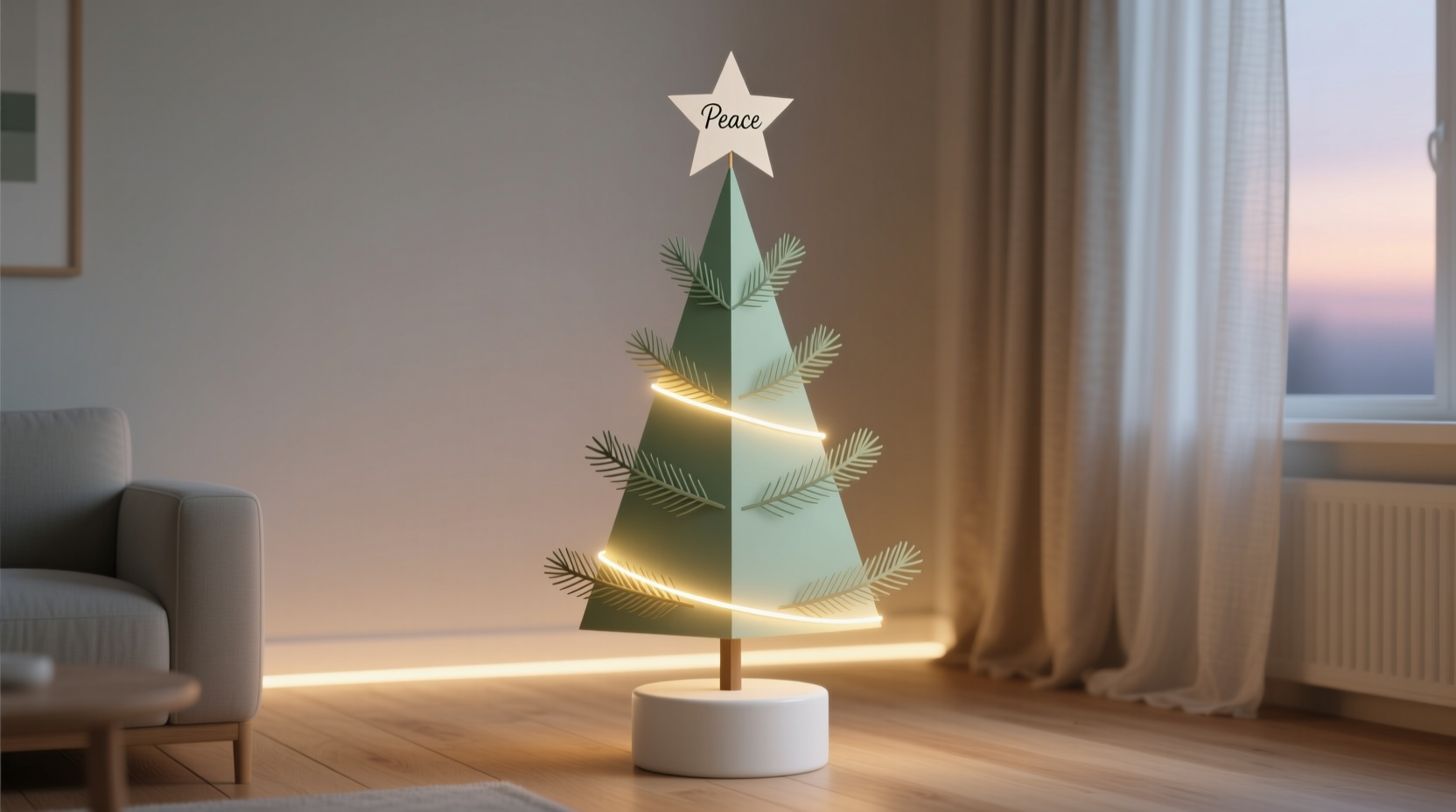
The holidays often come with an unspoken pressure to go bigger, brighter, and busier. But research in environmental psychology suggests that visual clutter increases stress and reduces cognitive focus. In contrast, environments with clean lines, limited color schemes, and open space promote relaxation and mental clarity.
A minimalist Christmas tree aligns with these principles. It removes the visual noise of dozens of mismatched ornaments and tangled lights, replacing them with deliberate choices that reflect personal meaning rather than seasonal obligation. This doesn’t mean the tree lacks character—it simply expresses it through subtlety.
“Minimalism in decor isn’t about absence. It’s about presence—the presence of what truly matters.” — Clara Nguyen, Interior Designer & Author of *Calm Spaces*
For many, this means fewer ornaments, muted tones, and a focus on tactile materials like wood, linen, and ceramic. Lighting becomes not just functional, but emotional—a tool for shaping mood rather than merely illuminating objects.
Selecting the Right Tree and Base
The foundation of your calming display begins with the tree itself. While artificial trees offer convenience, a real fir, spruce, or pine introduces natural fragrance and organic variation that complements a minimalist aesthetic. If opting for artificial, choose one with a realistic silhouette—avoid overly full or shiny models that scream “department store display.”
Look for trees with subtle gradients in green, slight asymmetry, and branch structure that allows light to filter through. Slim-profile trees work especially well in smaller spaces and enhance the sense of intentionality.
The base should be equally understated. A simple black metal stand hidden beneath a neutral tree collar made of woven rattan, unfinished wood, or textured concrete enhances the minimalist tone. Avoid ornate skirts or patterned covers—they compete with the tree’s quiet elegance.
Curating a Soft Color Palette
Color sets the emotional tone of your tree. For a calming effect, avoid high-contrast combinations like red-and-green or metallic silver-and-blue. Instead, embrace a monochromatic or tonal scheme rooted in earthiness and neutrality.
Recommended palettes include:
- Cream, ivory, and warm white
- Soft sage, eucalyptus, and moss
- Charcoal, slate, and deep taupe
- Blush pink with sand and oat
These combinations feel grounded and restful. They allow the eye to move slowly across the tree without jarring transitions. When incorporating color, limit it to no more than two accent tones—and use them sparingly.
| Palette Type | Best For | Ornament Suggestions |
|---|---|---|
| Monochrome White | Modern lofts, Nordic interiors | Frosted glass, matte ceramics, bleached wood |
| Earthy Neutrals | Rustic, farmhouse, or biophilic spaces | Unfinished wood slices, linen-wrapped balls, dried citrus |
| Subtle Pastel | Coastal, cottage, or gender-neutral nurseries | Hand-blown glass in blush or seafoam, paper stars |
| Natural Tones | Forest cabins, sustainable homes | Pinecones, wool felt shapes, seed pods |
The goal is harmony, not variety. Each ornament should feel like it belongs, not like it was added for the sake of tradition.
Choosing and Arranging Soft Lighting
If the tree is the canvas, lighting is the brushstroke. Traditional Christmas lights—especially multicolored LEDs or strobing strands—can undermine a calming aesthetic. Instead, opt for warm white incandescent or low-lumen LED fairy lights with a color temperature between 2200K and 2700K. These emit a candle-like glow that feels intimate, not festive in the flashy sense.
String length matters. For a standard 6–7 foot tree, use at least 300–500 bulbs to ensure even coverage without gaps. Wrap lights slowly from the trunk outward, tucking strands into the inner branches to create depth. This technique, known as \"layering,\" prevents the “spaghetti strand” look and produces a gentle internal radiance.
For added dimension, consider supplementing with micro-string lights nestled within garlands or draped lightly around select branches. Avoid flashing modes or color-changing options—consistency supports serenity.
Step-by-Step Guide to Lighting Your Tree
- Test the lights before installation to ensure all bulbs function.
- Begin at the plug end, securing the base to the bottom of the trunk with twist ties.
- Work upward in a spiral, moving inward first to illuminate the core, then outward to the tips.
- Alternate directions every few rows to prevent visible patterns.
- Tuck wire stems into branches to hide them from view.
- Stand back frequently to assess balance and fill dark zones.
- Connect to a timer set to turn on at dusk and off at bedtime.
The finished effect should resemble moonlight filtering through pine boughs—soft, diffused, and barely there.
Ornamentation: Less Is More
In a minimalist tree, each ornament carries more weight. Rather than filling every branch, aim for strategic placement. As a rule, use no more than 15–25 decorations on a 6-foot tree. Distribute them unevenly—like brushstrokes in a painting—to create visual interest without symmetry.
Choose ornaments with texture over shine. Matte finishes absorb light rather than reflect it, contributing to the calm. Materials like:
- Wood (sliced, sanded, or carved)
- Ceramic (unglazed or hand-thrown)
- Wool felt (hand-stitched, irregular edges)
- Recycled paper (origami shapes, quilled designs)
…add warmth without glare. Handmade or heirloom pieces deepen emotional resonance. Consider including one meaningful item per family member—a child’s first ornament, a travel souvenir, or a symbol of a personal milestone.
“A single handmade star, imperfect in shape but perfect in memory, holds more holiday spirit than fifty mass-produced baubles.” — Rafael Torres, Craft Ethnographer
Real Example: The Urban Apartment Transformation
Sophie, a graphic designer in Portland, Oregon, lives in a compact loft with floor-to-ceiling windows. Each year, her old brightly lit tree clashed with the serene Scandinavian interior she’d carefully curated. Last December, she decided to try a minimalist approach.
She selected a slim Fraser fir, wrapped it in 400 warm white fairy lights layered from trunk to tip, and added only 18 ornaments: seven wooden animals from her childhood, six handmade ceramic beads in cream and charcoal, and five small linen pouches filled with cinnamon sticks and tied with twine.
The result transformed her living space. Instead of feeling like a temporary display, the tree looked like a natural extension of her home. Neighbors commented on its tranquility, and Sophie reported feeling less anxious during the busy holiday week. “It didn’t feel like I was decorating,” she said. “It felt like I was remembering.”
Essential Checklist for a Calming Minimalist Tree
- ☐ Choose a tree with a natural, unexaggerated shape
- ☐ Select warm white, non-blinking lights (2200K–2700K)
- ☐ Limit color palette to 1–2 neutrals + 1 subtle accent
- ☐ Use fewer than 25 ornaments total
- ☐ Prioritize natural materials: wood, ceramic, wool, paper
- ☐ Layer lights from inside out for depth
- ☐ Incorporate one meaningful, personal ornament
- ☐ Use a timer for consistent, effortless lighting
- ☐ Leave intentional empty spaces on branches
- ☐ Pair with quiet music or silence when enjoying the tree
Frequently Asked Questions
Can I use candles instead of electric lights?
While real candles evoke unmatched warmth, they pose fire risks, especially on dry trees. If you choose taper candles, use only on a real tree that’s freshly cut and well-watered, and never leave them unattended. For safety and sustainability, LED flameless candles placed nearby (not on the tree) offer a convincing alternative.
How do I keep my minimalist tree from looking bare or sad?
The difference between minimalist and sparse lies in intentionality. Ensure your lights are dense enough to create glow, and place ornaments where they catch the light. Add texture with garlands of dried orange slices, cinnamon sticks, or loosely twisted linen ribbon. The tree should feel curated, not incomplete.
Is it okay to mix modern and vintage elements?
Absolutely. In fact, blending eras often enhances authenticity. A mid-century ceramic star beside a hand-carved family heirloom creates narrative depth. Just maintain consistency in color and finish—avoid mixing high-gloss with matte unless deliberately contrasting.
Conclusion: Invite Stillness Into the Season
A calming minimalist Christmas tree is more than a design choice—it’s an act of mindfulness. In choosing fewer ornaments, softer light, and natural materials, you’re not reducing the holiday’s significance. You’re refining it. You’re making space for reflection, for connection, for breath.
This season, resist the urge to fill every inch. Let your tree be a reminder that peace isn’t found in perfection, but in presence. Start simple. Light one strand. Hang one ornament that means something. Build from there, slowly, quietly.




 浙公网安备
33010002000092号
浙公网安备
33010002000092号 浙B2-20120091-4
Comments
No comments yet. Why don't you start the discussion?