
Sleep is not a luxury—it’s a biological necessity. Yet millions struggle to fall asleep or stay asleep, often due to poor pre-bed habits. A well-designed nighttime routine signals the brain that it's time to wind down, shifting the nervous system from alertness to relaxation. Unlike quick fixes or sleep aids, a consistent calming routine works with your body’s natural rhythms, improving both sleep onset and sleep depth over time. The key isn’t complexity; it’s consistency, intentionality, and alignment with circadian biology.
A calming nighttime routine doesn’t need to be elaborate. What matters most is creating a predictable sequence of low-stimulus activities that reduce mental chatter, lower physiological arousal, and prepare both mind and body for restorative sleep. This article outlines a science-informed approach to building such a routine, including actionable steps, common pitfalls, and real-world examples to guide you toward more restful nights.
The Science Behind Sleep Preparation
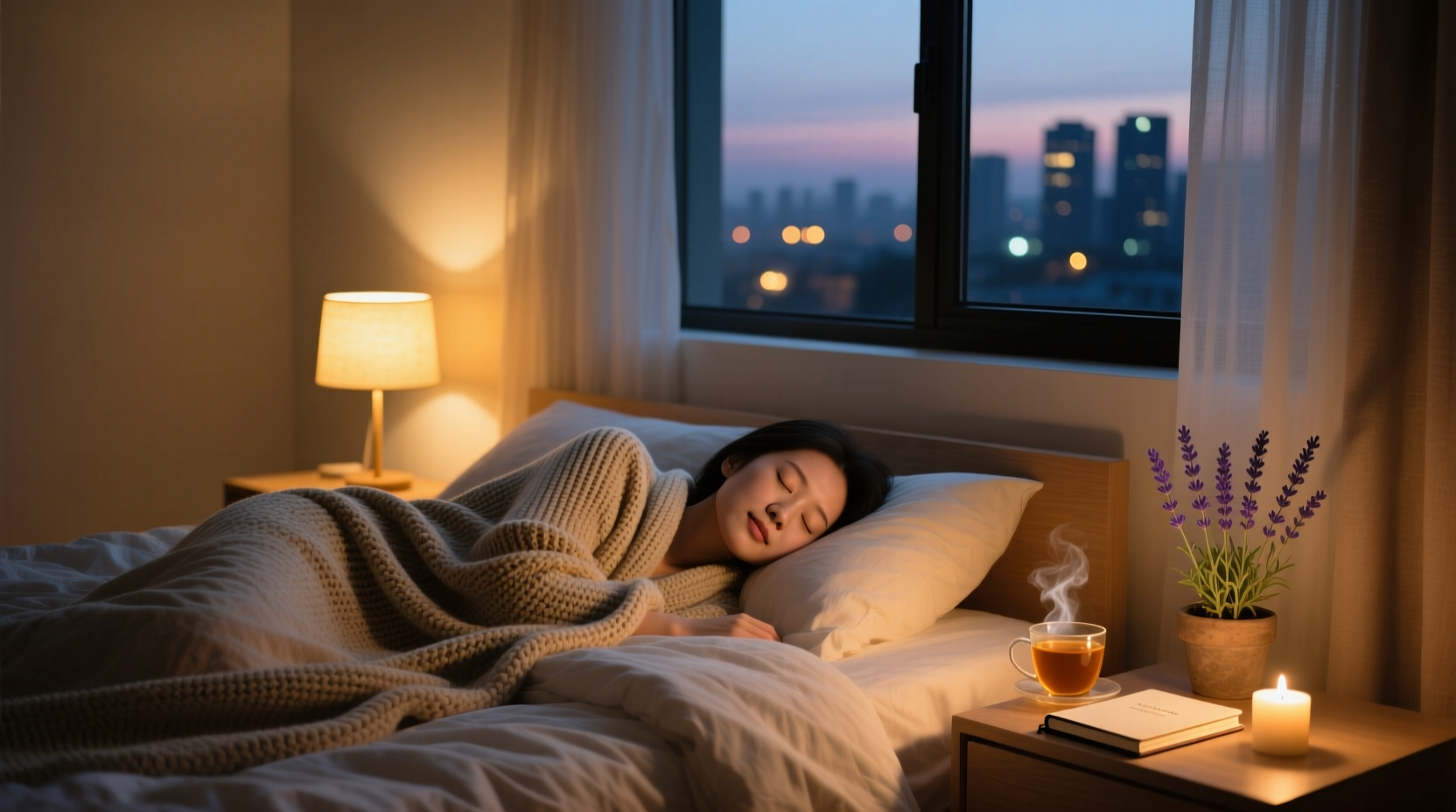
Your body operates on a 24-hour internal clock known as the circadian rhythm. This rhythm regulates hormone production, core temperature, and alertness levels throughout the day. As evening approaches, the pineal gland begins releasing melatonin—a hormone that promotes drowsiness—in response to diminishing light. However, modern lifestyles often interfere with this process. Blue light from screens, late meals, emotional stress, and irregular schedules can delay melatonin release, disrupting the natural transition into sleep.
Neurologically, transitioning to sleep requires a shift from sympathetic dominance (the “fight-or-flight” state) to parasympathetic activation (the “rest-and-digest” mode). Activities that engage the parasympathetic nervous system—such as slow breathing, gentle movement, and mindfulness—can accelerate this shift. Research shows that individuals who follow structured pre-sleep routines fall asleep faster, experience fewer nighttime awakenings, and report higher subjective sleep quality.
“A consistent bedtime ritual tells the brain: ‘The day is over. It’s safe to let go.’ That psychological signal is just as important as any physiological change.” — Dr. Lena Torres, Sleep Psychologist and Author of *Rest Reclaimed*
Step-by-Step Guide to Building Your Nighttime Routine
Creating an effective nighttime routine involves more than just brushing your teeth and turning off the lights. It’s about crafting a deliberate wind-down period that nurtures physical relaxation and mental clarity. Follow this six-step framework, ideally beginning 60–90 minutes before target bedtime.
- Set a fixed bedtime and wake time: Even on weekends, aim to go to bed and rise within a 30-minute window. Consistency reinforces your circadian rhythm.
- Dim the lights and reduce screen exposure: At least one hour before bed, lower ambient lighting and avoid smartphones, TVs, and laptops. Use blue light filters if necessary, but better yet, switch to non-digital activities.
- Engage in low-stimulation activities: Read a physical book, journal, listen to soft music, or practice light stretching. Avoid emotionally intense content or problem-solving tasks.
- Practice relaxation techniques: Try diaphragmatic breathing (4-7-8 method), progressive muscle relaxation, or a short guided meditation. These reduce heart rate and quiet mental noise.
- Prepare your environment: Ensure your bedroom is cool (60–67°F), dark, and quiet. Use blackout curtains, white noise machines, or earplugs if needed.
- Complete hygiene rituals: Brush teeth, wash face, and change into comfortable sleepwear. These small acts serve as behavioral cues that sleep is imminent.
Common Pitfalls and How to Avoid Them
Even with good intentions, many people undermine their own sleep efforts through subtle but impactful behaviors. Awareness is the first step toward correction.
| Pitfall | Why It Disrupts Sleep | Better Alternative |
|---|---|---|
| Using phones in bed | Blue light suppresses melatonin; scrolling increases mental arousal | Charge phone outside the bedroom; use a physical alarm clock |
| Consuming caffeine after 2 PM | Caffeine has a half-life of 5–6 hours and delays sleep onset | Switch to herbal tea or water after early afternoon |
| Eating heavy meals late at night | Digestion raises core body temperature and activates the gut-brain axis | Finish dinner 2–3 hours before bed; opt for light snacks if needed |
| Drinking alcohol to relax | Alcohol fragments sleep architecture, reducing REM sleep | Try chamomile tea or tart cherry juice instead |
| Lying in bed awake for more than 20 minutes | Associates the bed with frustration and wakefulness | Get up, move to another room, and return when sleepy |
Real Example: How Sarah Transformed Her Sleep in Three Weeks
Sarah, a 34-year-old project manager, struggled with insomnia for years. She’d often lie awake until 1:00 AM despite feeling exhausted, her mind racing through work emails and to-do lists. After consulting a sleep specialist, she implemented a structured nighttime routine based on cognitive-behavioral principles.
She began by setting a fixed bedtime of 10:30 PM and waking at 6:30 AM daily. One hour before bed, she turned off all screens, lit a candle, and moved to the living room with a novel. She practiced five minutes of box breathing (inhale 4 seconds, hold 4, exhale 4, hold 4) and journalled three things she was grateful for that day. Her bedroom remained a screen-free zone, and she used a lavender-scented linen spray to enhance olfactory calm.
Within ten days, Sarah noticed she was falling asleep within 20 minutes instead of 60–90. By week three, her sleep efficiency (time spent asleep vs. time in bed) improved from 78% to 92%. “I didn’t realize how much my phone and late-night snacks were sabotaging me,” she said. “Now, my body expects rest at the same time every night. It feels like retraining a muscle.”
Essential Components of a Calming Routine: A Checklist
To ensure your nighttime routine supports deep rest, use this checklist nightly. Customize it to fit your lifestyle, but aim to complete at least 4–5 items consistently.
- ✅ Stop using electronic devices at least 60 minutes before bed
- ✅ Dim overhead lights and use warm-toned lamps instead
- ✅ Avoid caffeine after 2 PM and large meals within 3 hours of bedtime
- ✅ Engage in a relaxing activity (reading, drawing, knitting, listening to calm music)
- ✅ Practice a mindfulness or breathing exercise for 5–10 minutes
- ✅ Prepare your bedroom: adjust temperature, block light, reduce noise
- ✅ Complete personal hygiene (brush teeth, wash face, change clothes)
- ✅ Reflect positively: write down one win from the day or something you’re grateful for
- ✅ Get into bed only when sleepy, not just tired
- ✅ Keep the same wake-up time every day, even on weekends
Frequently Asked Questions
How long should a nighttime routine last?
An effective routine typically lasts between 30 and 90 minutes. The goal is to allow enough time for your nervous system to transition from active to relaxed. Shorter routines may not provide sufficient wind-down time, while excessively long ones can become burdensome. Start with 45 minutes and adjust based on what feels sustainable and effective.
What if I can’t fall asleep even after following a routine?
If you’ve been lying awake for more than 20 minutes, get out of bed and go to another dimly lit room. Do something quiet and non-stimulating, like reading a physical book or folding laundry. Return to bed only when you feel sleepy. This prevents your brain from associating the bed with frustration. If sleep difficulties persist beyond a few weeks, consider consulting a sleep specialist to rule out conditions like insomnia or sleep apnea.
Can I include a warm bath or shower in my routine?
Yes—and it’s highly recommended. A warm bath or shower 1–2 hours before bed can improve sleep quality. While it may seem counterintuitive, warming the body briefly causes a rapid cooldown afterward, which mimics the natural drop in core temperature that precedes sleep. Studies show this thermal shift can accelerate sleep onset by up to 10 minutes.
Final Thoughts: Make Rest a Ritual, Not a Reward
In a culture that glorifies busyness, rest is often treated as something earned only after productivity. But true well-being comes not from pushing harder, but from honoring our biological need for recovery. A calming nighttime routine isn’t self-indulgence—it’s foundational self-care. It reshapes your relationship with sleep, transforming it from a frustrating challenge into a daily act of renewal.
The most powerful routines are simple, repeatable, and personalized. You don’t need expensive tools or apps. What you need is commitment—to show up for yourself each night, to pause, to breathe, and to prepare for the restoration that only deep sleep can provide. Start small. Pick one or two changes from this guide and integrate them tonight. In a few weeks, you may find that not only are you sleeping better, but you’re also more focused, resilient, and present during the day.




 浙公网安备
33010002000092号
浙公网安备
33010002000092号 浙B2-20120091-4
Comments
No comments yet. Why don't you start the discussion?