
A capsule wardrobe is more than a minimalist fashion trend—it’s a practical solution for simplifying daily decisions, reducing clutter, and dressing well without overspending. The idea centers around curating a small collection of high-quality, interchangeable clothing items that reflect your personal style and suit your lifestyle. While many assume building such a wardrobe requires designer labels or frequent shopping, the truth is you can create one thoughtfully for under $200. With strategic planning, disciplined shopping, and creative styling, you can assemble a versatile, cohesive closet that lasts through seasons and trends.
Understanding the Capsule Wardrobe Concept
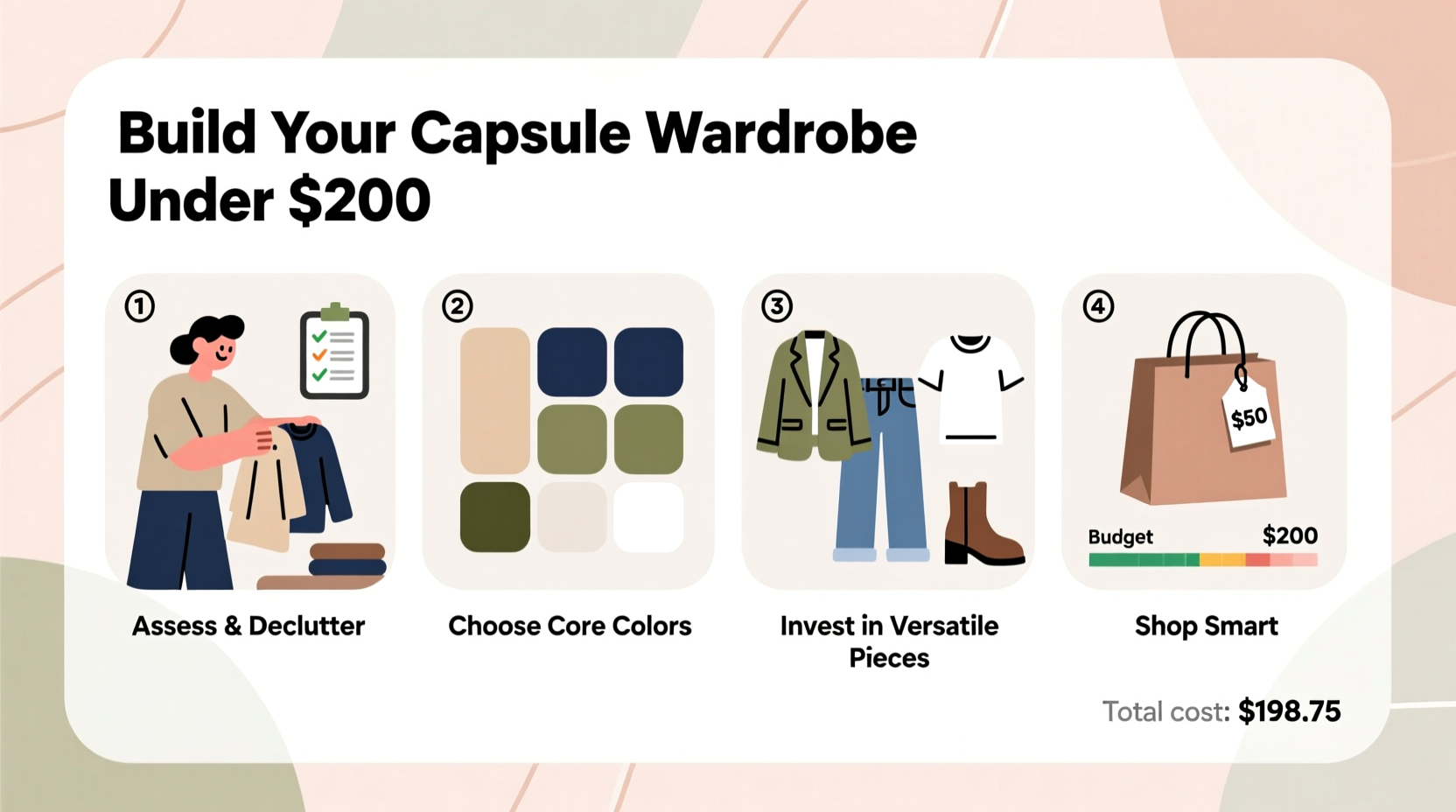
The term “capsule wardrobe” was popularized in the 1970s by London boutique owner Susie Faux, who described it as a minimal set of timeless pieces that work together seamlessly. Today, the concept has evolved but remains rooted in intentionality: owning fewer clothes that you love wearing and wear often. A typical capsule includes 30–40 items—everything from tops and bottoms to outerwear and shoes—carefully selected to mix, match, and adapt to various occasions.
Contrary to common belief, a capsule isn’t about deprivation. It’s about efficiency. By focusing on quality over quantity and prioritizing versatility, you reduce decision fatigue, save time getting dressed, and ultimately spend less money in the long run—even if you start with a tight budget.
Step-by-Step Guide to Building Your Capsule Under $200
Creating a budget-friendly capsule wardrobe takes planning, patience, and precision. Follow this timeline to stay on track and avoid impulse buys.
- Week 1: Audit Your Current Closet
Remove everything from your wardrobe and sort items into three piles: keep, donate, and repair. Keep only what fits well, makes you feel confident, and aligns with your lifestyle (e.g., office, casual, weekend). Note gaps—do you lack a neutral blazer? A pair of black jeans? - Week 2: Define Your Style & Needs
Identify your most common activities: commuting, working from home, social events, etc. Choose a color palette—neutral bases like black, navy, gray, beige, or white work best because they’re easy to mix. Stick to 3–4 accent colors max. - Week 3: Plan Your Core Pieces
List essential categories: 5 tops, 3 bottoms, 1 dress, 1 jacket, 1 sweater, 1 pair of shoes, and accessories. Prioritize natural fabrics (cotton, wool, linen) when possible—they last longer and look better. - Week 4: Shop Strategically
Use secondhand apps, thrift stores, and clearance sales. Set a strict spending limit per category. Track every dollar spent in a notebook or spreadsheet to stay under $200. - Week 5: Assemble & Test
Lay out all new and kept items. Create at least 15 different outfits using only your capsule. Adjust as needed—swap one piece if combinations feel limited.
Smart Shopping Strategies to Stay Under Budget
The key to building a $200 capsule lies not in splurging on a few expensive staples but in maximizing value across multiple affordable purchases. Here’s how to stretch every dollar:
- Thrift First: Thrift stores, consignment shops, and online platforms like ThredUp, Poshmark, or Facebook Marketplace offer gently used clothing at up to 90% off retail prices. Search for keywords like “linen,” “merino,” or “cotton blend” to find higher-quality materials.
- Wait for Sales: Major retailers like H&M, Uniqlo, Old Navy, and Target frequently discount basics. Sign up for newsletters to receive early access to promotions.
- Buy Versatile Neutrals: A black crewneck sweater can be dressed up with trousers or down with jeans. Prioritize pieces that transition between seasons and settings.
- Avoid Trends: Skip fast-fashion fads. Instead, invest in classic silhouettes—straight-leg pants, button-down shirts, A-line skirts—that remain stylish year after year.
- Try Before You Buy (Even Online): Order multiple sizes during sale events with free return policies. Return what doesn’t fit—many brands allow returns within 30 days.
| Item | Budget Allocation | Where to Find | Price Target |
|---|---|---|---|
| Blouse/Top (x3) | $45 | Thrift store, H&M sale | $10–$15 each |
| Bottoms (jeans, pants, skirt x2) | $50 | Goodwill, Poshmark | $20–$25 each |
| Dress (1) | $25 | ThredUp, garage sale | $20–$25 |
| Jacket or Blazer | $30 | Consignment shop | $25–$30 |
| Sweater or Cardigan | $20 | Uniqlo clearance | $20 |
| Shoes (1 pair) | $25 | Payless outlet, thrift | $20–$25 |
| Accessories (belt, scarf) | $5 | Dollar store, reuse existing | $0–$5 |
| Total | $200 |
Real Example: Maria’s $187 Capsule Wardrobe
Maria, a 28-year-old administrative assistant living in Austin, Texas, wanted to simplify her mornings and stop overspending on clothes she rarely wore. She began with an empty closet after donating 60% of her old wardrobe. Her goal: a professional yet comfortable capsule suitable for office wear and weekend errands—all under $200.
She started by choosing a color scheme: navy, cream, charcoal, and burgundy. Over two weekends, she visited local thrift stores and browsed Poshmark. She found:
- Two tailored blazers (one navy, one gray) for $18 total
- Three cotton-blend button-down shirts in white, cream, and pale blue for $36
- A pair of black ponte pants and a navy midi skirt for $40 combined
- A burgundy knit sweater from a consignment shop for $15
- One black leather-look ankle boot (gently used) for $22
- A wrap dress in geometric print for $20
- Two t-shirts and a tank top from H&M’s clearance rack: $16
- A wide brown belt from a dollar store: $3
- Reused a silk scarf and stud earrings she already owned
Total spent: $187. She created over 20 unique outfits, including polished looks for client meetings and relaxed combos for Fridays. Within a month, she reported saving nearly an hour per week on outfit decisions and felt more confident in her appearance.
“Minimalism isn’t about having less. It’s about making room for more of what matters.” — Courtney Carver, creator of Project 333
Essential Checklist for Your Budget Capsule
Use this checklist to ensure your capsule is functional, balanced, and cost-effective:
- ✅ Defined personal style and lifestyle needs
- ✅ Completed full closet audit and declutter
- ✅ Chosen a cohesive color palette (3 neutrals + 1–2 accents)
- ✅ Listed required clothing categories
- ✅ Set price limits per item type
- ✅ Researched secondhand and discount sources
- ✅ Purchased only what fills real gaps
- ✅ Tested at least 15 mix-and-match outfits
- ✅ Stored off-season or backup items separately
- ✅ Committed to wearing each piece at least once in 30 days
Frequently Asked Questions
Can I include patterned items in a capsule wardrobe?
Yes, but choose patterns that incorporate your base colors. For example, a striped shirt with navy and white works well in a neutral capsule. Limit prints to 1–2 pieces to maintain cohesion.
What if my job requires different attire each day?
A capsule can still work. Focus on layering: a blazer over a tee instantly elevates a casual look. Rotate core pieces with a few role-specific items—like a crisp white shirt for presentations—while keeping the rest consistent.
How do I maintain the wardrobe long-term without overspending?
Follow the “one in, one out” rule: whenever you buy something new, donate an old item. Repair minor damages like loose buttons or small tears instead of replacing entire garments. Reassess your capsule every 3–6 months to adapt to seasonal changes or shifts in routine.
Final Tips for Long-Term Success
A successful capsule wardrobe isn’t built overnight. It evolves with you. Resist the urge to rush purchases—even on a budget, buying the wrong piece wastes money and space. Instead, take time to understand what truly works for your body, schedule, and aesthetic preferences.
Care for your clothes properly. Wash in cold water, turn knits inside out, and air dry when possible. Fold sweaters instead of hanging them to prevent stretching. These habits extend garment life, preserving both appearance and value.
Remember, sustainability isn’t just environmental—it’s financial and emotional too. When you wear clothes that fit well, reflect your identity, and serve your daily needs, you build confidence and consistency. That’s the real ROI of a capsule wardrobe.




 浙公网安备
33010002000092号
浙公网安备
33010002000092号 浙B2-20120091-4
Comments
No comments yet. Why don't you start the discussion?