
A well-curated capsule wardrobe simplifies daily dressing while maintaining style, versatility, and confidence. For professionals balancing office commitments and personal time, the challenge lies in creating a cohesive collection that works across contexts—without sacrificing individuality or comfort. The solution isn’t more clothes; it’s smarter choices. By selecting high-quality, interchangeable pieces, you can build a minimalist yet functional wardrobe that effortlessly shifts from boardroom meetings to brunch dates.
The key is intentionality: choosing garments that serve multiple roles, align with your lifestyle, and reflect your personal aesthetic. Done right, a dual-purpose capsule reduces decision fatigue, saves money, and promotes sustainable fashion habits. This guide walks through the practical steps to design a wardrobe that supports both professional presence and relaxed weekends—without doubling your closet space.
Define Your Style Needs Across Contexts
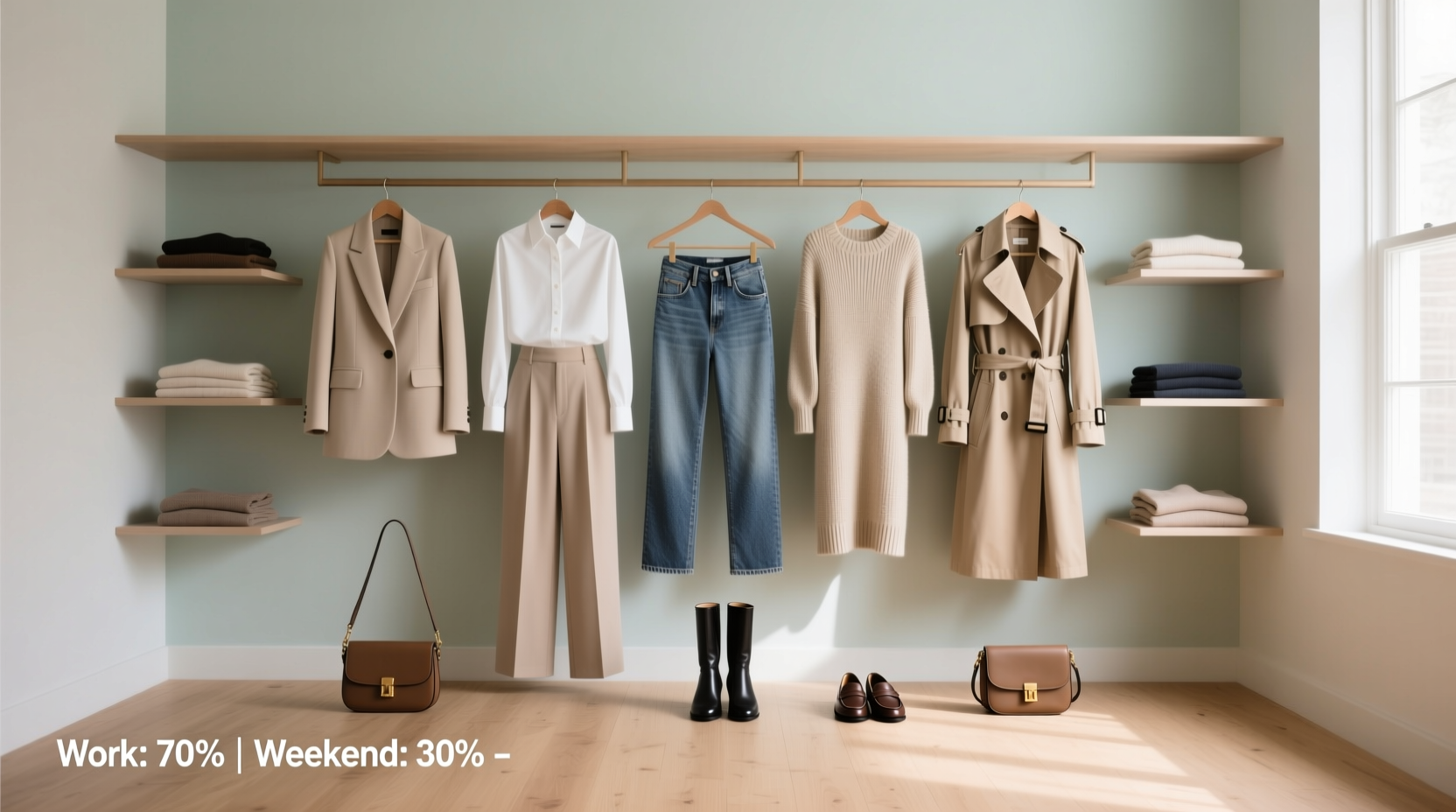
Before purchasing or organizing any clothing, assess how you actually dress during the week versus on weekends. Begin by tracking what you wear for seven days, noting each outfit’s components and setting. Ask yourself:
- What are the dress codes at my workplace? (e.g., business formal, smart casual)
- How often do I attend hybrid events—like after-work drinks or client dinners?
- What activities dominate my weekends? (e.g., hiking, social outings, errands)
- Which items do I reach for most frequently?
This audit reveals patterns and gaps. You may discover that your “work” shirts also work perfectly for dinner out, or that certain jeans elevate easily with accessories. Use this insight to define two overlapping style zones: one anchored in professionalism, the other in ease and leisure. The sweet spot—the intersection of these zones—is where your capsule thrives.
“Capsule wardrobes succeed when they reflect real life, not idealized versions of it.” — Sarah Thornton, Sustainable Fashion Consultant
Select Core Pieces That Bridge Both Worlds
The foundation of a dual-use capsule rests on transitional staples—items designed to be dressed up or down depending on pairing and occasion. These should make up 60–70% of your wardrobe. Prioritize neutral colors like navy, charcoal, cream, olive, and black, which mix and match easily, then add subtle texture or pattern for depth.
Below is a list of essential bridge pieces:
- Tailored trousers in wool-blend or stretch fabric—pair with blazers for work, sneakers for weekends.
- Chinos or cropped pants in mid-gray or khaki—ideal with Oxford shirts or knit polos.
- Button-down shirts in cotton or poplin—tuck in for meetings, roll sleeves and leave untucked casually.
- Sweaters (crewneck or V-neck) in merino or cashmere—layer over collared shirts or tees.
- A structured blazer in unlined linen or lightweight wool—adds polish instantly.
- Dark wash jeans with clean lines—avoid rips or excessive fading.
- Pencil or midi skirts in A-line cuts—pair with boots or loafers depending on context.
- Loafers or ankle boots with low heels—comfortable enough for walking, refined enough for presentations.
These items form a flexible base. From here, layer in personality through accessories and accent pieces without cluttering your core rotation.
Build a Smart Capsule in 5 Steps
Creating a functional capsule doesn’t happen overnight. Follow this step-by-step process to ensure every piece earns its place.
- Clear and categorize. Remove everything from your closet. Sort into categories: tops, bottoms, outerwear, shoes, dresses, etc. Set aside anything unworn in the past year, ill-fitting, or damaged beyond repair.
- Identify anchors. Choose 3–5 foundational items that represent your ideal work-to-weekend look. Examples: a navy blazer, gray chinos, white button-down, black turtleneck, dark jeans.
- Build around them. Select additional pieces that coordinate with all anchors. Aim for at least three outfit combinations per garment.
- Limits matter. Cap your total items. A typical capsule ranges from 30–40 pieces including shoes and outerwear. Exclude undergarments, sleepwear, and workout clothes.
- Test and refine. Wear only capsule items for two weeks. Note discomfort, repetition, or missing elements. Adjust accordingly—swap, donate, or invest in one strategic addition.
Example Capsule Breakdown (35 Items)
| Category | Items | Quantity |
|---|---|---|
| Tops | Button-downs, knits, tees, turtlenecks | 10 |
| Bottoms | Trousers, chinos, jeans, skirt | 6 |
| Dresses/Jumpsuits | Sheath dress, wrap dress, utility jumpsuit | 3 |
| Outerwear | Blazer, trench coat, cardigan, denim jacket | 4 |
| Shoes | Loafers, ankle boots, white sneakers, flats | 4 pairs |
| Accessories | Belt, scarf, watch, tote, crossbody bag | 5–6 |
| Optional Seasonal | Light parka, rain boots, summer sandals | 3–4 |
This structure ensures balance and flexibility. Each category supports multiple configurations, reducing visual repetition even with limited pieces.
Use Accessories to Shift Tone
One of the most powerful tools in transitioning between work and weekend is accessory strategy. The same base outfit—a white shirt and dark jeans—can read “executive” or “laid-back creative” based on finishing touches.
- For work: Add a silk scarf tied at the neck, structured handbag, leather belt, and classic watch.
- For weekend: Swap in canvas sneakers, a slouchy tote, layered necklaces, and aviator sunglasses.
Outerwear also plays a transformative role. A tailored trench elevates casual separates instantly, while a denim jacket softens a blazer-and-trouser combo for Saturday markets.
Limit accessories to 5–6 key items that enhance variety without overwhelming storage. Choose timeless materials like leather, brass, and natural fibers for durability and cohesion.
Real-Life Example: Maya’s Hybrid Wardrobe
Maya works in digital marketing at a semi-formal startup and enjoys outdoor hikes and gallery visits on weekends. Her previous wardrobe was split: stiff workwear she disliked wearing, and comfy weekend clothes that felt too casual for impromptu coworker lunches.
After auditing her habits, she built a 36-piece capsule centered on neutral tones and natural fabrics. Key purchases included:
- An oatmeal-colored merino sweater that layers over shirts or stands alone
- Black ponte pants that hold shape all day and transition to dinner
- A reversible trench (khaki outside, navy inside) for variable weather
- White leather sneakers polished enough for office days
Within three weeks, Maya reduced morning decisions by 70%. She wore coordinated outfits daily, received compliments on her “effortless” style, and stopped last-minute laundry crises. Most importantly, she felt authentic in every setting—professional without stiffness, relaxed without sloppiness.
Capsule Wardrobe Checklist
Use this checklist to evaluate and finalize your capsule:
- ☐ All items fit well and are in good condition
- ☐ At least 80% of pieces are in neutral or coordinating colors
- ☐ Every top pairs with at least two bottoms
- ☐ Every bottom works with three or more tops
- ☐ Shoes are comfortable for walking and appropriate for work
- ☐ Outerwear suits local climate and layers easily
- ☐ Outfits exist for all regular scenarios (meetings, travel, casual outings)
- ☐ Total count stays within self-imposed limit
- ☐ Non-capsule items are stored or donated
- ☐ System in place for seasonal rotation (if needed)
Frequently Asked Questions
Can a capsule wardrobe work in a strict corporate environment?
Yes, but adapt the formula. Focus on elevated basics—fine-gauge knits, wrinkle-resistant blouses, tailored skirts—and rotate through color-blocked variations (e.g., navy, burgundy, ivory). Use subtle patterned silk scarves or statement earrings to avoid monotony. Many corporate capsules thrive with 40–50 pieces due to stricter dress expectations.
What if my weekend activities vary widely—like cycling and fine dining?
Incorporate performance wear as “satellite” pieces outside the main capsule. Keep gym gear, bike apparel, or rain gear separate but accessible. Your capsule covers 80% of your needs; specialty items support the remaining 20%. Just ensure your outer layer (jacket, coat) can integrate with both modes.
How often should I update my capsule?
Reassess seasonally. Every 3–4 months, review wear frequency, fit changes, and lifestyle shifts. Replace worn items one-for-one. Avoid trend-driven additions unless they genuinely expand versatility. Quality over novelty ensures longevity.
Final Thoughts: Simplicity Is Strength
A successful capsule wardrobe isn’t about restriction—it’s about liberation. When your clothes align with how you live, not just how you wish you lived, getting dressed becomes intuitive rather than exhausting. The fusion of work and weekend styles reflects modern life: fluid, multifaceted, and deeply personal.
Start small. Pull out five pieces that already bridge both worlds. Build outward from there. Over time, you’ll find that less truly becomes more—not just in closet space, but in clarity, confidence, and daily ease.




 浙公网安备
33010002000092号
浙公网安备
33010002000092号 浙B2-20120091-4
Comments
No comments yet. Why don't you start the discussion?