
A well-curated capsule wardrobe simplifies daily dressing while elevating personal style. When built exclusively with neutral-toned pieces, it becomes even more powerful—offering unmatched versatility, longevity, and cohesion. Neutrals like beige, taupe, charcoal, navy, black, white, and camel transcend seasonal trends and allow for effortless mixing and layering. This approach isn’t about limiting expression; it’s about refining it. By focusing on quality over quantity and strategic selection, you can build a minimalist yet expressive closet that supports both comfort and confidence.
The Power of Neutral Tones in Wardrobe Design
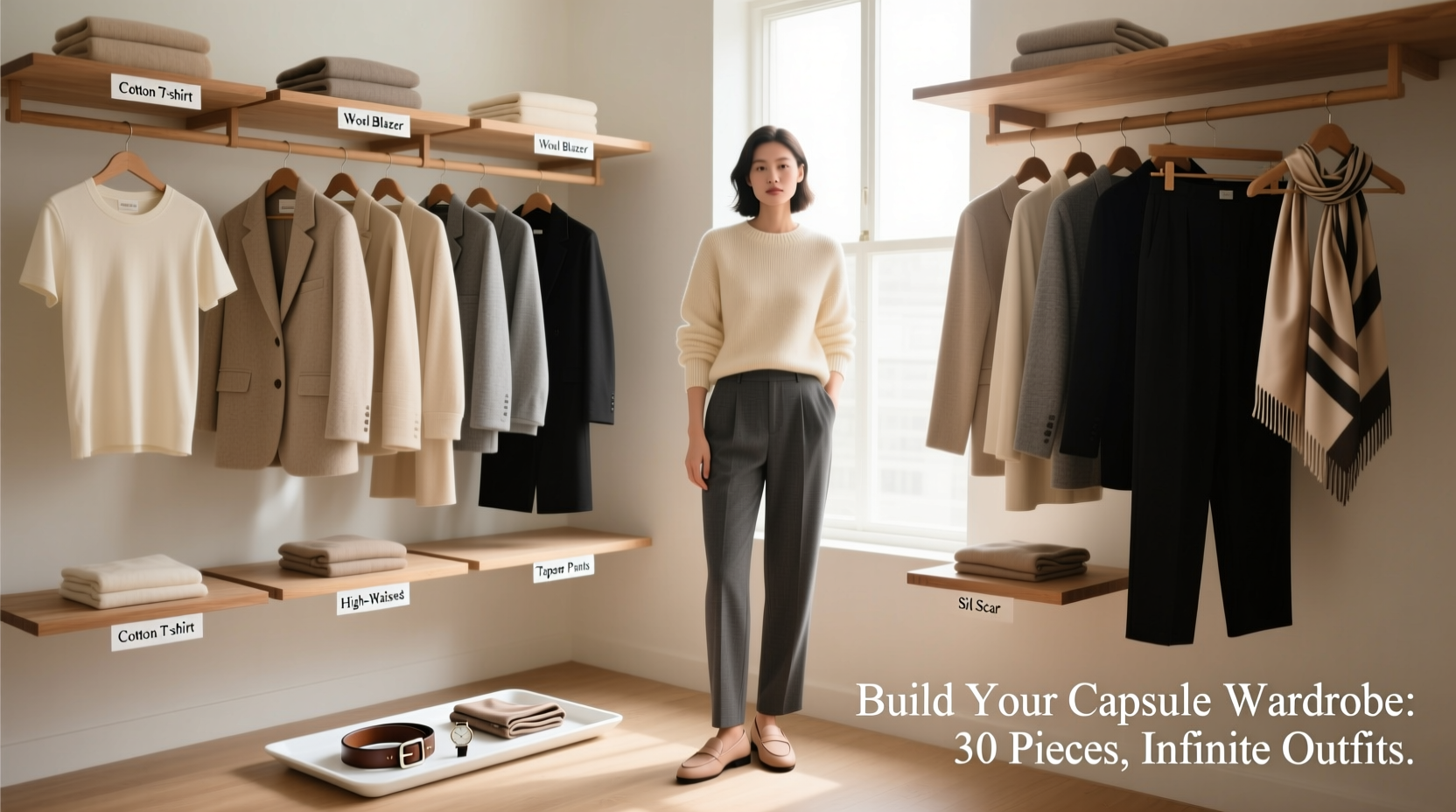
Neutral colors form the foundation of timeless fashion. Unlike bold hues or trend-driven prints, neutrals serve as a consistent backdrop that supports long-term wearability. They are inherently flexible—each piece can pair with nearly every other item in your closet, drastically increasing outfit combinations without increasing volume.
Designers and stylists often refer to neutrals as “wardrobe anchors.” These are the garments you return to again and again because they work reliably across contexts: work, weekend, travel, or transition seasons. A neutral palette also makes accessorizing easier. Whether you add a pop of color through a scarf or elevate an outfit with metallic jewelry, the base remains calm and cohesive.
“Neutrals aren’t boring—they’re intelligent. They reflect intentionality in dressing.” — Sarah Lin, Sustainable Style Consultant
Psychologically, wearing neutrals can project calmness, competence, and clarity. In professional environments, this quiet strength is often more impactful than loud statements. But neutrality doesn’t mean monotony. Subtle variations in texture—such as wool, cotton, silk, or linen—add depth and interest even within a monochromatic scheme.
Step-by-Step Guide to Building Your Neutral Capsule
Creating a capsule wardrobe takes planning, honesty, and patience. It's not simply removing clothes—it's constructing a system where each piece has purpose and compatibility.
- Define your lifestyle needs: Start by evaluating your weekly routine. How many days do you work from home? Do you attend formal events regularly? Are you frequently outdoors? Your wardrobe should reflect real life, not aspirational fantasy.
- Choose your core neutral palette: Select 4–6 foundational shades. Common choices include ivory, oatmeal, charcoal gray, deep brown, navy, and black. Avoid pure white unless you're committed to maintenance; off-white or cream is often more practical.
- Declutter ruthlessly: Remove everything from your closet. Sort items into three piles: keep (if they fit, flatter, and align with your palette), donate, and repair/consider. Only items in good condition and true to your chosen tones make the cut.
- Identify gaps: Lay out what you’ve kept. Look for missing categories—perhaps a tailored blazer, a mid-weight coat, or versatile flats. Make a list of needed pieces based on function, not desire.
- Invest in key items: Prioritize high-use, high-quality staples. Spend more on outerwear, shoes, and tailored pieces that define your silhouette. Choose natural fibers when possible—they drape better, age gracefully, and breathe well.
- Test compatibility: Every new addition must pair with at least three existing items. If it doesn’t, reconsider—even if it’s beautiful.
- Limit total count: Aim for 30–50 pieces total, including tops, bottoms, dresses, outerwear, and shoes. Exclude underwear, sleepwear, and workout clothes.
Essential Pieces for a Neutral Capsule Wardrobe
Certain garments act as linchpins in a neutral wardrobe. Their design, cut, and fabric enable multiple roles across different settings.
| Category | Recommended Items | Why It Matters |
|---|---|---|
| Tops | White button-down, black turtleneck, striped breton (in gray/white), cashmere crewneck | Versatile bases for layering; easy to dress up or down |
| Bottoms | Dark wash straight-leg jeans, black tailored trousers, beige chinos, midi skirt (taupe) | Balance casual and formal; suit varied body types and occasions |
| Dresses | Sheath dress (charcoal), shirt dress (ivory), wrap dress (camel) | One-and-done options that simplify decision fatigue |
| Outerwear | Trench coat (beige), wool pea coat (navy), oversized blazer (gray) | Add structure and weather protection without sacrificing style |
| Shoes | Black ankle boots, nude loafers, white sneakers, black ballet flats | Span seasons and coordinate effortlessly with all neutrals |
Focus on consistency in finish and proportion. For example, if your pants have a slightly cropped hem, ensure your shoes complement that length. Similarly, if most of your tops are slim-fitting, balance them with one or two relaxed layers like an open-knit cardigan or duster coat.
Real Example: Maya’s Transition to a Neutral Capsule
Maya, a 38-year-old project manager, spent years cycling through fast fashion. Her closet held 120+ items, yet she felt she had “nothing to wear.” After reading about capsule wardrobes, she decided to try a 30-day experiment using only neutral tones.
She began by identifying her five most-worn outfits—four involved black pants and a variation of a white top. That insight became her blueprint. She kept only pieces in soft black, warm gray, camel, and cream. She donated 78 items.
Over the next month, she wore 37 unique combinations from just 28 core pieces. She noticed she was spending less time choosing outfits and received more compliments—colleagues described her look as “put-together” and “calmly confident.”
The biggest surprise? She saved money. Instead of buying replacements for stained or ill-fitting clothes, she invested in a single cashmere-blend coat and a pair of Italian leather loafers. One year later, those remain her most-used items.
Common Mistakes to Avoid
- Mixing cool and warm neutrals haphazardly: Charcoal gray (cool) may clash with camel (warm) if not balanced properly. Stick to one undertone family unless intentionally creating contrast.
- Ignoring texture: Wearing all flat cotton or all shiny polyester flattens an outfit. Combine matte wool with soft cashmere or crisp cotton poplin for visual interest.
- Over-prioritizing trends: A faux fur vest in mushroom might seem neutral, but if it only works in winter and limits pairing options, it disrupts the capsule logic.
- Skipping proper fits: A poorly tailored black blazer defeats the purpose. Alterations are worth the cost—one adjustment can revive multiple garments.
- Forgetting footwear: Shoes anchor an outfit. If your only neutral shoes are worn-out sneakers, your polished look still fails.
“A capsule wardrobe fails when it’s built on compromise. Every piece must earn its place.” — Lena Cho, Wardrobe Architect
Checklist: Building Your Neutral Capsule
- ☐ Audit current wardrobe—remove non-neutrals and poor-condition items
- ☐ Define primary lifestyle activities (e.g., office, remote work, weekends)
- ☐ Choose 4–6 core neutral shades with consistent undertones
- ☐ List essential clothing categories based on real usage
- ☐ Identify 3–5 gap items needing purchase
- ☐ Set a budget for quality investments (outerwear, shoes, basics)
- ☐ Test every new item against the “three-pair rule”
- ☐ Limit final collection to 30–50 functional pieces
- ☐ Reassess every season—rotate, repair, or replace mindfully
Frequently Asked Questions
Can a neutral capsule be stylish?
Absolutely. Style comes from proportion, texture, and confidence—not color alone. A well-cut camel coat over a ribbed charcoal turtleneck and wide-leg cream trousers creates a sophisticated, modern silhouette. Accessories like belts, watches, or structured bags further personalize the look.
What if I love color? Won’t I feel restricted?
You don’t have to eliminate color entirely. Many people use a neutral capsule as a base and add color through rotating accessories—scarves, handbags, or seasonal outer layers. This way, you enjoy variety without compromising coordination.
How often should I update my capsule?
Reassess every 3–6 months. Life changes—new jobs, climates, or body shapes require adjustments. The goal isn’t rigidity but responsiveness. Keep what still serves you; release what no longer fits, literally or figuratively.
Final Thoughts: Simplicity as a Statement
A neutral capsule wardrobe is more than a fashion choice—it’s a philosophy. It champions mindfulness over impulse, utility over excess, and clarity over chaos. In a world of constant noise, choosing simplicity becomes radical.
This approach rewards patience. At first, building such a wardrobe may feel limiting. But over time, the freedom becomes apparent: fewer decisions, less stress, and greater satisfaction with what you own. You begin to see clothing not as disposable decor but as enduring tools for self-expression.
The elegance of neutrals lies in their silence. They don’t shout—they speak clearly, consistently, and with purpose. And when every piece in your closet meets that standard, getting dressed stops being a chore and starts being an act of alignment.




 浙公网安备
33010002000092号
浙公网安备
33010002000092号 浙B2-20120091-4
Comments
No comments yet. Why don't you start the discussion?