
A well-designed capsule wardrobe eliminates decision fatigue, reduces clutter, and elevates everyday dressing into an effortless ritual. When built exclusively with neutral tones—shades like beige, taupe, charcoal, ivory, olive, and soft black—it becomes a masterclass in cohesion, adaptability, and longevity. Neutral palettes transcend seasonal trends and weather conditions, allowing the same pieces to transition seamlessly from spring layers to winter coats. More than just a minimalist trend, a neutral-toned capsule is a functional system that prioritizes quality over quantity and intentionality over impulse.
The goal isn't uniformity or dullness; it's harmony. By focusing on tonal variation, texture, and cut, a neutral wardrobe can be rich, dynamic, and deeply personal. This approach works across climates, lifestyles, and body types, offering a sustainable alternative to fast fashion while maintaining elegance and practicality throughout the year.
Why Neutrals Work Year-Round
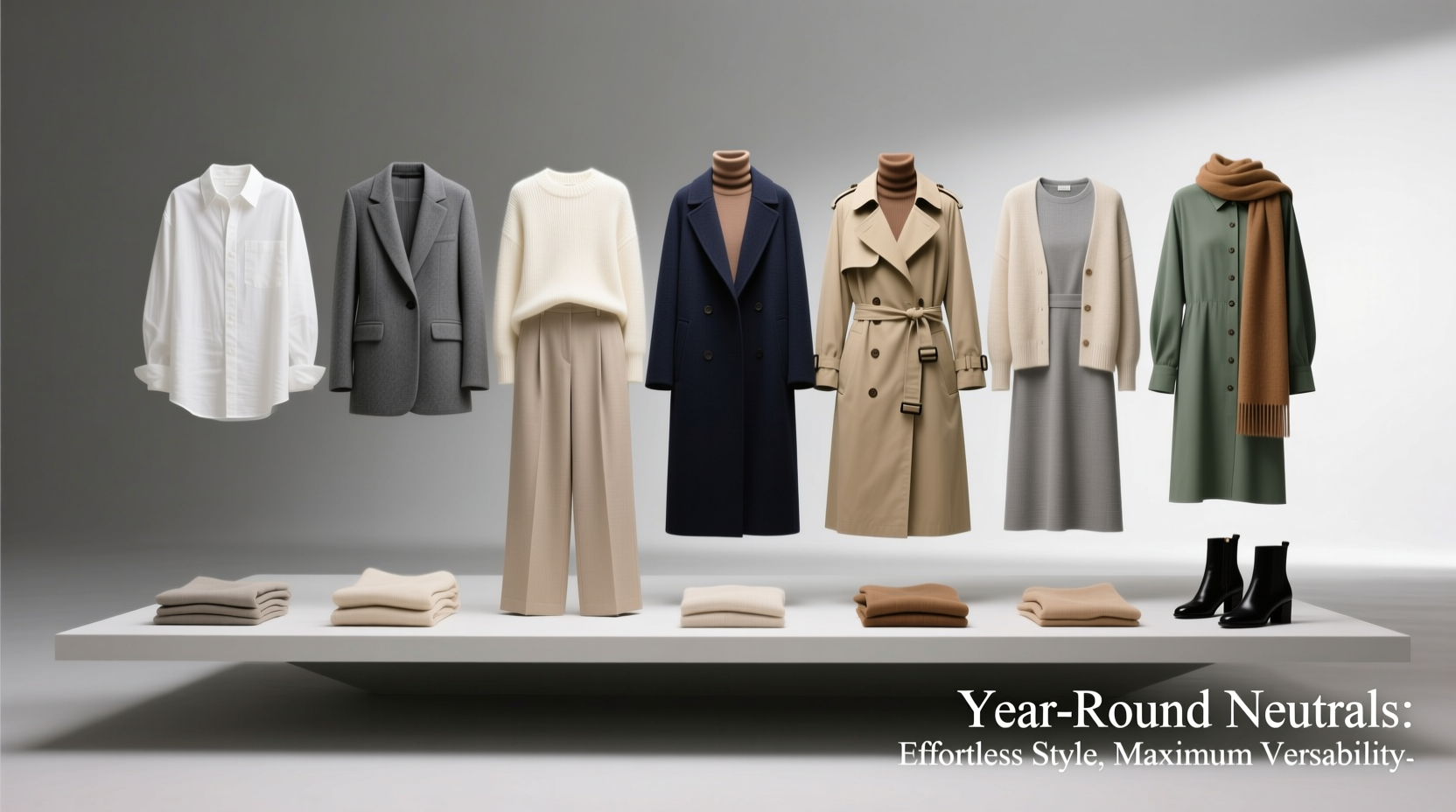
Neutral colors are inherently versatile because they sit outside the chromatic extremes of the color wheel. Unlike bold hues or seasonal pastels, neutrals don’t clash—they complement. This makes them ideal for layering, mixing, and recombining without visual conflict. Whether you're dressing for a humid summer day or a snow-covered morning, neutral garments integrate naturally into any environment.
From a psychological standpoint, neutrals convey calm, confidence, and timelessness. They also photograph well, maintain resale value, and age gracefully—few things look more polished than a perfectly tailored camel coat or a crisp white shirt worn decades after purchase.
“Neutrals aren’t boring—they’re foundational. Like the walls of a room, they set the stage for everything else.” — Clara Mendez, Sustainable Fashion Consultant
Because these shades absorb and reflect light subtly, they adapt to different lighting conditions throughout the seasons. A warm oatmeal sweater glows in autumn sunlight but remains soft under fluorescent office lights. A deep slate gray blazer reads as professional in winter and cool in summer when paired with lighter textures.
Step-by-Step Guide to Building Your Neutral Capsule
Creating a year-round neutral capsule requires planning, editing, and a clear understanding of your lifestyle. Follow this six-step process to build a functional, seasonless collection.
- Define your lifestyle needs. Identify how you dress daily: office work, remote job, parenting, travel, or hybrid routines. This determines the balance between formal, casual, and activewear.
- Select a neutral spectrum. Choose 5–7 core neutrals that work with your skin tone and climate. Common options include: ivory, cream, beige, camel, taupe, warm gray, cool gray, charcoal, soft black, and olive.
- Determine your climate zones. If you live in four-season regions, plan for layering. In milder climates, focus on breathable fabrics and transitional weights.
- Curate core categories. Every capsule should include tops, bottoms, outerwear, dresses (if applicable), footwear, and layering pieces.
- Invest in quality fabrics. Prioritize natural fibers like wool, cotton, linen, silk, and cashmere for breathability, durability, and drape.
- Edit ruthlessly. Only keep items that fit perfectly, feel comfortable, and align with your aesthetic. Each piece should pair with at least three others.
Essential Pieces for a Neutral Capsule Wardrobe
A successful neutral capsule balances function and form. Below is a checklist of foundational items designed to cover all seasons and occasions.
Checklist: Core Items for Year-Round Wear
- White or ivory cotton button-down shirt
- Black or charcoal tailored trousers
- Taupe or beige chinos or cropped pants
- Dark wash (near-black) jeans in non-stretch denim
- Cashmere or merino crewneck sweater (gray or camel)
- Olive utility jacket or chore coat
- Camel or charcoal wool coat (mid-weight)
- Black wool-blend peacoat (for cold climates)
- Cream turtleneck (lightweight and heavyweight versions)
- Neutral trench coat (beige or stone)
- Slip dress in taupe or charcoal (silk or viscose)
- Blazer in heather gray or soft black
- Two pairs of neutral shoes: loafers (tan or black) and ankle boots (brown or black)
- White sneakers (leather or vegan leather)
- Belt in matching leather tone
- Minimalist watch and small leather bag
These pieces form the backbone of your wardrobe. The key is ensuring consistency in undertones—either all warm (ivory, camel, olive), all cool (charcoal, silver gray, soft black), or balanced. Mixing warm and cool neutrals without intention can create visual dissonance.
Do’s and Don’ts: Building a Cohesive Palette
Maintaining harmony in a neutral wardrobe depends on attention to detail. Use this table to avoid common pitfalls and reinforce best practices.
| Do | Don’t |
|---|---|
| Stick to one dominant undertone family (warm, cool, or balanced) | Mix warm camel and cool gray without a transitional piece |
| Vary textures (knit, twill, silk, wool) to add depth | Wear flat, matte fabrics head-to-toe without contrast |
| Use tonal layering (light beige under dark khaki) | Pair overly similar shades that blend into one shapeless mass |
| Invest in proper tailoring for perfect fit | Keep ill-fitting items “just in case” |
| Rotate seasonal layers instead of full replacements | Buy duplicates of the same item unless necessary |
Real Example: A Year in a Neutral Capsule
Sophie, a 38-year-old project manager in Portland, Oregon, built her neutral capsule over three months. Her climate experiences rainy springs, mild summers, damp autumns, and chilly winters—making versatility essential.
She started by clearing out 70% of her closet, keeping only five pieces that met her criteria: fit, fabric, and compatibility. She then purchased 18 core items using secondhand platforms and ethical brands, focusing on wool, organic cotton, and TENCEL™ blends.
In January, she layered a charcoal turtleneck under a camel wool blazer with black trousers and ankle boots. By June, the same turtleneck was replaced with a linen-cotton blend popover shirt in ivory, paired with beige cropped pants and loafers. Come October, she added an olive chore coat over the blazer for extra warmth.
Her entire wardrobe fits in a single wardrobe cube and suitcase. “I haven’t stressed about outfits in months,” she says. “Even when traveling, I pack just 12 pieces and look put together every day.”
Maximizing Outfit Combinations
A 30-piece neutral capsule can generate over 100 unique outfits when properly structured. The secret lies in modular design: think of each garment as a component in a system.
For example:
- Base Layer: Ivory turtleneck
- Middle Layer: Gray cardigan or blazer
- Outer Layer: Olive field jacket or wool coat
- Bottom: Black trousers or beige chinos
- Shoes: Loafers or ankle boots
This combination can shift across seasons simply by adjusting layer thickness. In summer, wear only the turtleneck (in lightweight cotton) with chinos and loafers. In winter, stack all layers with thicker knits and boots.
To track versatility, assign each top a number and each bottom a letter. Record combinations weekly. Over time, identify underused items and reassess their necessity.
“The fewer colors you use, the more intentional each choice becomes. That’s where true style emerges.” — Julian Park, Menswear Designer & Capsule Advocate
Frequently Asked Questions
Can a neutral wardrobe still feel expressive?
Absolutely. Expression comes from silhouette, texture, proportion, and styling—not just color. A wide-leg cream trouser with a fitted charcoal turtleneck creates drama through contrast. Accessories like scarves, belts, or jewelry in metallics or earthy stones add personality without breaking neutrality.
How do I choose between warm and cool neutrals?
Assess your skin’s undertones. If you look better in gold jewelry and peachy blush, warm neutrals (camel, oat, olive) will suit you. If silver jewelry enhances your complexion, lean into cool grays, charcoal, and icy whites. For neutral undertones, a balanced palette works best.
Won’t everything look the same after a while?
Only if texture and cut are ignored. A ribbed wool sweater reads differently than a smooth cotton poplin shirt, even in the same shade. Introduce variation through herringbone wool, seersucker cotton, brushed flannel, or silk crepe. These subtle shifts keep the eye engaged.
Final Tips for Long-Term Success
Maintaining a neutral capsule isn’t about rigidity—it’s about refinement. Reassess every six months. Remove worn items, repair what can be saved, and replace only when necessary. Shop with a list, not emotion.
When adding new pieces, ask:
- Does this match at least three existing items?
- Is the fabric durable and appropriate for multiple seasons?
- Will I wear this 30+ times?
Store off-season layers folded in breathable cotton bags, away from direct light. Rotate shoes and bags to prevent creasing and extend lifespan.
Conclusion
A capsule wardrobe built entirely on neutral tones is not a limitation—it’s liberation. It streamlines choices, reduces consumption, and cultivates a signature style that evolves quietly but powerfully over time. With careful selection, intelligent layering, and respect for material quality, this approach delivers year-round relevance across climates and contexts.
You don’t need variety in color to experience richness in life. Sometimes, the most profound statements are made in silence—and the most elegant wardrobes speak in whispers of beige, gray, and soft black.




 浙公网安备
33010002000092号
浙公网安备
33010002000092号 浙B2-20120091-4
Comments
No comments yet. Why don't you start the discussion?