
A great company name does more than just identify a business—it tells a story, evokes emotion, and becomes synonymous with trust and value. In an era where attention spans are short and competition is fierce, choosing a name that sticks in people’s minds is one of the most strategic decisions you’ll make. The right name can elevate your brand from invisible to iconic. But it’s not about being clever for cleverness’ sake; it’s about alignment—between your mission, audience, voice, and long-term vision.
Consider names like Apple, Tesla, or Airbnb. None are literal descriptions of their products, yet each conveys clarity, innovation, and personality. These brands didn’t just pick a name—they built an identity around one. Creating such a name requires intention, research, and creativity. Below is a comprehensive guide to help you craft a company name that doesn’t just sound good, but feels right.
Understand Your Brand Identity First
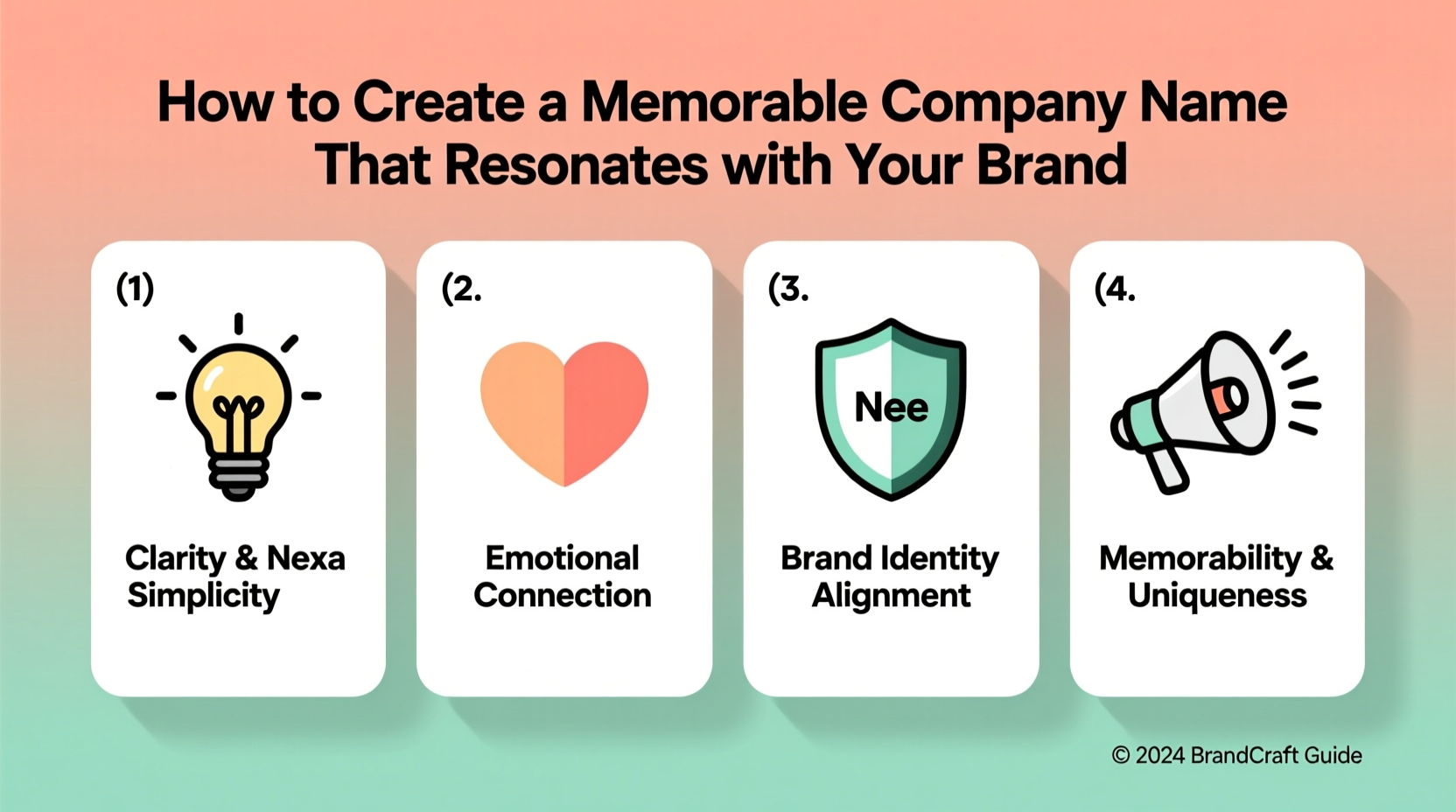
Before brainstorming names, define what your brand stands for. A powerful name grows out of purpose, values, tone, and target audience. Ask yourself: What problem do we solve? Who are we speaking to? What emotions should our brand evoke—trust, excitement, simplicity, luxury?
If you're launching a sustainable skincare line, a name like “EcoGlow” immediately signals both environmental care and radiance. On the other hand, a fintech startup might aim for precision and reliability—names like “Steadfast Capital” or “NexaPay” project stability and modernity.
“Your company name is the first impression your brand makes. It should reflect who you are before a customer even visits your website.” — Lisa Chen, Brand Strategist at Veridian Collective
Follow a Step-by-Step Naming Process
Creating a strong name isn’t random—it’s a structured creative process. Follow these steps to ensure clarity and effectiveness:
- Clarify your brand strategy: Revisit your mission, vision, and audience personas.
- Brainstorm keywords: List words related to your industry, benefits, values, and metaphors (e.g., “flow,” “spark,” “summit”).
- Explore naming styles: Consider descriptive (Zoom), suggestive (Netflix), abstract (Kodak), or founder-based names (Hewlett-Packard).
- Combine and modify: Use prefixes, suffixes, portmanteaus (Spotify = Spotify + ty), or foreign language roots (IKEA from Ingvar Kamprad Elmtaryd Agunnaryd).
- Shortlist and test: Narrow to 5–10 options and gather feedback from diverse audiences.
- Check legal and digital availability: Verify domain names, trademarks, and social media handles.
Naming Styles Compared
| Style | Description | Example |
|---|---|---|
| Descriptive | Clearly states what the company does | General Motors |
| Suggestive | Hints at benefits or experience | Amazon (vast selection) |
| Abstract | Unique, invented word with no direct meaning | Xerox |
| Acronym | Built from initials | IBM (International Business Machines) |
| Founder-Based | Named after a person | Dell, Disney |
Principles of a Memorable Name
Catchiness matters, but longevity matters more. A name may sound trendy today but feel outdated in five years. Focus on timeless qualities:
- Simplicity: Easy to spell, pronounce, and remember (e.g., Uber, Slack).
- Distinctiveness: Stands out in your industry without being confusing.
- Scalability: Doesn’t limit future growth (e.g., “Denver Coffee Co.” may hinder expansion beyond Denver).
- Linguistic clarity: Avoids unintended meanings in other languages (remember Chevrolet’s “Nova,” which was misinterpreted in Spanish-speaking markets as “no go”?)
- Emotional resonance: Evokes feeling or imagery (Patagonia suggests adventure and wild landscapes).
Real Example: How “Slack” Got Its Name
Slack, now a household name in workplace communication, began as a gaming company called Tiny Speck. When their game failed, they pivoted to using their internal chat tool as a product. They needed a new name—one that reflected productivity without stress.
The team chose “Slack” as an acronym for “Searchable Log of All Conversation and Knowledge.” Though counterintuitive (slacking off has negative connotations), they redefined the term: slack as freedom from overload, space to think, reduced friction. The irony became part of the brand’s charm. Today, Slack embodies efficiency through calm, organized communication.
This example shows that even a word with mixed associations can become powerful when aligned with a clear narrative and consistent branding.
Checklist: Is Your Company Name Ready?
Use this checklist before finalizing your decision:
- ✅ It’s easy to spell and pronounce.
- ✅ It’s available as a .com domain (or relevant TLD).
- ✅ Social media handles are unclaimed or purchasable.
- ✅ It doesn’t infringe on existing trademarks.
- ✅ It works internationally (no offensive translations).
- ✅ It aligns with your brand voice and long-term goals.
- ✅ It passes the “phone test”—can someone understand and remember it if you say it once?
- ✅ It feels authentic, not forced or overly trendy.
Common Mistakes to Avoid
Even smart entrepreneurs fall into naming traps. Watch out for these pitfalls:
- Overcomplication: Long, hyphenated, or hard-to-spell names hurt recall.
- Too narrow focus: Naming after a single product limits scalability.
- Ignoring cultural context: A name that means something positive in English might mean something else elsewhere.
- Chasing trends: Suffixes like “-ly,” “-ify,” or “-r” may date quickly.
- Skipping legal checks: Trademark disputes can force costly rebrands later.
“A name isn’t just a label—it’s the beginning of your brand’s legacy. Choose one that can grow with you.” — Marcus Tran, IP Attorney and Brand Consultant
Frequently Asked Questions
Can I use a name that’s already taken in another industry?
Possibly, but proceed with caution. Trademarks are industry-specific, so “Apple Records” and “Apple Inc.” coexisted until conflicts arose. Conduct a thorough trademark search via official databases (like USPTO) to assess risk.
Should I include keywords like “tech” or “solutions” in my name?
Rarely. While it may seem descriptive, terms like “Global Solutions” are generic and forgettable. They also make your brand feel impersonal. Focus on uniqueness over clarity—clarity comes through branding, not naming.
Is it okay to change my company name later?
Yes, but it’s expensive and risky. Rebranding involves updating legal documents, marketing materials, websites, and customer perception. It’s far better to invest time upfront than to rebrand prematurely.
Final Thoughts: Build a Name That Lasts
A memorable company name isn’t found—it’s crafted. It emerges from deep understanding, creative exploration, and rigorous evaluation. The best names don’t just stand out; they invite connection. They become shorthand for everything your brand delivers.
Take your time. Involve stakeholders. Test ideas. Sleep on them. And when you find the one that feels inevitable—that clicks like a key turning in a lock—you’ll know.




 浙公网安备
33010002000092号
浙公网安备
33010002000092号 浙B2-20120091-4
Comments
No comments yet. Why don't you start the discussion?