
A minimalist capsule wardrobe is more than a fashion trend—it’s a lifestyle shift toward intentionality, simplicity, and sustainability. By narrowing your closet to just 10 carefully chosen items, you eliminate decision fatigue, reduce clutter, and ensure every piece you wear works hard for your daily life. The goal isn’t scarcity but smart selection: each item must be functional, timeless, and combinable with the rest. This approach doesn’t require sacrificing style; instead, it enhances it by focusing on quality over quantity.
The concept of a capsule wardrobe was popularized in the 1970s by London boutique owner Susie Faux and later embraced by designers like Donna Karan. Today, minimalism in fashion has evolved into a global movement, especially among those seeking sustainable alternatives to fast fashion. A 10-piece capsule takes this idea to its most distilled form—ideal for travelers, urban professionals, or anyone looking to streamline their mornings and align their wardrobe with personal values.
Why 10 Pieces? The Power of Constraint
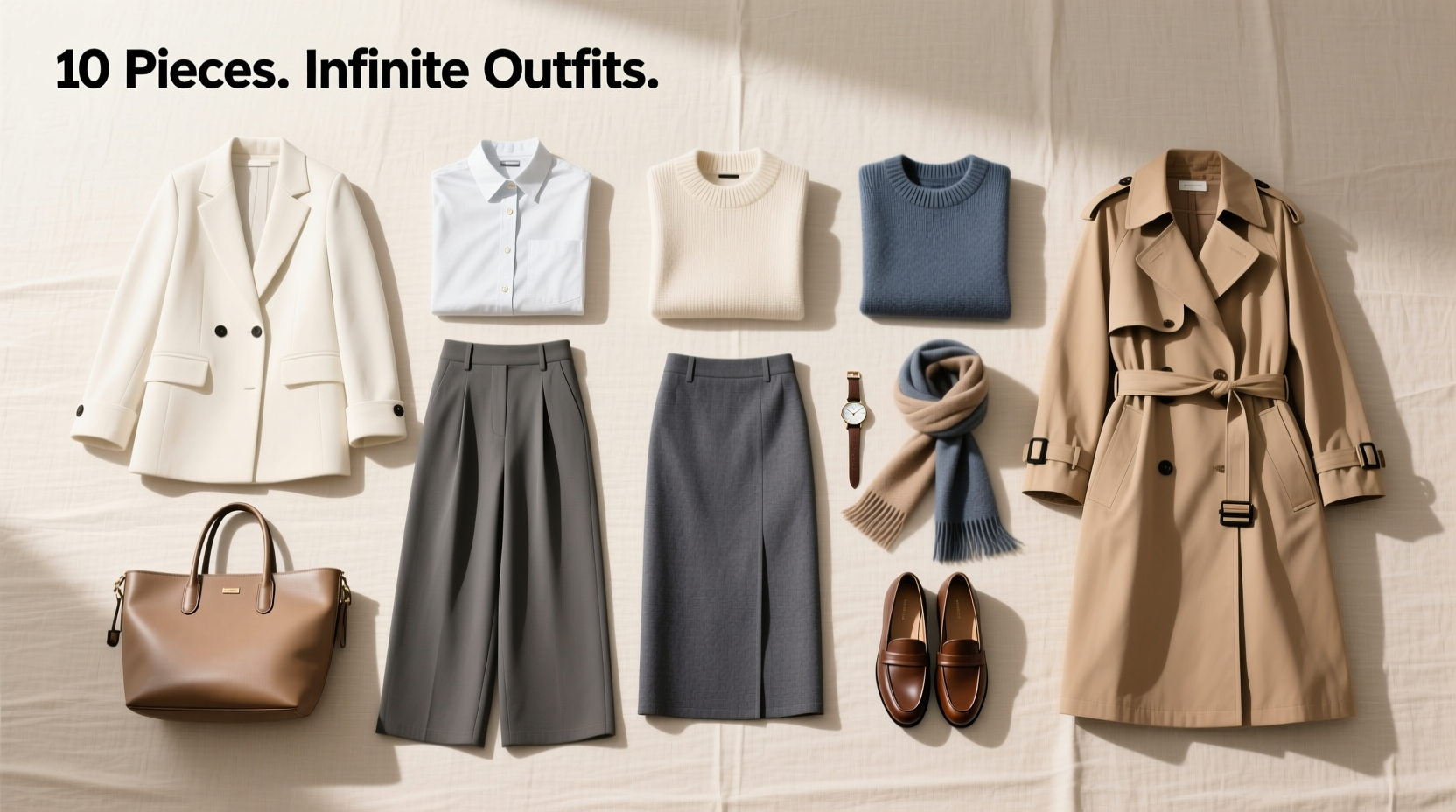
Limiting your wardrobe to 10 core clothing items forces thoughtful choices. Unlike traditional wardrobes that grow unchecked, a minimalist capsule operates under deliberate constraints. These limitations foster creativity: when you can’t rely on variety, you learn to mix and layer effectively. Each garment must serve multiple roles—appropriate for work, casual outings, and even semi-formal events when styled correctly.
This number also makes maintenance easier. With fewer clothes, laundering becomes manageable, storage needs shrink, and outfit planning turns from stressful to intuitive. Most importantly, a small wardrobe encourages mindfulness. You begin to notice what you actually wear versus what merely takes up space.
Step-by-Step Guide to Building Your 10-Piece Capsule
Creating a functional 10-item wardrobe requires strategy. Follow these steps to build one that fits your lifestyle and climate.
- Assess Your Lifestyle Needs: Are you in an office environment, working remotely, or frequently outdoors? Your daily activities dictate which garments are essential. For example, a blazer may matter more if you attend meetings, while durable pants make sense for active days.
- Choose a Cohesive Color Palette: Stick to neutral tones like black, navy, gray, beige, or white. These colors mix and match effortlessly. Add one accent shade (like burgundy or olive) if desired, but keep it subtle.
- Select High-Quality Fabrics: Opt for natural materials such as cotton, wool, linen, or silk blends. They breathe better, age gracefully, and maintain shape longer than synthetics.
- Determine Your Climate Zone: Adjust fabric weights accordingly. In colder regions, include a warm coat and layer-friendly knits. Warmer climates allow lighter fabrics and sleeveless options.
- Pick One Statement Piece: Even minimalism benefits from personality. This could be a textured sweater, a patterned scarf (if counted separately), or uniquely tailored trousers.
- Edit Ruthlessly: After selecting potential items, ask: Does this go with at least three other pieces? Have I worn it in the past month? Would I pack it for a week-long trip? If not, reconsider.
Sample 10-Piece Capsule Wardrobe
The following table outlines a balanced, gender-neutral capsule suitable for temperate climates and mixed-use scenarios. All pieces coordinate across outfits.
| Item | Description | Versatility Notes |
|---|---|---|
| 1. Tailored Trousers | Mid-rise, straight-leg in charcoal gray wool blend | Pairs with blazer for work, sneakers for weekends |
| 2. Dark Wash Jeans | Slim-straight cut, non-distressed denim | Casual wear, dress up with loafers or down with tees |
| 3. White Button-Down Shirt | Cotton poplin, classic fit | Worn open as layer, tucked for formal looks |
| 4. Black Turtleneck | Fine-gauge merino wool | Layer under blazers or wear solo in cooler weather |
| 5. Navy Blazer | Unstructured cotton-linen blend | Elevates jeans, completes professional ensembles |
| 6. Neutral Sweater | Beige crewneck in soft cashmere blend | Adds warmth without bulk; complements all bottoms |
| 7. Black Loafers | Leather, slip-on style with rubber sole | Dressy enough for meetings, comfortable for walking |
| 8. White Sneakers | Minimalist canvas or leather design | Go-to shoe for casual and smart-casual combos |
| 9. Trench Coat | Beige waterproof cotton gabardine, mid-length | Protects from rain, adds polish over any outfit |
| 10. Structured Handbag/Backpack | Medium-sized, black leather with clean lines | Holds essentials, transitions from day to evening |
This combination yields over 30 distinct outfit combinations without repetition. For instance:
- Morning meeting: Turtleneck + tailored trousers + blazer + loafers
- Casual weekend: Jeans + white tee (under shirt) + trench + sneakers
- Evening out: Button-down half-tucked into jeans + sweater over shoulders + handbag
Expert Insight: Less Is More in Modern Style
“Simplicity isn’t about deprivation—it’s about removing noise so the right things stand out.” — Clara Nguyen, Sustainable Fashion Consultant
Clara emphasizes that true style emerges when distractions are removed. “When clients switch to a capsule, they often discover they have clearer personal expression. Instead of chasing trends, they invest in pieces that reflect who they are.” She recommends starting small: “Try a two-week trial with only 10 tops and bottoms. You’ll likely find you never reach for half of what you thought you needed.”
Common Pitfalls and How to Avoid Them
Even with good intentions, building a minimalist wardrobe can go wrong. Here are frequent missteps and how to correct them.
| Do’s | Don’ts |
|---|---|
| Do prioritize fit above brand or price | Don’t keep ill-fitting items “just in case” |
| Do wash clothes according to care labels to extend life | Don’t overload the washing machine or use high heat unnecessarily |
| Do repair minor damages promptly (e.g., loose buttons) | Don’t ignore snags or stains until they worsen |
| Do rotate seasonal layers outside the core 10 | Don’t count outerwear like winter coats in the main count unless used daily |
Mini Case Study: From Overwhelmed to Organized
Sarah, a 34-year-old project manager in Portland, Oregon, had over 80 items in her closet but felt she had “nothing to wear” every morning. After reading about capsule wardrobes, she challenged herself to live with just 10 core pieces for six weeks. She selected:
- Black ankle boots
- Gray wool coat
- Striped Breton top
- Three interchangeable tops (white, black, cream)
- Two pairs of pants (black trousers, dark jeans)
- Blazer, cardigan, tote bag
Within days, Sarah saved nearly 20 minutes each morning. She reported feeling more confident because each outfit felt intentional. “I stopped worrying about being ‘on trend’ and started enjoying my clothes again,” she said. After the trial, she kept her capsule structure but expanded slightly to 15 pieces—still far below her original count.
Frequently Asked Questions
Can a 10-piece wardrobe work year-round?
Yes, with strategic layering. Core pieces remain consistent, while lightweight or heavy-duty layers (like thermal base layers or summer dresses) rotate seasonally. The 10-item rule typically applies to foundational garments, allowing supplementary items for extreme weather.
What about underwear, sleepwear, or workout clothes?
The 10-piece framework focuses on visible, day-wear clothing. Undergarments, activewear, and loungewear are considered separate categories since they don’t contribute to outfit coordination. However, applying minimalist principles to those areas can further simplify your routine.
How do I handle special occasions?
Borrow, rent, or own one versatile “occasion” piece outside the capsule. A little black dress or a well-cut suit can be used across events without disrupting the minimalist ethos. Alternatively, re-style existing pieces with jewelry or shoes reserved for evenings.
Final Checklist Before Launching Your Capsule
- ☑ Defined personal style and daily dressing needs
- ☑ Selected a harmonious color scheme
- ☑ Chosen fabrics suited to your climate and lifestyle
- ☑ Tried every item for fit and comfort
- ☑ Tested at least five mix-and-match combinations
- ☑ Stored off-season or excess clothes out of sight
- ☑ Committed to a trial period (minimum 2 weeks)
Conclusion: Start Small, Think Long-Term
A minimalist capsule wardrobe of 10 pieces isn’t about restriction—it’s about liberation. Liberation from indecision, from laundry piles, from the pressure to constantly update your look. When you surround yourself only with what truly serves you, getting dressed becomes effortless, and your style becomes authentic.




 浙公网安备
33010002000092号
浙公网安备
33010002000092号 浙B2-20120091-4
Comments
No comments yet. Why don't you start the discussion?