
A minimalist Christmas tree doesn’t mean less joy—it means more intention. By stripping away ornaments, tinsel, and clutter, you allow the quiet beauty of simplicity to shine. One of the most effective ways to achieve this refined aesthetic is by using only warm white lights. These soft, golden-hued bulbs evoke candlelight, creating a cozy, timeless glow that enhances the natural form of the tree without overwhelming it. When done thoughtfully, a light-only minimalist tree becomes a focal point of calm and elegance in your holiday decor.
The appeal of this approach lies in its versatility and sustainability. Without physical ornaments to store or replace, maintenance is minimal. The focus shifts from consumerism to atmosphere—on warmth, ambiance, and presence. Whether your style leans Scandinavian, modern farmhouse, or urban loft, a warm-white-lit tree blends seamlessly. This guide walks through the principles, techniques, and subtle details that transform a basic evergreen into a statement of understated holiday grace.
Selecting the Right Tree
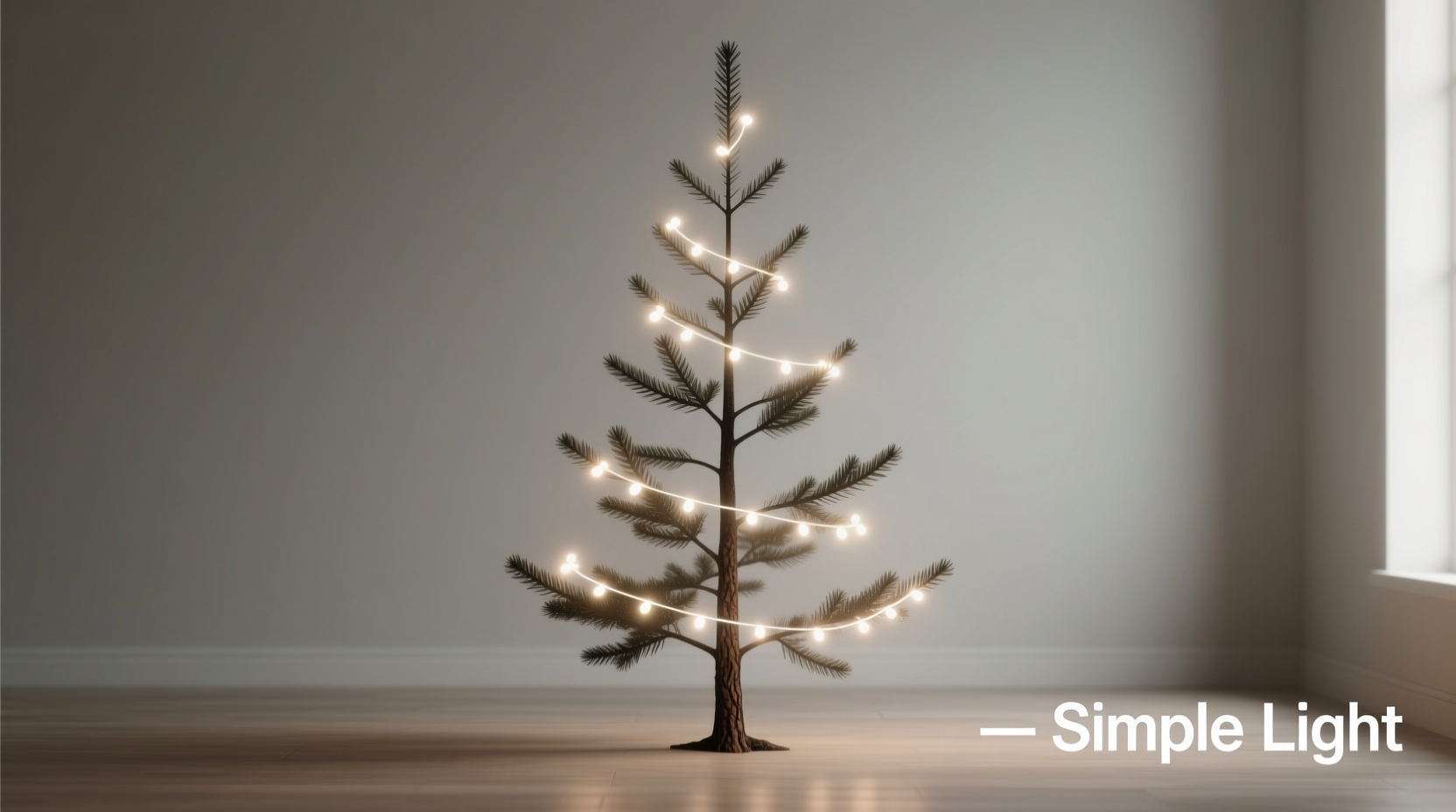
The foundation of a successful minimalist tree is the tree itself. Since there will be no ornaments to distract or add visual weight, the shape, density, and color of the foliage become critically important. A well-proportioned tree with balanced branches allows the lights to cascade evenly, creating rhythm and depth.
Fir species—such as Fraser, Balsam, or Noble—are ideal due to their full, tiered branching structure and deep green needles. These hold their shape well and provide a rich backdrop for warm white lighting. If opting for an artificial tree, choose one with varied branch lengths and realistic needle texture. Avoid overly bushy or sparse models; instead, seek a medium-density profile that allows light to penetrate while still offering surface area for illumination.
Height matters too. In smaller spaces, a 6- to 7-foot tree maintains proportion without dominating the room. For high-ceilinged rooms, go taller—but ensure the top doesn’t brush the ceiling or compete with chandeliers. A tree topper isn’t necessary in minimalist design, but if used, keep it subtle: a simple fabric bow, dried citrus slice, or neutral ribbon knot preserves the clean aesthetic.
Choosing the Perfect Warm White Lights
Not all white lights are the same. The difference between cool, clinical white and warm, inviting white can make or break the mood of your tree. Warm white bulbs emit a soft yellowish glow similar to incandescent or candlelight, typically around 2700–3000 Kelvin on the color temperature scale. This warmth complements wood tones, cream textiles, and natural materials common in minimalist interiors.
LED string lights are recommended for energy efficiency, longevity, and cooler operation. Look for high-quality LEDs labeled “warm white” or “soft white”—avoid terms like “daylight” or “bright white.” Opt for bulbs with a frosted or diffused finish to soften glare and distribute light evenly. Clear bulbs work best; colored coatings can tint the glow unnaturally.
| Light Type | Color Temp (Kelvin) | Lifespan | Best For Minimalist Trees? |
|---|---|---|---|
| Incandescent Warm White | 2700K | 1,000 hours | Moderate – authentic glow but short-lived |
| LED Warm White (Frosted) | 2700–3000K | 25,000+ hours | Yes – efficient, consistent, long-lasting |
| LED Cool White | 5000K+ | 25,000+ hours | No – too harsh and blue-toned |
| Twinkling Warm White | 2700K | 15,000 hours | Use sparingly – disrupts serenity |
For a truly minimalist effect, avoid blinking, chasing, or color-changing modes. Steady illumination supports tranquility. Choose cords with minimal visibility—thin, green or brown wires blend better with branches than stark white or silver.
Step-by-Step Lighting Technique
How you apply the lights determines whether the tree looks haphazard or harmonious. The goal is even coverage with no dark zones or clumps. Follow this methodical process:
- Measure and plan: Use 100 lights per vertical foot of tree (e.g., a 6-foot tree needs ~600 bulbs). Buy extra strings to ensure full coverage.
- Start at the base: Plug the first string into an extension cord near the floor. Begin weaving lights into the innermost core of the lowest branches.
- Work inward to outward: Thread each bulb deep into the branch, then loop back toward the tip. This creates depth and prevents a flat, shell-like appearance.
- Spiral upward: Move in a continuous spiral pattern from bottom to top. Maintain consistent spacing—roughly 3–4 inches between bulbs along the strand.
- Layer multiple strands: Overlap strings slightly to fill gaps. Conceal connection points within the trunk or behind branches.
- Test frequently: Turn on the lights after every two feet of progress to spot dark patches early.
- Final touch-up: Step back and view from multiple angles. Add supplemental mini-string lights if needed for balance.
The result should be a uniformly glowing silhouette, where individual bulbs aren’t the focus, but rather the collective radiance they produce. From across the room, the tree should appear softly luminous, like a living lantern.
Design Principles for a Cohesive Minimalist Vibe
A minimalist tree thrives on restraint and context. It’s not just about what you leave off—it’s about how the tree interacts with its surroundings. Consider these design elements to elevate the overall impression:
- Neutral backdrop: Place the tree against a light wall or in a corner with uncluttered surroundings. Avoid busy wallpaper or competing artwork.
- Simple stand: Swap out ornate metal stands for wooden, matte black, or concrete bases that align with minimalist aesthetics.
- Complementary lighting: Pair the tree with ambient room lighting—floor lamps with warm bulbs, candles, or dimmable overheads—to extend the cozy glow.
- Natural accents: If adding subtle decoration, use organic elements: a jute ribbon wrapped once around the base, pinecones tucked low in branches, or a linen tree skirt.
- Scale and space: Allow breathing room around the tree. Don’t crowd it with presents or furniture. Empty space emphasizes intentionality.
“Minimalism isn’t emptiness—it’s editing. Every element must earn its place. With only lights, the tree becomes pure form and light, which is profoundly festive in its own right.” — Lena Torres, Interior Designer & Author of *Calm Spaces*
In a real-world example, Sarah M., a graphic designer in Portland, transformed her living room with a 7-foot Noble fir lit solely with 700 warm white LED lights. She placed the tree in a bay window, flanked by neutral curtains and a single bench. “I was nervous it would look bare,” she said. “But when I turned off the overhead lights, it felt like magic. My kids said it looked like a ‘tree from a snow globe.’ We ended up gathering around it every night just to sit and talk.” Her experience underscores how emotional impact often grows from simplicity, not excess.
Maintenance and Year-Round Mindset
A minimalist tree is easier to maintain, but not maintenance-free. Check connections weekly to prevent flickering. Dust the branches gently with a microfiber cloth or soft duster—dust dulls light output. For real trees, water daily to prolong freshness and reduce needle drop. Artificial trees should be stored in a breathable bag, away from heat and sunlight to preserve both needles and wiring.
The philosophy behind this decor choice often extends beyond the holidays. Many who adopt minimalist lighting report a lasting shift in how they approach seasonal decor—favoring quality over quantity, experience over accumulation. As one Reddit user shared in a home design thread: “After doing the lights-only tree, I couldn’t go back to tinsel and baubles. It felt like noise after silence.”
Frequently Asked Questions
Can I use battery-operated lights for a minimalist tree?
Yes, but with caution. Battery-powered strings work well for small trees or accent lighting, but larger trees require substantial power. Frequent battery changes can disrupt consistency, and dimming over time may create uneven brightness. For a full-sized tree, plug-in lights are more reliable and cost-effective.
What if my tree still looks sparse with only lights?
If the tree appears thin, consider adding a second layer of lights on a staggered pattern. Alternatively, enhance depth by placing a mirror behind the tree to reflect the glow. You can also increase ambient room lighting to amplify the overall brightness without adding ornaments.
Is this style appropriate for families with young children?
Absolutely. Many parents find the minimalist approach reduces stress during the holidays. Without fragile or small ornaments, the tree becomes child-friendly. Kids often appreciate the calming glow and enjoy helping weave the lights. Some families incorporate a single handmade ornament—a tradition that adds meaning without clutter.
Final Thoughts and Call to Action
A minimalist Christmas tree illuminated solely with warm white lights is more than a decorating choice—it’s a statement of presence over perfection. It invites stillness, reflection, and connection in a season often defined by rush and excess. By focusing on light, form, and atmosphere, you create a space that feels both festive and peaceful.
This holiday season, consider what might happen if you removed everything nonessential. What stories do the shadows and glimmers tell? How does the room change when the tree breathes instead of shouts? You don’t need dozens of ornaments to celebrate wonder. Sometimes, all you need is a single strand of warm light tracing the outline of a branch, reminding you that beauty lives in the quiet moments.




 浙公网安备
33010002000092号
浙公网安备
33010002000092号 浙B2-20120091-4
Comments
No comments yet. Why don't you start the discussion?