
A well-tailored woolen jacket is a cornerstone of refined wardrobes. Whether it’s a classic overcoat, a tweed blazer, or a winter-ready topcoat, its silhouette speaks volumes about craftsmanship and personal style. Yet, wool’s natural resilience can falter without proper care. Over time, improper storage, frequent wear, and incorrect cleaning can lead to sagging shoulders, flattened lapels, and a distorted fit. Fortunately, with intentional maintenance and restorative practices, you can keep your wool jacket looking sharp for years—or even decades.
Understanding Wool’s Structure and Vulnerabilities
Wool fibers are naturally elastic and breathable, making them excellent at retaining shape under normal conditions. However, this elasticity has limits. The interlocking scales in wool fibers can mat down when exposed to moisture, heat, or pressure. Most wool jackets also feature internal canvas or horsehair lining that gives them structure. When this layer shifts or compresses, the jacket loses its intended form.
Common culprits behind shape loss include:
- Hanging by the sleeves or on thin hangers
- Folding instead of hanging
- Exposure to steam or high heat during drying
- Over-wearing without rest periods
- Improper cleaning methods (e.g., machine washing)
Preserving shape begins with understanding these risks and addressing them proactively.
Proper Storage: The Foundation of Shape Preservation
How you store your wool jacket between wears determines much of its lifespan. Unlike cotton or synthetics, wool needs space to breathe and support to maintain drape.
Follow these storage guidelines:
- Use the right hanger: Choose a sturdy wooden or wide-padded hanger. Wire or narrow plastic hangers create indentations and stretch shoulder seams.
- Avoid compression: Never stack items on top of a hung jacket. Store it at the end of a closet row where it won’t be crowded.
- Breathe, don’t suffocate: Use breathable cotton garment bags—not plastic—for long-term storage. Plastic traps moisture and encourages mildew.
- Seasonal rotation: During off-seasons, clean the jacket before storing. Moths are attracted to organic residues like sweat and food particles.
| Storage Factor | Do | Don't |
|---|---|---|
| Hanger Type | Wooden or padded hanger with rounded shoulders | Thin wire or plastic hangers |
| Covering | Cotton garment bag | Plastic dry-cleaning bags or sealed containers |
| Environment | Cool, dry, ventilated closet | Damp basements or hot attics |
| Duration | Short-term: open air; Long-term: cleaned & bagged | Leave unwashed for months |
Restoring Lost Shape: A Step-by-Step Guide
If your jacket has begun to lose its structure—noticeable droop in the shoulders or a limp collar—you can often reverse minor damage with careful intervention.
- Assess the damage: Lay the jacket flat on a clean surface. Check for asymmetry, puckering, or collapsed padding in the shoulders and chest.
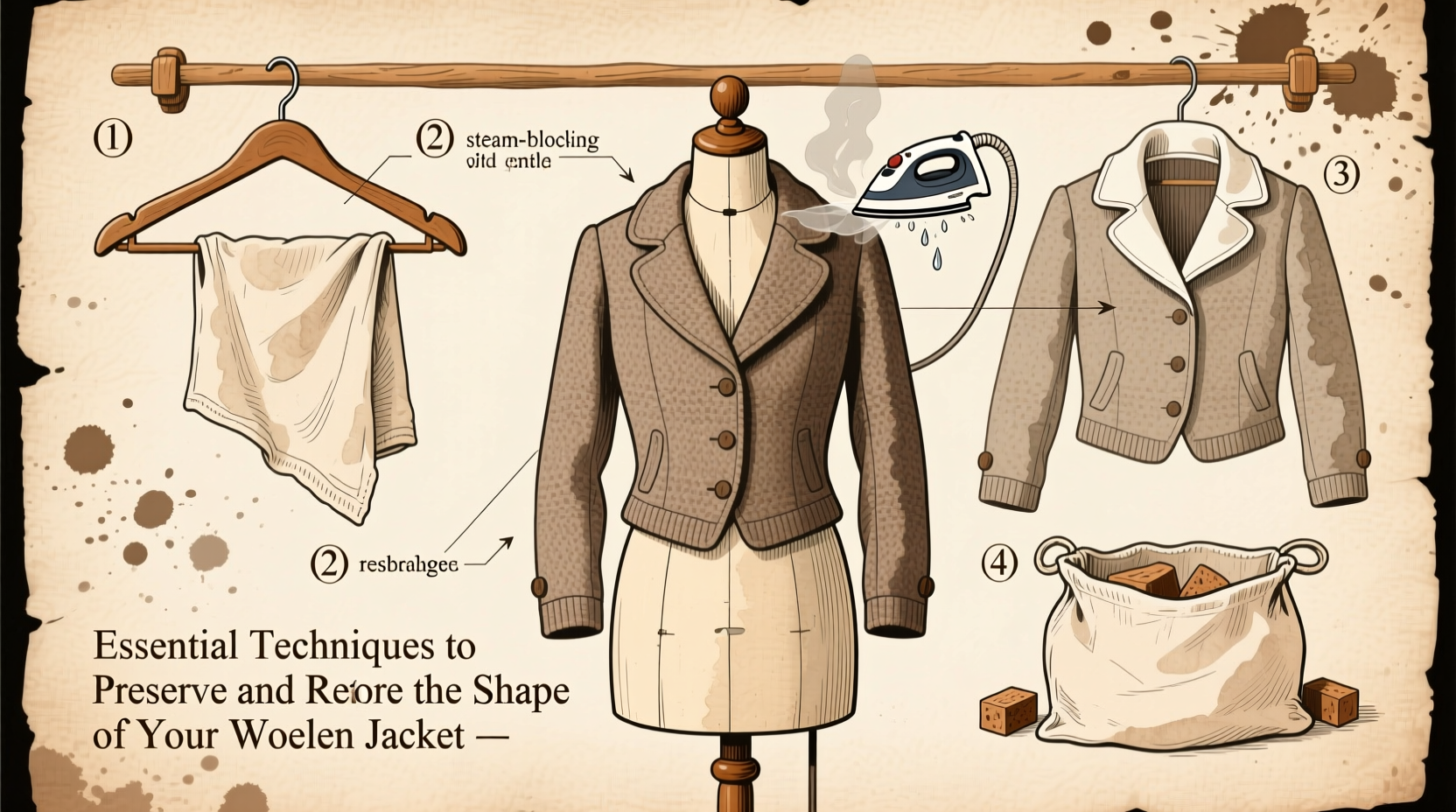
- Steam gently: Use a handheld steamer held 6 inches from the fabric. Move vertically along seams and lapels. Avoid direct contact or excessive moisture.
- Reshape while damp: After steaming, re-hang the jacket on the correct hanger. Lightly tug the lapels and cuffs into position. Let it air-dry overnight.
- Refresh the canvas: If internal canvas has shifted, place a clean towel inside the shoulder area and press lightly with a cool iron through a cloth. This helps re-adhere layers.
- Let it rest: After wearing, allow 24–48 hours off the hanger for fibers to rebound before wearing again.
This process won’t fix severe structural issues but can revive a jacket showing early signs of fatigue.
“Wool garments need recovery time. Just like fine wine, they perform best when treated with patience and respect.” — Julian Hart, Master Tailor, Savile Row Atelier
Real Example: Reviving a Heirloom Tweed Jacket
Thomas inherited his grandfather’s 1960s Harris Tweed jacket—crafted with full canvas and natural shoulder padding. Though cherished, years in a plastic bag had left it misshapen: one shoulder dipped, and the collar curled inward. Following restoration steps, Thomas first hand-brushed the fabric to remove dust, then steam-treated each panel. He used a cedar hanger to retrain the shoulders and stored it in a breathable linen bag. Within two weeks, the jacket regained nearly all its original structure. A local tailor later confirmed the canvas was intact—just compressed. With ongoing care, Thomas now wears it regularly, preserving both memory and material integrity.
Essential Care Checklist
To consistently protect your wool jacket’s shape, follow this actionable checklist:
- ✔ Hang immediately after wear on a proper hanger
- ✔ Air out for 24 hours before re-hanging
- ✔ Brush weekly with a soft clothes brush
- ✔ Steam only when necessary—never iron directly
- ✔ Store seasonally in breathable fabric covers
- ✔ Rotate wear to allow fiber recovery
- ✔ Dry clean only when visibly soiled or stained
When to Seek Professional Help
Some shape issues go beyond home remedies. If you notice:
- Permanent creases or bulges in the chest
- Shoulder padding visibly shifted or bunched
- Lining pulling away from seams
- Moth damage or thinning fabric
—it’s time to consult a professional tailor or conservator. Many tailors offer “re-blocking” services, where they carefully dismantle and reconstruct the internal structure to restore the original silhouette. While this may cost $100–$300, it’s an investment in extending a jacket’s life by 10+ years.
FAQ: Common Questions About Wool Jacket Care
Can I wash my wool jacket at home?
No. Hand-washing or machine-washing risks felting, shrinkage, and distortion. Spot-clean minor stains with a damp cloth and mild detergent, but always opt for professional dry cleaning for deep cleaning.
How often should I dry clean my wool jacket?
Only 1–2 times per season, or when visibly soiled. Over-cleaning removes natural oils and stresses the fibers. Regular brushing and airing reduce the need for chemical treatment.
Why does my jacket’s collar curl up?
This usually results from uneven moisture exposure or stress on the interfacing. Gently steaming the underside of the collar and reshaping it while warm can correct mild curling.
Final Thoughts: Shape Is a Sign of Respect
The shape of a wool jacket is not merely aesthetic—it reflects how much you value craftsmanship, sustainability, and personal presentation. By treating your garment with consistent care, you honor the hands that made it and ensure it continues to serve you with dignity. These techniques aren’t just about maintenance; they’re about stewardship. A jacket preserved well transcends fashion cycles and becomes heirloom-quality.




 浙公网安备
33010002000092号
浙公网安备
33010002000092号 浙B2-20120091-4
Comments
No comments yet. Why don't you start the discussion?