
A minimalist Christmas tree doesn’t mean sacrificing luxury—it means elevating it. In an age where less is more, the most sophisticated holiday interiors feature trees that are refined, intentional, and rich in texture rather than clutter. A high-end minimalist tree focuses on quality over quantity, using carefully curated elements to evoke elegance, warmth, and timeless style. This approach appeals to modern design sensibilities while maintaining the spirit of the season. Whether you live in a sleek urban loft or a heritage home with contemporary touches, a minimalist tree can become a statement piece that feels both festive and fashion-forward.
The Philosophy of Minimalist Holiday Design
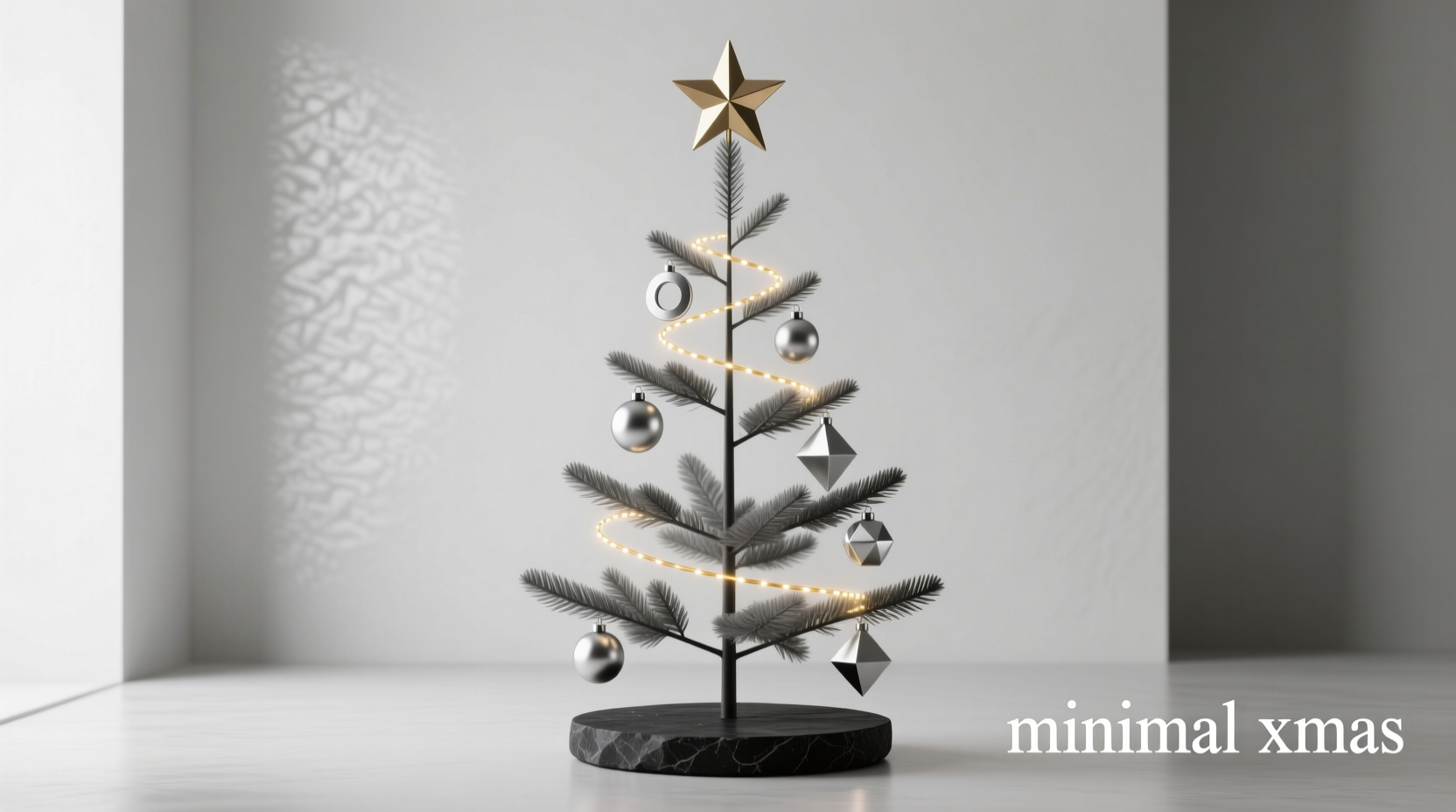
Minimalism in interior design isn’t about emptiness; it’s about clarity. It strips away the excess to reveal what truly matters—form, material, light, and space. Applied to a Christmas tree, this philosophy shifts focus from abundance to intentionality. Instead of layering dozens of ornaments and strands of tinsel, a minimalist tree uses fewer elements, each chosen for its aesthetic weight, craftsmanship, or emotional resonance.
Designer-led holiday styling often embraces restraint. As interior architect Clara Mendes notes:
“Luxury isn’t measured by how much you display, but by how thoughtfully you compose. A single handmade ornament on a perfectly shaped branch can say more than a hundred mass-produced baubles.” — Clara Mendes, Interior Architect & Founder of Atelier Lumen
This mindset transforms the tree into a sculptural centerpiece—a living installation that honors seasonal joy without overwhelming the room. The goal is not austerity, but sophistication through curation.
Step-by-Step: Building Your Minimalist Designer Tree
Creating a high-end minimalist tree follows a deliberate process. Each stage prioritizes balance, proportion, and tactile richness. Follow this timeline to build your tree with confidence and precision.
- Select the right tree form – Choose a real fir, spruce, or artificial tree with a clean silhouette and full but structured shape. Avoid overly bushy or cartoonish profiles. For a designer look, consider a white-washed or frosted finish on artificial trees, or a slim-profile real tree in a neutral-toned pot.
- Choose a refined base – Ditch plastic stands. Opt for a matte black metal stand, a woven rattan planter, or a travertine cube. The base should feel like furniture, not an afterthought.
- Limit the lighting – Use warm-white LED fairy lights only. String them evenly, wrapping around branches in a spiral from base to tip. Aim for subtlety—light should glow, not glare. For a luxury touch, use battery-operated lights with remote dimmers.
- Curate a restrained ornament palette – Select no more than 15–20 ornaments. Focus on materials: hand-blown glass, ceramic, brushed brass, or felt. Stick to one or two colors (e.g., cream and charcoal, gold and olive) or go monochrome with clear glass and mirrored finishes.
- Add one focal element – This could be a large artisan star, a sculptural topper in blackened steel, or a single vintage-inspired angel. Place it at the top with care—it’s the exclamation point of your design.
- Incorporate natural texture – Weave in subtle organic elements: dried oranges, cinnamon sticks bound with linen thread, or eucalyptus garlands. These add scent and softness without visual noise.
- Final edit – Step back. Remove anything that feels redundant, distracting, or overly festive. If an ornament draws too much attention, it may not belong.
Material Palette: What Defines High-End Minimalism
The difference between a basic minimalist tree and a high-end one lies in materiality. Luxury is conveyed not through glitter, but through grain, weight, and craftsmanship. Consider these premium materials when selecting components:
| Element | Designer Choice | Avoid |
|---|---|---|
| Ornaments | Hand-blown glass with matte finish, ceramic spheres, oxidized metal pendants | Plastic, mirrored balls with rainbow reflections, character-themed decor |
| Tree Stand | Matte stone, blackened steel, handwoven fiber | Clear plastic, bright red metal, branded stands |
| Garland | Linen-wrapped eucalyptus, dried fig branches, cashmere ribbon loops | Tinsel chains, popcorn strings, synthetic vines |
| Lighting | Warm-white micro LEDs on copper wire, candle-style bulbs | Multi-color strings, flashing modes, thick plastic cords |
| Tree Topper | Geometric brass star, folded paper crane cluster, dried palm frond sculpture | Glittery bows, plastic snowflakes, oversized Santa hats |
When combining materials, follow the “rule of three”: choose up to three dominant textures (e.g., glass, wool, and metal) and repeat them throughout the tree for cohesion. This repetition creates rhythm without monotony.
Real Example: The SoHo Loft Tree Transformation
In December 2023, designer duo Lin & Vale were commissioned to style a 7-foot Christmas tree for a penthouse in Manhattan’s SoHo district. The client requested “a tree that feels like it belongs in a boutique hotel lobby—calm, chic, unforgettable.”
The designers began with a slim-profile artificial spruce in a natural taupe tone, mounted on a custom blackened steel stand. They wrapped 200 warm-white micro LEDs evenly around the trunk and primary branches. For ornamentation, they used only 12 pieces: six matte cream glass orbs, four oxidized brass teardrops, and two hand-thrown ceramic stars glazed in ash gray.
Instead of garland, they draped a single strand of unspun raw silk, knotted loosely every 18 inches and accented with pressed bay leaves. The topper was a forged iron crescent moon with a tiny crystal at its center—unexpected, yet harmonious.
The result? A tree that guests described as “serene,” “expensive-looking,” and “like a piece of art.” It required less than half the typical decorations but took twice as long to install due to meticulous placement. This case underscores a key truth: high-end minimalism demands precision, not speed.
Checklist: Creating Your High-End Minimalist Tree
Use this checklist to ensure every detail aligns with luxury minimalist principles:
- ☐ Tree has a balanced, architectural shape (not overstuffed)
- ☐ Base is neutral, textured, and furniture-grade
- ☐ Lights are warm-white, evenly distributed, and cord-concealed
- ☐ Ornament count is under 20 and all share a cohesive material or color story
- ☐ At least one artisan or handmade element is included
- ☐ Natural textures (dried citrus, herbs, wool) are used sparingly
- ☐ No visible packaging tags, price stickers, or plastic hangers
- ☐ Tree has been viewed and approved from multiple room angles
- ☐ One strong focal point (topper or central ornament) anchors the design
- ☐ Final edit removed at least two items originally planned
Avoiding Common Pitfalls
Even with the best intentions, minimalist trees can fall short when common missteps occur. Here’s what separates a polished design from one that feels unfinished or cheap:
- Under-lighting: Too few lights make a tree look bare. Aim for 100 lights per foot of tree height. For a 6-foot tree, that’s 600 warm-white LEDs.
- Over-matching: While coordination is important, identical ornaments in perfect rows feel sterile. Introduce slight variation in size or finish for organic depth.
- Neglecting scale: Large rooms need larger ornaments. A 7-foot tree in a double-height living space should feature at least a few 4-inch diameter pieces to avoid looking lost.
- Ignoring scent: Luxury environments engage multiple senses. Incorporate subtle fragrance via dried citrus, sandalwood sticks, or a diffuser nearby—never artificial spray near the tree.
- Skipping maintenance: Real trees dry out. Water daily. Artificial trees collect dust—wipe branches gently with a microfiber cloth before decorating.
“The most memorable trees aren’t the fullest—they’re the ones that make you pause. That moment of quiet admiration? That’s the sign of successful design.” — Rafael Stone, Award-Winning Set Designer for Editorial Holiday Features
Frequently Asked Questions
Can a minimalist tree still feel festive?
Absolutely. Festivity comes from atmosphere, not ornament density. Combine your tree with ambient lighting, soft textiles, and seasonal scents to create warmth. A minimalist tree often feels more celebratory because it’s not visually exhausting—guests can actually enjoy being in the space.
Where can I find high-quality minimalist ornaments?
Look to artisan marketplaces like Etsy (search “hand-blown Christmas ornament” or “sculptural tree decor”), design boutiques such as The Future Perfect or Matter, or European brands like Skultuna (Sweden) and Bitossi (Italy). Museum gift shops also carry elegant, timeless options.
Is it okay to mix real and artificial elements?
Yes—and it’s encouraged. Many designers blend a real tree with artificial accents (like ceramic or metal ornaments) for durability and control. Conversely, an artificial tree can be elevated with real dried botanicals. The key is consistency in tone and color.
Conclusion: Elevate Your Holiday with Intention
A minimalist Christmas tree with high-end designer appeal isn’t about following trends—it’s about expressing taste. It reflects a commitment to quality, a respect for space, and a desire to celebrate with meaning rather than excess. By focusing on material integrity, balanced composition, and thoughtful details, you create a tree that doesn’t just decorate a room but transforms it.
This holiday season, resist the urge to over-decorate. Instead, invest in a few exceptional pieces, place them with care, and let silence speak as loudly as sparkle. A truly luxurious tree doesn’t shout “Merry Christmas”—it whispers, “Welcome. Stay awhile.”




 浙公网安备
33010002000092号
浙公网安备
33010002000092号 浙B2-20120091-4
Comments
No comments yet. Why don't you start the discussion?