
For many people—whether secular, interfaith, culturally diverse, or simply seeking a more intentional holiday experience—the traditional Christmas tree carries layers of meaning that don’t align with their values or beliefs. Yet the desire for warmth, beauty, ritual, and shared celebration remains deeply human. A non-religious Christmas tree isn’t about subtraction—it’s about thoughtful curation: replacing dogma with delight, doctrine with discovery, and inherited symbols with personally resonant ones. This approach honors tradition while honoring authenticity. It invites participation without pressure, joy without justification, and festivity rooted in universal human experiences—light in darkness, renewal in winter, connection across generations.
Why a Non-Religious Tree Is More Than Just an Alternative
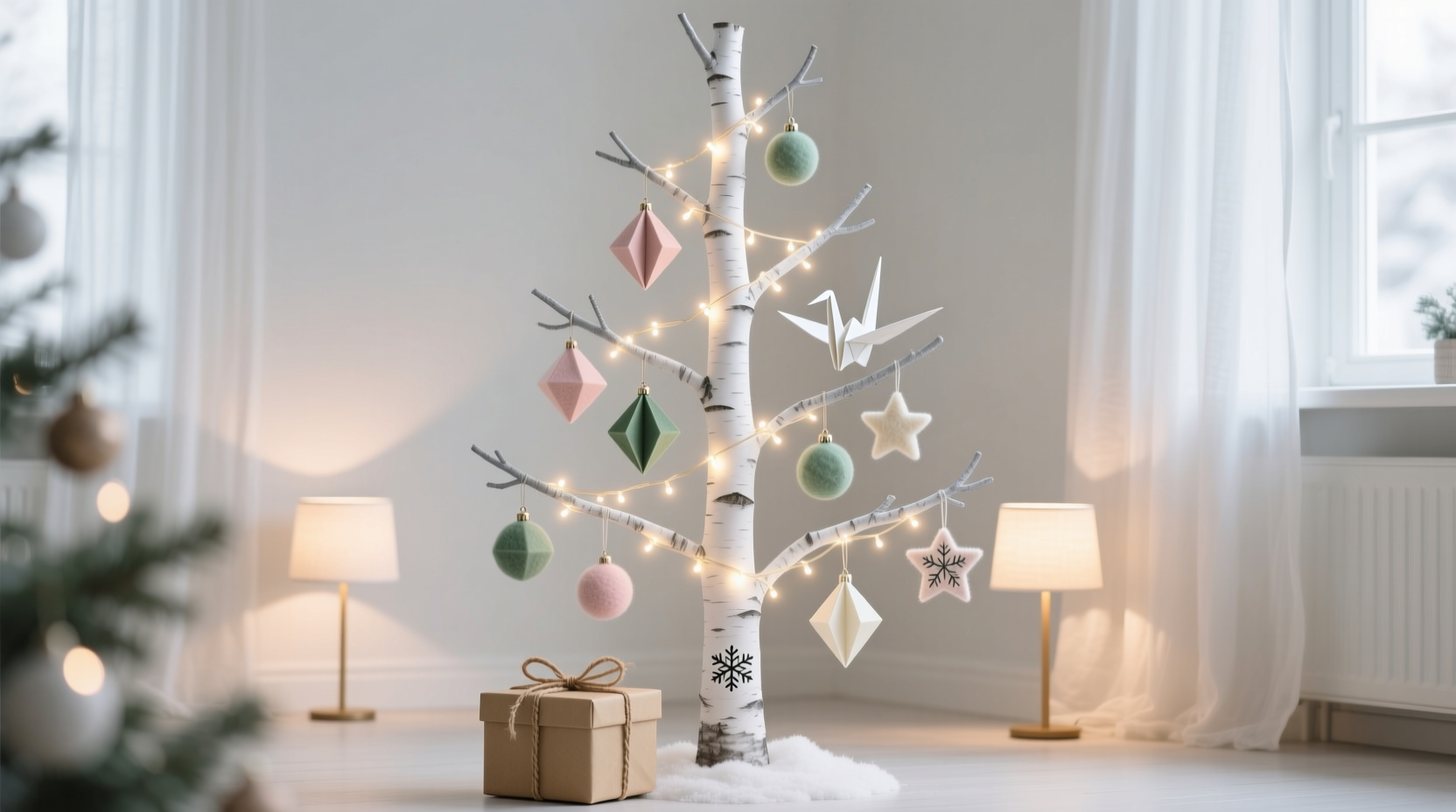
A tree stripped of religious context doesn’t lose its emotional gravity—it gains flexibility. Anthropologists and cultural historians note that evergreen trees have symbolized resilience, continuity, and hope across dozens of pre-Christian traditions—from Norse Yule logs to Roman Saturnalia decorations to Baltic solstice rites. The modern Christmas tree evolved from these layered customs, not a single theological origin. As Dr. Lena Torres, cultural historian at the University of Vermont, explains:
“Trees were never inherently Christian. They became associated with Christmas through centuries of syncretism—blending local customs with emerging religious frameworks. Today, reclaiming the tree as a secular symbol of light, endurance, and gathering is less a departure from tradition and more a return to its oldest, most human roots.” — Dr. Lena Torres, author of Winter Light: Rituals of Resilience Across Cultures
This perspective shifts the focus from “what the tree represents” to “what it makes possible”: shared decoration time with children, a focal point for gratitude practices, a canvas for storytelling, or a quiet anchor during the year’s shortest days. It’s not about erasing meaning—it’s about choosing it deliberately.
Core Principles for Building Meaning Without Doctrine
Creating a festive, non-religious tree rests on four foundational principles—not rules, but guiding intentions:
- Nature-Centered Symbolism: Prioritize organic materials (wood, pinecones, dried citrus, wool, unbleached cotton) and motifs tied to seasonal cycles—buds, snowflakes, migrating birds, constellations—rather than sacred figures or texts.
- Light as Universal Language: Use warm-white or amber string lights (not just white), candle-style LED pillars, or even battery-operated lanterns. Light is biologically comforting in winter and culturally neutral across belief systems.
- Personal Narrative Over Prescribed Iconography: Ornaments should reflect family history, milestones, hobbies, or values—e.g., a ceramic owl for a child’s love of owls, a tiny globe for a family’s travel memories, or hand-stamped wooden discs with initials and years.
- Tactile & Sensory Richness: Texture matters. Incorporate woven ribbons, knitted garlands, smooth river stones painted with metallic accents, or bundles of cinnamon sticks. Festivity lives in the feel of things—not just the sight.
Step-by-Step: Building Your Tree in 5 Intentional Stages
Follow this sequence—not as rigid instruction, but as a mindful framework that ensures cohesion and meaning:
- Choose Your Tree Ethically: Opt for a potted living tree you’ll plant after the holidays, a high-quality reusable artificial tree made from recyclable materials, or even a striking wall-mounted branch sculpture. Avoid cut trees unless sourced from local, pesticide-free farms with replanting commitments.
- Select a Unifying Color Palette (3–4 Colors Max): Go beyond red/green. Try deep indigo + oatmeal + copper; sage + terracotta + cream; or charcoal + pale gold + slate blue. These palettes feel seasonal without leaning into commercial or liturgical associations.
- Create 3–5 “Anchor Ornaments”: These are larger, meaningful pieces placed first—e.g., a hand-thrown ceramic star (representing guidance, not divinity), a brass sun disk (for solar return), or a woven nest holding three smooth stones (symbolizing past/present/future). Space them evenly for visual balance.
- Add Layers of Texture & Scale: Drape a linen garland, weave in thin birch twigs, tuck in sprigs of rosemary (for remembrance), then hang ornaments ranging from 1” wood slices to 4” felt moons. Varying sizes prevent visual monotony.
- Finish with Light & Scent: Weave warm-toned fairy lights *from the trunk outward*, not just around the perimeter. Add a subtle diffuser nearby with cedarwood, bergamot, and clove—scents linked to winter wellness, not worship.
What to Use (and What to Skip) for Authentic Festivity
Below is a practical comparison guide—designed not to shame choices, but to clarify intentionality. The goal isn’t perfection, but awareness.
| Category | Thoughtful, Non-Religious Options | Elements That Risk Religious Association (Unless Recontextualized) |
|---|---|---|
| Ornament Motifs | Constellations, snow crystals, hibernating animals, seed pods, origami cranes, geometric patterns, hand-drawn family portraits, pressed autumn leaves | Angels, nativity scenes, crosses, doves with olive branches (unless used as peace symbols in broader context), “Jesus is the Reason” text ornaments |
| Materials | Unbleached cotton, wool felt, reclaimed wood, beeswax-coated paper, sea glass, ceramic, cork, dried citrus | Plastic mass-produced ornaments with overtly Christian slogans or imagery, glitter-heavy items that evoke commercial excess over craft |
| Tree Topper | Wooden sun, brass moon phase, woven star, oversized pinecone wrapped in copper wire, fabric crane | Traditional angel or star with halos, crown-shaped toppers implying monarchy/divine right |
| Ritual Elements | A “gratitude box” beneath the tree where family writes notes to read on New Year’s Eve; a small shelf holding favorite winter books; a bowl of polished stones for guests to hold while sharing hopes | Advent calendars with biblical verses, scripture-based ornament kits, nightly devotional readings centered on doctrine |
Real Example: The Henderson Family’s “Roots & Light” Tree
In Portland, Oregon, the Henderson family—two agnostic parents, a 7-year-old who identifies as “science-curious,” and a grandmother who celebrates both Hanukkah and Winter Solstice—spent three years refining their approach. Their breakthrough came when they stopped asking, “What should we avoid?” and started asking, “What do we want this tree to *do*?”
Their current tree is a 6-foot Nordmann fir in a handmade cedar planter. Its base holds soil and moss, with tiny solar-powered lights embedded in the bark. Ornaments include: hand-blown glass orbs containing soil from each family member’s birthplace; ceramic acorns stamped with initials and birth years; knitted mushrooms (a nod to Pacific Northwest forests); and a rotating “story ornament”—a wooden disc where each person adds one sentence about a moment of kindness they witnessed that month.
They cap it with a large, asymmetrical wooden sun carved by the grandmother. No lights are turned on until the winter solstice—making illumination itself a ritual of anticipation and renewal. “It’s not about rejecting anything,” says parent Maya Henderson. “It’s about making space for what *is* true for us—curiosity, care for the earth, quiet wonder, and the simple comfort of being together when it’s cold outside.”
Your Inclusive Tree Checklist
Before finalizing your tree, run through this concise checklist. Tick off each item only when it reflects your genuine intent—not external expectations.
- ✅ I’ve chosen materials that feel sustainable and tactile—not just decorative.
- ✅ At least 3 ornaments tell a story about my family, values, or local landscape.
- ✅ My color palette feels cohesive and seasonally grounded—not reliant on red/green clichés.
- ✅ Light is warm, abundant, and intentionally placed—not an afterthought or purely functional.
- ✅ There’s at least one element that invites interaction (a note box, a scent, a touchable texture).
- ✅ I feel calm—not conflicted—when I look at it.
FAQ: Addressing Common Concerns
Won’t skipping religious symbols make the tree feel “empty” or “generic”?
Not if meaning is actively curated. Generic comes from default choices (mass-produced ornaments, predictable colors, no personal narrative). Intentional minimalism—like a tree adorned only with hand-dyed wool balls in shades of twilight, hung with care and lit by beeswax candles—feels rich, not empty. Depth emerges from attention, not abundance.
How do I explain this choice to religious relatives without causing tension?
Frame it as expansion, not exclusion: “We love celebrating the season’s magic—light, togetherness, rest—and we’re designing our tree to reflect what brings *us* that feeling. We’d love your help picking out some pinecones or choosing which books go on the tree shelf!” Focus on shared values (joy, generosity, beauty) rather than doctrinal differences.
Can I still use “Christmas” in the name—or should I call it a “winter tree”?
Yes, you can absolutely keep “Christmas tree.” Christmas, like many holidays, has become a broad cultural container—much like “Easter eggs” or “Thanksgiving turkey” carry meanings beyond original contexts. What matters is how *you* fill it. If “Christmas tree” feels warm and familiar in your home, use it. If “Winter Solstice Tree” or “Family Light Tree” resonates more, choose that. Language serves meaning—not the other way around.
Conclusion: Your Tree Is an Invitation, Not a Statement
A non-religious Christmas tree isn’t a compromise. It’s an act of creative sovereignty—a chance to build something beautiful that breathes with your values, honors your relationships, and meets the quiet human need for light, rhythm, and belonging during the dark months. It asks nothing of others and offers everything: warmth, artistry, memory, presence. You don’t need permission to celebrate in ways that feel true. You don’t need to justify your joy. You only need to choose one branch, one ornament, one string of light—and begin.
Start small. This year, swap one traditional ornament for something handmade or nature-gathered. Next year, add a gratitude practice beneath the boughs. Let your tree grow with your understanding of what festivity means—not as a fixed ideal, but as a living, breathing expression of who you are, right now, in this season.




 浙公网安备
33010002000092号
浙公网安备
33010002000092号 浙B2-20120091-4
Comments
No comments yet. Why don't you start the discussion?