
There’s a quiet magic in stepping into a home that feels like it belongs to another era—especially during the holidays. The scent of pine mingling with old tinsel, the warm crackle of a vinyl record spinning classic carols, the soft glow of bubble lights reflecting off aluminum trees: these are the sensory imprints of a nostalgic Christmas. In an age of minimalist aesthetics and digital convenience, many are rediscovering the charm of mid-century holiday traditions. Creating a nostalgic Christmas isn’t about replicating the past perfectly—it’s about curating moments that feel warm, familiar, and deeply personal. With the right blend of retro decorations and vintage music, you can transform your space into a living memory, even if those memories aren’t your own.
The Emotional Power of Holiday Nostalgia
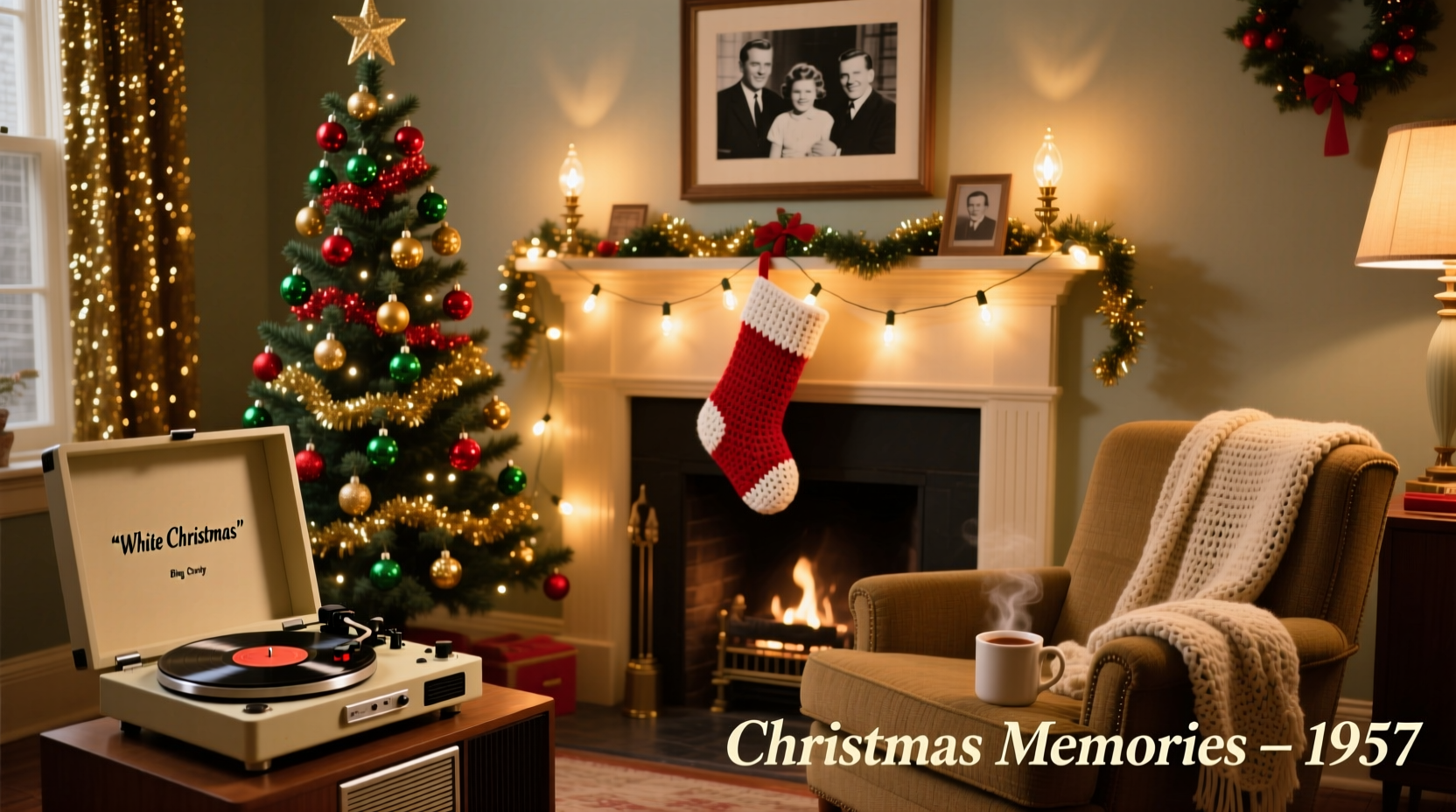
Nostalgia is more than sentimentality—it’s a psychological anchor. Studies show that revisiting comforting memories, especially around the holidays, can reduce stress and increase feelings of belonging. Retro holiday decor and music tap directly into this emotional reservoir. The sight of a cardboard Santa village or the sound of Brenda Lee singing “Rockin’ Around the Christmas Tree” doesn’t just decorate a room; it evokes stories, family gatherings, and simpler times. This emotional resonance is why retro styling remains powerful decades after its peak.
Mid-century Christmas aesthetics—roughly spanning the 1940s to the 1970s—emphasized bold colors, playful novelty, and handcrafted charm. Unlike today’s often coordinated themes, vintage holiday design welcomed clutter, mismatched patterns, and whimsy. Think red-and-green plaid tablecloths under strings of popcorn, ceramic reindeer grazing on the mantel, and tree skirts made from repurposed fabric. Music played constantly, not through smart speakers on shuffle, but via carefully selected records or radio broadcasts timed to the season.
Selecting Authentic Retro Decorations by Era
To build an authentic nostalgic Christmas, consider which decade inspires you most. Each era brought distinct materials, color palettes, and decorative motifs.
| Era | Key Decor Elements | Signature Colors | Materials |
|---|---|---|---|
| 1940s–50s | Cardboard villages, paper chains, handmade ornaments | Crimson, forest green, gold | Paper, wood, glass bulbs |
| 1950s–60s | Tinsel trees, bubble lights, sleighs, Santas with painted faces | Silver, turquoise, pink, aqua | Metal, plastic, aluminum |
| 1960s–70s | Mod patterns, inflatable figures, psychedelic wrapping paper | Orange, avocado, harvest gold | Vinyl, polyester, foam |
The 1950s saw the rise of mass-produced decorations, making holiday cheer more accessible. Tinsel was king, often applied so heavily it obscured the tree itself. Bubble lights—glass tubes filled with bubbling liquid—added mesmerizing motion. By the 1960s, space-age influence arrived in the form of aluminum Christmas trees, best experienced with a rotating color wheel projector casting shifting hues across the walls.
“People remember the aluminum tree not because it looked real, but because it felt magical. It wasn’t natural—it was science fiction made festive.” — Dr. Lila Monroe, Cultural Historian, Museum of American Holidays
Curating a Retro Holiday Soundtrack
No nostalgic Christmas is complete without the right soundtrack. Unlike modern playlists that jump from Mariah Carey to synth-pop covers, vintage holiday music followed a rhythm—often centered around family listening time, dinner gatherings, or late-night wrapping sessions. The golden age of Christmas music (1940s–1960s) produced enduring classics performed by artists whose voices became synonymous with the season.
Begin by identifying core tracks that define the era you’re emulating:
- Bing Crosby – “White Christmas” (1942)
- The Ronettes – “Sleigh Ride” (1963)
- Darlene Love – “Christmas (Baby Please Come Home)”
- Perry Como – “Hot Chocolate”
- Andy Williams – “The Most Wonderful Time of the Year”
- Dean Martin – “Let It Snow! Let It Snow! Let It Snow!”
For authenticity, source original recordings rather than remastered versions. The slight imperfections—the vinyl hiss, the analog warmth—are part of the charm. If you own a record player, dedicate a shelf near your tree to a curated stack of holiday LPs. Albums like Bing Crosby’s *Merry Christmas* or Nat King Cole’s *The Magic of Christmas* were designed to be listened to in full, creating a narrative arc from Advent to New Year’s Day.
Step-by-Step Guide to Building Your Retro Christmas Setting
Creating a cohesive nostalgic atmosphere requires planning and layering. Follow this timeline to ensure every detail lands with intention.
- Week 1: Define Your Era & Theme
Choose whether you’re leaning into 1950s traditionalism, 1960s futurism, or 1970s kitsch. This decision will guide your shopping, decorating, and playlist choices. - Week 2: Source Decorations
Visit thrift stores, estate sales, or online marketplaces like eBay for vintage items. Look for original packaging as a sign of authenticity. Prioritize lighting—vintage string lights with large bulbs, bubble lights, or candelabra-style flame bulbs add instant period character. - Week 3: Set Up the Tree
Use a metal stand for aluminum trees or a sturdy wooden base for flocked ones. Layer tinsel strand by strand (not thrown), letting it drape naturally. Add handmade or ceramic ornaments sparingly—mid-century trees were often densely decorated but not overcrowded with meaning-laden heirlooms. - Week 4: Integrate Music
Create a daily playlist schedule. For example: morning coffee with Andy Williams, afternoon baking with Brenda Lee, evening wind-down with Nat King Cole. Use a vintage radio or console stereo if possible. - Final Touches: Activate the Senses
Spritz a hint of pine-scented room spray, use cloth napkins in retro prints, and serve drinks in mid-century glassware. The goal is immersion.
A Real-Life Example: The Johnson Family’s 1965 Christmas Revival
The Johnsons of Toledo, Ohio, decided to recreate their grandmother’s 1965 Christmas for her 90th birthday. They began by scanning old family photos to identify key elements: a silver aluminum tree, a red velvet couch draped with a knitted afghan, and a record player stacked with Motown and Christmas albums.
They sourced a vintage Sears aluminum tree from an online collector and paired it with a rotating color wheel projector found on Etsy. Instead of traditional ornaments, they hung small mirrored balls and star-shaped tinsel garlands. The centerpiece of the living room was a working 1964 Motorola television set tuned to a loop of classic Christmas specials—Rudolph, Frosty, and A Charlie Brown Christmas—playing silently with subtitles.
Music was central. They created a Spotify playlist titled “Grandma’s December 1965” featuring songs she danced to at her office party that year: “Winter Wonderland,” “Here Comes Santa Claus,” and “I Saw Mommy Kissing Santa Claus.” On the night of the celebration, guests arrived in vintage attire, and the first thing Grandma said was, “It smells like home.”
This wasn’t just decoration—it was emotional restoration.
Retro Do’s and Don’ts
| Do | Don’t |
|---|---|
| Use warm-white or colored incandescent bulbs for lighting—they mimic vintage electricity output. | Use LED string lights that look too bright or uniform; they break the illusion. |
| Mix textures: velvet stockings, wool blankets, ceramic figurines. | Over-matching everything; mid-century homes embraced visual variety. |
| Play music from the actual era, not modern covers. | Include contemporary pop songs unless blending eras intentionally. |
| Display vintage packaging—original boxes for decorations add authenticity. | Hide all evidence of modern life; tuck away smartphones and flat-screen TVs discreetly. |
Building a Lasting Tradition
Nostalgic Christmas styling doesn’t have to be a one-time performance. Turn it into a tradition by documenting your process each year. Keep a journal noting which records you played, what decorations received the most comments, and how family members responded. Over time, you’ll develop your own legacy—a new vintage worth remembering.
Consider starting a “memory box” where you store not just ornaments, but Polaroids of the tree, printed playlists, and handwritten notes about the season. Future generations might one day recreate *your* version of a nostalgic Christmas.
Frequently Asked Questions
Where can I find authentic retro Christmas decorations?
Start with local thrift stores, antique malls, and online platforms like eBay, Etsy, and Facebook Marketplace. Search terms like “vintage Christmas,” “aluminum tree,” or “mid-century tinsel” yield better results. Estate sales—especially in older neighborhoods—are treasure troves.
Are bubble lights safe to use today?
Original vintage bubble lights should be used with caution due to potential fluid leakage and electrical wear. However, modern reproductions are widely available and meet current safety standards. Look for UL-listed versions that replicate the look without the risk.
Can I mix different decades in my retro theme?
Absolutely. Many families didn’t update their decorations annually, so a 1970s living room might still feature a 1950s tree skirt and 1960s records. Blending eras can enhance authenticity, as long as there’s a cohesive visual thread—like consistent color tones or repeated materials.
Bring Back the Warmth
In a world that moves faster each year, the nostalgic Christmas offers something rare: slowness, warmth, and connection. It invites us to pause, to remember, and to celebrate not just the holiday, but the feeling it once gave us. You don’t need a time machine to experience it—just a few thoughtful decorations, a well-chosen song, and the courage to embrace joy in its most unapologetically sentimental form.
Start small. Hang a strand of vintage tinsel. Play one classic record all evening. Light a scented candle that reminds you of childhood. These gestures accumulate into atmosphere. And before long, you won’t just be recreating nostalgia—you’ll be living it.




 浙公网安备
33010002000092号
浙公网安备
33010002000092号 浙B2-20120091-4
Comments
No comments yet. Why don't you start the discussion?