
A lush, full Christmas tree is the centerpiece of holiday decor, radiating warmth and festivity. But not every tree starts out perfectly dense—especially if you're working with a slim, sparse, or pre-lit model. The good news? You don’t need to buy a new tree to achieve that magazine-worthy look. With strategic lighting placement, thoughtful ornament spacing, and a few insider techniques, even the thinnest evergreen can appear rich, voluminous, and professionally styled.
The secret lies in manipulating visual depth and perceived density. Lighting creates shadows and highlights that trick the eye into seeing more volume, while ornament distribution balances gaps and adds dimension. When done right, these elements work together to transform an underwhelming tree into a showstopper.
Use Lighting to Create Depth and Volume
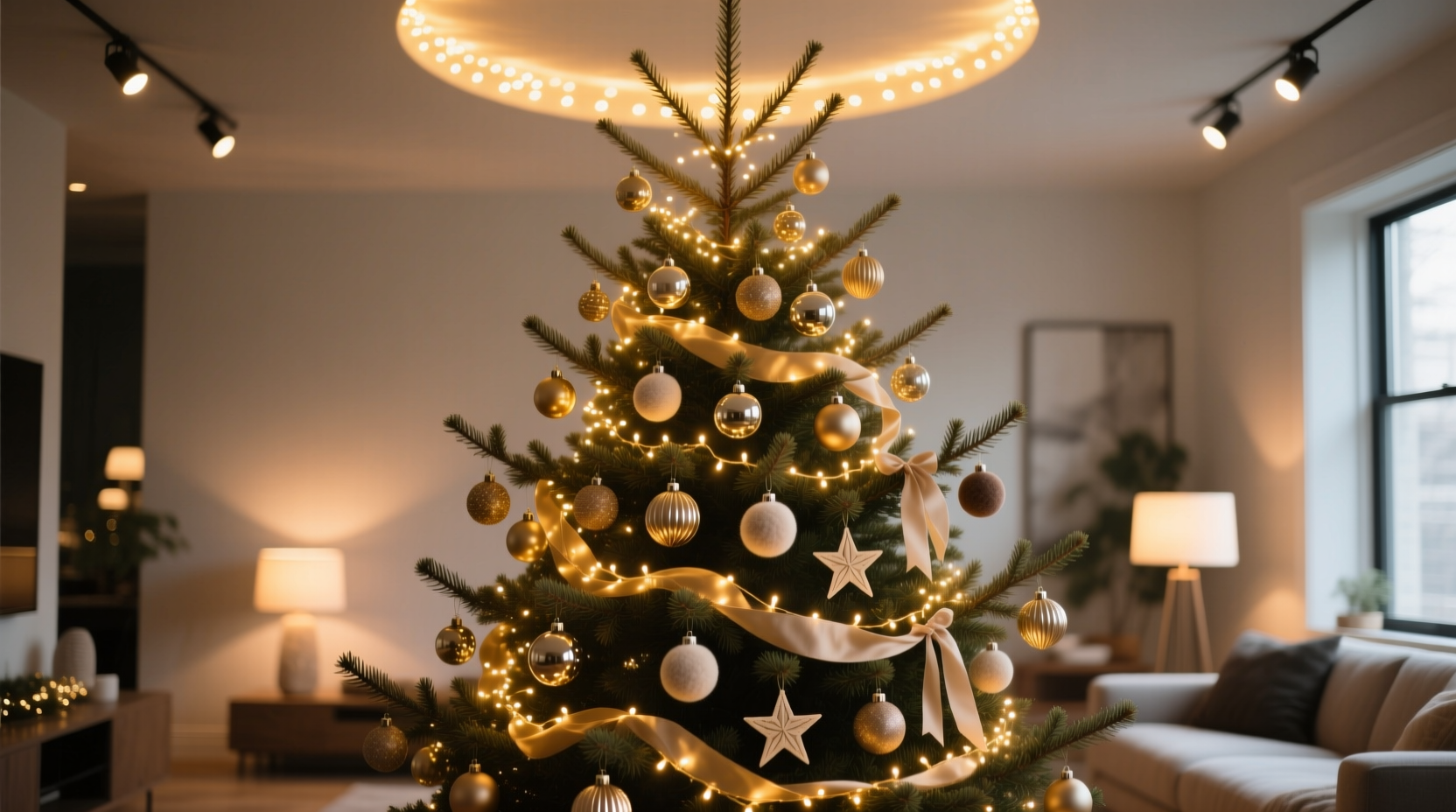
Lighting isn't just about illumination—it's a design tool. Properly placed lights add layers of glow that enhance texture and give the illusion of thickness. Most people simply wrap their tree from top to bottom in a single spiral, but that method often leaves dark zones and flat-looking sides.
To maximize fullness, start at the base of the trunk and weave lights deep into the branches, moving outward. This “inside-out” technique ensures light emanates from within the tree rather than just skimming the surface. As light reflects off inner needles and ornaments, it fills in shadowed areas and gives the impression of greater density.
For best results, use more lights than you think necessary. A general rule is 100 lights per vertical foot of tree. So a 7-foot tree should have around 700 lights minimum, though 1,000 will deliver a richer effect. If your pre-lit tree falls short, layer additional strands over the existing ones, focusing on thinner sections.
Layer Different Types of Lights for Dimension
Consider combining multiple light styles. For example, pair steady incandescent bulbs with twinkling mini LEDs or fairy lights. The contrast between constant and flickering light adds movement and draws attention away from bare spots. Clear lights maintain a classic look, while multicolored sets can energize themed trees—but avoid mixing too many colors, which can create visual chaos.
“Lighting is the skeleton of your tree’s design. Without proper illumination, even the best ornaments won’t shine.” — Daniel Reyes, Professional Holiday Stylist and Set Designer
Strategic Ornament Placement for Visual Fullness
Ornaments do more than decorate—they fill space. The way you hang them determines whether your tree looks balanced or patchy. Avoid clustering all large ornaments at the top or grouping similar items together, as this creates visual weight in isolated zones and emphasizes emptiness elsewhere.
Instead, distribute ornaments by size, color, and reflectivity. Start with larger pieces (3–4 inches) and place them deep within the branches, slightly angled toward the front. These act as anchors. Then fill in with medium (2–3 inch) and small (under 2 inch) ornaments, staggering them across different levels and depths.
Use the “Three-Zone” Hanging Method
Divide your tree into three visual zones: inner, mid, and outer layers. Place about 30% of ornaments in the inner zone (near the trunk), 50% in the mid-layer, and 20% on the outer tips. This mimics natural depth and prevents a “flat” appearance.
- Inner Zone: Use reflective or metallic ornaments that catch backlight and bounce it forward.
- Mid Zone: Mix textures—wood, glass, fabric—to add interest and break up monotony.
- Outer Zone: Hang lightweight, colorful pieces that frame the silhouette.
Fill Gaps with Foliage and Fluffing Techniques
No amount of lighting or ornamentation can fully compensate for poor branch structure. Before decorating, spend time fluffing each section. Start at the trunk and pull individual tips outward and downward, rotating the tree as you go. This exposes hidden layers and builds volume from within.
For persistent gaps, especially near the base or back, consider adding artificial foliage sprays. Pine, holly, or eucalyptus picks (sold at craft stores) can be tucked into thin areas to pad the profile. Choose greenery that matches your tree’s tone and needle length for a seamless blend.
Another clever trick: use sheer ribbon or garland in wide, looping patterns. Satin or metallic ribbons catch light and draw the eye along flowing lines, effectively masking sparse zones. Avoid tight, repetitive spirals—these highlight symmetry flaws. Instead, vary loop sizes and directions for a natural, organic flow.
Mini Case Study: Transforming a Slim Pre-Lit Tree
Sarah M., a homeowner in Portland, Oregon, struggled each year with her 7.5-foot pre-lit fir tree. Though convenient, it had long, leggy branches and noticeable gaps on one side due to storage compression. After learning lighting layering techniques from a local decorator, she implemented a new approach.
She began by rewiring the factory lights, adding 300 extra warm-white LEDs focused on the thin side. She then used the three-zone ornament method, placing mirrored balls deep inside and clustering smaller red and gold baubles in staggered formations. Finally, she wove pine-sprig picks into weak areas and finished with a wide velvet ribbon in loose cascades.
The result? Her tree appeared nearly twice as full. Neighbors assumed she’d purchased a premium $300 tree, when in fact she spent under $20 on supplemental materials. “It’s not about the tree,” she said. “It’s about how you work with what you’ve got.”
Do’s and Don’ts of Tree Fullness: A Quick Reference Table
| Category | Do | Don’t |
|---|---|---|
| Lighting | Weave lights from trunk outward; use 100+ lights per foot | Wrap in flat, even spirals; use only surface-level strings |
| Ornaments | Distribute by size and depth; mix reflective and matte finishes | Cluster similar sizes or colors; hang all ornaments on tips |
| Spacing | Fluff branches outward; rotate tree while styling | Decorate one side at a time; skip back or base sections |
| Filling Gaps | Use matching foliage picks; drape ribbon in varied loops | Overload one area; use mismatched greenery |
Step-by-Step Guide to a Fuller-Looking Tree
- Fluff thoroughly: Work in sections, pulling branch tips outward and down. Rotate the tree as you go to ensure even expansion.
- Add core lighting: Begin with the existing lights, rewiring if necessary to eliminate dark patches. Weave new strands from the trunk outward.
- Insert filler foliage: Tuck sprays into thin areas, especially near the base or back. Trim stems to fit discreetly.
- Hang large ornaments first: Place 30% of your largest decorations deep in the inner and mid-layers, angling them forward.
- Layer medium and small ornaments: Distribute evenly, varying colors and textures. Avoid symmetry—stagger placement for a natural look.
- Incorporate reflective elements: Use mirrored balls, metallic picks, or glittered pinecones to bounce light into shadowed zones.
- Drape ribbon or garland: Use wide, soft ribbon in gentle loops from top to bottom. Vary loop size and direction.
- Step back and assess: View the tree from multiple angles and distances. Fill any remaining gaps with small accents or adjust lighting.
Frequently Asked Questions
Can I make a skinny tree look full without spending much?
Absolutely. The most effective tools—time, fluffing, and strategic lighting—are free. Invest in a single pack of reflective ornaments or a spool of wide ribbon ($10–$15) to amplify the effect. Most transformations rely on technique, not expensive upgrades.
How do I prevent my tree from looking cluttered while trying to make it fuller?
Balance is key. Stick to a cohesive color palette—three dominant colors max—and vary ornament sizes gradually. Use empty space intentionally; overcrowding can feel chaotic. If in doubt, step back every few minutes to evaluate the overall effect.
Should I use more lights or more ornaments to create fullness?
Lights have a greater impact on perceived volume because they affect depth and shadow. Well-placed lighting can make a sparse tree appear lush even before ornaments are added. That said, ornaments provide focal points and texture. Combine both for maximum effect, but prioritize lighting first.
Conclusion: Turn Your Tree Into a Focal Point
Creating a full-looking Christmas tree isn’t about starting with perfection—it’s about enhancing what you have with intention and skill. By mastering lighting depth, distributing ornaments strategically, and using simple filler tricks, you can elevate even the most modest tree into a radiant holiday centerpiece.
These techniques aren’t reserved for professional decorators. With a few hours of focused effort and attention to detail, anyone can achieve a balanced, luxurious look. The holidays are about creativity and care, not cost. So take your time, experiment with layering, and enjoy the process of bringing your tree to life.




 浙公网安备
33010002000092号
浙公网安备
33010002000092号 浙B2-20120091-4
Comments
No comments yet. Why don't you start the discussion?