
For many, the first breath beneath the Christmas tree is more than nostalgia—it’s olfactory time travel. That crisp pine resin, warm cedarwood, faint citrus zest, and whisper of clove isn’t accidental. It’s the unconscious result of decades of cultural association, botanical chemistry, and sensory memory hardwired into our limbic system. Yet most people stop at “a tree smells nice” without considering how to intentionally shape that aroma into a layered, intentional scent profile—one that tells a story, calms the nervous system, and anchors the season in something tangible and deeply personal. Creating a scent profile goes beyond spritzing pine-scented spray. It means understanding volatility, safety, material compatibility, and emotional resonance—and weaving those elements together with purpose.
Why Scent Profiling Matters More Than You Think
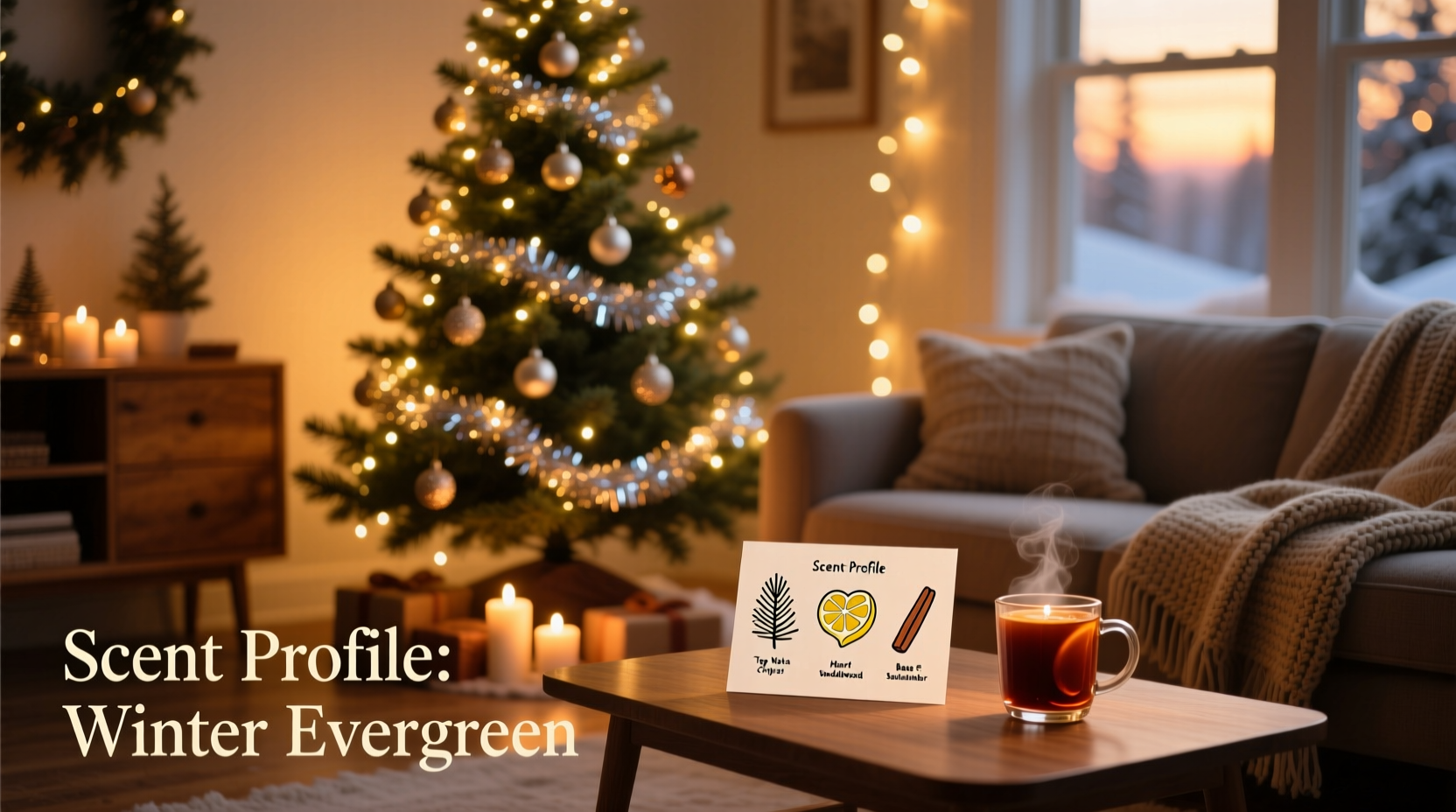
A scent profile is not just about pleasantness; it’s about intentionality. Psychologists refer to “olfactory anchoring”—the phenomenon where a specific aroma becomes neurologically tied to a mood, memory, or place. During the holidays, when stress levels rise and routines fracture, a well-designed scent environment can serve as a subtle but powerful regulator. Research published in the International Journal of Environmental Research and Public Health (2022) found that participants exposed to a blended conifer-citrus-cinnamon aroma for 20 minutes daily over three weeks reported a 37% reduction in perceived seasonal anxiety compared to control groups using unscented diffusers.
Moreover, scent profiling prevents olfactory fatigue—the brain’s natural habituation to constant smells. A flat, single-note fragrance (e.g., “pure pine”) quickly fades from awareness. But a profile with top, heart, and base notes—like bright bergamot (top), balsamic fir needle (heart), and smoky vetiver (base)—creates movement, depth, and staying power. It also respects the tree itself: real evergreens release volatile organic compounds (VOCs) like α-pinene and limonene naturally. A thoughtful profile enhances—not masks—those compounds.
Step-by-Step: Building Your Tree’s Scent Profile (5-Phase Timeline)
- Phase 1: Observe & Assess (Day 1)
Before adding anything, spend five quiet minutes near your freshly set-up tree. Breathe deeply. Note what you smell: Is it sharp and green (Douglas fir)? Sweet and resinous (Balsam fir)? Mild and herbal (Nordmann)? Does the scent fade within 30 minutes? This establishes your baseline—and reveals whether your tree is naturally aromatic or needs gentle amplification. - Phase 2: Select Core Notes (Day 2)
Choose one anchor note that complements your tree’s natural profile. For example: Balsam fir + vanilla bean (warmth); Blue spruce + grapefruit peel (brightness); White pine + black pepper (spice). Avoid clashing profiles—e.g., heavy amber with a delicate Fraser fir. - Phase 3: Layer Safely (Days 3–4)
Introduce only one new element every 24 hours. Start with passive diffusion (e.g., dried citrus wheels on lower branches), then add low-heat options (simmer pots placed *away* from tree limbs), and finally—if needed—ultrasonic diffusion with water-based blends (never oil directly on tree). - Phase 4: Refine & Balance (Days 5–7)
After 72 hours, reassess. Does the profile feel harmonious or overwhelming? Is one note dominating? Adjust by reducing intensity (e.g., halve simmer pot spices) or introducing a counterpoint (e.g., add a sprig of rosemary to cut excessive sweetness). - Phase 5: Maintain & Evolve (Ongoing)
Refresh passive elements every 3–4 days. Rotate diffusion blends weekly—e.g., Week 1: Citrus-Pine; Week 2: Cedar-Clove; Week 3: Vanilla-Balsam—to sustain interest and prevent adaptation. Never use heat-based diffusers within 3 feet of tree branches.
Your Scent Palette: Natural Materials, Safety First
Not all festive aromas are safe—or effective—near live greenery. Real trees are flammable, sensitive to oils, and vulnerable to desiccation. Prioritize materials that diffuse gently, avoid direct contact, and pose zero fire risk. Below is a comparison of common options by efficacy, safety, and practicality:
| Material | Best Use Case | Safety Rating (1–5★) | Key Caution |
|---|---|---|---|
| Fresh citrus peels (orange, grapefruit) | Passive diffusion on lower branches or in tree skirt | ★★★★★ | Replace every 3 days—mold risk if left too long |
| Dried cinnamon sticks & star anise | Simmer pot base or decorative sachets in fabric pouches | ★★★★☆ | Never place directly on tree—can stain or attract pests |
| Pure essential oils (e.g., Siberian fir, sweet orange) | Ultrasonic diffuser placed ≥6 ft from tree | ★★★☆☆ | Never apply undiluted oil to tree—causes needle drop and resin disruption |
| Pine needle bundles (foraged or purchased) | Tucked into garlands or under tree skirt | ★★★★★ | Ensure no pests or mold—air-dry 48 hrs before use |
| Candles (soy or beeswax) | Placed on nearby mantel or side table only | ★★☆☆☆ | Never on or near tree—extreme fire hazard; wax drips damage needles |
Crucially, avoid synthetic “Christmas tree” sprays. These often contain petroleum distillates and artificial musks that coat needles, inhibit transpiration, and accelerate drying. As Dr. Lena Torres, a horticultural scientist at the University of Vermont’s Christmas Tree Extension Program, explains:
“Trees breathe through their needles. Anything that forms a film—whether silicone-based sprays or heavy waxes—blocks stomata and shortens display life by up to 40%. Authentic scent comes from air, not coating.” — Dr. Lena Torres, Horticultural Scientist
Real-World Example: The Maple Street Living Room
In Burlington, Vermont, the Chen family transformed their modest Fraser fir into a multi-sensory centerpiece—not with gadgets, but with rhythm and restraint. Their tree arrived on December 1st, slightly reserved in aroma. On Day 1, they observed: clean, faintly peppery, with little projection. They chose cedarwood as their anchor (to deepen the fir’s natural base) and added brightness with dried grapefruit wheels threaded onto twine and draped loosely over lower branches. On Day 3, they began a daily simmer pot on the kitchen stove—using water, two cinnamon sticks, four whole cloves, and one fresh rosemary sprig—keeping the pot covered and steam directed away from the tree. By Day 6, they introduced a small linen sachet filled with dried balsam tips and a single drop of vanilla absolute (diluted in rice bran oil), tucked discreetly behind the tree skirt. The result? Guests consistently remarked on the “cozy forest walk after rain” quality—not “smells like Christmas,” but “feels like being wrapped in winter light.” Their tree stayed lush and fragrant for 28 days, outlasting neighbors’ trees by nearly a week.
The Practical Scent Profile Checklist
- ☑️ Identified your tree species and its natural aromatic profile (sharp, sweet, herbal, or muted)
- ☑️ Chosen one primary anchor note (e.g., cedar, vanilla, bergamot) that complements—not competes with—your tree
- ☑️ Selected at least one supporting note for contrast (e.g., black pepper to balance sweetness; rosemary to lift heaviness)
- ☑️ Verified all materials are non-toxic, non-oily, and non-flammable near greenery
- ☑️ Placed all active diffusion (simmer pots, diffusers) at least 6 feet from the trunk and 3 feet from any branch
- ☑️ Scheduled refreshes: citrus peels every 3 days, dried spices every 5 days, sachets every 7 days
- ☑️ Tested one new element at a time, waiting 24 hours before adding another
FAQ: Addressing Common Concerns
Can I use essential oils directly on my tree’s trunk or branches?
No. Undiluted essential oils disrupt the tree’s natural resin flow, cause rapid needle desiccation, and may trigger allergic reactions in sensitive individuals. Oils belong in properly ventilated diffusers—not on living plant tissue. If you wish to incorporate them, use an ultrasonic diffuser with a 1:100 dilution (1 drop oil per 100 mL water) and position it across the room.
My tree stopped smelling after three days—what went wrong?
This is normal and rarely a sign of failure. Evergreens emit VOCs most intensely during the first 48–72 hours post-cutting, then stabilize at a subtler level. Rather than chasing stronger scent, refine your profile: Add a contrasting top note (e.g., crushed juniper berries) to reawaken perception, or introduce gentle warmth (a low-heat simmer pot nearby) to volatilize existing compounds. Remember—olfaction adapts. Change is your ally.
Are there scent combinations I should absolutely avoid near a real tree?
Yes. Avoid heavy, cloying bases like synthetic amber, patchouli, or tonka bean—they overwhelm conifer notes and feel incongruous. Also avoid high-phenol oils (e.g., oregano, thyme) near trees; their antimicrobial properties can stress plant tissue. And never combine vinegar-based cleaners (sometimes used for “natural” tree preservatives) with citrus or pine scents—the resulting acrid off-gas is unpleasant and irritating.
Conclusion: Your Tree, Your Signature Scent
A Christmas tree is never just decoration. It’s a living archive of tradition, biology, and personal meaning. When you create a scent profile—not just add fragrance—you honor that complexity. You move beyond seasonal cliché into quiet intention: choosing notes that soothe your own nerves, reflect your family’s history, or evoke a specific memory—a grandmother’s kitchen, a snowy hike, the first snowfall of childhood. There is no universal “perfect” profile. The right one is the one that makes you pause, inhale deeply, and feel unmistakably, peacefully *here*. Start small. Observe. Adjust. Trust your nose over marketing. Let the tree lead—and let your scent choices follow with respect and care.




 浙公网安备
33010002000092号
浙公网安备
33010002000092号 浙B2-20120091-4
Comments
No comments yet. Why don't you start the discussion?