
The average household sends over 20 pounds of bathroom-related waste to landfills each year—shampoo bottles, toothpaste tubes, floss containers, and disposable razors. Much of this waste is unnecessary. A growing movement toward zero waste living has turned the spotlight on one of the most overlooked spaces: the bathroom. By replacing single-use plastic with reusable systems and choosing concentrated, package-free products like bars and refills, it’s possible to dramatically reduce environmental impact without sacrificing hygiene or comfort.
Creating a zero waste bathroom isn’t about perfection—it’s about progress. It starts with mindful choices, simple swaps, and designing a system that supports sustainability every day. The two most impactful tools in this transition are refillable containers and bar-based personal care products. Together, they eliminate plastic packaging, reduce water consumption, and often deliver better performance than their conventional counterparts.
Why Refillables and Bars Are the Foundation of Zero Waste Bathrooms
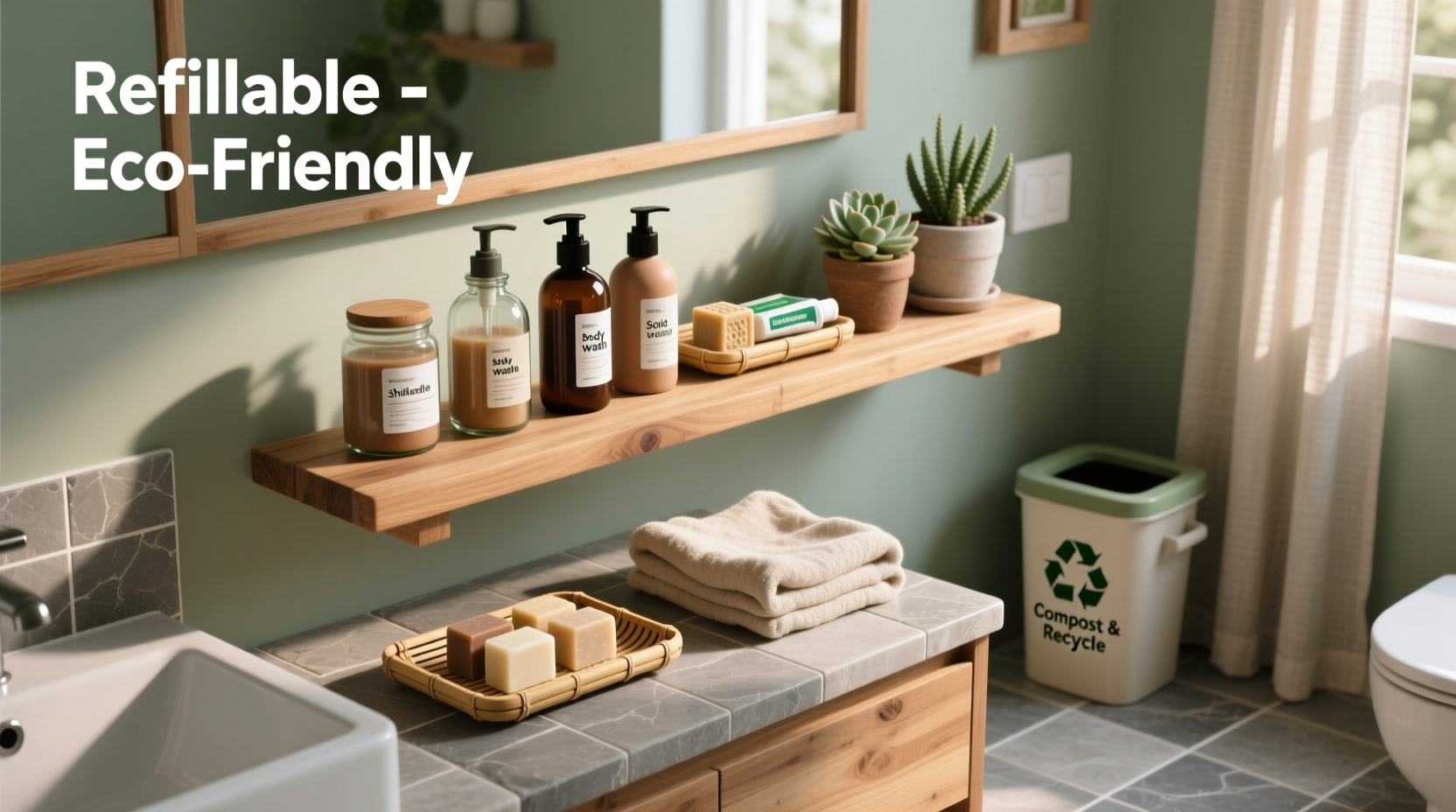
Traditional bathroom products rely heavily on plastic packaging. Even when recyclable, many of these items—especially small tubes and caps—are not processed by municipal recycling programs. Shampoos, conditioners, and body washes are typically diluted with up to 80% water, meaning consumers pay to ship water across continents. In contrast, solid bars and refillable systems offer concentrated formulas with minimal or no packaging.
Bar products—such as shampoo bars, conditioner bars, soap bars, and even toothpaste tablets—arrive unwrapped or in compostable paper. They last longer than liquid equivalents and take up less space. Refillable containers allow you to reuse glass or metal dispensers indefinitely, purchasing only the product concentrate when needed. This closed-loop approach reduces both resource extraction and landfill burden.
“Switching to solid bars and refillables can cut a person’s bathroom plastic footprint by over 90%.” — Dr. Lena Peterson, Environmental Scientist & Sustainable Living Researcher
Step-by-Step Guide to Transitioning Your Bathroom
Transforming your bathroom into a zero waste zone doesn’t require a complete overhaul overnight. A phased approach ensures lasting change. Follow this timeline to make the shift practical and sustainable.
- Assess Current Products (Week 1): Take inventory of everything in your bathroom. Note which items come in plastic, how often they’re replaced, and which generate the most waste.
- Choose Your First Swaps (Week 2): Select 2–3 high-impact products to replace first—ideally those you use daily. Shampoo and hand soap are excellent starting points.
- Purchase Reusable Containers (Week 3): Invest in durable glass bottles with pump dispensers for liquids and tins for bars. Look for ones with wide mouths for easy cleaning and refilling.
- Source Refillable or Bar Alternatives (Week 4): Order shampoo bars, refillable deodorant sticks, or bulk toothpaste tablets from eco-conscious brands.
- Refill and Rotate (Ongoing): As old products run out, refill your containers or restock bars. Keep track of what works and adjust as needed.
This gradual method prevents waste from prematurely discarding usable products while building new habits. Most people complete a full transition within 3–6 months.
Essential Zero Waste Bathroom Swaps
Not all products have sustainable alternatives, but the majority do. Below is a comparison of common bathroom items and their zero waste equivalents.
| Conventional Product | Zero Waste Alternative | Environmental Benefit |
|---|---|---|
| Plastic shampoo bottle | Shampoo bar in compostable wrap | Eliminates 1 plastic bottle per bar; lasts 50+ washes |
| Liquid body wash (plastic) | Vegetable oil-based soap bar | No packaging; biodegradable formula |
| Disposable plastic razor | Safety razor with replaceable metal blades | Blades recyclable; handle lasts decades |
| Plastic toothbrush | Bamboo toothbrush (compostable handle) | Biodegradable; low carbon footprint |
| Toothpaste tube | Toothpaste tablets in glass jar | Reusable container; no microplastics |
| Face cleanser (pump bottle) | Cleansing bar or refillable glass pump | Reduces plastic and water use |
When selecting alternatives, prioritize products with transparent ingredient lists, ethical sourcing, and minimal processing. Avoid “greenwashed” items that claim sustainability but still rely on plastic or synthetic additives.
Designing a Functional Refill System at Home
A successful zero waste bathroom depends on infrastructure. Refillable containers must be practical, easy to clean, and clearly labeled. Here’s how to set up an efficient system:
- Choose the right materials: Use amber or cobalt glass bottles to protect light-sensitive products like oils or lotions. Stainless steel tins work well for storing bars in damp environments.
- Standardize sizes: Stick to one or two container sizes to simplify refilling and storage. For example, use 8 oz bottles for shampoo and conditioner, and 4 oz for hand soap.
- Label everything: Use waterproof labels or chalkboard tape to mark contents and expiration dates. This prevents confusion and ensures safety.
- Create a refill station: Dedicate a drawer or shelf to bulk supplies and empty containers. Include a funnel, measuring cup, and cleaning brush for smooth refills.
- Source refills wisely: Buy from local zero waste stores, co-ops, or online retailers offering bulk shipping in compostable mailers. Some brands provide returnable container programs.
Real Example: How One Family Reduced Bathroom Waste by 95%
The Rivera family of four in Portland, Oregon, decided to go zero waste after watching a documentary on ocean plastics. They began by auditing their bathroom waste and discovered they were using nearly 30 plastic bottles and tubes per month. Over six months, they implemented changes step by step.
They replaced liquid shampoo and conditioner with matching bars stored in bamboo trays. They purchased a family-sized refill pouch of castile soap and decanted it into glass dispensers for hand and body wash. Deodorant came in cardboard tubes, and they switched to a shared safety razor with bulk-blade subscriptions.
Within a year, their bathroom generated only two small bags of non-recyclable waste—mostly old prescription medication packaging. Their annual plastic savings exceeded 350 items. “It felt overwhelming at first,” said Maria Rivera, “but once we had the containers and found reliable suppliers, it became second nature.”
Common Challenges and How to Overcome Them
Transitioning to a zero waste bathroom isn’t always seamless. Common concerns include cost, product effectiveness, and accessibility.
Myth: Zero waste products are too expensive.
While upfront costs may be higher—such as a $25 safety razor or $12 shampoo bar—the long-term savings are significant. A single shampoo bar replaces 2–3 plastic bottles, and metal razor blades cost pennies each. Over a year, most households save 20–30% on personal care spending.
Challenge: Bars don’t lather well in hard water.
Hard water minerals can interfere with bar performance. To counter this, rinse hair with a diluted apple cider vinegar solution (1 part vinegar to 4 parts water) once a week. Alternatively, look for bars formulated for hard water, often containing chelating agents like citric acid.
Issue: Refills aren’t available locally.
Many rural or underserved areas lack access to zero waste shops. Online retailers like EarthHero, Plaine Products, and By Humankind offer nationwide shipping with eco-friendly packaging. Consider organizing a local refill collective to order in bulk and share delivery costs.
Zero Waste Bathroom Checklist
Use this checklist to guide your transition. Tick off items as you complete them.
- ✅ Audit current bathroom products and identify top waste contributors
- ✅ Purchase 2–3 refillable glass or metal containers
- ✅ Replace liquid soap with a bar stored in a draining dish
- ✅ Switch to a shampoo and conditioner bar
- ✅ Choose a bamboo toothbrush and toothpaste tablets
- ✅ Install a safety razor or switch to a recyclable blade system
- ✅ Set up a home refill station with funnels and labels
- ✅ Source first refill or bar refill from a sustainable brand
- ✅ Recycle or properly dispose of empty plastic containers
- ✅ Share your progress with friends or on social media to inspire others
Frequently Asked Questions
Do shampoo bars work for all hair types?
Yes, but formulation matters. Look for bars tailored to your hair type—moisturizing for curly or dry hair, clarifying for oily scalps, or volumizing for fine strands. It may take 2–4 weeks for your hair to adjust as it sheds silicone buildup from conventional shampoos.
How do I keep bar products from getting soggy?
Use a self-draining soap dish made of bamboo, ceramic, or metal with raised ridges. After each use, place the bar in a well-ventilated area away from direct shower spray. Never leave it sitting in water.
Are refillable containers hygienic?
Yes, as long as they’re cleaned regularly. Rinse with hot water and sanitize monthly with a vinegar solution or mild bleach alternative. Always use clean hands or tools when refilling to avoid contamination.
Final Thoughts: Building a Sustainable Routine That Lasts
A zero waste bathroom is more than a collection of eco-friendly products—it’s a mindset shift toward intentionality and responsibility. Refillable containers and bar-based essentials are not temporary trends but enduring solutions to a systemic problem. They empower individuals to take control of their consumption, reduce reliance on extractive industries, and contribute to a circular economy.
The journey begins with a single swap: trading a plastic bottle for a bar, or reusing a jar instead of tossing it. Each choice compounds over time, influencing not just your waste output but also your awareness of how everyday habits shape the planet. Sustainability isn’t about doing everything perfectly—it’s about doing something consistently.




 浙公网安备
33010002000092号
浙公网安备
33010002000092号 浙B2-20120091-4
Comments
No comments yet. Why don't you start the discussion?