
A Christmas tree should feel alive—three-dimensional, dynamic, and full of visual interest. Yet many trees end up looking flat, crowded, or one-dimensional, as if all the ornaments were hung on a single plane. The secret to a truly stunning tree isn’t just in the lights or the treetopper—it’s in depth. Depth transforms a basic decoration into a layered, immersive centerpiece that draws the eye from every angle. Achieving this effect requires thoughtful planning and intentional placement, not just volume. By understanding how to layer colors, sizes, textures, and lighting, you can craft a tree that feels rich, balanced, and professionally styled.
Understanding Visual Depth in Tree Design
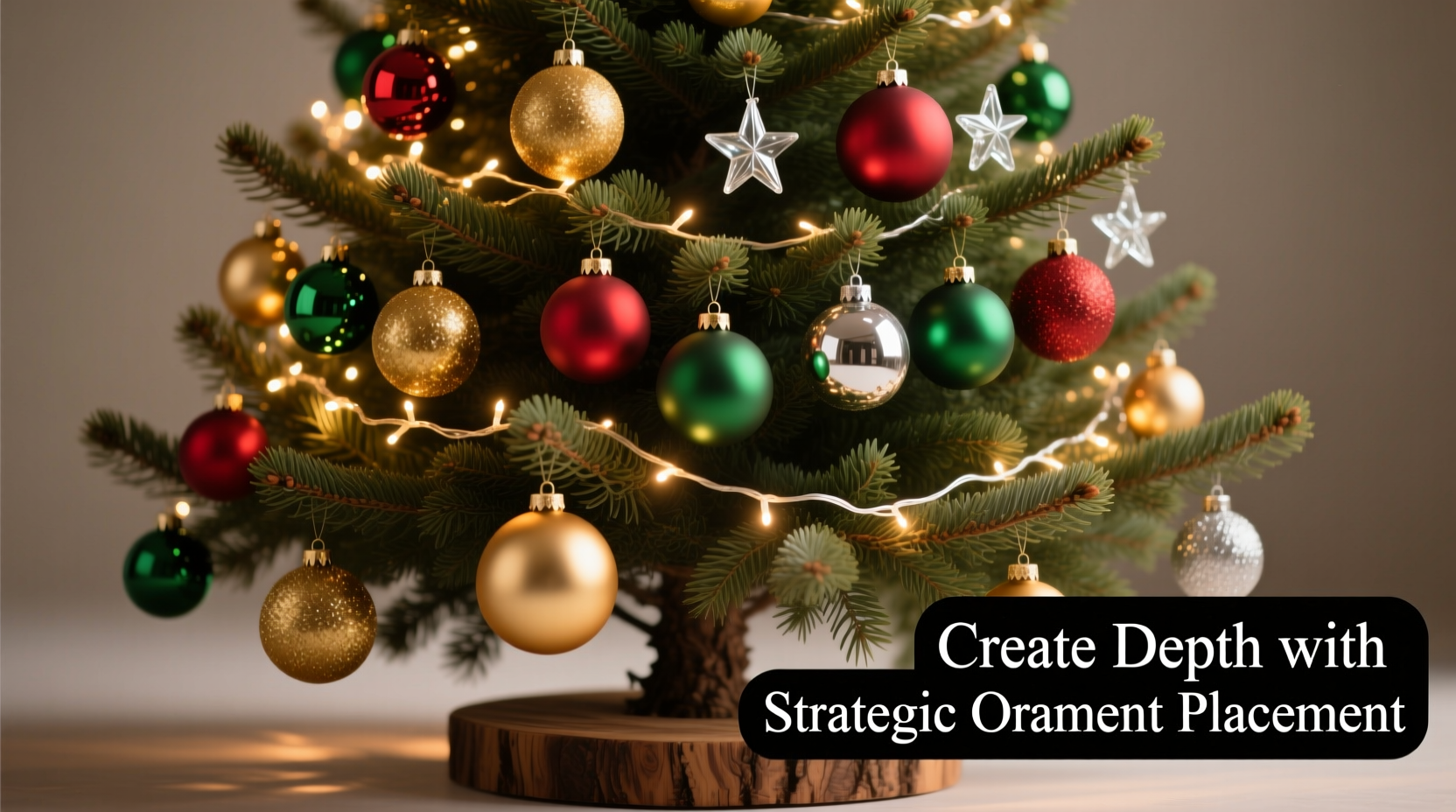
Visual depth refers to the illusion of distance and dimension within a two-dimensional field of view. On a Christmas tree, it means creating layers so the eye moves naturally from the outer branches inward, noticing details at multiple levels rather than seeing everything at once. A flat tree appears cluttered because all ornaments compete for attention on the surface. A deep tree invites exploration, revealing new elements as you shift your perspective.
Depth is achieved through three primary techniques: placement strategy, ornament variety, and lighting integration. Rather than filling the tree haphazardly, decorators who master depth treat the tree like a 3D canvas—placing some ornaments forward, others nestled deep within, and using scale and color to guide the viewer’s gaze.
“Most people decorate their trees like they’re painting a wall—uniformly and frontally. But a great tree is sculptural. It has rhythm, shadow, and surprise.” — Clara Mendez, Professional Holiday Stylist & Designer
Step-by-Step Guide to Building Depth Through Placement
Creating depth isn’t accidental—it follows a deliberate process. Follow these steps to transform your tree from flat to dimensional.
- Start with the frame: Shape and fullness matter. Before hanging any ornament, assess your tree’s silhouette. Fluff artificial branches outward and upward to open space between layers. For real trees, trim excess lower branches if needed to allow airflow and visibility. A fuller tree provides more structural “pockets” for deep ornament placement.
- Layer your lights first—with intention. String lights should not just outline the tree; they should penetrate it. Use warm white or soft ivory bulbs and weave them deep into the core, wrapping around central trunks and inner limbs. This creates an internal glow that illuminates ornaments placed further back, enhancing their visibility and adding luminous depth.
- Begin with large base ornaments—deep inside. Select 5–7 oversized ornaments (3–5 inches in diameter) in matte or textured finishes. Place these first, pushing them 6–8 inches into the interior branches near the trunk. These act as anchors, creating focal points that draw the eye inward. Choose deeper tones like burgundy, forest green, or navy for contrast against lighter outer layers.
- Add mid-sized ornaments in clusters—angled outward. Work in groups of three, placing medium ornaments (2–3 inches) on secondary branches. Rotate each cluster so one faces left, one forward, one right—this encourages multidirectional viewing. Vary finishes: mix glossy, frosted, and metallic to catch light differently.
- Finish with small accents on the periphery. Delicate glass balls, mini pinecones, or beaded stars go on the very tips of branches. These create sparkle and movement at the surface level, framing the deeper layers without overwhelming them.
Variety Is Key: Using Size, Color, and Texture Strategically
Ornament diversity is essential for depth. If every ball is the same size, color, and finish, the tree lacks contrast and recedes visually. Instead, use variation to create foreground, middle ground, and background.
Think of your tree like a landscape painting: the background has softer tones and larger shapes, the middle ground features active detail, and the foreground pops with texture and brightness. Apply this principle to your ornament selection.
| Layer | Ornament Size | Color Strategy | Texture/Finish | Placement Depth |
|---|---|---|---|---|
| Background (Inner Layer) | Large (3–5\") | Deep, muted tones (navy, plum, charcoal) | Matte, felted, or woven | Nested near trunk, 6–10\" deep |
| Middle Ground | Medium (2–3\") | Rich jewel tones (emerald, ruby, gold) | Mixed: glossy, crackled, metallic | Mid-branch, 3–6\" deep |
| Foreground (Surface) | Small (1–2\") | Bright accents (white, silver, blush) | Sparkly, faceted, glittered | Tips of branches, outer edge |
This structured approach ensures that no single layer dominates. Instead, the eye travels through the tree, discovering new details with each glance.
Real Example: Transforming a Flat Tree in One Evening
Sarah Thompson, a homeowner in Portland, had always struggled with her pre-lit artificial tree looking “like a department store reject.” Every year, she used the same 40 red and gold balls, hanging them evenly but without thought to depth. Last December, she decided to try a new method after watching a designer video.
She began by removing all ornaments and restringing her lights to reach deeper into the core. Then, she borrowed six large velvet ornaments from her sister and placed them deep inside the tree, focusing on areas near the top center and lower thirds. Next, she grouped her original red balls in threes, angling them outward, and filled gaps with smaller mercury glass accents she bought on sale.
The result? Her family didn’t recognize the tree. “It looked like it had been decorated by someone who knew what they were doing,” her daughter said. The added depth made the tree appear larger and more luxurious—even though she used fewer total ornaments than before.
Common Mistakes That Flatten Your Tree
Even well-intentioned decorators fall into traps that undermine depth. Avoid these frequent errors:
- Hanging all ornaments on the surface. This creates a “shell” effect—pretty from the front, hollow from the side.
- Overusing matching sets. Full boxes of identical balls eliminate contrast and make the tree look uniform instead of layered.
- Ignoring the back of the tree. If your tree is visible from multiple rooms or angles, neglecting the rear flattens the overall effect.
- Placing only round ornaments. Without variation in shape—stars, icicles, birds, candles—the tree lacks visual rhythm.
- Using only shiny finishes. Reflective surfaces bounce light but don’t recede. Balance shine with matte pieces to create shadow and dimension.
Checklist: Create Depth in 7 Actions
Follow this checklist to ensure your tree has professional-level depth:
- Fluff and shape all branches to open interior space.
- Weave lights deep into the core, not just around the edges.
- Select 5–7 large, textured ornaments for inner placement.
- Choose at least three sizes of ornaments (large, medium, small).
- Use a mix of finishes: matte, glossy, metallic, glittered.
- Place ornaments in odd-numbered clusters (groups of 3 or 5).
- Step away frequently to check balance from multiple angles.
Frequently Asked Questions
How many ornaments do I need to create depth?
There’s no fixed number—it depends on tree size and fullness. As a rule of thumb: for a 6-foot tree, use at least 60–80 ornaments across varying sizes. Focus on distribution, not quantity. Fewer well-placed ornaments create more depth than a crowded mass of identical ones.
Can I achieve depth with a slim or pencil tree?
Slim trees present a challenge, but depth is still possible. Use vertical layering: place slender ornaments like icicles or elongated beads at different depths along the length of branches. Hang a few key pieces slightly behind the main plane using clear fishing line to suggest dimension without width.
Should garland or ribbon go on a deep tree?
Yes, but use it strategically. Swags or ribbon loops should start deep and cascade outward, mimicking natural flow. Avoid wrapping tightly around the surface, which compresses the look. Opt for wide ribbon with varied patterns to add texture at multiple levels.
Final Touches: Finishing with Finesse
Once ornaments are placed, take one last walk around the tree. Look for “dead zones”—areas where branches are bare or where too many similar colors cluster. Fill gaps with small accent pieces or sprigs of faux foliage. Consider adding a few non-ornament elements: tiny wrapped gifts nestled in lower branches, miniature lanterns, or even small fabric bows tucked into junctions.
The tree topper should complement, not dominate. A classic star or angel works best when balanced with the rest of the design. If using a bow, make sure its tails extend down into the upper third of the tree, linking the top to the body below.
“A tree with depth doesn’t shout—it whispers. It reveals itself slowly, rewarding those who take the time to look.” — Clara Mendez
Conclusion
Creating depth on your Christmas tree isn’t about buying more decorations—it’s about using what you have with greater intention. Strategic ornament placement turns a simple holiday tradition into an art form. By layering sizes, varying textures, and reaching into the tree’s interior, you build a display that feels abundant, balanced, and alive from every angle. This season, resist the urge to cover every inch. Instead, invite the eye inward. Let shadows play, let light glow from within, and let your tree tell a story that unfolds with every glance.




 浙公网安备
33010002000092号
浙公网安备
33010002000092号 浙B2-20120091-4
Comments
No comments yet. Why don't you start the discussion?