
Living in a small apartment doesn’t mean sacrificing style or comfort. With thoughtful design decisions, even the most compact spaces can feel open, airy, and inviting. The key lies not in adding more square footage, but in manipulating perception—using light, color, furniture, and layout to create the illusion of space. These practical, budget-friendly techniques are used by interior designers and urban dwellers alike to maximize visual openness without moving walls or renovating.
Use Light Colors to Expand Visual Space
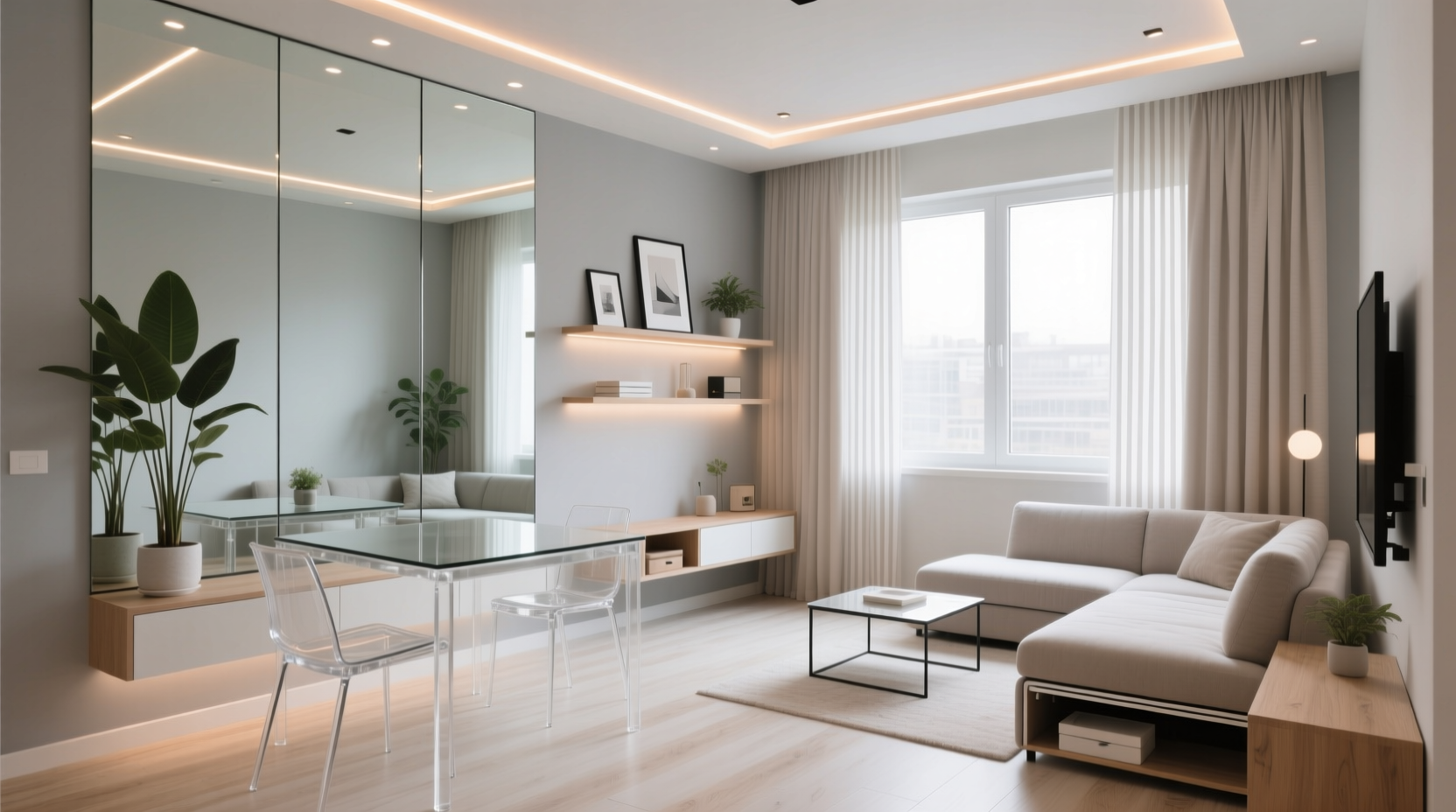
Color has a profound psychological impact on how we perceive size. Dark hues absorb light and make walls feel closer, while light tones reflect it, pushing boundaries outward. For small apartments, sticking to a soft, neutral palette is one of the most effective ways to enhance spaciousness.
Whites, creams, light grays, and pastels work exceptionally well on walls, ceilings, and large furniture pieces. Even if you want to add personality, reserve bolder colors for accents—pillows, artwork, or a single statement chair—rather than dominant surfaces.
Consider extending this principle beyond paint. Light-colored flooring, especially pale wood or white-washed finishes, contributes to an overall sense of brightness. If you're using rugs, opt for ones in similar tones to the floor to avoid segmenting the space.
Mirror, Mirror: Double the Room with Strategic Reflections
Mirrors are among the most powerful tools in spatial illusion. They don’t just reflect light—they reflect the room itself, effectively doubling its visual depth. Placing a large mirror opposite a window amplifies natural light and gives the impression of an additional window or doorway.
Beyond functionality, mirrors can be decorative. A floor-length mirror in a narrow hallway elongates the passage, while a cluster of smaller mirrors above a console creates focal interest without clutter. Avoid heavy frames; sleek, frameless, or thin-metal designs keep the look light and modern.
“Mirrors are like optical architects—they can reshape how we experience a room without moving a single wall.” — Lena Torres, Interior Designer & Author of *Small Spaces, Big Impact*
For maximum effect, position mirrors where they’ll catch movement and changing light throughout the day. A mirrored backsplash in a kitchen or bathroom also adds subtle dimension without overwhelming the space.
Furniture Selection: Scale Matters
One of the biggest mistakes in small-space decorating is choosing oversized furniture. A bulky sofa or wide dining table can dominate a studio, making it feel cramped and unbalanced. Instead, prioritize proportion and multi-functionality.
Select low-profile sofas with exposed legs. Furniture that allows sightlines beneath it—like a coffee table on slender metal legs—creates visual continuity between floor and ceiling, enhancing openness. Ottomans with storage inside serve as seating, footrests, and hidden organization all in one.
| Furniture Type | Do’s | Don’ts |
|---|---|---|
| Sofa | Choose one with exposed legs and slim arms | Avoid deep, boxy sectionals |
| Dining Table | Opt for drop-leaf or extendable models | Don’t use a table that blocks walkways when pulled out |
| Bed | Pick a platform bed with under-bed storage | Avoid tall headboards that break ceiling height |
| Storage | Use vertical shelving and wall-mounted units | Don’t overload floors with stacked bins |
Consider modular or nesting furniture. Nesting tables can be pulled together when needed and tucked away when not. Fold-down desks disappear into the wall. Murphy beds free up entire rooms at night. These aren’t just space-savers—they’re lifestyle enablers.
Maximize Vertical Space and Keep Floors Clear
When floor space is limited, look up. Walls offer abundant real estate for storage and decoration without encroaching on walking areas. Floating shelves, tall bookcases, and mounted cabinets draw the eye upward, emphasizing ceiling height and minimizing clutter.
Install shelves from floor to ceiling if possible. Even if you don’t fill the top portion, the linearity suggests volume. Use baskets or boxes on higher shelves to store less-used items—keeping them accessible but out of sight.
Keep the floor as clear as possible. Every object on the ground competes for attention and shrinks perceived space. Use furniture with legs, hang coats on hooks instead of freestanding racks, and store shoes in under-bed containers. Even rugs should be sized appropriately—a too-small rug can make a room feel disjointed.
Step-by-Step Guide: Declutter and Rearrange for Openness
Follow this five-step process every few months to maintain a spacious feel:
- Empty each zone completely. Remove everything from a section—shelf, drawer, corner—and assess what belongs.
- Sort by function and frequency. Keep essentials within easy reach; store seasonal or rare-use items out of sight.
- Choose multi-purpose items. Replace single-use decor or furniture with pieces that serve dual roles (e.g., bench with storage).
- Rearrange for flow. Position furniture to allow clear pathways. Avoid blocking windows or doors.
- Edit decor. Limit decorative objects to a few meaningful pieces. Too many knickknacks create visual noise.
This routine prevents accumulation and keeps the space feeling intentional and open.
Lighting: Layer Brightness to Enhance Depth
Poor lighting makes any room feel cave-like. In small apartments, layered lighting is essential. Relying solely on a central ceiling fixture flattens the space and casts shadows that diminish volume.
Instead, combine three types of lighting:
- Ambient: Overhead lights or recessed fixtures that provide general illumination.
- Task: Desk lamps, under-cabinet lights, or reading lights that support specific activities.
- Accent: Wall sconces, LED strips, or picture lights that highlight features and add dimension.
Use warm-white bulbs (2700K–3000K) to maintain coziness while ensuring brightness. Place floor and table lamps in corners to wash light across walls, making them recede visually. LED strip lighting under shelves or behind TVs creates a floating effect that enhances airiness.
Real Example: Transforming a 450-Square-Foot Studio
Take Maria, a graphic designer living in a 450-square-foot studio in downtown Chicago. Her space felt cramped, with a sofa blocking access to the bedroom nook and dark brown furniture absorbing all available light.
She applied several of these principles over a weekend:
- Painted walls and ceiling in a soft off-white.
- Replaced her sectional with a two-seater sofa on chrome legs.
- Installed a full-length mirror on the closet door, angled toward the window.
- Added floating shelves beside the bed for books and plants.
- Introduced layered lighting: a pendant over the dining table, a floor lamp in the corner, and LED strips under the kitchen cabinets.
The result? Friends commented they “didn’t realize it was the same apartment.” The space now feels cohesive, bright, and surprisingly roomy—proof that small changes yield big perceptual shifts.
Common Decor Mistakes That Shrink Small Spaces
Avoid these pitfalls that undermine efforts to enlarge a small apartment:
- Over-furnishing: Just because a piece fits doesn’t mean it belongs. Leave breathing room around furniture.
- Heavy window treatments: Thick drapes block light and draw attention to window edges. Opt for sheer curtains or minimalist blinds.
- Too many patterns: Busy wallpapers, rugs, or upholstery compete for attention and create chaos.
- Ignoring scale: A giant painting on a tiny wall overwhelms; instead, go for a gallery wall with smaller frames or a single medium-sized piece.
- Blocking sightlines: Tall furniture in the middle of a room interrupts flow. Keep the center area open.
Every design choice should either add function or enhance openness—not both at the expense of space.
Checklist: 10 Quick Wins to Make Your Apartment Feel Bigger
Apply these actionable steps immediately:
- Paint walls and ceiling in the same light color.
- Hang a large mirror opposite a natural light source.
- Replace bulky furniture with legged, low-profile alternatives.
- Install floating shelves or wall-mounted storage.
- Add at least three light sources in the main living area.
- Declutter countertops and flat surfaces—keep only essentials.
- Use a glass-top table or transparent acrylic chairs.
- Arrange furniture to create clear walkways.
- Use vertical stripes in wallpaper or textiles to draw the eye upward.
- Minimize door swing intrusion with sliding or pocket doors if renovating.
FAQ
Can I use dark colors in a small apartment?
Yes—but sparingly. Deep shades on an accent wall or in accessories can add sophistication without shrinking the space, as long as the majority of surfaces remain light. Balance is key: pair dark elements with ample lighting and reflective surfaces.
What type of rug makes a room look bigger?
A large, light-colored rug that nearly touches all four walls creates unity and expands the floor plane. Avoid small rugs that \"float\" in the center—they fragment the space. If using pattern, choose subtle textures over bold geometrics.
How do I make a low-ceiling apartment feel taller?
Draw the eye upward with vertical lines. Use tall bookshelves, floor-to-ceiling curtains, or vertical paneling. Hang artwork vertically or in an ascending line. Lighting that grazes upward along walls also emphasizes height.
Conclusion
Decorating a small apartment to look bigger isn’t about hiding its size—it’s about celebrating its potential. With intelligent use of color, light, mirrors, and furniture, even the coziest unit can feel expansive and elegant. These tricks cost little, require no construction, and deliver immediate results. The goal isn’t to mimic a larger home, but to craft a space that feels open, calm, and uniquely yours.




 浙公网安备
33010002000092号
浙公网安备
33010002000092号 浙B2-20120091-4
Comments
No comments yet. Why don't you start the discussion?