
Decorating a staircase with string lights can transform an ordinary space into something magical—especially during the holidays or seasonal celebrations. Battery-operated string lights offer flexibility, ease of installation, and no need for nearby outlets. However, staircases present unique challenges: foot traffic, handrail obstructions, and fall risks. Done incorrectly, even decorative lighting can become a safety hazard. The key is balancing aesthetics with caution. This guide provides a comprehensive approach to installing battery-powered string lights on your staircase in a way that’s visually stunning and safe for everyone in the home.
Why Choose Battery-Operated String Lights?
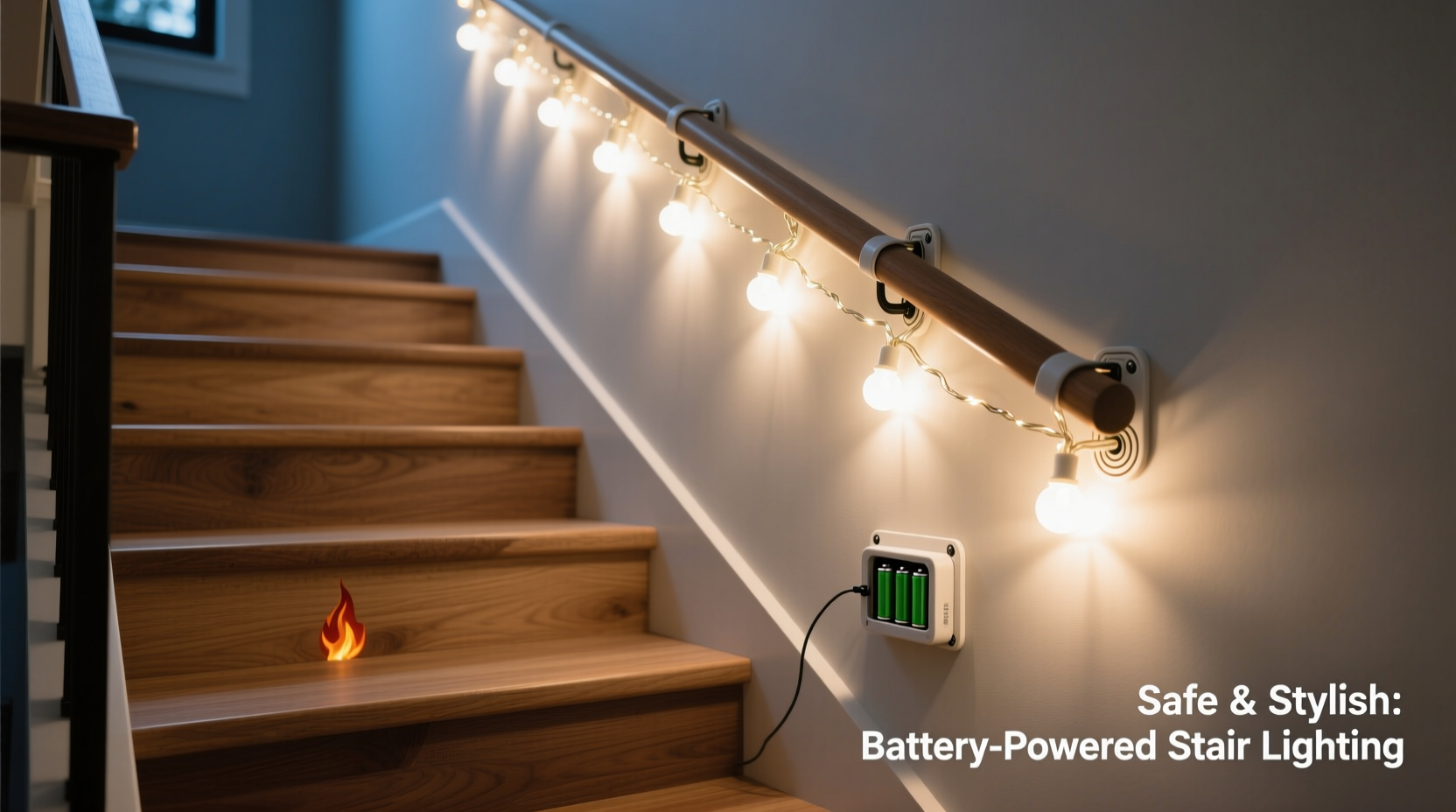
Battery-powered string lights have surged in popularity due to their portability and simplicity. Unlike plug-in versions, they don’t require access to electrical outlets, making them ideal for staircases where cords would need to snake across floors or walls. They’re also safer in high-traffic areas because there are no trailing wires to trip over.
These lights come in various styles—warm white, multicolor, fairy lights, icicle designs—and often include convenient features like timers, dimmers, and remote controls. Many models use LED bulbs, which consume less power, generate minimal heat, and last significantly longer than traditional incandescent options.
Key Safety Considerations Before You Begin
Safety must be the top priority when decorating any part of your home, especially areas used frequently like staircases. Falls on stairs are among the most common household accidents. Introducing foreign objects—even lightweight decorations—can increase risk if not installed thoughtfully.
The U.S. Consumer Product Safety Commission (CPSC) reports that thousands of injuries each year are linked to holiday decorations, many involving falls or tripping hazards. While battery-operated lights eliminate electrical shock risks from faulty wiring, improper placement can still create dangers.
“Even low-voltage decorations need to be secured properly on stairs. A misplaced light strand can lead to serious injury.” — Sarah Linwood, Home Safety Inspector & NFPA Contributor
To mitigate risks, always ensure that:
- Lights do not dangle where they can be stepped on or caught by clothing.
- Batteries are securely enclosed and inaccessible to children or pets.
- No part of the decoration obstructs handrail use.
- Lights are turned off when unattended or overnight unless equipped with a timer.
Step-by-Step Guide: Installing String Lights Safely on Your Staircase
Follow this detailed process to achieve a beautiful and secure installation.
- Assess the Staircase Layout
Measure the length of the railing or wall you plan to decorate. Count the number of steps and note any turns, landings, or obstacles. Decide whether you’ll run lights along the handrail, down balusters, or along the wall beside the stairs. - Select the Right Type of Lights
Choose compact, lightweight string lights designed for indoor use. Look for models with built-in adhesive clips or hooks. Avoid heavy-duty outdoor strings unless specifically rated for indoor safety. - Check Battery Life and Accessibility
Use fresh batteries and consider lithium types for longer life and stable voltage. Ensure the battery pack is easy to access for replacements but located out of reach of children. Mount it under a step, behind a post, or inside a discreet enclosure. - Plan the Light Path
Lay out the string on the floor first to visualize spacing and coverage. For handrails, decide whether to follow the rail’s curve or zigzag between spindles. Avoid creating patterns that could confuse depth perception at night. - Secure Lights Without Damage
Use removable adhesive clips, twist ties, or clear mounting putty to fasten lights. Do not nail, staple, or tape directly to wood or paint unless using painter’s tape temporarily. Never wrap lights tightly around railings in a way that makes gripping difficult. - Test the Setup
Turn on the lights during both day and night to assess brightness and visibility. Walk up and down the stairs slowly to ensure nothing interferes with balance or handrail use. - Monitor and Maintain
Check weekly for loose connections, dimming bulbs, or shifting clips. Replace weak batteries promptly to avoid flickering, which can cause visual discomfort.
Best Practices and Common Mistakes to Avoid
Even well-intentioned decorators make errors that compromise safety. Below is a comparison table outlining what to do and what to avoid.
| Do’s | Don’ts |
|---|---|
| Use adhesive clips designed for string lights | Nail or staple lights into wood surfaces |
| Keep battery packs mounted securely and out of reach | Leave battery cases open or accessible to kids |
| Ensure handrails remain fully functional and unobstructed | Wrap lights tightly around railings, reducing grip space |
| Turn off lights when leaving the house or going to sleep | Leave lights on unattended for days without monitoring |
| Choose warm white tones to avoid glare at night | Use flashing or strobe modes that may disorient users |
One often-overlooked issue is overloading a single area with too many strands. Even battery-powered systems can overheat if enclosed in tight spaces or covered with fabric. Always allow ventilation around the battery pack and avoid bundling wires.
Real-World Example: A Holiday Makeover Done Right
In Denver, Colorado, homeowner Maria Tran wanted to add festive charm to her narrow, winding staircase for Christmas. She chose two sets of warm-white LED battery string lights with built-in timers. After measuring her 14-step staircase, she decided to run one strand along the inner side of the handrail—closest to the wall—and another vertically down every third baluster to create a cascading effect.
Maria used small, clear adhesive clips to secure each bulb node, ensuring none protruded beyond the rail. She mounted the battery packs underneath the second and top landings using double-sided tape inside plastic enclosures to prevent tampering by her toddler. Both sets were set to turn on at 5 PM and off at midnight.
Over four weeks, she checked the setup twice weekly. One clip loosened after heavy use; she replaced it immediately. No incidents occurred, and guests complimented the subtle elegance of the lighting. Her careful planning ensured beauty didn’t come at the cost of safety.
Essential Checklist for Safe Installation
Before turning on your lights, go through this final checklist to confirm everything meets safety standards:
- ✅ All light strands are securely fastened and will not shift with movement or drafts
- ✅ Handrails are fully accessible and unobstructed for gripping
- ✅ Battery packs are closed, secure, and placed out of reach of children and pets
- ✅ No part of the string hangs low enough to be stepped on or caught on shoes/bags
- ✅ Lights do not create visual confusion (e.g., blinking rapidly or mimicking step edges)
- ✅ A timer or manual shut-off plan is in place to limit runtime
- ✅ You’ve tested walking up and down the stairs with the lights on
- ✅ Replacement batteries are on hand for quick swaps
Frequently Asked Questions
Can I leave battery-operated string lights on my staircase overnight?
It’s not recommended to leave any decorative lights on unattended overnight. While LED battery lights pose a lower fire risk, malfunctions can still occur. Use a timer to automatically turn them off after 4–8 hours, especially while sleeping.
Are there child-safe options for staircase lighting?
Yes. Look for string lights with enclosed battery boxes that require a screwdriver to open. Mount these in locations unreachable by children. Also, choose cool-touch LEDs and avoid small, detachable parts that could become choking hazards.
How do I remove adhesive residue after taking down the lights?
Use a small amount of rubbing alcohol on a cotton ball or soft cloth. Gently rub the area until the residue lifts, then wipe with a damp cloth. Avoid abrasive cleaners on finished wood or painted surfaces.
Final Thoughts: Beauty Meets Responsibility
A beautifully lit staircase can elevate the ambiance of your entire home. With battery-operated string lights, you gain creative freedom without being tethered to outlets. But creativity must coexist with responsibility. Every decision—from clip placement to runtime settings—should prioritize the safety of those who use the stairs daily.
By following structured planning, using quality materials, and conducting regular checks, you can enjoy seasonal sparkle without compromising peace of mind. Remember: the goal isn’t just to impress guests, but to protect your family.




 浙公网安备
33010002000092号
浙公网安备
33010002000092号 浙B2-20120091-4
Comments
No comments yet. Why don't you start the discussion?