
When *NieR: Automata* launched on PlayStation 4 in 2017, it was hailed as a genre-defying masterpiece—equal parts action RPG, philosophical narrative, and visual poetry. Its cyberpunk aesthetic, haunting soundtrack, and fluid combat left a lasting impression. Now, with the release of *NieR: Automata* Remastered, players are faced with a critical question: is this more than just a simple port? The answer lies in a suite of meaningful visual and performance upgrades that elevate the experience without altering its soul.
This deep dive compares the remastered edition against the original PS4 release, analyzing frame rates, resolution, texture quality, loading times, and new features. Whether you're considering revisiting the game or experiencing it for the first time, understanding these differences can help you choose the best way to engage with one of modern gaming’s most emotionally resonant titles.
Resolution and Frame Rate: A Noticeable Leap Forward
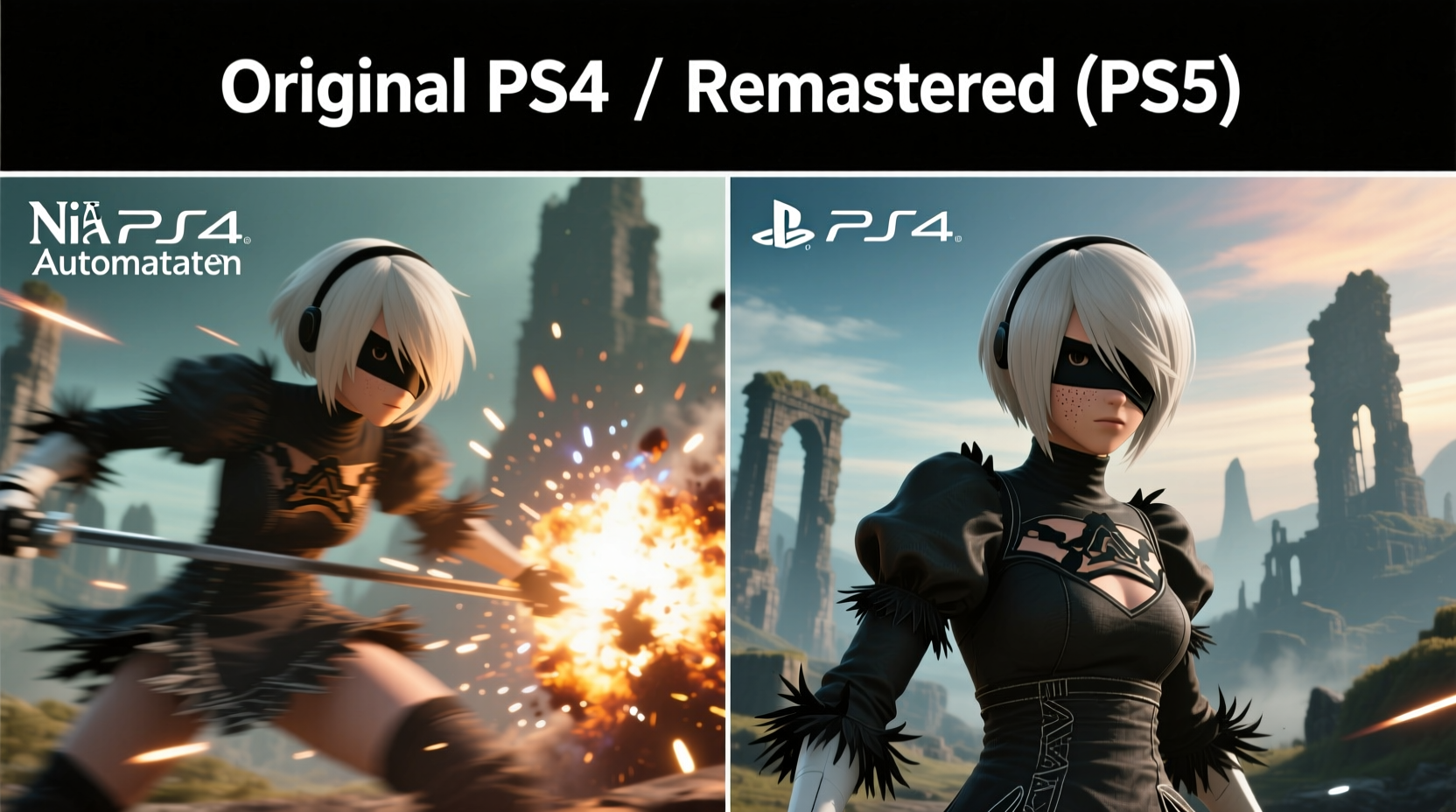
The most immediately apparent improvement in the remastered version is its support for higher resolutions and a stabilized frame rate. On base PS4 hardware, the original game ran at a dynamic resolution ranging between 900p and 1080p, often dropping during intense combat sequences. The frame rate, while targeting 60 FPS, frequently dipped into the 40s during explosions or multi-enemy encounters.
In contrast, the remastered edition targets native 1080p on standard PS4 models and up to 4K on PS4 Pro (when connected to a compatible display). More importantly, developers implemented optimizations that result in a far more consistent 60 FPS across all platforms. This stability enhances the precision required in fast-paced swordplay and bullet-hell segments, where split-second reactions define success.
Texture Quality and Environmental Detail Enhancements
Beyond resolution, the remaster brings significant improvements to texture fidelity. In the original release, textures on character models, weapons, and environmental surfaces such as concrete ruins or rusted machinery were serviceable but occasionally blurred at close range. This was particularly noticeable in cutscenes or during slow camera pans through desolate cityscapes.
The remastered version includes reworked texture packs with higher-resolution assets. Character faces now show finer details—such as individual strands of hair, micro-scratches on armor, and improved skin shaders. Background elements like crumbling walls, foliage, and debris benefit from increased polygon density and normal mapping, making environments feel denser and more immersive.
One standout example is the City Ruins area. In the original version, distant buildings faded into low-poly silhouettes under draw distance limitations. The remaster extends LOD (Level of Detail) distances, allowing structures to retain clarity even when viewed from elevated vantage points. Similarly, particle effects during boss fights—like the glowing fragments from Goliath-class enemies—are rendered with greater precision and less screen-space distortion.
Performance Comparison: Loading Times and System Optimization
Loading times have been dramatically reduced thanks to optimized asset streaming and better memory management. On the original PS4, transitioning between zones—especially after death or fast travel—could take 15–25 seconds depending on HDD fragmentation. The remastered edition cuts this down by nearly half, averaging 8–12 seconds on standard drives and under 6 seconds on systems with upgraded SSDs (via external USB enclosures).
This improvement isn’t just about convenience; it affects pacing. *NieR: Automata* thrives on rhythm—shifting from quiet exploration to frenetic combat and back again. Faster load transitions preserve that flow, minimizing disruptions during repeated runs, which are essential for unlocking multiple endings.
Besides faster loads, the remaster introduces suspend/resume functionality on PS4, allowing players to pause the game entirely and return instantly later—a feature absent in the original release. This small but impactful change makes the game more accessible for shorter play sessions.
Detailed Feature Comparison: Remastered vs Original
| Feature | Original PS4 Version | Remastered Version |
|---|---|---|
| Resolution | Dynamic 900p–1080p | Native 1080p (PS4), up to 4K (PS4 Pro) |
| Frame Rate | Target 60 FPS (frequent drops) | Stable 60 FPS (optimized) |
| Texture Quality | Standard HD textures | Enhanced high-res textures |
| Loading Times | 15–25 seconds per zone | 6–12 seconds (varies by hardware) |
| Suspend/Resume | Not supported | Supported on PS4 |
| Trophies | Base set only | All original + bonus unlockable avatar |
| Photo Mode | No | Yes – customizable camera, filters, pose options |
The addition of Photo Mode is perhaps the most celebrated new feature. It allows players to freeze moments in time—whether capturing 2B’s silhouette against a blood-red moon or a serene forest bathed in morning light. With adjustable depth of field, zoom, and real-time pose controls for characters, it transforms the game into an interactive art gallery.
“Photo Mode wasn’t just a gimmick—it gave fans a deeper emotional connection to the world. We wanted people to linger in those quiet spaces.” — Yoko Taro, Creative Director, PlatinumGames
Real-World Play Experience: A Case Study
Consider Alex, a longtime fan who replayed the original *NieR: Automata* in 2018 and recently returned to the remastered version in 2023. Using the same mid-tier PS4 console, he noticed immediate differences. “The first time I fought Adam and Eve, I barely remembered how chaotic it looked,” he said. “But in the remaster, every explosion had clearer particle trails, and their dialogue scenes felt sharper—almost cinematic.”
Alex also appreciated the reduced loading times. As someone playing in short bursts between work shifts, waiting 20 seconds to respawn after dying disrupted his immersion. With the remaster’s faster loads, he found himself more willing to experiment with different builds and riskier strategies. “It sounds minor, but it changed how I engaged with the game,” he noted.
Moreover, Alex used Photo Mode extensively, sharing screenshots online. “I never thought I’d spend 45 minutes trying to get the perfect shot of Pascal’s village at sunset,” he laughed. “But the ability to adjust lighting and angles made it worth it.”
Actionable Tips for Getting the Most Out of the Remaster
- Enable V-Sync to eliminate screen tearing during high-speed combat.
- Adjust brightness settings in-game; darker areas like the Data Center are more visible with gamma correction.
- Take advantage of suspend mode if using an external SSD—your progress saves instantly, even when powered off.
- Experiment with aspect ratios in Photo Mode—try 16:9 for cinematic shots or 4:3 for retro framing.
- Back up save data regularly, especially before triggering ending sequences that delete files permanently (as part of the narrative design).
Expert Insight: Why Visual Fidelity Matters in Narrative Games
Visual upgrades do more than make a game look prettier—they deepen storytelling. Dr. Lena Park, a researcher in digital narrative design at the University of Edinburgh, explains: “In games like *NieR: Automata*, where atmosphere and tone are central to the experience, enhanced visuals amplify emotional resonance. Crisper textures, stable framerates, and better lighting don’t distract from the story—they reinforce it.”
“When players see every crack in a machine lifeform’s face or notice the subtle glow of YoRHa units in dim corridors, they’re not just seeing better graphics—they’re feeling the weight of existence that the game explores.” — Dr. Lena Park, Digital Narrative Researcher
This aligns perfectly with *NieR: Automata*’s themes of consciousness, identity, and impermanence. The remaster doesn’t overwrite the original message—it clarifies it, letting players sit longer with its melancholic beauty.
Frequently Asked Questions
Is the remastered version worth buying if I already own the original?
If you plan to replay the game or value improved performance and Photo Mode, yes. While the core story and gameplay remain unchanged, the technical refinements enhance immersion significantly. For returning players, the smoother experience and visual clarity offer a fresh perspective on familiar moments.
Does the remaster include any new story content?
No. The remastered edition does not add new plotlines, characters, or endings. However, it includes developer commentary in some menu screens and a special trophy/avatar unlocked after completing certain challenges—small bonuses for completionists.
Can I transfer my save data from the original game to the remaster?
Unfortunately, no direct save transfer is supported. However, platinuming the original unlocks a special server-themed theme in the remaster, serving as a nod to loyal fans.
Conclusion: A Worthy Evolution of a Modern Classic
The *NieR: Automata* Remastered isn't revolutionary—it doesn't reinvent the wheel. But it polishes an already brilliant experience into something even more refined. From buttery-smooth 60 FPS gameplay to richer textures and near-instant loading, every upgrade serves the player’s engagement. Photo Mode adds a creative layer previously missing, inviting fans to explore the game world beyond combat and dialogue.
For newcomers, this is the definitive way to experience *NieR: Automata*. For veterans, it offers a chance to reconnect with a beloved title through a clearer lens—one that respects the original’s vision while embracing modern standards.




 浙公网安备
33010002000092号
浙公网安备
33010002000092号 浙B2-20120091-4
Comments
No comments yet. Why don't you start the discussion?