
Decorating a staircase with Christmas lights can instantly elevate your holiday ambiance. The warm glow winding up the banister evokes warmth and celebration. But stairs are high-traffic areas where safety is paramount. A poorly installed light display can lead to trips, falls, or even electrical fires. With thoughtful planning and the right techniques, you can create a stunning visual effect while keeping your home—and everyone in it—safe.
The key lies in balancing aesthetics with practicality. From choosing the correct type of lights to securing them properly and managing cords, every detail matters. This guide walks through proven methods used by professional decorators and endorsed by fire safety experts to help you achieve a festive look without compromising on security.
Selecting the Right Lights for Staircase Use
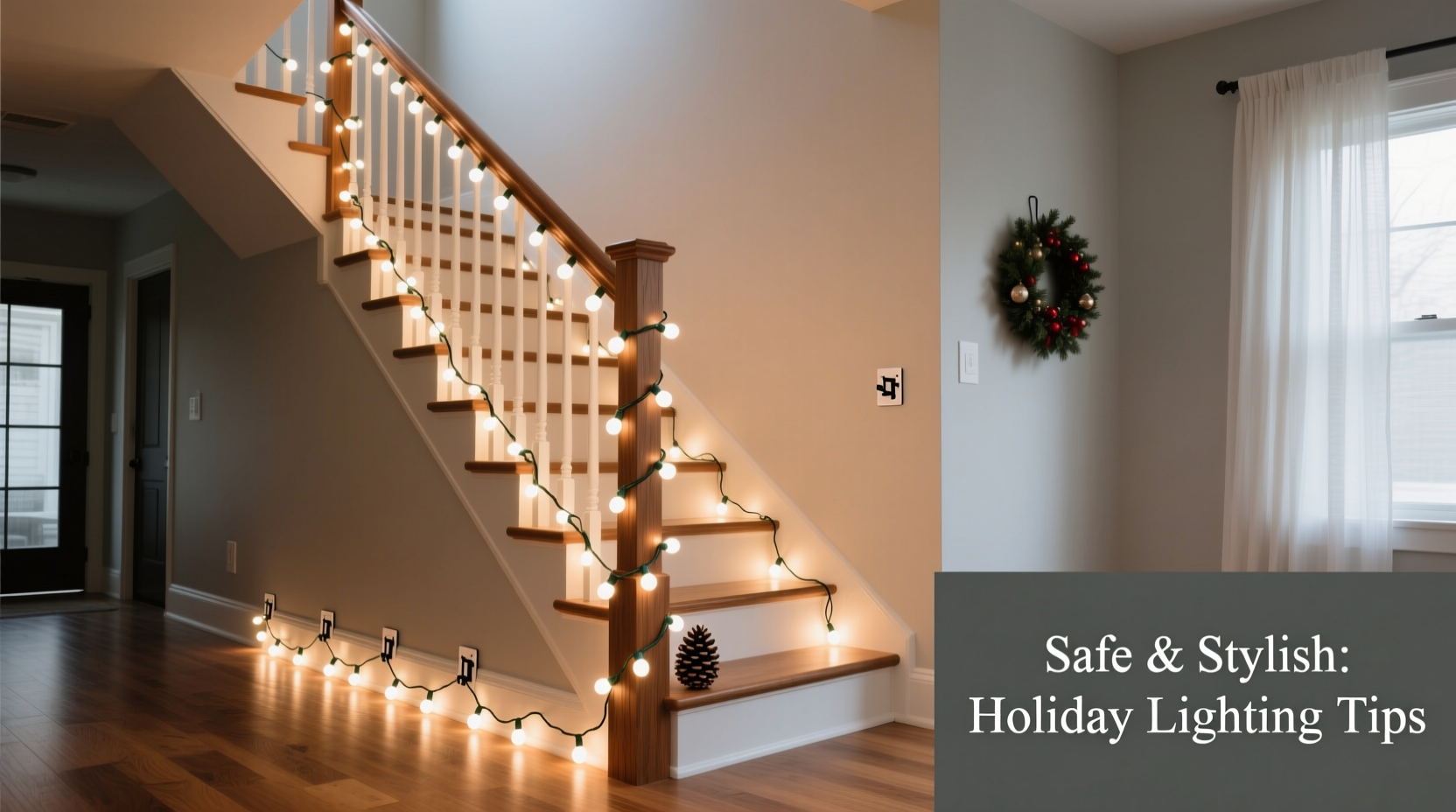
Not all Christmas lights are created equal—especially when used on staircases. The environment demands durability, low heat output, and secure attachment points. LED lights are overwhelmingly recommended over traditional incandescent bulbs for several reasons: they consume less energy, emit minimal heat, and last significantly longer. These characteristics make them ideal for close proximity to handrails, walls, and foot traffic.
When shopping for lights, check for certification labels such as UL (Underwriters Laboratories) or ETL (Intertek). These indicate that the product has passed rigorous safety testing. Look specifically for strings labeled “for indoor/outdoor use” if your staircase connects different levels or is near an entryway exposed to moisture.
Length matters too. Measure your staircase’s total linear feet before purchasing. A typical two-story staircase may require 50–75 feet of lighting depending on how densely you plan to wrap the rail. Avoid connecting more than three strands end-to-end unless the manufacturer explicitly allows it, as this increases the risk of circuit overload.
Step-by-Step Guide to Safe Installation
Installing lights on a staircase requires precision and patience. Follow this timeline-tested method to ensure both beauty and safety:
- Inspect all light strings before installation. Check for frayed wires, cracked sockets, or loose bulbs. Discard any damaged sets immediately.
- Clean the banister surface with a dry cloth to remove dust or grease. This improves adhesion for clips or adhesive mounts.
- Start at the bottom step, working upward. This prevents sagging and ensures consistent tension.
- Use plastic clips instead of nails or staples. Specialized stair railing clips (available at hardware stores) grip the rail and hold wires securely without damaging wood or paint.
- Space lights evenly—about 3–6 inches apart—for a balanced appearance. Overcrowding increases heat buildup and makes troubleshooting harder.
- Route power cords along the wall side of the staircase, not across treads. Use cord covers or baseboard clips to keep them flat and out of the walking path.
- Plug into a grounded outlet near the base or top of the stairs. Never use extension cords unless absolutely necessary—and if so, choose heavy-duty, surge-protected models rated for indoor use.
- Test the setup before finalizing placement. Turn on the lights and observe brightness, flickering, or overheating.
- Secure excess cord length neatly behind baseboards or furniture. Coil loosely; tight bundling traps heat.
- Install a timer set to turn lights off during sleeping hours (e.g., 11 PM to 7 AM), reducing fire risk and energy use.
This process typically takes 45–90 minutes, depending on staircase complexity. Enlist a helper to hold sections steady while you fasten clips—especially useful on curved or spiral staircases.
Do’s and Don’ts: Safety Comparison Table
| Do’s | Don’ts |
|---|---|
| Use UL-certified LED lights | Use old or damaged light strings |
| Secure wires with non-damaging clips | Nail, staple, or tape wires directly to surfaces |
| Keep cords away from walking paths | Run cords across steps or landings |
| Limit string connections to three per circuit | Daisy-chain multiple long strands indefinitely |
| Use timers or smart plugs | Leave lights on unattended or overnight |
| Inspect monthly during season | Forget about them after installation |
Adhering to these guidelines minimizes the most common causes of accidents. According to the National Fire Protection Association (NFPA), decorative lighting accounts for an estimated 7,500 home fires annually. Most incidents stem from outdated equipment, improper installation, or lack of monitoring.
Real Example: A Near-Miss on the Main Staircase
In suburban Denver, a family decorated their oak staircase using older incandescent lights secured with masking tape. By mid-December, one bulb had darkened and begun to overheat. Unnoticed beneath layers of tinsel, the base socket started melting the plastic wire coating. On December 18th, the homeowner smelled smoke and discovered charring near the third step.
Luckily, the circuit tripped before flames spread. After replacing the wiring and consulting an electrician, they reinstalled the display using LED lights and proper clips. They also added a smart plug with remote shutoff capability. Since then, they’ve conducted biweekly checks throughout the season.
This scenario underscores how easily small oversights become serious threats. It wasn’t neglect—it was simply unawareness of evolving safety standards. Updating tools and habits could have prevented the incident entirely.
Expert Insight: What Fire Safety Professionals Recommend
“Staircases are escape routes during emergencies. Any obstruction or ignition source there multiplies danger exponentially. Always assume someone will need to descend those stairs quickly in darkness or smoke.” — Captain Marcus Reed, Denver Fire Department Public Education Unit
Fire departments nationwide emphasize clear egress pathways during holiday decorating campaigns. Captain Reed advises homeowners to perform a “night test”: turn off all lights and walk down the staircase slowly. If you feel any cord underfoot or see wires protruding into the path, adjustments are needed.
Additionally, he recommends installing arc-fault circuit interrupters (AFCIs) in homes over 10 years old. These breakers detect dangerous electrical arcs—common in aging light strings—and cut power before overheating occurs. While not required in all jurisdictions, they’re a worthwhile upgrade for seasonal lighting loads.
Checklist: Safe Staircase Light Decoration
- ☐ Measure staircase length to determine needed light footage
- ☐ Purchase UL-listed LED light strings (indoor-rated)
- ☐ Buy stair-specific plastic clips or adhesive mounts
- ☐ Test all bulbs and check for damaged insulation
- ☐ Plan cord route away from walking areas
- ☐ Install lights starting from bottom to top
- ☐ Secure each segment with clips every 6–8 inches
- ☐ Plug into GFCI-protected or AFCI-equipped outlet
- ☐ Set timer to limit daily operation (max 8–10 hours)
- ☐ Schedule monthly inspection for wear or heat signs
- ☐ Remove promptly after holidays (ideally within two weeks of New Year’s)
Following this checklist reduces oversight errors and creates accountability. Print it and mark off items as you go—it’s especially helpful when coordinating with others or hiring seasonal help.
Frequently Asked Questions
Can I use outdoor lights indoors on my staircase?
Yes, outdoor-rated lights can be used indoors—they're built to withstand harsher conditions. However, ensure they’re plugged into indoor-safe outlets and avoid excessive moisture exposure unless designed for it. Just note that outdoor strings may have thicker casings, making them less flexible for tight curves.
Are battery-powered lights safe for stair railings?
Absolutely. Battery-operated rope lights or mini string sets eliminate cords altogether, making them excellent for stair safety. Choose models with automatic shutoff timers and replace batteries regularly. Keep spare batteries on hand to prevent sudden dimming mid-season.
How do I prevent children or pets from pulling on the lights?
Elevate the strand slightly above reach if possible, or use transparent guards (like plastic conduit tubing) over vulnerable sections. Training and supervision remain essential. Consider motion-activated lighting alternatives in homes with curious toddlers or active pets.
Final Thoughts: Beauty Meets Responsibility
A beautifully lit staircase doesn’t have to come at the cost of safety. In fact, the most impressive displays are often those that appear effortless because every component is thoughtfully placed and securely anchored. By selecting modern materials, following structured installation practices, and respecting the staircase’s role as a critical passage, you honor both tradition and responsibility.
Your holiday decor should bring joy—not anxiety. Take the time now to assess your approach, upgrade aging equipment, and implement safeguards. Whether you live in a historic home with grand stairs or a compact townhouse with a narrow ascent, these principles apply universally.




 浙公网安备
33010002000092号
浙公网安备
33010002000092号 浙B2-20120091-4
Comments
No comments yet. Why don't you start the discussion?