
Christmas trees have long been a canvas for personal expression, from minimalist Nordic styles to glittering maximalist displays. But in recent years, fans have taken holiday decorating to new levels by merging nostalgia, fandom, and creativity—transforming their trees into tributes to beloved video games. Whether it’s the lush forests of Hyrule, the neon glow of Night City, or the blocky charm of the Overworld, designing a Christmas tree inspired by your favorite game is a powerful way to celebrate both the season and the digital worlds that shaped your childhood—and adulthood.
This isn’t just about hanging a few themed baubles. A truly immersive game-inspired tree captures the mood, color palette, sound, and even narrative essence of the game. It’s storytelling through tinsel, lore through lights. With thoughtful planning and attention to detail, you can craft a centerpiece that delights fans and sparks conversation among guests.
Choose Your Game and Define Its Aesthetic
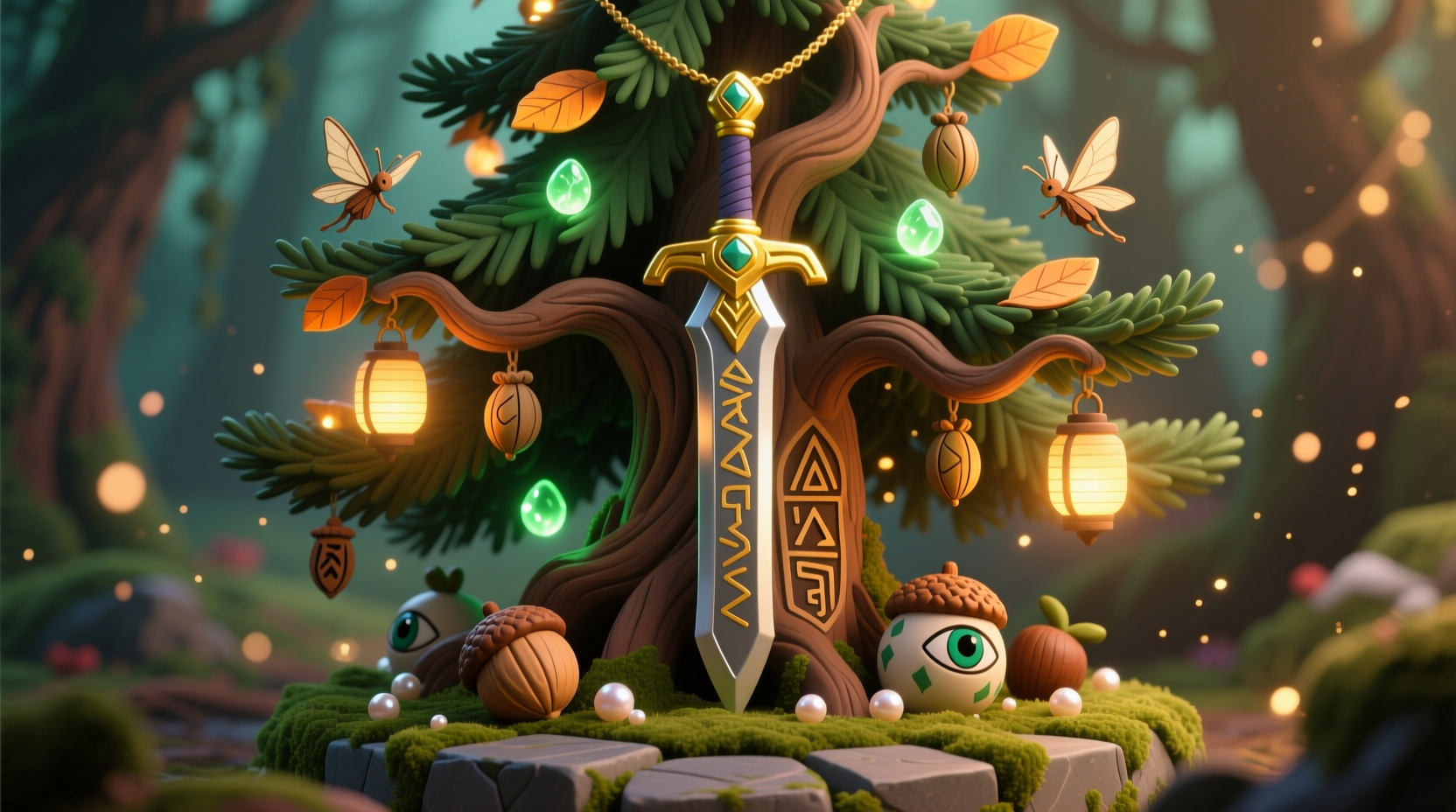
The first step is selecting which game will serve as your muse. While any title can inspire a tree, some lend themselves more naturally to holiday reinterpretation due to strong visual identities, iconic symbols, or seasonal undertones. Consider games like The Legend of Zelda: Breath of the Wild, Cyberpunk 2077, Animal Crossing: New Horizons, Stardew Valley, or Minecraft. Each offers a distinct atmosphere you can translate into decor.
Once chosen, break down the game’s aesthetic into core components:
- Color Palette: What are the dominant colors? Is it earthy and green (Zelda), electric and dark (Cyberpunk), or pastel and cheerful (Animal Crossing)?
- Iconography: Identify recurring symbols—Triforce, Pikmin, pixel hearts, Poké Balls, or Power Stars.
- Materials & Textures: Does the world feel rustic, futuristic, handmade, or industrial?
- Mood: Is it adventurous, melancholic, whimsical, or tense?
These elements will guide every decision—from tree color to ornament style. For example, a Stardew Valley-themed tree should feel cozy and handcrafted, using warm yellows, reds, and browns, with ornaments shaped like parsnips, friendship hearts, and farm animals.
Build the Foundation: Tree, Lights, and Skirt
Your base setup determines how well the theme comes together. You don’t need a real tree—artificial ones come in various colors and densities, ideal for customization.
Tree Type:
- Traditional Green: Works for nature-based games like Zelda or Horizon Zero Dawn.
- White or Silver: Perfect for sci-fi or winter-themed games like Mass Effect or Fortnite's snow maps.
- Black or Dark Gray: Ideal for cyberpunk or horror-tinged titles like Resident Evil or Dead Space.
Lighting Strategy:
Lights should enhance the game’s ambiance. Use colored LED strings or smart bulbs that can shift hues. For instance:
- Cyberpunk 2077: Alternate strips of neon pink, blue, and purple.
- Minecraft: Use warm white lights to mimic torchlight in a cave.
- Pokémon: Flashing red and white bulbs resembling Poké Ball energy.
Consider adding subtle motion effects—like flickering “campfire” LEDs for a Dark Souls tree or pulsing “reactor core” lights for Portal.
Tree Skirt:
This often-overlooked element can anchor your theme. Options include:
- A pixel-art crochet blanket for retro games.
- A velvet cloth with embroidered Triforce or Master Sword silhouette.
- A metallic tinfoil skirt with circuit patterns for sci-fi themes.
“Thematic consistency starts from the ground up. The tree skirt is where your concept touches reality.” — Lila Tran, Themed Decor Designer & Creator of FanFest Holiday Builds
Create or Source Themed Ornaments
Ornaments are the soul of your tree. They tell the story. You can buy licensed merchandise, but handmade pieces add authenticity and emotional value.
D.IY Approaches:
- Felt Cutouts: Use templates to make miniature versions of items like Link’s shield, Mario’s hat, or Samus’s helmet.
- 3D Printing: Print small models of characters or objects (e.g., Chocobos, Portal Gun, Heart Containers).
- Clay Sculpting: Air-dry clay lets you shape custom items like Golden Bananas (Donkey Kong) or Rupees.
- Photo Baubles: Insert tiny printed screenshots into clear glass balls—perfect for capturing key game moments.
For games with progression systems, consider structuring ornament placement by “level.” Place early-game items near the bottom and legendary gear at the top—like placing the Master Sword at the pinnacle of a Zelda tree.
| Game | Ornament Ideas | Material Suggestions |
|---|---|---|
| The Legend of Zelda | Triforce, Ocarina, Sheikah Eye, Loftwing Feather | Gold-painted wood, translucent resin, felt |
| Minecraft | Creeper head, diamond pickaxe, crafting table | Foam blocks, fabric, plastic cubes |
| Animal Crossing | Turnip, fishing rod, Nook Inc. logo, daisy | Felt, embroidery, polymer clay |
| Cyberpunk 2077 | Edgerunner logo, braindance disc, netrunner chip | Metallic paper, circuit boards, LED accents |
Step-by-Step Guide: Building Your Game-Inspired Tree
Follow this timeline to ensure a polished result without last-minute stress.
- Week 1: Theme Finalization
Select your game and define its visual language. Collect reference images and create a supply list. - Week 2: Gather Materials
Purchase or order tree, lights, and basic ornaments. Begin DIY projects that require drying or shipping time. - Week 3: Craft & Customize
Complete handmade decorations. Test lighting setups. Modify store-bought items (e.g., paint baubles to match your palette). - Week 4: Assembly
Set up the tree, wrap lights, add the skirt. Hang ornaments starting from the inside out and bottom up. - Final Touches:
Add a themed tree topper—a glowing Light Ring (Destiny), a pixel-art star (Tetris), or a model spaceship (No Man’s Sky).
Take photos throughout the process. Not only does this document your work, but it also provides content for social media sharing—many fan communities actively celebrate these creations each December.
Enhance the Experience with Sound and Interactivity
A great themed tree doesn’t just look the part—it immerses. Subtle audio cues can elevate the experience.
Place a small Bluetooth speaker near the tree programmed to play a looping playlist of ambient tracks from the game’s soundtrack. Imagine soft Overworld melodies from Zelda drifting through the room, or the gentle chimes of Stardew Valley’s town theme during dinner.
For advanced builders, integrate interactivity:
- Use motion sensors to trigger sound clips when someone approaches (“It’s dangerous to go alone!”).
- Install a button guests can press to light up a “secret” ornament (e.g., a hidden 1-Up mushroom).
- Link smart lights to react to music beats—perfect for rhythm games like Guitar Hero or Beat Saber.
Just be mindful of volume and repetition. The goal is ambiance, not distraction.
Mini Case Study: The “Portal” Puzzle Tree
Last holiday season, Mark R., a software engineer and lifelong gamer from Portland, transformed his living room with a Portal-themed Christmas tree. His goal? To mirror the game’s sterile, scientific aesthetic while keeping it festive.
He started with a slim silver artificial tree, wrapped in cool-white LED strips. Instead of traditional garland, he used lengths of black and yellow caution tape. Ornaments included 3D-printed mini turrets wearing tiny Santa hats, clear baubles filled with floating cake models, and hand-painted signs reading “The Cake Is a Lie.”
The topper was a custom-built rotating portal gun that emitted a soft blue glow. A hidden speaker played GLaDOS’s dry voice lines on a low loop: “I’m glad we could share these few minutes together.”
The tree became a hit at his holiday party, especially among fellow gamers. “People didn’t just take photos—they interacted,” Mark said. “Kids tried to ‘solve’ it like a puzzle. That’s when I knew it worked.”
Common Pitfalls and How to Avoid Them
Even passionate fans can misstep. Here’s what to watch for:
| Do | Don't |
|---|---|
| Stick to a cohesive color scheme | Use clashing colors just because they appear somewhere in the game |
| Balance recognizable icons with subtlety | Overload the tree with too many large ornaments |
| Incorporate texture and layering | Rely only on flat printed decorations |
| Test electronics in advance | Plug in untested DIY circuits on Christmas Eve |
Frequently Asked Questions
Can I combine multiple games into one tree?
Yes, but only if they share a universe or aesthetic. A “Nintendo All-Stars” tree works with careful curation—use shared elements like pixel art or power-up motifs. Avoid mashing unrelated games (e.g., The Witcher and Super Mario), as it can look chaotic.
How do I explain the theme to non-gamers?
Include a small display card next to the tree titled “This Year’s Theme: [Game Name].” List 2–3 key symbols and their meanings. For example: “The blue triangles represent the Triforce, a sacred relic granting wisdom, courage, and power.”
Are DIY ornaments safe for households with pets or kids?
Ensure all materials are non-toxic and securely attached. Avoid small detachable parts, sharp edges, or cords within reach. Use shatterproof baubles and battery-operated lights when possible.
Checklist: Design Your Game-Inspired Christmas Tree
- ☐ Choose a video game with strong visual identity
- ☐ Define color palette, key symbols, and mood
- ☐ Select tree type (color, size, material)
- ☐ Plan lighting scheme (color, pattern, smart features)
- ☐ Design or source at least 8 themed ornaments
- ☐ Create or purchase a matching tree skirt
- ☐ Build or customize a unique tree topper
- ☐ Prepare ambient audio or interactive elements
- ☐ Assemble tree with balanced ornament distribution
- ☐ Add explanatory note for guests (optional)
Conclusion: Make This Holiday Season Unforgettably Geeky
Designing a Christmas tree inspired by your favorite video game is more than decoration—it’s an act of love for the worlds that gave you adventure, comfort, and community. It bridges generations, inviting younger family members to explore classics while letting older fans relive golden moments. In a season often defined by tradition, this kind of personalization brings fresh joy.
You don’t need a six-figure budget or professional crafting skills. You need passion, planning, and the willingness to play. So pick your game, power up your imagination, and start building a tree that doesn’t just stand in your living room—but tells a story.




 浙公网安备
33010002000092号
浙公网安备
33010002000092号 浙B2-20120091-4
Comments
No comments yet. Why don't you start the discussion?