
Christmas doesn’t have to mean bright reds, glittering golds, or cheerful pastels. For those drawn to the dramatic, mysterious, and introspective, a goth Christmas tree offers a powerful alternative—a celebration of winter’s depth, elegance in darkness, and beauty in the unconventional. Far from being merely “spooky,” a well-designed goth tree balances aesthetic cohesion, texture, and mood to create a centerpiece that feels luxurious, intentional, and deeply personal.
Designing a goth Christmas tree isn’t about throwing on black ornaments and calling it done. It’s an exercise in atmosphere, contrast, and thematic storytelling. With careful selection of colors, materials, lighting, and symbolic elements, you can craft a tree that honors both the season and your unique style—elegant, somber, and unforgettable.
Understanding the Goth Aesthetic: Beyond Black
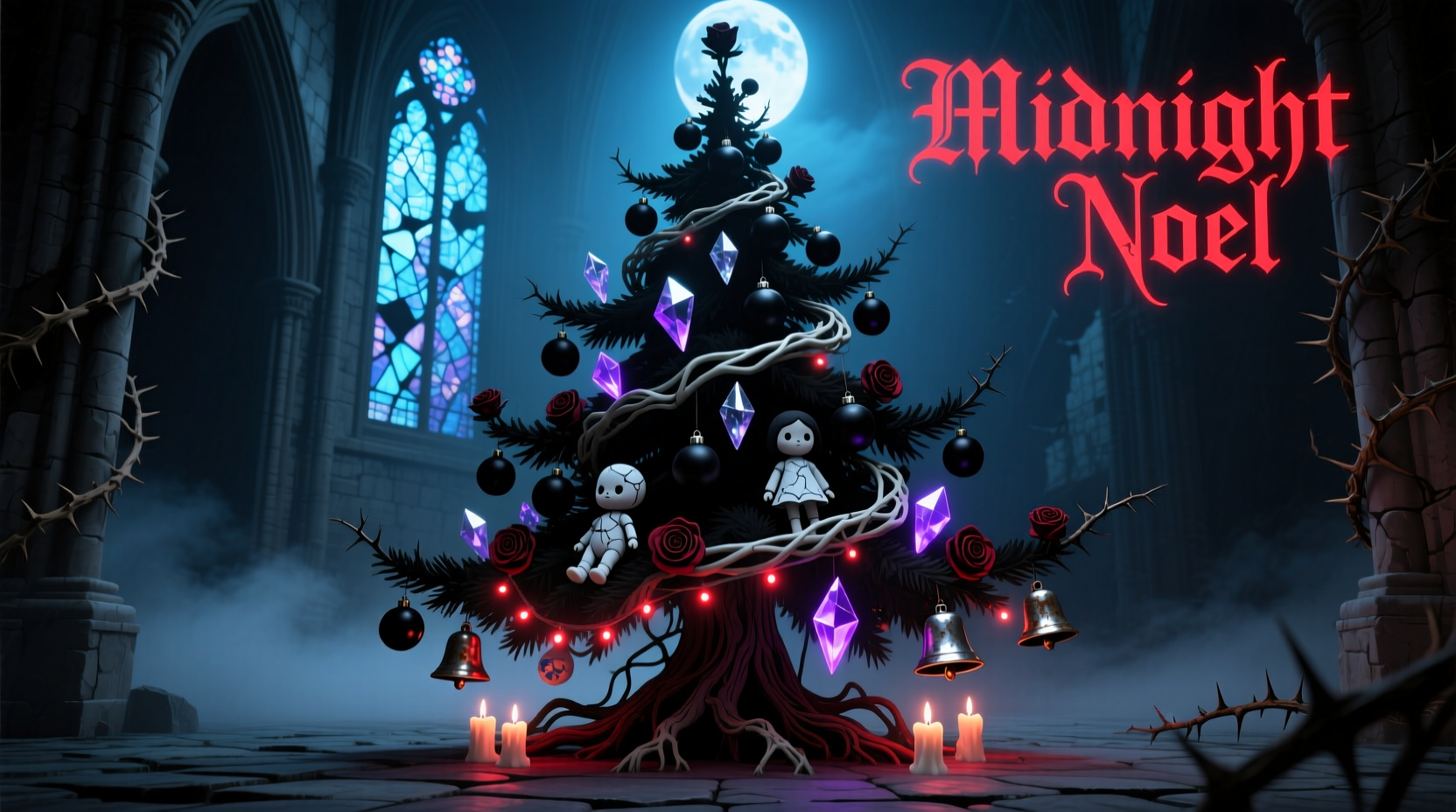
The term “goth” often conjures images of all-black wardrobes and candlelit basements, but its visual language is far more nuanced. Rooted in post-punk culture, Victorian mourning traditions, Romantic literature, and a fascination with the sublime and melancholic, goth design embraces shadow not as emptiness, but as space for reflection, mystery, and beauty.
A goth Christmas tree should reflect this complexity. While black is a dominant tone, it’s best used alongside deep jewel tones—burgundy, plum, forest green, navy—and metallic accents like tarnished silver, antique brass, or gunmetal gray. Texture plays a crucial role: matte finishes, velvet ribbons, lace, wrought iron, and glass evoke a sense of history and tactile richness.
“Goth decor isn’t about fear—it’s about reverence. It finds grace in stillness, beauty in decay, and warmth in shadow.” — Lila Moreau, Interior Designer & Dark Aesthetic Curator
When designing your tree, think less “haunted house” and more “candlelit cathedral in December.” The goal is not to frighten, but to mesmerize—to create a quiet, immersive experience that feels both festive and contemplative.
Step-by-Step Guide: Building Your Goth Tree from the Ground Up
Creating a cohesive goth Christmas tree requires planning and layering. Follow this sequence to build depth, balance, and mood throughout your design.
- Choose the Right Tree Base: Start with either a real fir or a high-quality artificial tree. For a goth theme, consider a dark green or even a black-dipped tree for maximum drama. Alternatively, a frosted or snow-dusted artificial tree can enhance the “winter graveyard” effect when paired with dark ornaments.
- Select a Color Palette: Limit your scheme to three to four core colors. A classic goth palette includes:
- Black (matte and glossy)
- Burgundy or blood red
- Deep purple or eggplant
- Metallic silver, pewter, or oxidized copper
- Incorporate Lighting Early: Before adding ornaments, weave in your light strings. Use warm white, amber, or dimmable LED candles for a flickering glow. Avoid cool blue or multicolored lights—they break the mood. Consider battery-operated fairy lights wrapped loosely around branches for a subtle, ethereal shimmer.
- Add Textural Layers: Begin with garlands made of black ribbon, dried blackberries, faux ivy, or braided leather. These provide visual weight and help unify the tree before ornament placement.
- Hang Ornaments Strategically: Place larger pieces toward the bottom and outer branches, smaller ones toward the top and center. Mix shapes—teardrops, skulls, ravens, moons, antique keys, and vintage-style glass balls.
- Crown with Intention: Skip the traditional star or angel. Instead, use a black raven, a crescent moon, a wrought iron cross, or a cluster of black feathers. This final touch sets the tone for the entire display.
Essential Elements of a Goth Tree: Decor That Matters
The ornaments and accessories you choose define the soul of your tree. Focus on quality over quantity. A sparsely decorated tree with meaningful pieces often reads as more sophisticated than one overloaded with generic items.
Ornament Ideas
- Glass baubles in black, deep red, or mercury glass finish
- Skeletal or anatomical motifs such as rib cages, hands, or hearts
- Nature-inspired dark elements like bats, crows, spiders, or dead roses
- Vintage religious icons—small crucifixes, stained-glass replicas, or rosaries (used respectfully)
- Candles—real (with fire safety) or flameless LED versions in black or deep red tapers
Garland Alternatives
Move beyond popcorn strands. Try:
- Braided black velvet rope
- Dried eucalyptus and black walnuts
- Paper cutouts of ravens or Gothic arches
- String of antique keys or lock charms
Tree Skirt Options
The base of the tree should ground the theme. Consider:
- Black lace overlay on a burgundy velvet skirt
- Faux fur in charcoal gray or raven black
- A wrought iron ring skirt with hanging chains or charms
Lighting: Crafting the Perfect Moody Glow
Lighting is the most transformative element of a goth Christmas tree. It doesn’t just illuminate—it shapes emotion. Harsh, bright lights destroy the atmosphere; soft, layered lighting enhances it.
Use multiple light sources at different intensities. Start with a base layer of warm white mini lights evenly distributed through the inner branches. Then, add accent lighting: flickering LED candles nestled in clusters, small spotlights aimed from below, or string lights with a slow pulse effect to mimic candlelight.
| Light Type | Best Use | Avoid |
|---|---|---|
| Warm white LEDs | Base coverage, inner branches | Overloading—use 100–200 bulbs max for a 6-ft tree |
| Amber fairy lights | Outer tips, delicate shimmer | Cool-toned variants |
| Flameless candles | Under-tree glow, mantle pairing | Plastic-looking designs |
| Dimmable smart lights | Adjusting mood by time of day | Full brightness after dusk |
For extra drama, place a sheer black curtain or backdrop behind the tree. This absorbs stray light and makes the ornaments appear to float in darkness. You can also use a fog machine on low for fleeting mist effects during gatherings—but only if safe and well-ventilated.
Real Example: The Velvet Crypt Tree
In Portland, Oregon, interior stylist Mira Chen transformed her living room into a “Victorian mourning parlor” for the holidays. Her 7-foot Fraser fir became the centerpiece—a tree she dubbed “The Velvet Crypt.”
She began with a black-dipped artificial tree for deeper contrast. Over 150 warm white micro-lights were hand-wrapped, focusing density in the lower third to simulate candlelight rising from a tomb. Garlands were made of dried black magnolia leaves and interspersed with miniature porcelain skulls wrapped in ivy.
Ornaments included hand-blown black glass orbs, vintage locket pendants, and custom 3D-printed bats in matte charcoal. The tree skirt was a repurposed antique mourning veil—black lace over heavy silk—weighted with smooth river stones to keep it flat.
The result? Guests described it as “hauntingly peaceful.” One wrote in the guestbook: “It felt like Christmas in a forgotten library—cold air, warm light, and stories waiting to be read.”
Mira’s success came from restraint. She used only 28 ornaments total, allowing each piece to breathe and be appreciated. “People expect clutter with dark themes,” she said. “But silence speaks louder than noise.”
Checklist: Your Goth Tree Design Roadmap
Before shopping or decorating, run through this checklist to ensure cohesion and impact:
- ☐ Defined color palette (max 4 colors)
- ☐ Chosen tree type (real, artificial, black-finished)
- ☐ Purchased warm white or amber lights (dimmable preferred)
- ☐ Selected non-traditional tree topper (raven, moon, etc.)
- ☐ Gathered textured garlands (lace, leather, dried flora)
- ☐ Curated ornaments with symbolic meaning
- ☐ Planned lighting layers (base + accent)
- ☐ Selected a dark, textured tree skirt
- ☐ Tested setup in low-light conditions
- ☐ Added complementary decor nearby (candles, books, art)
Common Pitfalls to Avoid
Even with the best intentions, a goth tree can veer into kitsch or chaos. Steer clear of these mistakes:
- Using too many themes at once: Mixing pirates, zombies, and unicorns dilutes the mood. Stick to one narrative—Gothic romance, Victorian mourning, or natural decay.
- Over-lighting: Excessive brightness kills the ambiance. If you can read a book by your tree’s glow, it’s too bright.
- Ignoring scale: Oversized skulls or flashing neon signs disrupt elegance. Choose pieces that feel integrated, not imposed.
- Skipping cohesion: Ensure ribbons, ornament hooks, and wire are black or metallic to avoid visual clutter.
“A goth tree should feel inevitable—like it was always meant to stand in that corner, glowing softly through the longest night.” — Rafael Stone, Seasonal Design Consultant
FAQ: Your Goth Tree Questions Answered
Can I mix goth decor with family heirlooms?
Yes—thoughtfully. Incorporate vintage ornaments by grouping them together or placing them near the trunk where they’re protected and honored. A single grandmother’s crystal ball amid black branches can become a powerful focal point.
Is a goth tree appropriate for kids?
It depends on your family. Many children love the drama and storytelling. Use age-appropriate symbols—bats and moons are fine; skeletons might need context. Frame it as “a different kind of Christmas” rather than “scary.”
How do I store my goth ornaments safely?
Use divided ornament boxes with soft lining. Wrap delicate pieces in acid-free tissue. Store in a cool, dry place away from sunlight. Label containers clearly to preserve the theme for next year.
Conclusion: Embrace the Shadows This Holiday
Designing a goth Christmas tree is an act of creative courage. It challenges expectations and reclaims the season for those who find magic in moonlight, comfort in velvet darkness, and joy in the unconventional. This isn’t a rejection of tradition—it’s a reinvention.
Your tree can be a sanctuary, a statement, or a silent poem in pine and shadow. Whether you live alone, share your home with curious relatives, or host intimate gatherings, a thoughtfully designed goth tree invites pause, wonder, and connection.




 浙公网安备
33010002000092号
浙公网安备
33010002000092号 浙B2-20120091-4
Comments
No comments yet. Why don't you start the discussion?