
Watching videos on YouTube TV without sound is more common than ever—whether you're in a noisy public space, sharing a room with a sleeping child, or living with hearing loss. Closed captions make content accessible, but many viewers don’t realize how much control they have over their caption experience. With just a few taps, you can not only turn on captions but also tailor their appearance, size, color, and background to match your preferences. This guide walks you through everything you need to know about activating and customizing closed captions on YouTube TV for a clearer, more enjoyable viewing experience.
Why Closed Captions Matter Beyond Accessibility
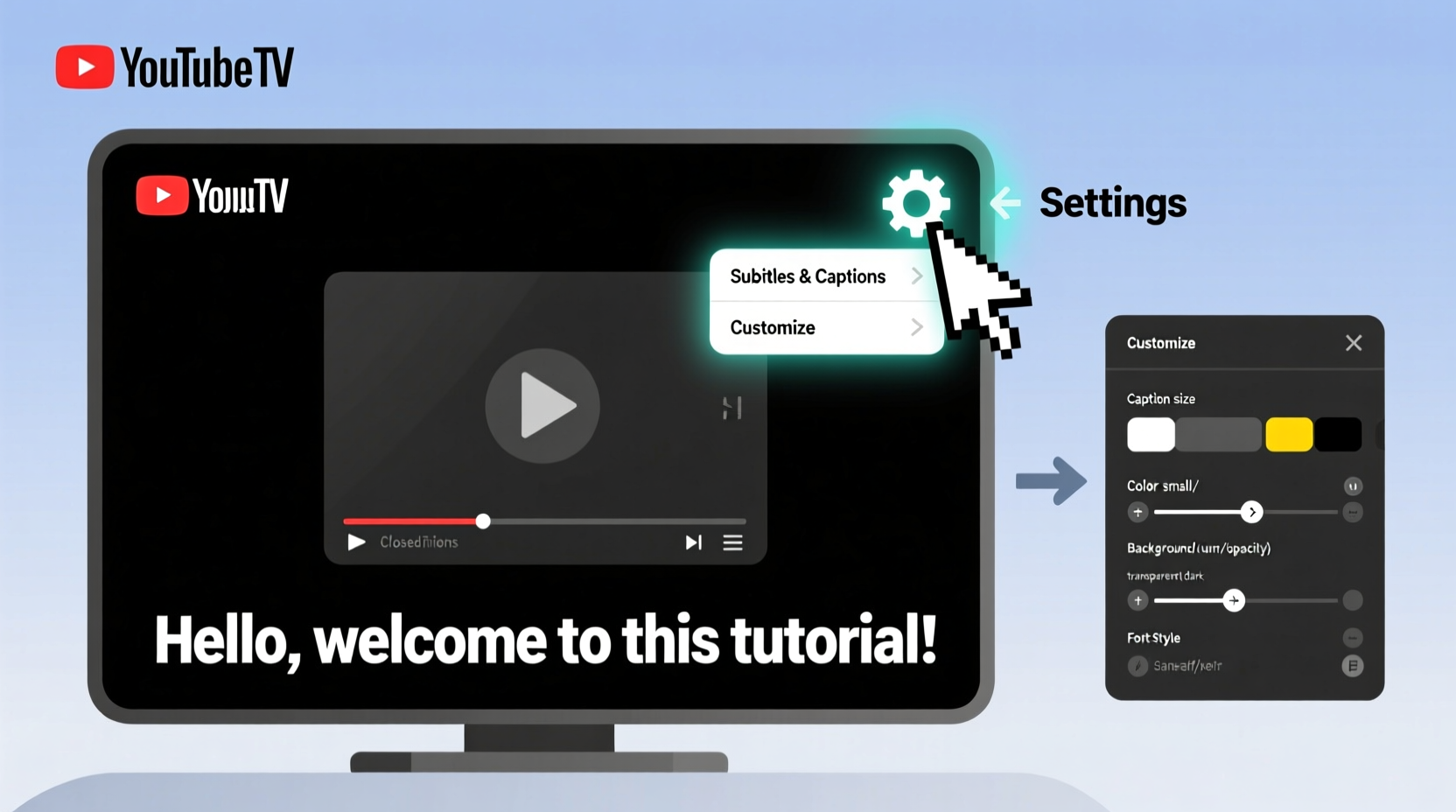
Closed captions are often associated with accessibility for the deaf and hard of hearing, but their benefits extend far beyond that. Studies show that over 80% of people who use captions do so in situations where audio isn't practical—like watching in silence during a commute or in a crowded office. Captions improve comprehension, especially with fast dialogue, accents, or technical language. They also help reinforce learning when consuming educational content.
“Captions aren’t just for accessibility—they’re a universal design feature that improves focus, retention, and usability for all viewers.” — Dr. Sarah Kim, Media Accessibility Researcher at Northwestern University
YouTube TV, unlike traditional broadcast television, gives users granular control over how captions appear. Whether you want larger text for easier reading or high-contrast styling for visibility in bright rooms, customization options empower you to create a personalized viewing setup.
Step-by-Step: How to Activate Closed Captions on YouTube TV
Activating captions on YouTube TV is straightforward, whether you're using a smart TV, streaming device, or mobile app. Follow this simple process:
- Open the YouTube TV app on your device (Android TV, Apple TV, Roku, mobile, etc.).
- Start playing any video from live TV, your library, or on-demand content.
- Press the “Up” button on your remote (or tap the screen if on mobile) to bring up playback controls.
- Look for the “CC” icon (usually in the lower-right corner of the screen).
- Select the “CC” icon to toggle captions on or off.
Once activated, captions will appear at the bottom of the screen in default style. While functional, they may not be optimized for readability depending on your environment or visual needs. That’s where customization comes in.
Customizing Caption Appearance for Maximum Clarity
YouTube TV allows deep customization of caption styling. These settings apply across all devices linked to your Google account, ensuring consistency no matter where you watch.
How to Access Caption Settings
- Go to Settings in the YouTube TV app (via the side menu or profile icon).
- Select Accessibility.
- Tap Caption Preferences.
- Choose from preset styles or select Create New Style.
Adjustable Caption Features
You can modify several visual aspects of captions:
- Text Size: Choose from small to extra-large to suit your eyesight and screen size.
- Font Style: Options include default, monospaced serif, proportional sans-serif, and others.
- Text Color & Background: Change text color (white, yellow, etc.) and add a background tint (black, transparent, or colored box) to reduce glare and improve contrast.
- Edge Style: Apply effects like drop shadow, raised, depressed, or outlined to enhance legibility.
- Window Color & Opacity: For full caption boxes, adjust transparency and fill color.
These changes are instantly previewed, so you can test different combinations before saving.
Recommended Customization Profiles
| Use Case | Recommended Settings |
|---|---|
| Bright Room / Glare on Screen | Large yellow text, black background, drop shadow |
| Night Viewing | White text, semi-transparent black background, proportional font |
| Viewers with Low Vision | Extra-large text, high-contrast colors (yellow on blue), bold outline |
| Minimalist Preference | Medium white text, no background, default font |
Real-World Example: Enhancing Family Viewing Time
The Patel family uses YouTube TV daily but faces challenges during evening shows. Mr. Patel has mild hearing loss, while their teenage daughter often watches with headphones late at night. Their living room has large windows, causing screen glare in the afternoon.
They created three caption profiles: one with large yellow text and a dark background for daytime viewing, another with soft white text and low brightness for nighttime, and a third simplified version for general use. By personalizing these settings, each family member enjoys clearer comprehension without needing subtitles turned off and on repeatedly. The change led to fewer interruptions and more shared enjoyment during movie nights.
Frequently Asked Questions
Do all videos on YouTube TV support closed captions?
Most live broadcasts, original content, and on-demand videos include closed captions. However, user-uploaded content may lack accurate or complete captions. Look for the “CC” badge next to a video to confirm availability. Automatic captions (generated by speech recognition) are available for most content but may contain errors in technical or fast-paced dialogue.
Can I use keyboard shortcuts to toggle captions on mobile or web?
Yes. On desktop browsers, press the “C” key while a video is playing to turn captions on or off. This shortcut works across YouTube TV and regular YouTube. On mobile, there’s no keyboard shortcut, but tapping the screen brings up the CC button in playback controls.
Are customized caption settings synced across devices?
Absolutely. As long as you’re signed into the same Google account, your caption preferences—including custom styles—sync automatically between your phone, tablet, smart TV, and web browser. This ensures a consistent experience no matter how or where you watch.
Pro Checklist: Optimizing Your Caption Experience
Follow this checklist to ensure you’re getting the most out of YouTube TV’s caption features:
- ✅ Turn on captions during your next viewing session to test readability.
- ✅ Visit Accessibility settings to explore built-in caption styles.
- ✅ Create a custom style tailored to your lighting and vision needs.
- ✅ Test the style across different types of content (news, movies, sports).
- ✅ Share your preferred settings with household members who may benefit.
- ✅ Periodically review settings as your viewing environment changes (e.g., seasonal light shifts).
Final Thoughts: Small Adjustments, Big Impact
Activating and customizing closed captions on YouTube TV is a small action with significant benefits. It enhances accessibility, improves comprehension, and makes viewing more comfortable in diverse environments. Whether you're hard of hearing, watching quietly, or simply want clearer text on screen, taking a few minutes to set up your ideal caption style pays off every time you press play.




 浙公网安备
33010002000092号
浙公网安备
33010002000092号 浙B2-20120091-4
Comments
No comments yet. Why don't you start the discussion?