
Understanding the relationship between the radius and diameter of a circle is fundamental in geometry, engineering, construction, and everyday problem-solving. Whether you're measuring a bicycle wheel, designing a garden layout, or helping a child with homework, knowing how to convert radius to diameter quickly and accurately saves time and prevents errors. This guide breaks down the process into clear, practical steps, explains the underlying math, and provides real-world examples to reinforce your understanding.
What Is Radius and What Is Diameter?
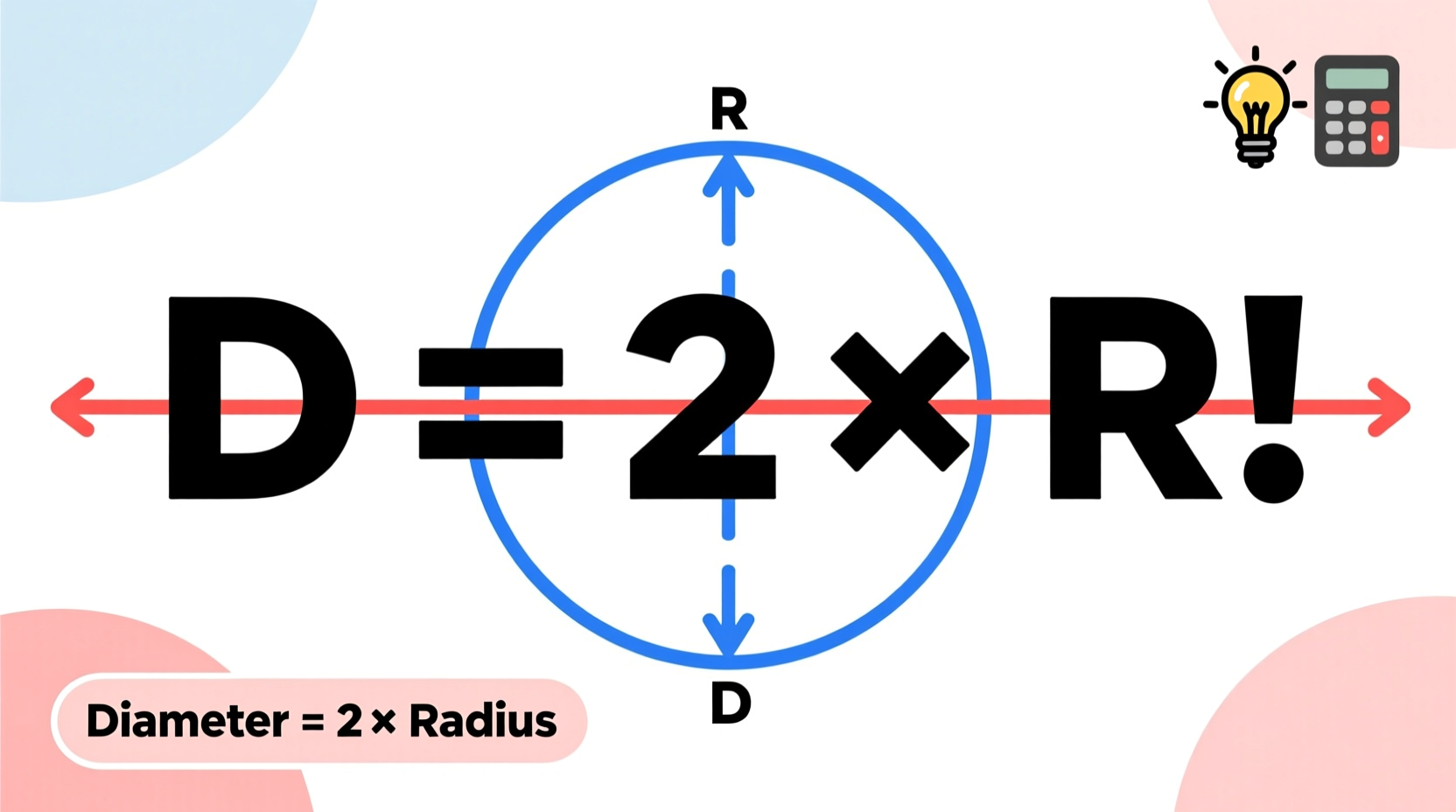
The radius of a circle is the distance from the center point to any point on its edge. It's essentially half the width of the circle. The diameter, on the other hand, spans the entire width of the circle, passing through the center from one edge to the opposite edge. Because it crosses the center and connects two points on the circumference, the diameter is always twice the length of the radius.
This relationship is consistent for all circles, regardless of size. A tiny coin and a massive Ferris wheel follow the same geometric rule: the diameter is exactly double the radius.
The Simple Formula: Diameter = 2 × Radius
The mathematical formula to calculate the diameter (d) from the radius (r) is straightforward:
d = 2 × r
This equation is derived directly from the definition of a circle. Since the radius extends from the center to the edge, doubling that distance gives you the full span across the circle—the diameter.
For example, if the radius of a pizza is 8 inches, the diameter is:
2 × 8 = 16 inches
This means the pizza is 16 inches wide from one side to the other, which is how most pizzas are labeled (e.g., “16-inch pizza”).
“Geometry isn’t just about shapes—it’s about relationships. The radius-to-diameter rule is one of the most reliable and widely used in practical mathematics.” — Dr. Alan Reeves, Mathematics Educator
Step-by-Step Guide to Calculating Diameter from Radius
Follow these six steps to confidently determine the diameter whenever you know the radius:
- Identify the radius: Make sure you have the correct measurement of the radius. It should start at the center of the circle and end at the outer edge.
- Ensure consistent units: Confirm that the radius is in a standard unit (inches, centimeters, meters, etc.) and that you’ll express the diameter in the same unit.
- Apply the formula: Multiply the radius value by 2.
- Double-check your math: Especially when dealing with decimals or fractions, re-calculate to avoid simple arithmetic errors.
- Label your answer: Always include the correct unit (e.g., cm, ft, mm).
- Verify with context: Ask yourself if the result makes sense. For instance, a car tire with a 15-inch radius should have a 30-inch diameter—reasonable for a standard vehicle.
Example Calculation
Suppose you're installing a circular tabletop and the manufacturer specifies a radius of 3.5 feet. To find the diameter:
d = 2 × 3.5 = 7 feet
The table is 7 feet across. This helps you determine if it will fit in your dining area.
Common Mistakes and How to Avoid Them
Even though the calculation is simple, errors often occur due to misreading measurements or misunderstanding terminology. Here are frequent pitfalls and how to prevent them:
| Mistake | Why It Happens | How to Avoid |
|---|---|---|
| Confusing radius with diameter | People assume the given measurement is the full width | Always check whether the term “radius” or “diameter” is used |
| Forgetting to multiply by 2 | Rushing or mental fatigue | Write down the formula each time until it becomes second nature |
| Unit mismatch | Using inches for radius but expecting meters for diameter | Convert all measurements to the same unit before calculating |
| Measuring from edge to edge without passing through the center | Incorrect physical measurement | Use a ruler or tape measure through the true center point |
Real-World Application: Planning a Garden Pond
Sarah wanted to install a circular pond in her backyard. The landscaping brochure listed the available models by radius. She liked the “Sunburst 4.2” model, described as having a radius of 4.2 meters. To determine if it would fit in her designated space—which was 9 meters wide—she needed the diameter.
She applied the formula:
d = 2 × 4.2 = 8.4 meters
The pond would be 8.4 meters across, leaving her 0.6 meters of clearance on either side. That was enough space for a surrounding stone path, so she approved the purchase. Without converting radius to diameter, she might have underestimated the footprint and chosen an oversized design.
This example shows how a basic calculation supports smart decision-making in home improvement projects.
Frequently Asked Questions
Can the diameter ever be smaller than the radius?
No. The diameter is always twice the radius, so it must be larger. If your calculated diameter is smaller, you likely divided instead of multiplied or misread the original measurement.
What if I only have the circumference? Can I still find the diameter?
Yes. If you know the circumference (C), use the formula d = C / π (pi ≈ 3.1416). Once you have the diameter, you can find the radius by dividing the diameter by 2.
Is this formula the same for all circles, even very large or very small ones?
Absolutely. The relationship d = 2r holds true for every perfect circle, whether it’s the size of a penny or the orbit of a satellite. Geometry is scale-invariant in this way.
Quick Reference Checklist
- ☑ Confirm you have the radius, not the diameter
- ☑ Check that the measurement unit is clear (cm, m, in, ft, etc.)
- ☑ Write down the formula: d = 2 × r
- ☑ Perform the multiplication carefully
- ☑ Include the correct unit in your final answer
- ☑ Verify the result makes sense in context
Conclusion: Empower Yourself with Basic Geometry
Calculating diameter from radius is a simple yet powerful skill. It takes only a moment to perform but can prevent costly mistakes in design, construction, crafting, and daily planning. By understanding the logic behind the formula and practicing accurate measurement, you gain confidence in handling circular objects and spaces. No advanced tools or software are needed—just a clear concept and careful attention to detail.




 浙公网安备
33010002000092号
浙公网安备
33010002000092号 浙B2-20120091-4
Comments
No comments yet. Why don't you start the discussion?