
In today’s hyper-connected world, having reliable wireless connectivity between devices is essential. While most modern PCs come equipped with built-in Bluetooth, many older models or desktop computers do not. Instead of purchasing an external Bluetooth dongle, you can use your smartphone—already a powerful, always-on device—as a Bluetooth adapter for your PC. This method allows you to pair peripherals like keyboards, mice, headphones, and speakers through your phone’s Bluetooth capabilities. The process is straightforward, cost-effective, and surprisingly efficient when done correctly.
Why Use Your Phone as a Bluetooth Adapter?
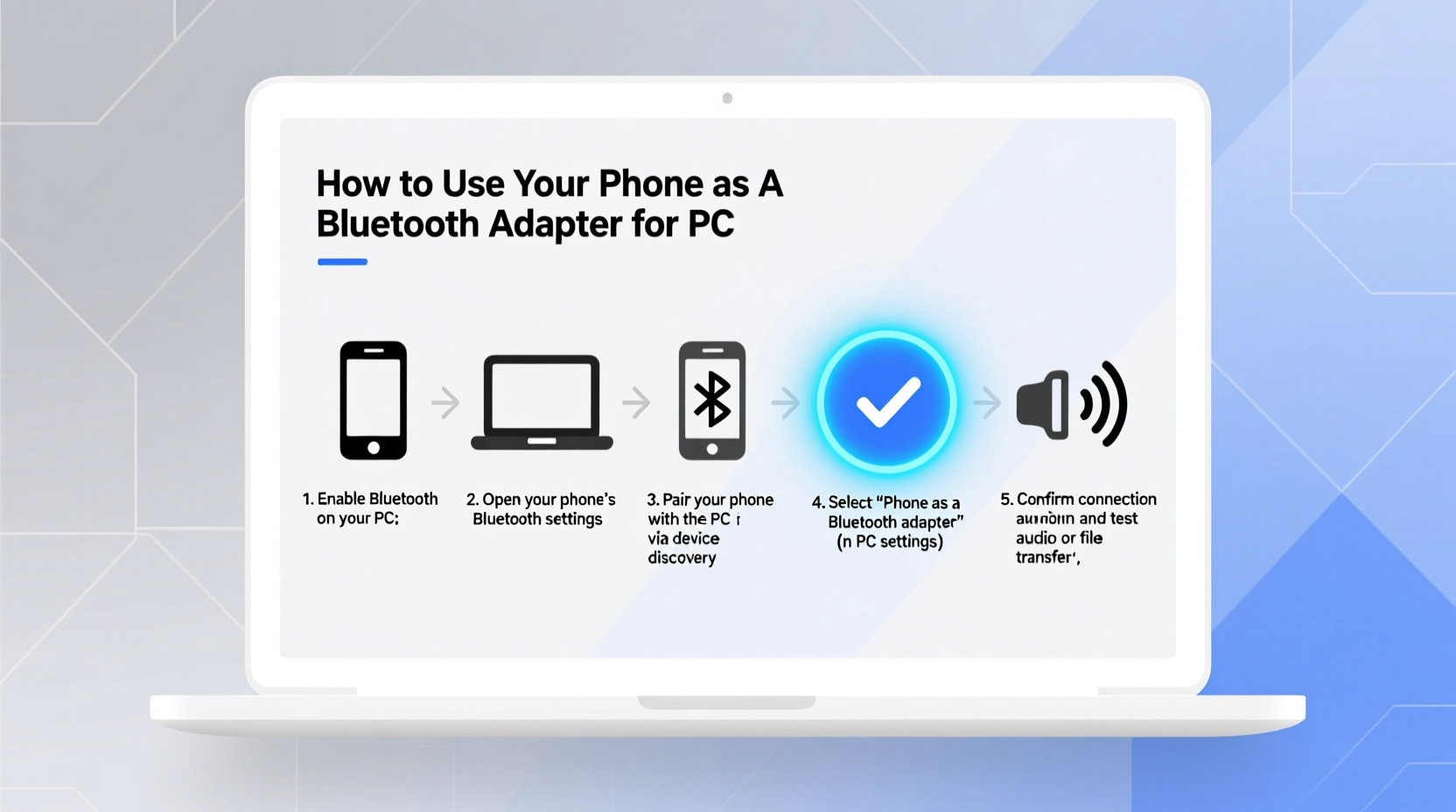
Not every computer has native Bluetooth support. Desktops, budget laptops, or older systems often lack the necessary hardware. Rather than buying additional accessories, leveraging your smartphone makes practical sense. Most smartphones have robust Bluetooth 4.0 or higher, ensuring stable connections and low latency. Additionally, this setup enables seamless integration across ecosystems—especially useful if you're using Android or iOS devices alongside Windows or Linux machines.
Using your phone in this role doesn’t require rooting, jailbreaking, or third-party apps in most cases. With just a few settings adjustments, your mobile becomes a bridge that extends your PC’s functionality without compromising performance.
Step-by-Step Guide to Connecting Your Phone as a Bluetooth Adapter
This guide assumes you're connecting an Android or iPhone to a Windows or Linux PC via USB tethering or Wi-Fi hotspot, then routing Bluetooth signals through the phone. Since direct “Bluetooth relay” isn’t natively supported by operating systems, we’ll use network-based forwarding techniques that effectively allow your PC to control your phone's Bluetooth interface remotely.
- Enable Developer Options on Your Phone
On Android: Go to Settings > About Phone > Tap \"Build Number\" seven times.
On iPhone: Developer mode must be enabled via Xcode (limited functionality; Android works better for this method). - Turn on USB Debugging (Android Only)
Navigate to Settings > Developer Options > Enable USB Debugging. - Connect Phone to PC via USB Cable
Plug in your phone. When prompted, allow file transfer or debugging access. - Install Vysor or Another Remote Control App
Download Vysor (vysor.io) on your PC. It mirrors your Android screen and allows interaction over USB/Wi-Fi. - Mirror Your Phone Screen to the PC
Open Vysor, select your device, and establish connection. You should now see your phone’s display on your computer. - Use Your Phone’s Bluetooth Interface Through the Mirror
From the mirrored screen, go to your phone’s Bluetooth settings and pair any peripheral—keyboard, headset, etc.—as normal. - Route Audio or Input Back to PC (Optional)
For audio devices: After pairing headphones via your phone, stream music from the PC through the browser or app running on the mirrored phone. - Keep Connection Stable
Maintain USB connection or switch to Wi-Fi mirroring if preferred. Avoid putting the phone to sleep.
While this method doesn’t make your phone a literal “adapter” in hardware terms, it creates a functional equivalent by giving your PC indirect access to your phone’s Bluetooth stack.
Alternative: Use Bluetooth Forwarding Tools (Advanced Users)
For technically inclined users, tools like Bluetooth PAN (Personal Area Network) or scripts using ADB (Android Debug Bridge) can forward certain types of data. However, these methods don’t typically allow arbitrary device pairing from the PC side—they’re more suited for networking than peripheral management.
“Smartphones are underutilized hubs for connectivity. By repurposing them as wireless bridges, users bypass hardware limitations creatively.” — Dr. Lena Torres, Wireless Systems Researcher at MIT Media Lab
Checklist: Preparing Your Devices for Connection
- ✅ Confirm your phone supports Bluetooth 4.0 or higher
- ✅ Update your phone’s OS to the latest version
- ✅ Install Vysor or scrcpy (open-source alternative) on your PC
- ✅ Enable USB Debugging (Android) or Trust This Computer (iOS)
- ✅ Use a high-quality USB cable for stable connection
- ✅ Disable battery optimization for mirroring apps
- ✅ Test Bluetooth pairing independently before linking to PC
Do’s and Don’ts When Using Your Phone as a Bluetooth Hub
| Do’s | Don’ts |
|---|---|
| Use a secure USB cable to prevent disconnections | Don’t rely on this method for low-latency tasks like gaming |
| Keep your phone unlocked and awake during use | Don’t disable developer options mid-session |
| Pair only one or two critical devices at a time | Don’t expect full HID (Human Interface Device) support from all peripherals |
| Close background apps to conserve battery and memory | Don’t leave sensitive data exposed on mirrored screens |
Real-World Example: Remote Worker Solves Keyboard Lag Issue
Sarah, a freelance writer working from home, uses a decade-old desktop PC because it handles her writing software smoothly. However, she recently bought a slim Bluetooth mechanical keyboard for comfort. Her desktop lacks Bluetooth, and her budget didn’t allow for a new machine or adapter. She remembered reading about phone-based solutions and decided to try Vysor.
After installing the app and enabling developer mode, she mirrored her Android phone to her monitor. Within minutes, she paired her keyboard through the phone’s Bluetooth menu. Though she couldn’t type directly into her PC applications yet, she realized she could open a cloud-based document on the mirrored phone and write there—syncing instantly to her desktop via Google Docs. The solution wasn’t perfect, but it eliminated typing lag and gave her ergonomic freedom. Over time, she added Bluetooth speakers the same way, turning her outdated rig into a surprisingly modern setup.
Frequently Asked Questions
Can I use my iPhone the same way as an Android phone?
Partially. iPhones support screen mirroring via QuickTime on Mac, but not natively on Windows. Third-party tools like LonelyScreen or ApowerMirror exist, though they often require Wi-Fi and may lack responsiveness. Full Bluetooth control from a PC remains limited compared to Android due to Apple’s closed ecosystem.
Is it safe to enable USB debugging on my phone?
Yes, if done responsibly. USB debugging allows deep system access, so only enable it when needed and avoid connecting to untrusted computers. Always revoke unauthorized authorizations in Developer Options > “Revoke USB debugging authorizations” periodically.
Will this drain my phone’s battery quickly?
Yes—screen mirroring, constant processing, and Bluetooth usage increase power consumption significantly. Keep your phone plugged in during extended sessions. Consider using a wall charger instead of drawing power solely from the PC’s USB port.
Optimizing Performance and Long-Term Use
For those who plan to use this setup regularly, consider automating parts of the workflow. Tasker (on Android) can auto-enable Bluetooth, launch Vysor, and disable battery saver when connected to your PC via USB. Similarly, batch scripts on Windows can start the mirroring application automatically upon device detection.
If security is a concern, ensure no personal notifications appear during mirroring. Activate “Do Not Disturb” or use work profiles to isolate professional activity. Also, disconnect the link when not in use to reduce attack surface.
Conclusion
Transforming your mobile phone into a de facto Bluetooth adapter for your PC is a clever workaround that breathes new life into older hardware. While not a native replacement for built-in Bluetooth, the combination of screen mirroring tools and your phone’s existing wireless capabilities delivers real utility. Whether you’re pairing a headset, syncing a fitness tracker, or using a wireless keyboard, this method proves that innovation often lies not in new gadgets—but in rethinking what you already own.




 浙公网安备
33010002000092号
浙公网安备
33010002000092号 浙B2-20120091-4
Comments
No comments yet. Why don't you start the discussion?