
The 2003 romantic comedy How to Lose a Guy in 10 Days remains a cultural touchstone, blending sharp humor with heartfelt emotion. Starring Kate Hudson and Matthew McConaughey at their charismatic peak, the film explores the fragile line between manipulation and genuine connection. Whether you're revisiting it after years or watching it for the first time, there's more beneath the surface than meets the eye. This guide offers ways to deepen your viewing experience, appreciate its nuances, and reflect on its themes long after the credits roll.
Understanding the Dual Narrative Structure
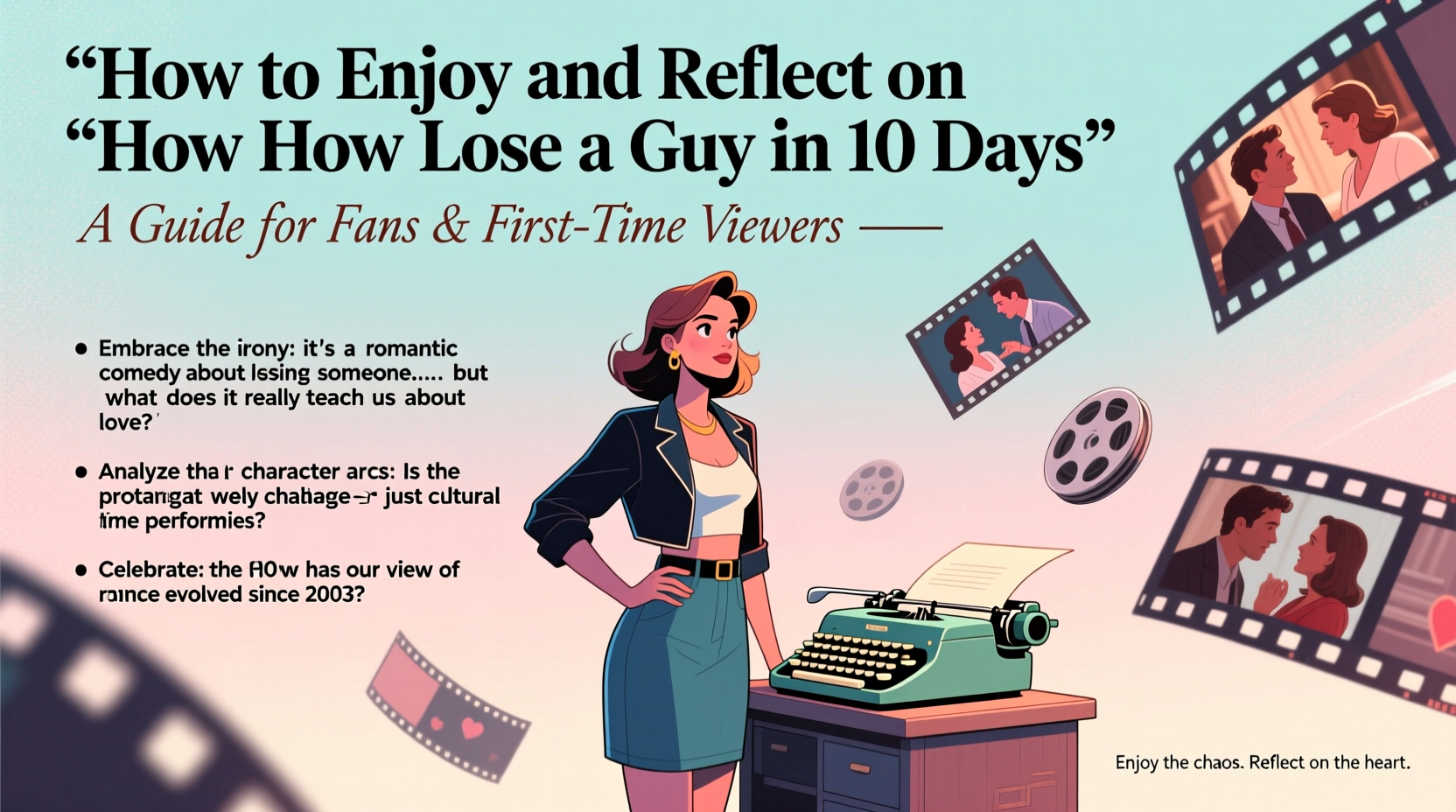
At its core, the film operates on two parallel plots: Andie Anderson (Hudson) writes a column titled “How to Lose a Guy in 10 Days” for a women’s magazine, while Benjamin Barry (McConaughey) accepts a bet to make any woman fall in love with him within ten days. Unbeknownst to each other, they become the subjects of one another’s experiments. This dual narrative creates dramatic irony—the audience knows both characters are playing roles, but they don’t know about each other’s schemes.
This structure amplifies tension and emotional investment. Viewers are pulled into a game of anticipation: when will the truth come out? How will they react? The brilliance lies in how the film gradually blurs the line between performance and authenticity. What begins as manipulation evolves into real affection, forcing both characters—and viewers—to question whether love can emerge from deception.
Appreciating the Era and Cultural Context
Set in early 2000s New York City, the film captures a specific moment in fashion, media, and gender dynamics. Women’s magazines like *Composure*, the fictional publication Andie works for, were influential in shaping relationship advice and beauty standards. The idea of writing a “how-to” list on driving men away reflects a satirical take on prescriptive dating culture.
Andie’s character challenges traditional femininity by being ambitious, career-driven, and unapologetically bold. Yet she also conforms to certain expectations—dressing stylishly, using flirtation as a tool—which invites reflection on how women navigate professional spaces while managing personal identity.
Similarly, Benjamin’s storyline critiques toxic masculinity in corporate environments. His colleagues value conquest over connection, reducing romance to a numbers game. The film subtly questions whether emotional vulnerability is weakness or strength—a theme still relevant today.
“Romantic comedies from this era often masked social commentary beneath glitter and charm. How to Lose a Guy in 10 Days uses humor to explore autonomy, honesty, and emotional risk.” — Dr. Lena Torres, Film Studies Professor, NYU
Step-by-Step Guide to a Reflective Viewing Experience
To truly engage with the film beyond surface-level entertainment, follow this structured approach:
- First Viewing – Focus on Plot and Chemistry: Let yourself be drawn into the story. Pay attention to pacing, comedic timing, and the magnetic chemistry between Hudson and McConaughey.
- Second Viewing – Track Character Motivations: Note key scenes where intentions shift. When does Andie stop performing? When does Ben realize he’s not just winning a bet?
- Analyze Dialogue Subtext: Rewatch conversations where double meanings abound. For example, when Ben says, “I’m all in,” is he still acting?
- Pause at Turning Points: Key moments include the Valentine’s Day party, the rooftop confrontation, and the final chase scene. Ask: What changes here emotionally?
- Reflect Post-Viewing: Journal your thoughts. Did your perception of either character change? Did the ending feel earned?
Do’s and Don’ts While Watching
| Do | Don't |
|---|---|
| Notice how costumes reflect personality shifts—Andie’s outfits become softer as she opens up emotionally. | Dismiss the film as shallow just because it’s a rom-com. |
| Consider the role of secondary characters (e.g., Chlovette, Ben’s coworkers) in highlighting main themes. | Ignore the power imbalance in their initial interactions—consent and transparency matter even in fiction. |
| Discuss the ending critically: Is forgiveness realistic given the level of deception? | Assume love always justifies broken trust. |
| Compare it to modern rom-coms to see how storytelling has evolved. | Watch it distracted—this film rewards attentive viewing. |
A Mini Case Study: Re-watching Through a Modern Lens
Sophia, a 28-year-old media analyst, first saw the film at 14 and loved its glamour and humor. When she rewatched it in 2023, her perspective shifted dramatically. “Back then, I thought it was cute that Ben pretended to love her for a bet. Now, it feels unsettling. That kind of emotional manipulation wouldn’t fly in a healthy relationship.”
She paused the film during the scene where Ben confesses his scheme. “I asked myself: Would I stay with someone who did that to me? Probably not. But what impressed me was how the film doesn’t fully excuse him. He has to earn redemption—not just through grand gestures, but accountability.”
Sophia’s experience shows how films evolve with us. Our understanding of ethics, agency, and emotional intelligence deepens over time, allowing older movies to serve as mirrors for personal growth.
Critical Reflection: Love, Deception, and Redemption
The film’s central ethical dilemma revolves around consent. Both protagonists enter the relationship under false pretenses. Andie manipulates Ben by weaponizing stereotypes of clingy behavior, while Ben exploits emotional intimacy for a corporate prize. Neither starts with honest intentions.
Yet the film argues that people can grow. Ben abandons the bet when his feelings become real. Andie halts her article when she realizes she’s hurting someone she cares about. Their transformations suggest that self-awareness and remorse are pathways to repair.
Still, the resolution raises questions. Does the final chase scene—a staple of the genre—oversimplify reconciliation? Can trust be rebuilt so quickly? These aren’t flaws in the film; they’re invitations to think critically about what we expect from relationships and narratives.
Frequently Asked Questions
Is How to Lose a Guy in 10 Days sexist or empowering?
The film contains elements of both. On one hand, it reinforces some gender stereotypes (e.g., women as manipulative, men as emotionally avoidant). On the other, it features a female lead with professional ambition and narrative control. Andie isn’t saved by the man—she chooses to forgive him, asserting agency in the relationship’s outcome.
Can you enjoy the film without agreeing with its message?
Absolutely. Art doesn’t require endorsement to be valuable. You can appreciate the performances, direction, and humor while critiquing aspects of the plot or ethics. Critical engagement enhances enjoyment, rather than diminishing it.
Why is the film still popular nearly two decades later?
Beyond star power and quotable lines, it taps into universal desires: to be loved authentically, to be seen for who we really are. Its blend of satire and sincerity resonates across generations, especially as audiences continue to debate the rules of modern romance.
Conclusion: Engage, Reflect, and Share
How to Lose a Guy in 10 Days is more than a romantic comedy—it’s a lens through which we can examine our beliefs about love, honesty, and personal growth. Whether you're captivated by its nostalgic charm or provoked by its moral ambiguities, the film invites deeper conversation. Use this guide to move beyond passive viewing and embrace a more thoughtful, reflective experience.




 浙公网安备
33010002000092号
浙公网安备
33010002000092号 浙B2-20120091-4
Comments
No comments yet. Why don't you start the discussion?