
Finding the perfect short cardigan jacket isn’t just about style—it’s about fit. A well-fitting cardigan enhances your silhouette, complements your outfit, and provides comfort throughout the day. Yet, many people settle for ill-fitting pieces because they assume sizing is straightforward or rely solely on labeled sizes. The truth? Sizing varies across brands, materials, and cuts. Without a clear understanding of how a short cardigan should fit, even the most stylish design can fall flat.
This guide breaks down the essential elements of fit: measurements, proportions, fabric behavior, and styling context. Whether you're shopping online or in-store, these insights will help you make informed decisions and walk away with a cardigan that fits like it was made for you.
Understanding Your Body Measurements
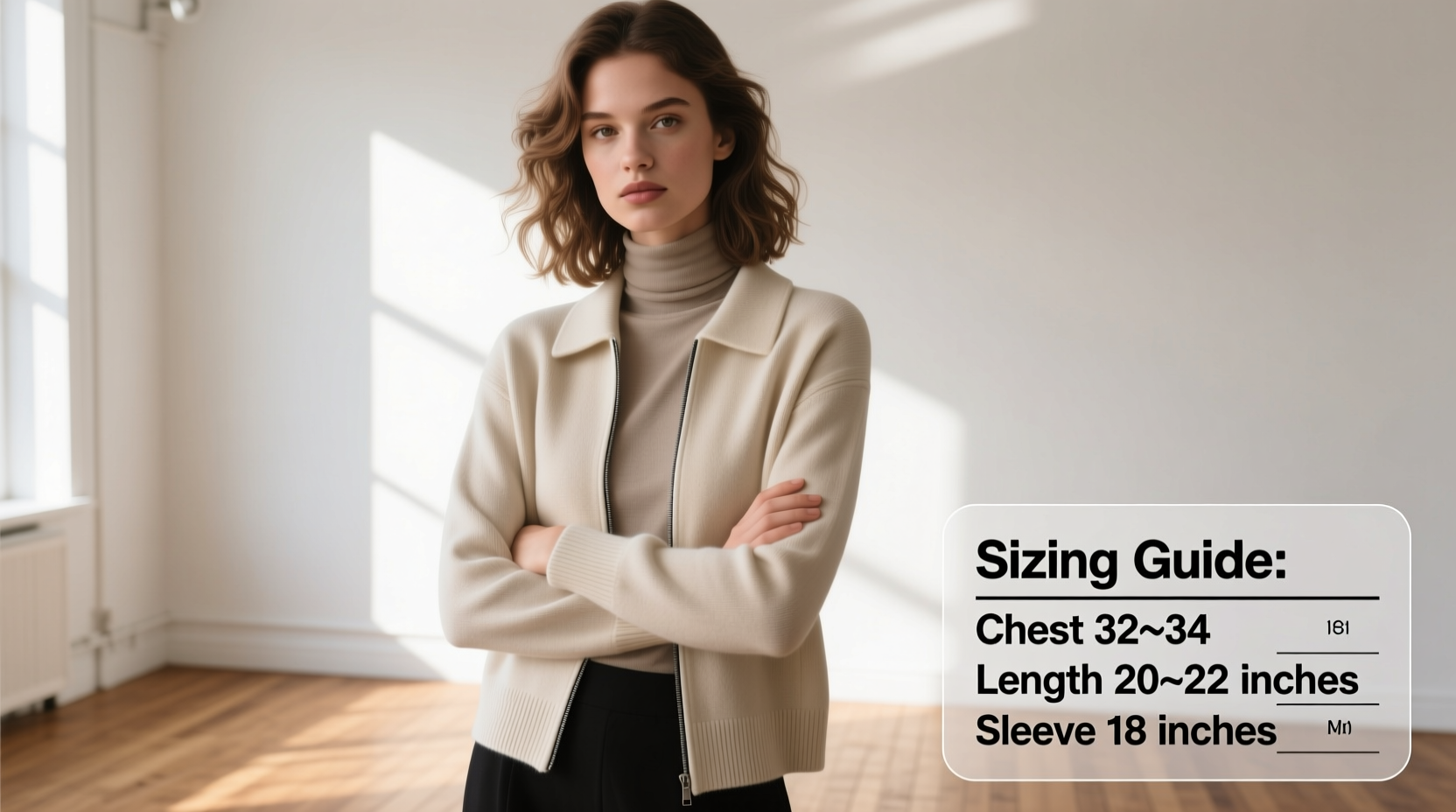
The foundation of any good fit starts with accurate body measurements. Unlike ready-to-wear labels, which often generalize sizing, precise numbers give you control over what works for your unique shape.
For a short cardigan jacket, focus on three key areas:
- Bust/Chest: Measure around the fullest part of your bust (for women) or chest (for men), keeping the tape parallel to the floor. This determines whether the cardigan will button comfortably or feel tight across the front.
- Shoulder Width: Measure from the edge of one shoulder to the other. A cardigan with poorly aligned seams will look boxy or constricting if this measurement is off.
- Length: From the base of the neck (where the collar sits) down to your desired hemline. For a “short” cardigan, aim for a length between 18–24 inches, ending at or just above the hip.
Once you have these numbers, compare them to brand-specific size charts. Never assume a size 8 means the same thing at different retailers. Some brands run small; others are generous. Prioritize garment measurements over body size labels.
Key Fit Principles for Short Cardigans
A short cardigan should flatter your frame without restricting movement. Here’s what to look for in an ideal fit:
- The shoulders should align precisely with your natural shoulder line. If the seam dips down your arm, it’s too big.
- The sleeves should end at the wrist bone or slightly above, allowing room for layering without excess fabric pooling.
- Closure (buttons, ties, or snaps) should lie flat without pulling or gapping. If the front edges flare open when fastened, the cut may be too narrow through the torso.
- The hem should sit at or above the hip. This length elongates the lower body and pairs well with high-waisted pants or dresses.
Fabric choice also affects fit. Knits with stretch (like cotton blends or merino wool) can accommodate slight variations in size, while structured fabrics (such as tweed or felted wool) require more precision.
“The difference between a good cardigan and a great one is fit. It should move with you, not fight against you.” — Lena Torres, Apparel Designer & Fit Consultant
Step-by-Step Guide to Finding Your Ideal Fit
Follow this five-step process to ensure every short cardigan you buy fits flawlessly:
- Take Your Measurements: Record your bust/chest, shoulder width, and preferred length using a soft tape measure.
- Check Garment Measurements: Look up the product’s detailed specs—not just the size chart. Reputable brands list actual garment dimensions (e.g., “chest: 38 inches” rather than just “Medium”).
- Determine Desired Ease: Decide how close-fitting or relaxed you want the cardigan. A slim fit allows 2–4 inches of ease; a relaxed fit adds 6–8 inches.
- Assess Sleeve and Shoulder Proportions: Compare sleeve length and shoulder seam placement to your favorite well-fitting tops. <5> Try Before You Buy (or Simulate It): If shopping online, use a similar-fitting cardigan from your closet as a reference. Lay it flat and measure it side-by-side with the new item’s listed dimensions.
Do’s and Don’ts: Common Fitting Mistakes
| Do’s | Don’ts |
|---|---|
| Choose a length that ends above the hip for balanced proportions. | Select a cardigan that hits at the widest part of your hips—it can shorten your frame. |
| Opt for adjustable closures (like tie belts) if you're between sizes. | Ignore sleeve cap height—if it’s too high or low, it restricts arm movement. |
| Consider layering needs—add 1–2 inches of extra chest room if wearing over thick sweaters. | Assume all “oversized” styles are flattering. True oversized fits require intentional styling. |
| Check drape and weight—light knits suit petite frames; heavier wools work for taller builds. | Overlook fabric recovery. Poor elasticity leads to sagging after minimal wear. |
Real Example: Sarah’s Online Shopping Success
Sarah, a 5’4” professional based in Portland, struggled with finding short cardigans that didn’t overwhelm her frame. She loved the look of a chunky knit from a popular Scandinavian brand but hesitated—reviews mentioned it ran large.
Instead of guessing, she measured her best-fitting cardigan: 36” chest, 16” shoulder width, 20” length. The product page listed the size Small at 38” chest, 17” shoulders, and 21” length. With only 2 inches of ease and minimal shoulder discrepancy, she took the risk.
The result? A tailored yet cozy fit that layered beautifully over blouses and turtlenecks. By relying on data instead of vanity sizing, Sarah avoided returns and found a wardrobe staple.
FAQ: Common Questions About Cardigan Fit
How much ease should a short cardigan have?
Ideal ease depends on style and fabric. For a classic fit, allow 2–4 inches over your actual chest measurement. For looser silhouettes (like duster-style knits), 6–10 inches may be appropriate. Always factor in layering thickness.
Can I alter a short cardigan if it doesn’t fit perfectly?
Minor adjustments are possible. A tailor can taper the sides or shorten the length, especially on structured knits. However, altering shoulder seams or sleeve caps is complex and often not cost-effective unless the piece is high-value.
What if my bust and waist differ significantly?
This is common, especially in hourglass shapes. Look for cardigans with shaping details—darts, belted waists, or wrap styles—that accommodate curves. Avoid straight, boxy cuts that add bulk where you don’t want it.
Your Fit Checklist Before Buying
- ✅ Measured your chest, shoulders, and desired length
- ✅ Checked the brand’s garment measurements (not just size chart)
- ✅ Determined preferred ease based on style and layering
- ✅ Verified sleeve length and shoulder seam alignment
- ✅ Considered fabric drape and stretch
- ✅ Compared to a current favorite cardigan (if shopping online)
- ✅ Read reviews for fit feedback (“runs large/small”)
Final Thoughts: Confidence Starts With Fit
A short cardigan jacket should feel effortless—something you reach for daily because it looks good and feels right. But achieving that depends less on trends and more on thoughtful sizing. When you understand your measurements, respect garment proportions, and apply real-world testing strategies, you stop buying clothes that almost work and start building a wardrobe where everything does.
The next time you’re drawn to a new cardigan, pause before adding it to cart. Ask: Does it align with my measurements? Will it layer well? Does the length complement my shape? Answering these questions turns impulse buys into lasting investments.




 浙公网安备
33010002000092号
浙公网安备
33010002000092号 浙B2-20120091-4
Comments
No comments yet. Why don't you start the discussion?