
Finding a jacket that fits well can be one of the most frustrating parts of dressing for petite frames. Off-the-rack styles are often designed with average or taller body types in mind, leading to sleeves that swallow your hands, shoulders that slip off, and hems that hit mid-thigh instead of the hip. But a well-fitting jacket isn’t just about comfort—it’s about proportion, confidence, and polish. When tailored correctly, even the simplest jacket can transform an outfit from casual to sophisticated. The key lies in understanding your body’s unique proportions and knowing how to adapt mainstream fashion to suit them.
Understand Your Frame: The Foundation of Fit
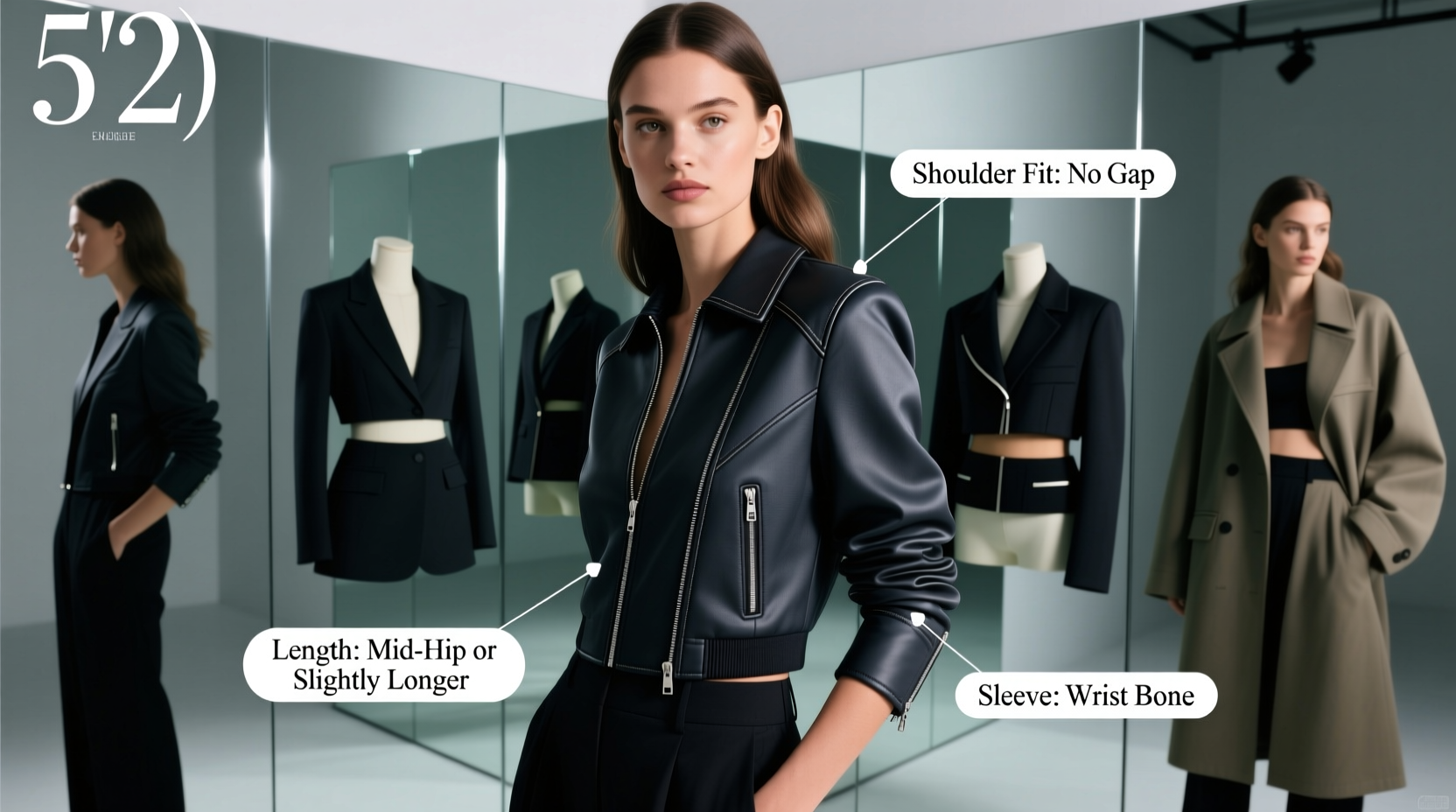
Small women typically range from 4'10\" to 5'3\", but height alone doesn’t define fit challenges. Proportions matter more than measurements. A woman who is 5'2\" with long arms and narrow shoulders has different needs than someone of the same height with shorter limbs and broader shoulders. Before shopping, take accurate measurements: bust, waist, shoulder width, sleeve length, and torso length. Use these numbers as your baseline—not the label on the tag.
Many brands use vanity sizing or inconsistent grading, so relying solely on size labels leads to disappointment. Instead, focus on how garments drape across your body. The shoulder seam should align precisely with the edge of your shoulder bone. If it extends past, the jacket is too big. If it cuts into your neck, it’s too narrow. This single detail makes or breaks the silhouette.
Key Fit Indicators: What to Look For
A jacket may look stylish on the hanger, but only a few structural elements determine whether it will flatter your frame. Pay attention to these five critical zones:
- Shoulders: As mentioned, the seam must sit exactly at the shoulder tip. No slipping, no digging.
- Sleeves: Ideal length ends at the base of your thumb, just above the wrist bone. Petite-specific brands often offer shorter sleeves (typically 30–31 inches).
- Length: For balance, the hem should fall between the top of the hip and the midpoint of the buttocks. Longer lengths overwhelm shorter torsos.
- Chest and Waist: The fabric should lie flat without pulling or gapping. Button the jacket—if it strains across the bust or back, go up a size or choose a stretch blend.
- Collar: It should lie smoothly against your back collarbone. If it lifts or gaps, the jacket is too tight through the shoulders or back.
Fit isn’t static. Movement matters. Raise your arms, sit down, reach forward. Does the jacket restrict motion or ride up excessively? A good fit allows freedom without excess fabric pooling at the back.
Style Hacks for Flattering Silhouettes
Beyond measurements, styling choices can enhance or undermine fit. Small women benefit from strategic design details that create vertical lines and balanced proportions.
- Opt for cropped or waist-length styles: Blazers and denim jackets ending at the hip elongate the lower body by creating a higher waistline.
- Choose structured shoulders: Light padding or natural tailoring adds definition without adding bulk.
- Embrace single-breasted closures: Double-breasted jackets add horizontal volume, which can shorten the torso.
- Stick to narrow lapels: Wide lapels make shoulders appear broader and can overpower delicate frames.
- Pick vertical details: Center vents, front seams, or pinstripes draw the eye upward, enhancing height perception.
| Feature | Recommended for Small Women | Use With Caution |
|---|---|---|
| Length | Waist to upper hip | Below hip or thigh-length |
| Lapels | Narrow, notched | Wide, peak |
| Buttons | Single-button or two-button | Double-breasted |
| Fit | Slim, not tight | Oversized or boxy |
| Pockets | Vertical welt or flap | Large patch pockets |
“Proportion is everything for petite dressing. A jacket that hits at the right point on the hip can visually extend the leg line by several inches.” — Lena Park, Stylist & Founder of Petite Style Lab
Step-by-Step Guide: How to Shop for Jackets with Confidence
Navigating stores or online retailers can feel overwhelming. Follow this practical sequence to streamline your search:
- Measure Yourself: Record your bust, waist, shoulder width, sleeve length, and torso height (from shoulder to desired hem point).
- Identify Your Body Shape: Hourglass, pear, rectangle, or inverted triangle? This guides cut selection (e.g., belted for hourglass, A-line for pear).
- Filter for Petite Options: Prioritize brands with dedicated petite lines (e.g., Ann Taylor Petite, J.Crew Petite, Reiss Petite).
- Check Sleeve and Torso Lengths: Read size charts carefully. Many “regular” sizes assume a 5’5”+ frame.
- Try On Multiple Sizes: Sizing varies widely. Try both your usual size and one down if the cut runs large.
- Assess Movement and Balance: Walk, sit, gesture. Does the jacket move with you? Does it align with your natural waist?
- Consider Tailoring: Minor adjustments like shortening sleeves or taking in the sides are affordable and transformative.
Real Example: From Frustration to Flawless Fit
Sophie, 5'1\" with a 30-inch sleeve length, struggled for years buying blazers off the rack. Most had shoulder seams falling halfway down her arm and sleeves dragging past her fingertips. She assumed she needed custom clothing—until she discovered a petite-specific retailer offering tailored cuts. She tried a wool-blend blazer labeled \"Petite 4,\" which featured shortened sleeves, a reduced torso length, and narrower shoulders. The difference was immediate: clean lines, sharp structure, and a silhouette that made her look polished and put-together. She later took it to a tailor to nip in the waist slightly, enhancing the hourglass effect. That single jacket became the cornerstone of her work wardrobe.
Essential Checklist: Before You Buy a Jacket
- ✅ Shoulder seam aligns with shoulder bone
- ✅ Sleeve ends at wrist bone (allowing room for movement)
- ✅ Hem hits between hip and mid-buttock
- ✅ Fabric lies flat with no pulling when buttoned
- ✅ Collar sits flush against the neck
- ✅ Allows full range of motion (arms up, sitting, reaching)
- ✅ Complements your body shape (e.g., nipped waist for curves)
- ✅ Made from quality material that holds its shape
- ✅ Available in petite sizing or adjustable enough to tailor
FAQ: Common Questions About Jacket Fit for Small Women
Can I wear oversized jackets if I’m small?
You can, but with caution. An intentionally oversized look works only when balanced—pair with slim pants or a belted waist to avoid being swallowed by fabric. Avoid slouchy shoulders or extra-long sleeves, which diminish presence.
Are there fabrics I should avoid?
Heavy tweeds or stiff canvases can overwhelm smaller frames. Opt for lightweight wools, soft cotton blends, or stretch-infused materials that drape rather than bulk.
Is tailoring worth it for less expensive jackets?
Yes—especially for sleeves and waist. Even a $70 jacket gains designer-level polish with simple alterations. Focus on structural fixes rather than complete redesigns.
Final Thoughts: Own Your Proportions with Confidence
Finding the perfect jacket isn’t about shrinking yourself to fit fashion—it’s about reshaping fashion to fit you. With attention to proportion, structure, and personal style, small women can wear jackets that project authority, elegance, and intention. Don’t settle for “close enough.” Use precise measurements, seek out brands that honor petite frames, and embrace tailoring as a tool of empowerment. The right jacket doesn’t just cover your shoulders—it elevates your entire presence.




 浙公网安备
33010002000092号
浙公网安备
33010002000092号 浙B2-20120091-4
Comments
No comments yet. Why don't you start the discussion?